
Best High-Resolution & Sound-Quality Car Stereos
The bench-tested Sony XAV-9000ES is my best complete sound-quality receiver. Alpine's HDS-990 is the dedicated high-resolution source-player choice, and three floating screens cover drivers who want a larger display without giving up the audio path.
A hi-res logo is only one part of a sound-quality receiver
I lead with the Sony XAV-9000ES because I tested its menus and its unusually deep onboard tuning on the bench. Three 5V output pairs, graphic and per-channel parametric EQ, time alignment, and crossover control matter far more to an amplified system than a file-format badge on the box. A hi-res sticker tells you what the deck can read, not what it can do with it.
The Alpine Status HDS-990 is a different animal — a dedicated high-resolution source player with its own controller, not a CarPlay touchscreen and not a DSP processor. Go in knowing that and it makes sense. Go in expecting a radio and you'll be disappointed.
The XAV-9500ES, JVC KW-Z1000W, and Pioneer WT8600 are the large-screen alternatives for systems that still want high-resolution source support and room to expand. None of them will out-tune the 9000ES, and none of them is trying to.
One thing worth saying before you spend the money: the receiver is the source and control layer, not the whole system. Match it with the right amplifier, speakers, installation, and tune, or the hi-res source has nowhere to go.
Compare my 5 sound-quality stereo picks
| Best for ↕ | My pick ↕ | Head Unit Size ↕ | Power Output ↕ | Rating ↕ | Buy |
|---|---|---|---|---|---|
| Best Overall | 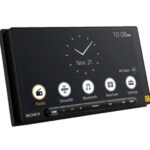 Sony XAV-9000ES Sony XAV-9000ES | Double-DIN face, shallow chassis | 20W RMS x 4 CTA-2006 | Buy Now $998.00 on Crutchfield | |
| Best Dedicated Source Player | 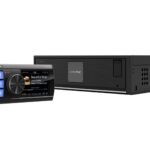 Alpine Status HDS-990 Alpine Status HDS-990 | Non-standard (not 1-/2-DIN) | 25W RMS / 50W peak × 4 | Buy Now $999.95 on Crutchfield | |
| Best Floating Screen | 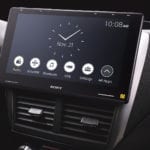 Sony XAV-9500ES Sony XAV-9500ES | Single-DIN (floating) | 20W RMS × 4 | Buy Now $1,198.00 on Crutchfield | |
| Best Big-Screen Value | 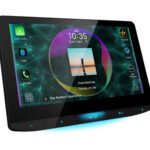 JVC KW-Z1000W JVC KW-Z1000W | Double-DIN (shallow-mount, floating 10.1″) | 22W RMS / 50W peak × 4 | Buy Now $799.99 on Amazon | |
| Best Multimedia |  Pioneer DMH-WT8600NEX Pioneer DMH-WT8600NEX | Single-DIN (floating) | 14W RMS × 4 | Buy Now $1,399.99 on Amazon |
CarAudioNow may earn a commission from retailer links. Brands do not influence the recommendations.
How I evaluate high-resolution and sound-quality stereos
I compare the complete signal and control path — source formats, preout voltage, output pairs, EQ, time alignment, crossover flexibility, noise risk, integration, and fit. I bench-tested the XAV-9000ES. The remaining exact models are researched and vetted against current documentation and support rather than presented as hands-on findings.
I look for documented preout voltage, enough output pairs, sensible internal power claims, and connections that fit the planned amplifier or DSP.
Useful EQ, time alignment, crossovers, and channel control matter more than a long audio-format list.
I verify the supported file formats, sample rates, USB or Bluetooth path, and whether the receiver downsamples accepted files.
A dedicated high-resolution source player solves a different system problem than a complete CarPlay receiver, so I keep those roles explicit.
I compare screen and chassis fit, integration, warranty, firmware support, and what the price buys beyond the audio logo.
Four questions for a sound-quality source
- Complete receiver or dedicated source player? Choose the XAV-9000ES for a normal dash screen and phone integration. Choose HDS-990 when the build needs a dedicated high-resolution player and controller rather than a CarPlay touchscreen.
- How many amplifier channels? Front, rear, and subwoofer outputs cover common systems. Active or multi-way builds need the right crossover and channel-control plan before buying.
- Will you tune it? Deeper parametric controls only add value when someone measures, listens, and uses them correctly. Otherwise, a simpler receiver can sound just as good.
- Do you also need a large screen? The XAV-9500ES, JVC Z1000W, and Pioneer WT8600 trade some sound-first focus for a 10.1-inch floating display and broader daily usability.
My best high-resolution and sound-quality stereos
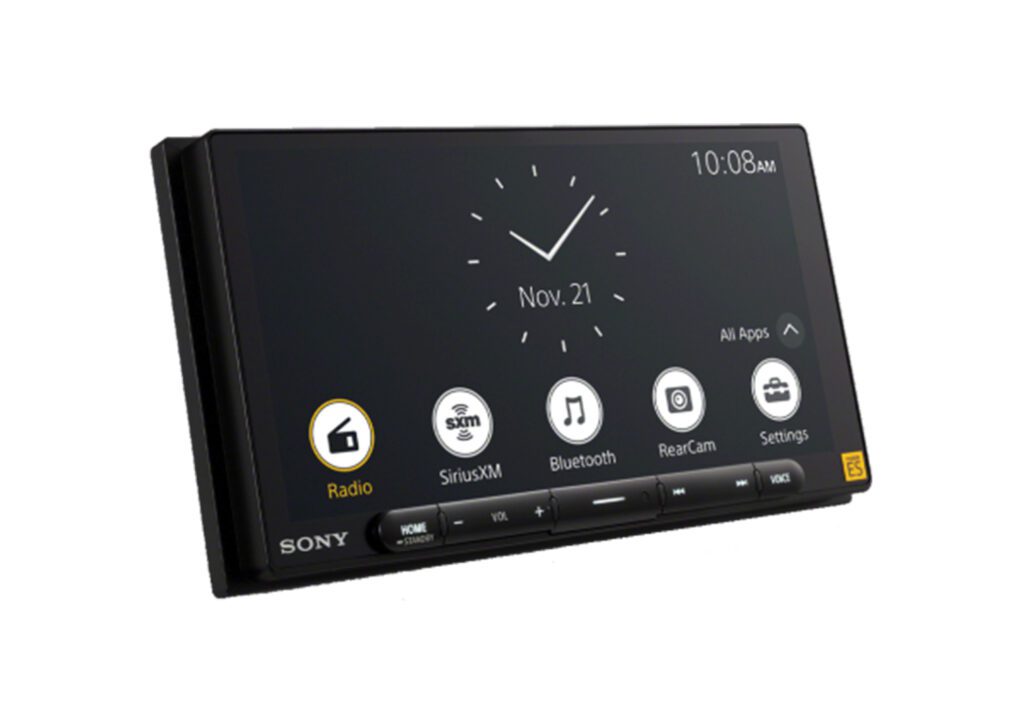
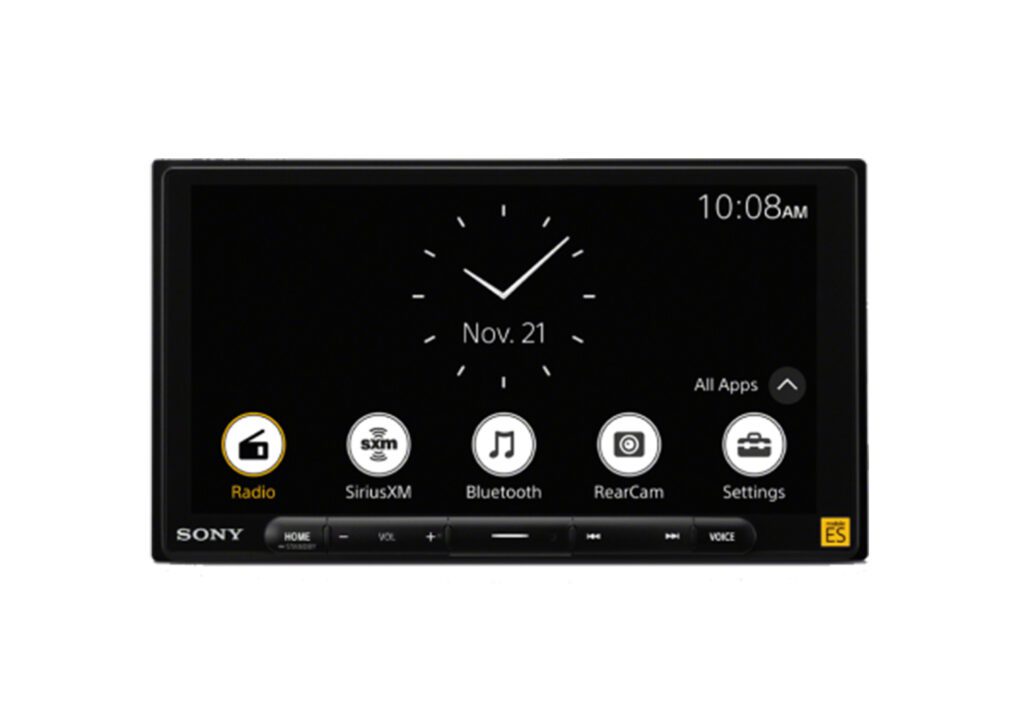
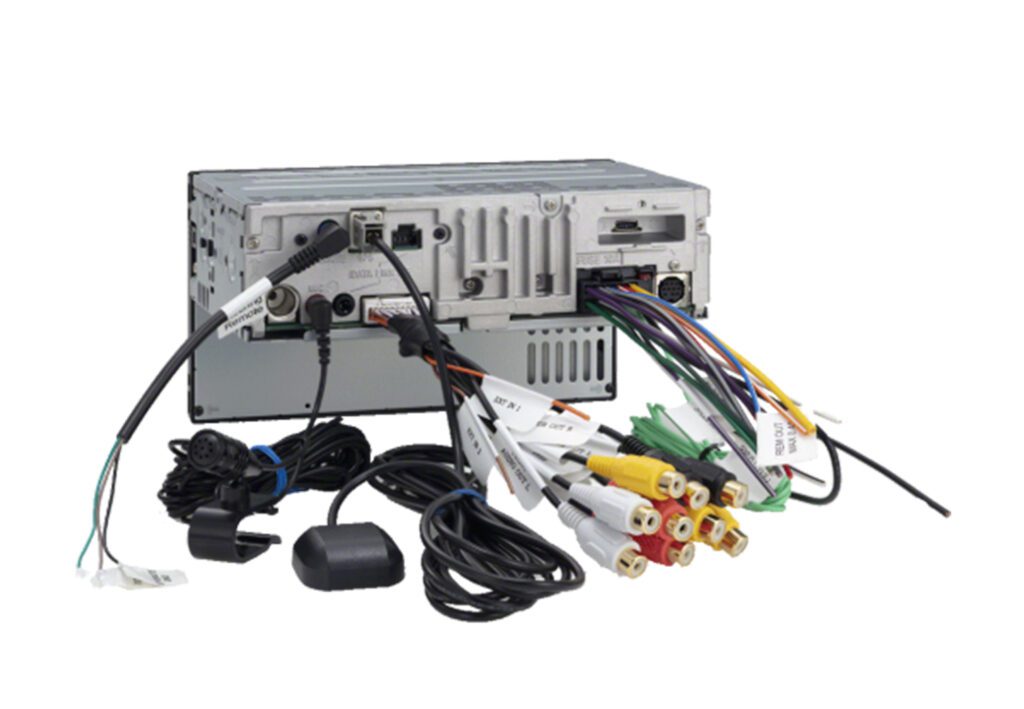
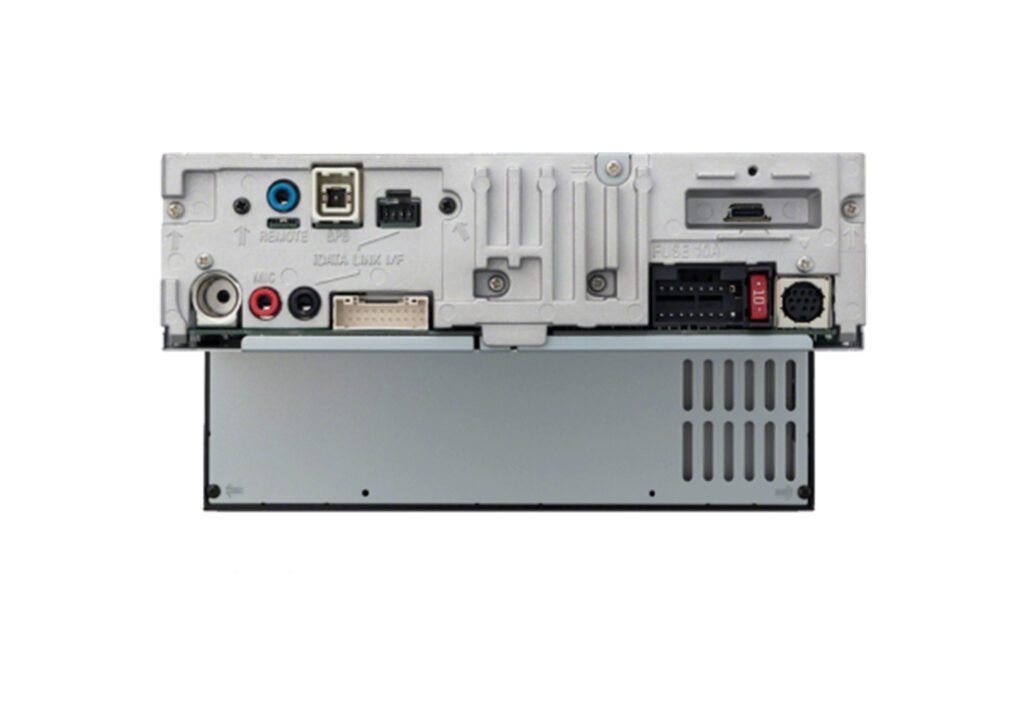
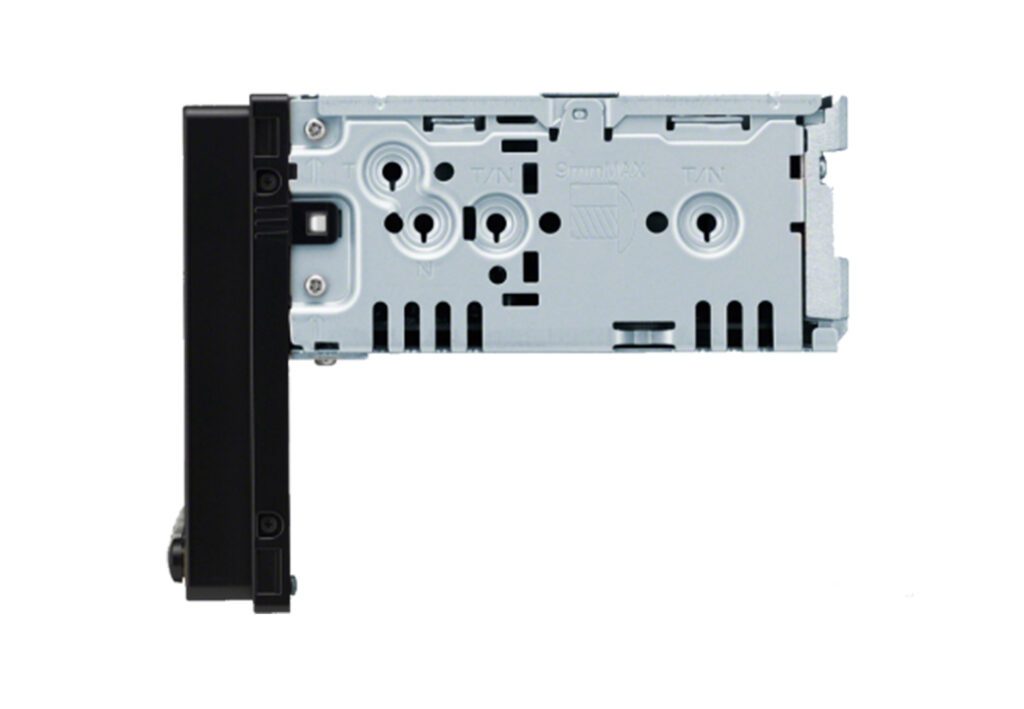
Sony XAV-9000ES
6.75-inch 720p screen · 5V preouts · parametric EQ · Mobile ES
CarAudioNow may earn a commission from retailer links. Brands do not influence the recommendations.
Why I picked it
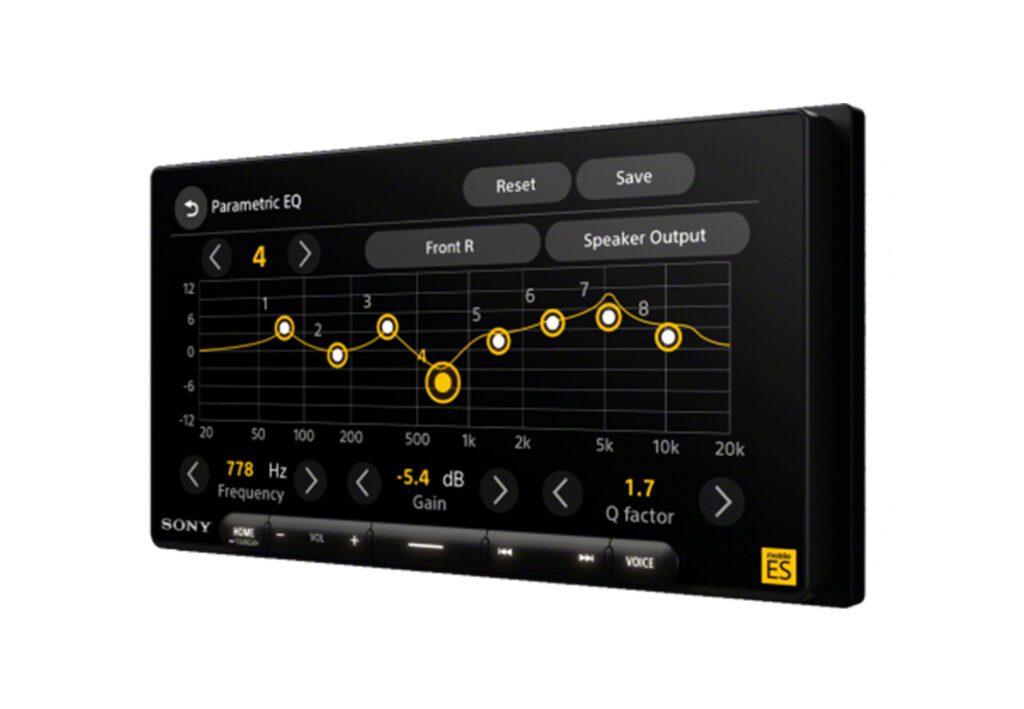
The XAV-9000ES is the fixed-screen receiver I'd choose when sound quality and tuning matter more than HDMI or HD Radio. I unboxed it, powered it on the bench, worked through the interface, played media, and went through the audio controls. What matters isn't the ES badge. It's three pairs of 5V outputs, a 14-band graphic EQ, an eight-band parametric EQ with per-channel control, time alignment, and crossover settings that are unusually deep for a head unit. The parametric section even lets you mute individual outputs while you tune, which is workflow I'd normally expect from a standalone DSP.
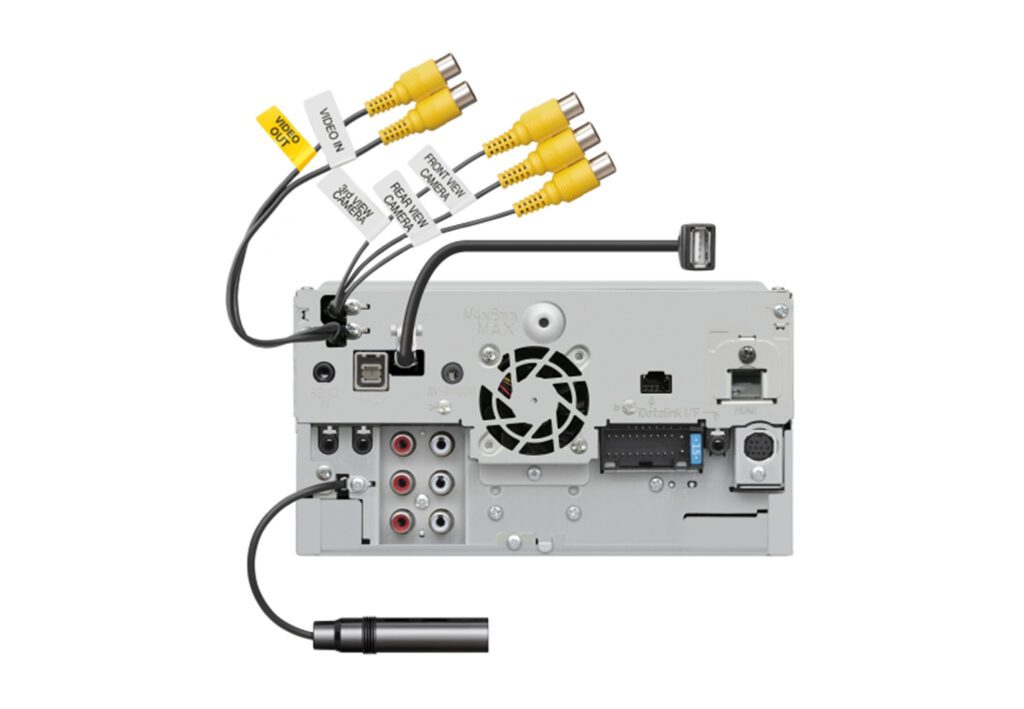
Its 6.75-inch capacitive panel is a true 1280 by 720 display, the menus are clean, and USB folder navigation is straightforward. Wireless CarPlay and Android Auto handle daily use, while LDAC and USB open up better sources for a high-resolution library. Three camera inputs add practical flexibility on a truck or an off-road build.
At around $1,000 with a three-year warranty, it's a chunk of change for a fixed 6.75-inch screen, and it leaves out HDMI, an auxiliary input, and HD Radio. That trade is deliberate — this is an audio-first receiver, not the most feature-packed multimedia deck on the shelf. If you're feeding amplifiers, you plan to tune the system properly, and you want a clean OEM-style screen instead of a big floating panel, the 9000ES earns its price.
| Make | Sony |
| Model | XAV-9000ES |
| Head Unit Size | Double-DIN face, shallow chassis |
| Screen Size | 6.75 in capacitive anti-glare |
| Display Resolution | 1280 x 720 |
| Smartphone Integration | Wired/wireless Apple CarPlay and Android Auto |
| Preamp Voltage | 5V, front/rear/sub |
| Power Output | 20W RMS x 4 CTA-2006 |
| Audio Tuning | 14-band graphic EQ, 8-band parametric EQ, time alignment, crossovers |
| Camera Inputs | 3 |
| Factory Integration | Maestro RR/RR2 ready, vehicle dependent |
| Media / Expansion | USB-C, LDAC, FLAC/ALAC/DSD, SiriusXM-ready; no HDMI |
| Warranty | 3 years |
| Typical Price | Around $1,000 |
Reasons to buy
- Bench-tested 14-band graphic and per-channel parametric tuning.
- Three pairs of 5V outputs suit a serious amplifier or DSP path.
- Sharp 1280 x 720 anti-glare capacitive display.
- Three camera inputs with configurable triggers.
- Three-year Mobile ES warranty.
Reasons not to buy
- No HDMI and no analog A/V input.
- No built-in HD Radio.
- Around $1,000 for a conventional 6.75-inch screen.
- The deep tuning controls take time and skill to get right.


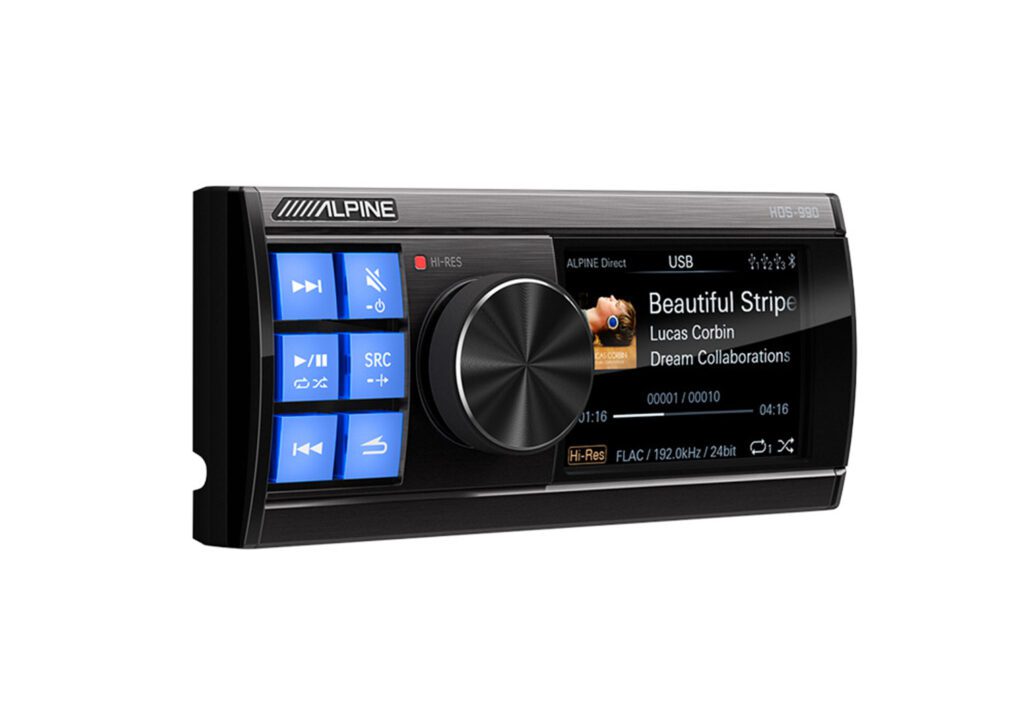

Alpine Status HDS-990
Non-standard chassis · hi-res source/processor · pairs with Status amps
CarAudioNow may earn a commission from retailer links. Brands do not influence the recommendations.
Why I picked it
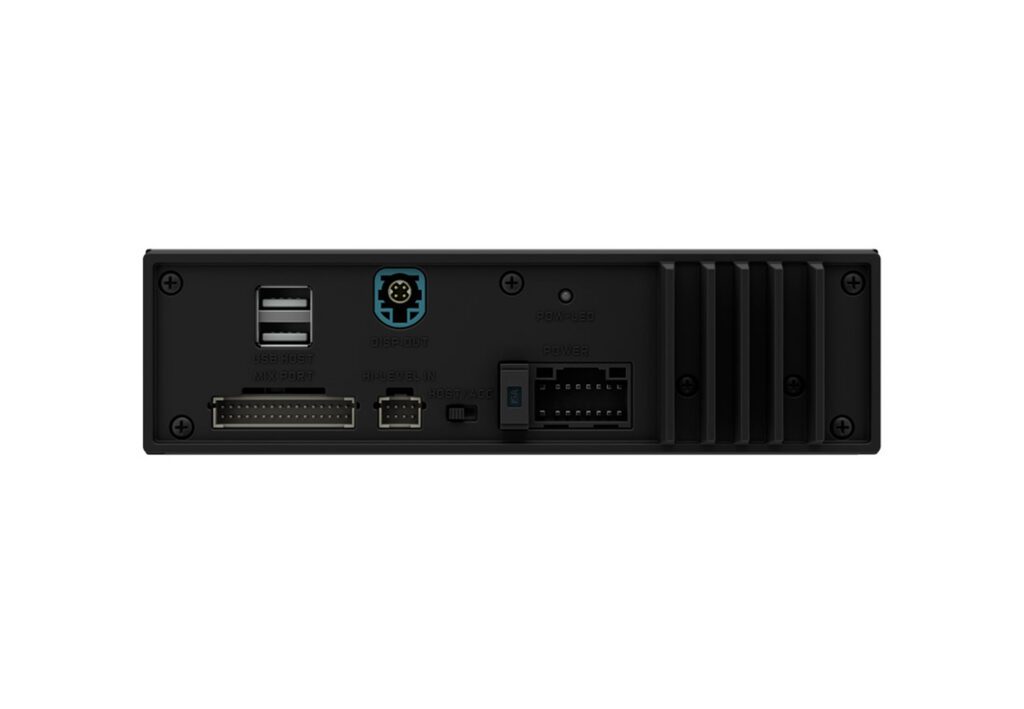
This one isn't a radio, and going in knowing that saves a lot of confusion. The Status HDS-990 is a high-resolution source and control brain — reference-grade DACs, granular time alignment, and a 10-band EQ that becomes 31-band with the HDP-D90 processor. It's built to sit between your source and Alpine's Status amplifiers and keep the signal intact end to end, which is the whole point at this level.
What it doesn't have matters as much as what it does. There's no AM/FM tuner, no hands-free calling, and no CarPlay or Android Auto. It won't drop into a standard 1-DIN or 2-DIN opening either, so mounting is a fabrication question rather than a dash-kit one. Power is 25 watts RMS per channel, but nobody buys this to run speakers off the deck. It's for the build where the system was planned around it, and it's priced for exactly that person — if you're weighing whether you need it, you don't.
| Make | Alpine |
| Model | Status HDS-990 |
| Head Unit Size | Non-standard (not 1-/2-DIN) |
| Screen Size | N/A |
| Screen Type | Hi-res color display (non-touch) |
| Screen Resolution | N/A |
| Smartphone Integration | No (CarPlay/AA not supported) |
| Outputs | High-res preouts (pairs with Status processor/amps) |
| Power Output | 25W RMS / 50W peak × 4 |
| iDatalink Maestro | No |
Reasons to buy
- Reference-grade DACs with granular time alignment for a true hi-res path.
- 10-band EQ that extends to 31-band with the HDP-D90 processor.
- Designed to partner directly with Alpine Status amplifiers.
- Works alongside a factory radio in vehicles you can't replace the head unit in.
- Signal path stays high-resolution from source to amplifier.
Reasons not to buy
- No AM/FM tuner, no hands-free, and no CarPlay or Android Auto.
- Non-standard chassis — mounting is fabrication, not a dash kit.
- Priced for enthusiasts chasing gains most systems can't resolve.
- Needs matching processing and amplification to be worth having.
Sony XAV-9500ES
1-DIN floating 10.1″ · wireless CarPlay & Android Auto · ES audio
CarAudioNow may earn a commission from retailer links. Brands do not influence the recommendations.
Why I picked it
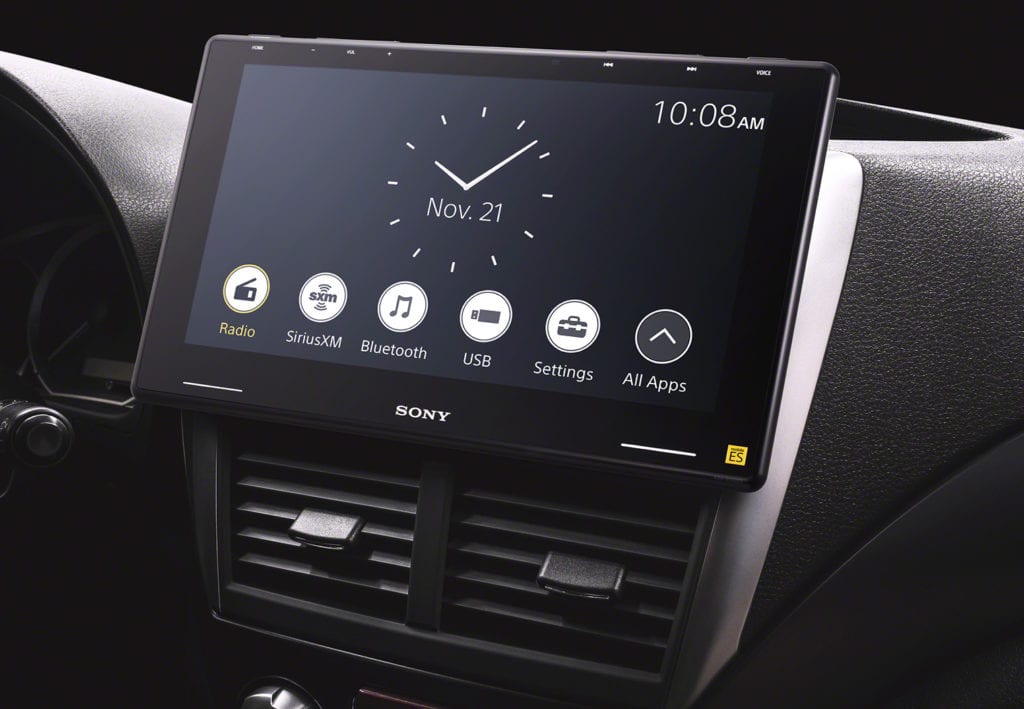
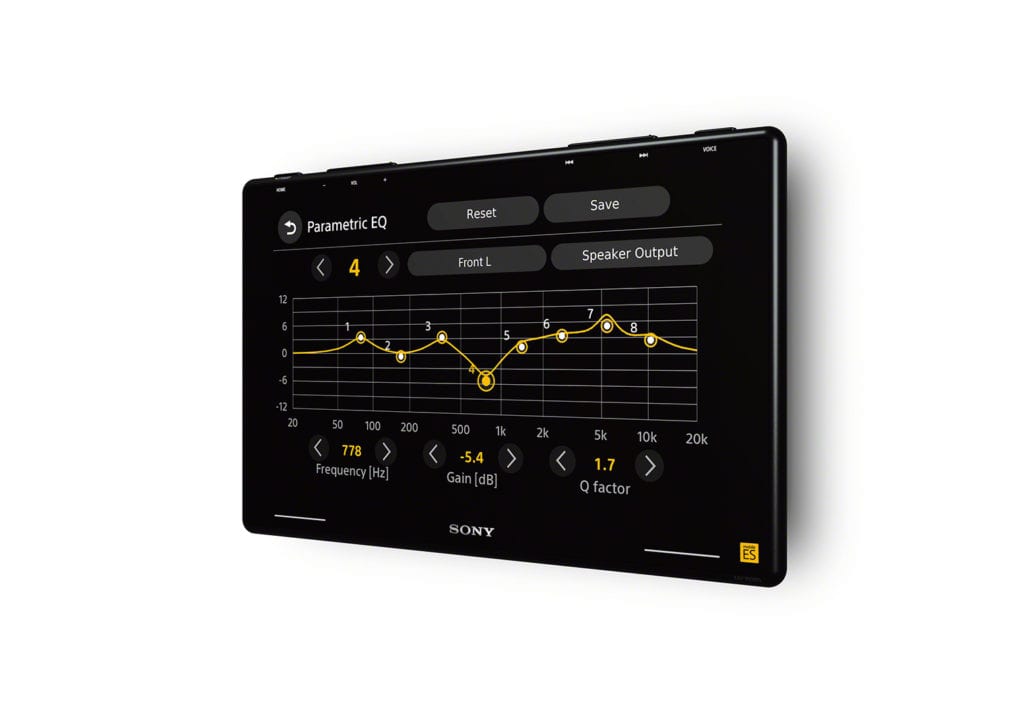
The XAV-9500ES is where I land when wireless CarPlay and a genuinely clean signal path matter equally. I've spent time with this one, and what stuck was how quiet the audio path is. Sony's Mobile ES platform pairs a 10.1-inch 1280 x 720 anti-glare panel with three pairs of 5V preouts and a low-noise design, so what reaches your amplifiers is worth amplifying. Onboard tuning is real rather than decorative, and the wireless reconnect is quick enough that you stop thinking about it.
The tradeoffs are the ones you'd expect at this tier. It's priced above Sony's non-ES decks, the 10.1-inch panel wants clearance a tight dash may not have, and there's no built-in navigation or disc transport — the phone handles maps. It mounts to a single-DIN chassis, so the opening is rarely the problem. The space in front of it is. For a compatible dash feeding an amplified system, this is the sound-first premium floating screen in the lineup.
| Make | Sony |
| Model | XAV-9500ES |
| Head Unit Size | Single-DIN (floating) |
| Screen Size | 10.1″ |
| Screen Type | Capacitive HD anti-glare |
| Screen Resolution | 1280 × 720 |
| Smartphone Integration | Wireless Apple CarPlay & Android Auto |
| Outputs | 6-ch preamp (5V front/rear/sub) |
| Preamp Voltage | 5V, front/rear/sub |
| Power Output | 20W RMS × 4 |
| iDatalink Maestro | Yes |
Reasons to buy
- Three pairs of 5V preouts and a low-noise ES audio path for amplified systems.
- Wireless CarPlay and Android Auto that reconnect quickly and stay connected.
- 10.1-inch 1280 x 720 anti-glare panel on a single-DIN chassis.
- Real onboard tuning rather than a token EQ.
- iDatalink Maestro ready for factory-integration work.
Reasons not to buy
- Priced above Sony's non-ES decks for audio quality you need amps to hear.
- No built-in navigation — maps come from your phone.
- No disc transport, so a CD collection needs another plan.
- The floating panel needs clearance a tight dash may not have.



JVC KW-Z1000W
Double-DIN floating 10.1″ · 24-bit/192kHz hi-res · K2 uprating · wireless CarPlay/AA · 4 cameras
CarAudioNow may earn a commission from retailer links. Brands do not influence the recommendations.
Why I picked it
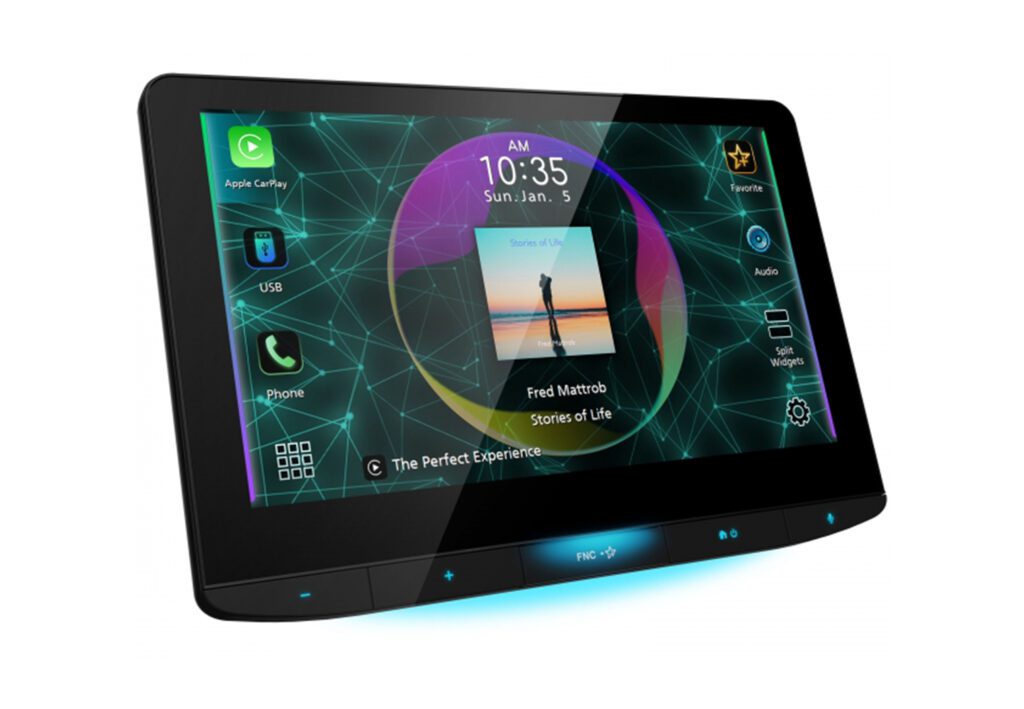
JVC's flagship is a lot of receiver for the money. The KW-Z1000W pairs a 10.1-inch 1280 x 720 floating capacitive screen with true 24-bit/192 kHz playback across FLAC, WAV, and DSD. LDAC Bluetooth means wireless streaming isn't automatically the weak link. Its K2 processing uprates compressed files to restore what the codec threw away. You won't mistake it for the master, but on a well-recorded MP3 the top end opens up noticeably.
Around that you get built-in HD Radio as another hi-res source, wireless CarPlay and Android Auto, three pairs of 5V preouts, and four camera inputs, which is rare enough to matter if a 360-degree view is the goal. The shallow-mount double-DIN chassis helps in tight dashes. The real limits start with a single rear USB port, which gets annoying fast if you keep music on a thumb drive and charge from the same deck. A double-DIN opening plus an oversized floating panel also makes some installs genuinely fiddly.
| Make | JVC |
| Model | KW-Z1000W |
| Head Unit Size | Double-DIN (shallow-mount, floating 10.1″) |
| Screen Size | 10.1″ |
| Screen Resolution | 1280 x 720 |
| Screen Type | LCD capacitive touchscreen |
| Hi-Res Audio | 24-bit / 192 kHz (FLAC, WAV, DSD; LDAC + K2) |
| Smartphone Integration | Wireless Apple CarPlay / Android Auto |
| HD Radio | Yes |
| Outputs | 3 pairs 5V preouts |
| Power Output | 22W RMS / 50W peak × 4 |
| Camera Inputs | 4 |
| iDatalink Maestro | Yes |
Reasons to buy
- True 24-bit/192 kHz playback across FLAC, WAV, and DSD.
- LDAC Bluetooth keeps wireless streaming out of the weak-link position.
- K2 processing audibly opens up compressed files.
- Three pairs of 5V preouts and four camera inputs.
- Shallow-mount double-DIN chassis fits dashes short on depth.
Reasons not to buy
- A single rear USB port has to serve both music and charging.
- Double-DIN opening plus a 10.1-inch floating panel makes some installs fiddly.
- 22 watts RMS per channel — the hi-res case only closes with amplifiers.
- The floating screen can block vents or controls in a shallow dash.


Pioneer DMH-WT8600NEX
1-DIN floating 10.1″ · capacitive HD · wired or wireless CarPlay/AA
CarAudioNow may earn a commission from retailer links. Brands do not influence the recommendations.
Why I picked it
When maximum screen is the whole point, the DMH-WT8600NEX is the one I point at. It puts a 10.1-inch 1280 x 720 capacitive panel on a single-DIN chassis. The float adjusts for height and tilt, so you dial the sightline in rather than take whatever the bracket gives you. Wired or wireless CarPlay and Android Auto are both there, along with multiple camera inputs, a 6-channel 4V preamp, and an A/V output.
Two things to check before you buy. A panel this size sits proud of the dash and crowds vents, climate controls, or a shifter path in a tight cabin. Measure the space in front of the opening, not just the opening. And internal power is 14 watts RMS per channel, which is fine for a deck that's feeding amplifiers and thin if it isn't. There's no built-in navigation here either. For a driver who wants tablet-sized real estate and plans to amplify, it earns the room it takes.
| Make | Pioneer |
| Model | DMH-WT8600NEX |
| Head Unit Size | Single-DIN (floating) |
| Screen Size | 10.1″ |
| Screen Type | Capacitive |
| Screen Resolution | 1280 × 720 |
| Smartphone Integration | Wired or wireless Apple CarPlay & Android Auto |
| Outputs | 6-ch preamp (4V front/rear/sub) + A/V out |
| Power Output | 14W RMS × 4 |
| iDatalink Maestro | Yes |
Reasons to buy
- 10.1-inch 1280 x 720 capacitive panel on a single-DIN chassis.
- Float adjusts for height and tilt, so you can set the sightline at install.
- Wired or wireless CarPlay and Android Auto, your choice.
- 6-channel 4V preamp plus an A/V output for expansion.
- iDatalink Maestro ready and takes multiple camera inputs.
Reasons not to buy
- A 10.1-inch panel crowds vents and controls in a tight dash.
- 14 watts RMS per channel — plan on amplifiers.
- No built-in navigation, so maps come from the phone.
- The floating-tablet look is not to everyone's taste.
Make sure the receiver and install parts fit your vehicle
Sound-quality builds live or die on what comes after the head unit, so plan the amplifier, the speakers, and the wiring at the same time as the receiver. Confirm the opening, depth, and screen clearance before you order. You can also check your dashboard size.
Best High-Resolution & Sound-Quality Car Stereos FAQs
What is the best sound-quality car stereo?+
The Sony XAV-9000ES is my best complete receiver for an amplified sound-quality system. I bench-tested its interface and tuning, including its graphic and per-channel parametric EQ, and it supplies three pairs of 5V outputs.
Is the Alpine Status HDS-990 a normal head unit?+
No. It is a dedicated high-resolution source player with its own controller for a specialized system, not a DSP processor. It does not replace a normal CarPlay touchscreen in the same way as the Sony, JVC, and Pioneer receivers.
Do high-resolution files automatically sound better in a car?+
No. Source quality can help, but road noise, speakers, installation, crossover settings, gain, EQ, and time alignment usually have a larger effect on what you hear.
Why do 5V preouts matter?+
A stronger preamp signal can let an amplifier reach target output with less input gain, which can help the system resist noise. It does not create sound quality by itself.
Do I need a separate DSP?+
Not always. The XAV-9000ES has deeper tuning than most receivers. A separate DSP is useful when the system needs more channels, more precise routing, measurement-driven correction, or OEM integration beyond the receiver’s tools.
What should I upgrade after the head unit?+
Start with speaker installation and tuning, then add amplification and a subwoofer as the system requires. My amplifier tuning guide covers the gain-setting step.
More reviews & comparisons
Use these guides to verify fit, integration, installation, and the rest of the system.
Why trust this guide?
