
Best iDatalink & Factory-Integration Car Stereos
The Kenwood DAX1050XR is my integration-first pick for supported Maestro APX vehicles. Conventional RR/RR2 receivers are still the right answer when your dash doesn't use an APX Direct Replacement kit.
Start with the vehicle and the Maestro path
iDatalink compatibility isn't one universal feature, and treating it like one is how people end up with a radio that fits and a car that lost half its buttons. Maestro RR and RR2 are add-on interfaces used with many conventional receivers. Maestro APX is a direct-replacement platform built around supported vehicle-specific kits.
The Kenwood DAX1050XR leads this guide because it's designed for the harder APX job, not because its screen fits every car. A compatible APX kit, Maestro hardware, a receiver harness, and careful installation are all part of that purchase — budget for the whole package, not the box price.
If your vehicle isn't supported, the Sony XAV-9500ES, Alpine Halo9 iLX-F509, Kenwood DMX9708S, and JVC KW-V960BW give you more conventional RR/RR2 paths. Write down the functions you actually need to keep — steering-wheel controls, the factory amp, climate display, chimes — and check them off against the interface documentation before you buy anything. Then verify every one of them against your exact trim using the Vehicle Fit Guide and the current interface documentation.
Compare my 5 iDatalink-ready picks
| Best for ↕ | My pick ↕ | Head Unit Size ↕ | Screen Size ↕ | Rating ↕ | Buy |
|---|---|---|---|---|---|
| Best Overall | 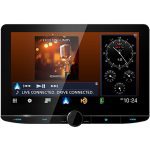 Kenwood Excelon Reference DAX1050XR Kenwood Excelon Reference DAX1050XR | Separate 1-DIN chassis with floating display | 10.1 in optically bonded capacitive | Buy Now $1,449.00 on Crutchfield | |
| Best Conventional Receiver | 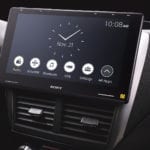 Sony XAV-9500ES Sony XAV-9500ES | Single-DIN (floating) | 10.1″ | Buy Now $1,198.00 on Crutchfield | |
| Most Flexible Install | 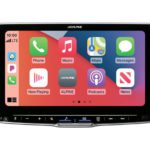 Alpine Halo9 iLX-F509 Alpine Halo9 iLX-F509 | Single-DIN (modular floating screen) | 9″ floating | Buy Now $1,445.00 on Amazon | |
| Best Value | 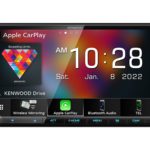 Kenwood DMX-9708S Kenwood DMX-9708S | Double-DIN (shallow chassis) | 6.95″ | Buy Now $799.00 on Crutchfield | |
| Best Multimedia | 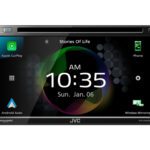 JVC KW-V960BW JVC KW-V960BW | Double-DIN | 6.8″ | Buy Now $949.00 on Amazon |
CarAudioNow may earn a commission from retailer links. Brands do not influence the recommendations.
How I evaluate iDatalink-compatible stereos
I start with the exact vehicle, the factory audio package, and the supported Maestro path, then compare retained functions, chassis and screen placement, cameras, audio outputs, firmware support, and the full installed cost. These exact finalists are researched and vetted, and every compatibility claim comes from current receiver and interface documentation rather than a retailer's summary.
I separate direct-replacement APX applications from conventional Maestro-ready receivers so the recommendation starts with the correct hardware family.
Steering controls, amplifiers, cameras, gauges, climate data, warning tones, and settings are checked individually by vehicle and trim.
The dash kit, module, harness, screen placement, firmware, and programming steps are part of the receiver decision.
I compare preouts, tuning, camera inputs, HD-camera support, and how the factory amplifier is retained or bypassed.
An integration-first radio can cost more but avoid losing expensive factory functions. I compare the complete installed system, not the receiver alone.
Four questions that decide the integration path
- Is the vehicle supported by Maestro APX? The DAX1050XR is compelling only with a compatible APX Direct Replacement kit. Without that path, choose a conventional RR/RR2-ready receiver.
- Which factory functions matter? Write them down before the dash comes apart. “Maestro-ready” does not mean every camera, screen, or setting survives in every trim.
- Where will the screen and chassis go? Separate and floating designs add mounting flexibility, but the display still must clear vents, controls, gauges, and the shifter.
- What is the full installed cost? Include the kit, Maestro module, harnesses, antenna/USB/camera adapters, programming, and labor before comparing receiver prices.
My best iDatalink and factory-integration stereos
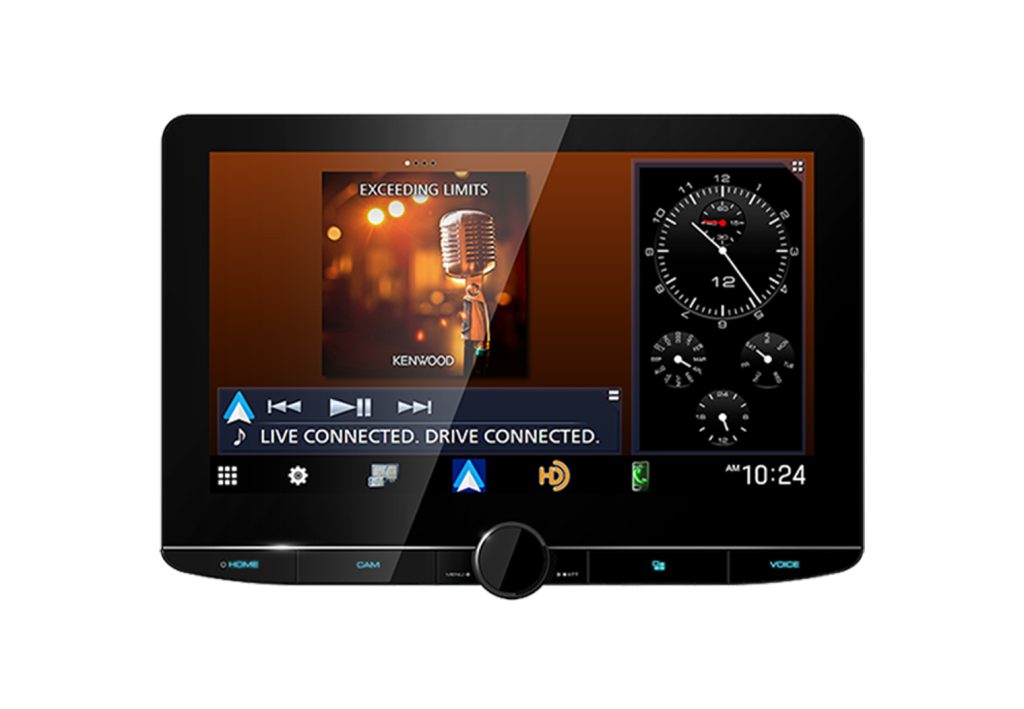
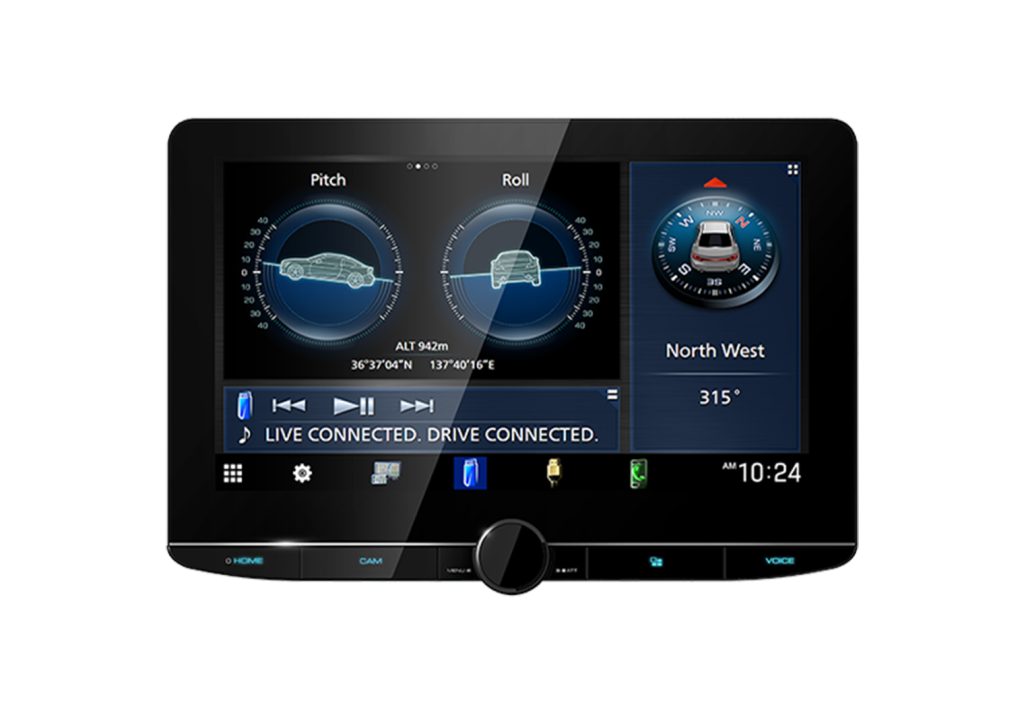
Kenwood Excelon Reference DAX1050XR
10.1-inch bonded display · Maestro APX · 5V and optical outputs
CarAudioNow may earn a commission from retailer links. Brands do not influence the recommendations.
Why I picked it
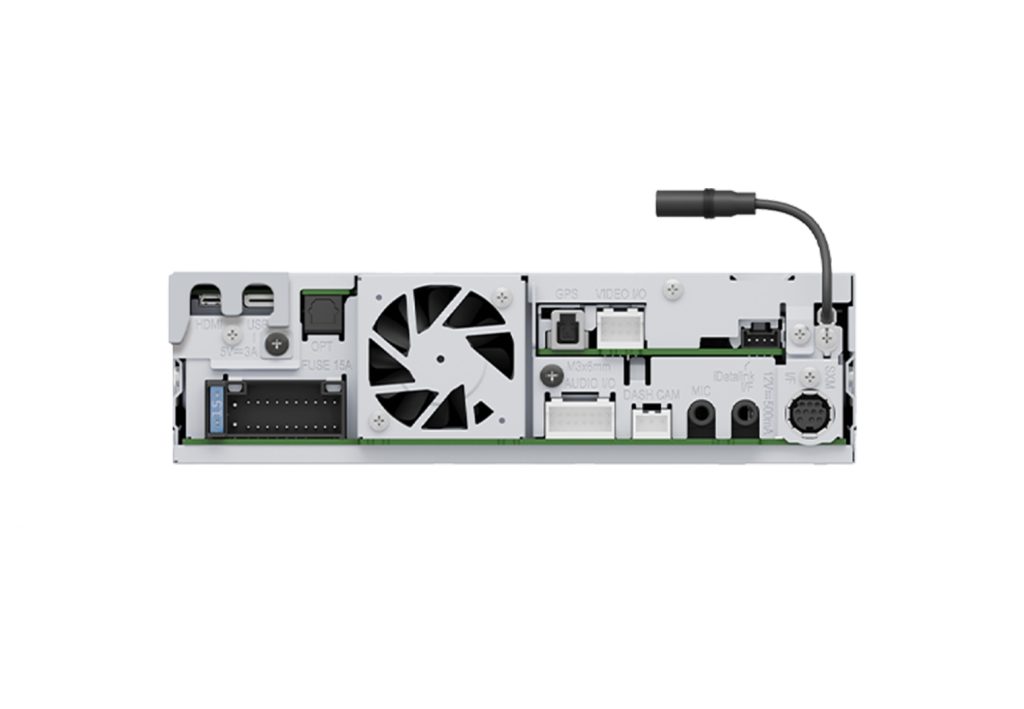
I picked the DAX1050XR for a late-model problem: the factory screen has to come out, but everything tied to it still has to work. Kenwood built this receiver around Maestro APX Direct Replacement kits, with a separate 1-DIN chassis that mounts horizontally or vertically away from the 10.1-inch screen. In a supported vehicle that's a far cleaner path to keeping steering-wheel controls, the factory amplifier, secondary displays, climate information, and vehicle data. The alternative is a generic radio and a shoebox of one-off adapters.
It's a serious source unit too. Kenwood specifies a bonded 1280 by 720 display, wireless CarPlay and Android Auto, LDAC, three pairs of 5V outputs, an optical output, graphic and parametric EQ, time alignment, and two-way or three-way crossovers. Four camera inputs, HDMI, and HD Radio handle expansion. I haven't installed this exact platform, so I'm treating those capabilities as manufacturer-verified rather than hands-on findings.
Fitment is the whole decision. This isn't a universal radio that drops into any double-DIN opening, and at around $1,450 that distinction gets expensive. A compatible APX vehicle kit, the Maestro module, a receiver harness, and careful screen placement are all part of what you're buying. It doesn't ship as a normal stand-alone wiring package, and a two-year warranty doesn't soften the installed total. If your vehicle is supported and keeping factory behavior is the first priority, this is the most complete integration-first option here. If it isn't supported, buy a conventional Maestro-ready receiver instead and don't look back.
| Make | Kenwood |
| Model | Excelon Reference DAX1050XR |
| Head Unit Size | Separate 1-DIN chassis with floating display |
| Screen Size | 10.1 in optically bonded capacitive |
| Display Resolution | 1280 x 720 |
| Smartphone Integration | Wired/wireless Apple CarPlay and Android Auto |
| Preamp Voltage | 5V, front/rear/sub; optical digital output |
| Power Output | 50W x 4 max; no comparable CTA RMS figure published |
| Audio Tuning | 13-band graphic EQ, 14-point parametric EQ, time alignment, 2-way/3-way crossovers |
| Camera Inputs | 4, with HD front/rear support |
| Factory Integration | Maestro RR/RR2 and APX Direct Replacement, vehicle dependent |
| Media / Expansion | Micro-HDMI, USB-C, HD Radio, LDAC, SiriusXM 360L-ready |
| Warranty | 2 years |
| Typical Price | Around $1,450 |
Reasons to buy
- APX Direct Replacement path is purpose-built for supported integrated dashes.
- Separate chassis mounts horizontally or vertically, away from the screen.
- 5V analog and optical digital outputs support advanced amplifier and DSP builds.
- Graphic plus parametric tuning is deeper than most multimedia receivers.
- Four cameras, HDMI, HD Radio, and factory-data display for real expansion.
Reasons not to buy
- A compatible APX vehicle kit and Maestro hardware are mandatory, not extras.
- Installed cost climbs well past the roughly $1,450 receiver price.
- The large screen can block vents or controls if the kit positions it poorly.
- A poor choice for a straightforward universal double-DIN replacement.
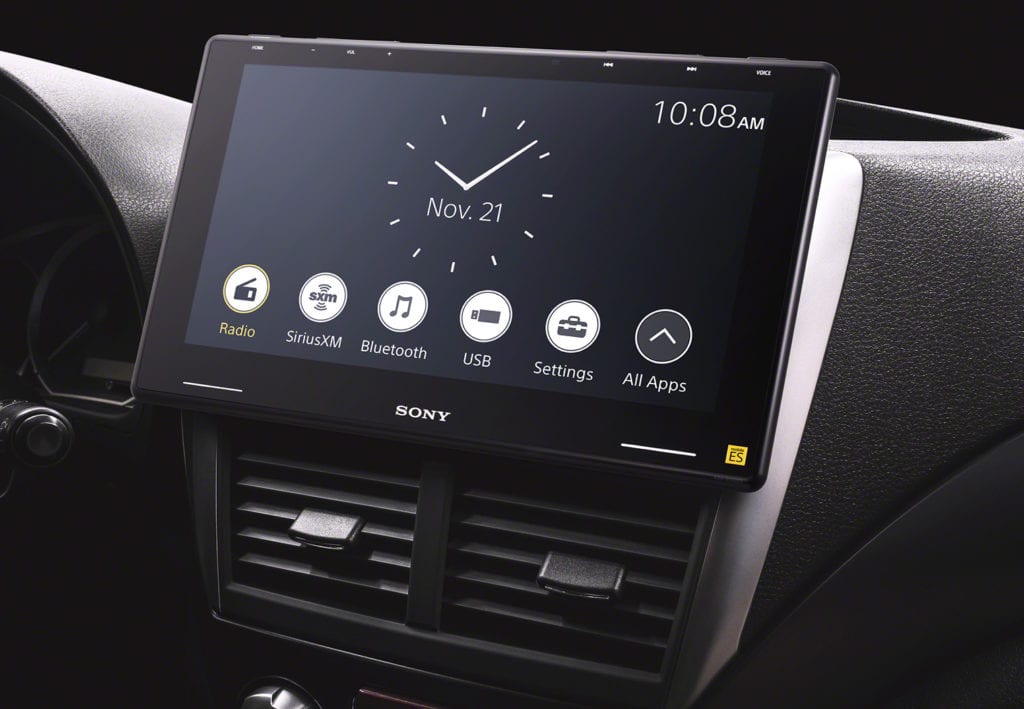
Sony XAV-9500ES
1-DIN floating 10.1″ · wireless CarPlay & Android Auto · ES audio
CarAudioNow may earn a commission from retailer links. Brands do not influence the recommendations.
Why I picked it
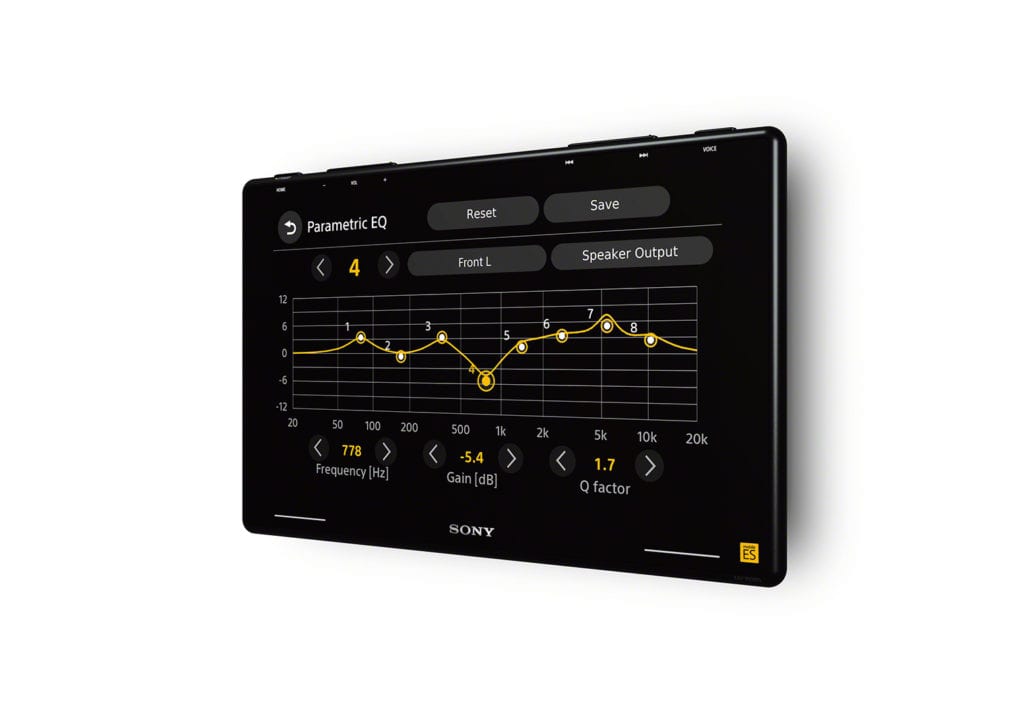
The XAV-9500ES is where I land when wireless CarPlay and a genuinely clean signal path matter equally. I've spent time with this one, and what stuck was how quiet the audio path is. Sony's Mobile ES platform pairs a 10.1-inch 1280 x 720 anti-glare panel with three pairs of 5V preouts and a low-noise design, so what reaches your amplifiers is worth amplifying. Onboard tuning is real rather than decorative, and the wireless reconnect is quick enough that you stop thinking about it.
The tradeoffs are the ones you'd expect at this tier. It's priced above Sony's non-ES decks, the 10.1-inch panel wants clearance a tight dash may not have, and there's no built-in navigation or disc transport — the phone handles maps. It mounts to a single-DIN chassis, so the opening is rarely the problem. The space in front of it is. For a compatible dash feeding an amplified system, this is the sound-first premium floating screen in the lineup.
| Make | Sony |
| Model | XAV-9500ES |
| Head Unit Size | Single-DIN (floating) |
| Screen Size | 10.1″ |
| Screen Type | Capacitive HD anti-glare |
| Screen Resolution | 1280 × 720 |
| Smartphone Integration | Wireless Apple CarPlay & Android Auto |
| Outputs | 6-ch preamp (5V front/rear/sub) |
| Preamp Voltage | 5V, front/rear/sub |
| Power Output | 20W RMS × 4 |
| iDatalink Maestro | Yes |
Reasons to buy
- Three pairs of 5V preouts and a low-noise ES audio path for amplified systems.
- Wireless CarPlay and Android Auto that reconnect quickly and stay connected.
- 10.1-inch 1280 x 720 anti-glare panel on a single-DIN chassis.
- Real onboard tuning rather than a token EQ.
- iDatalink Maestro ready for factory-integration work.
Reasons not to buy
- Priced above Sony's non-ES decks for audio quality you need amps to hear.
- No built-in navigation — maps come from your phone.
- No disc transport, so a CD collection needs another plan.
- The floating panel needs clearance a tight dash may not have.
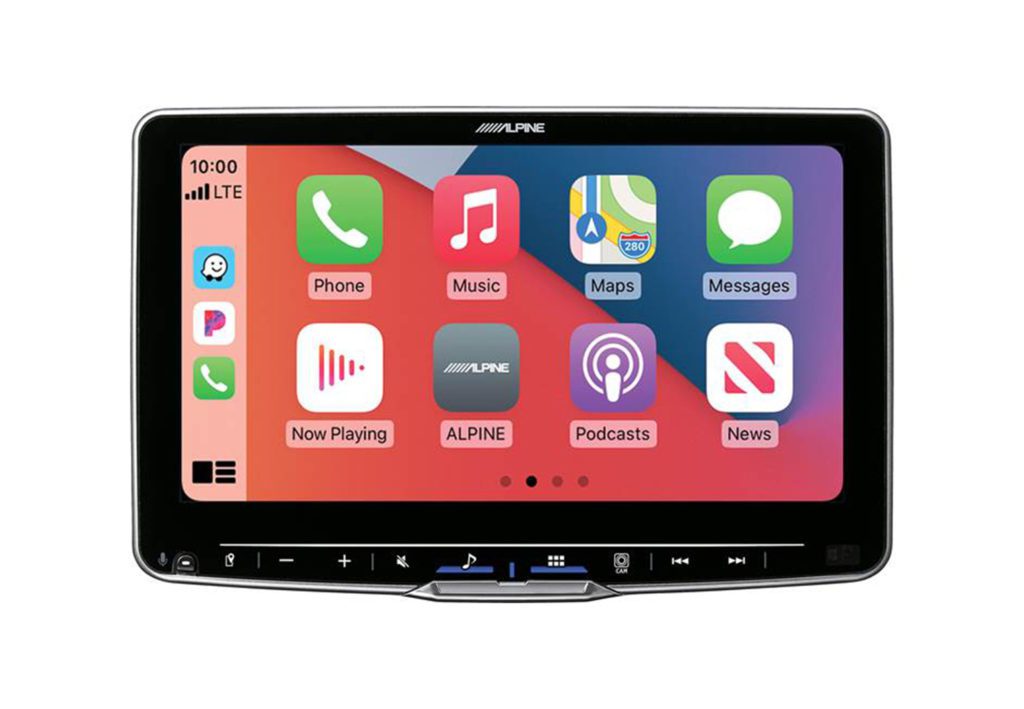
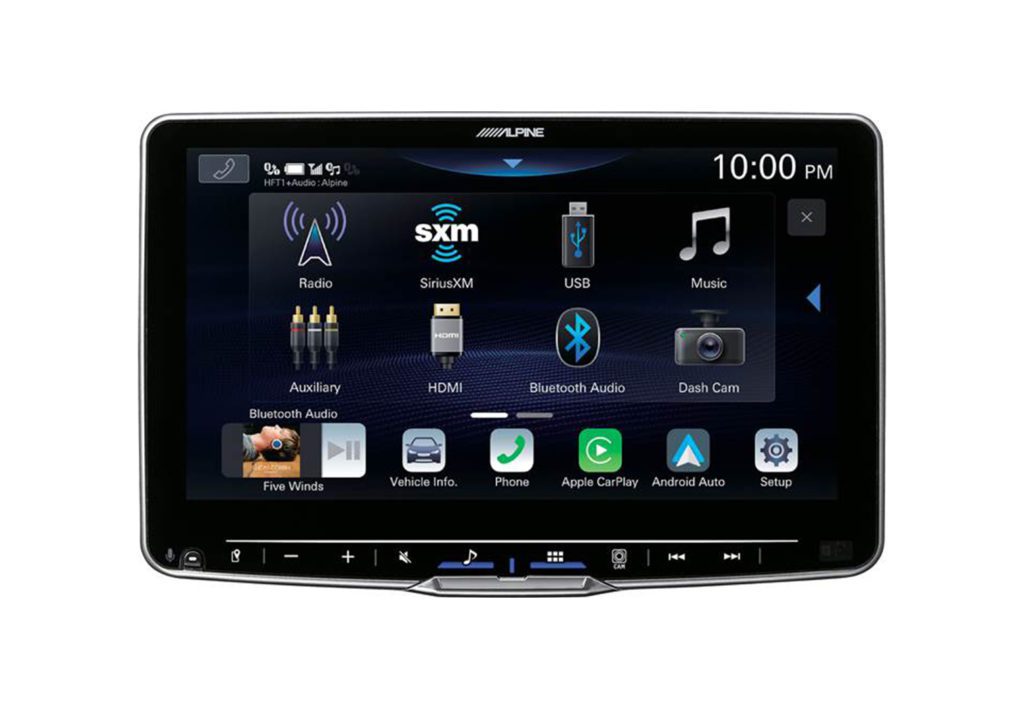
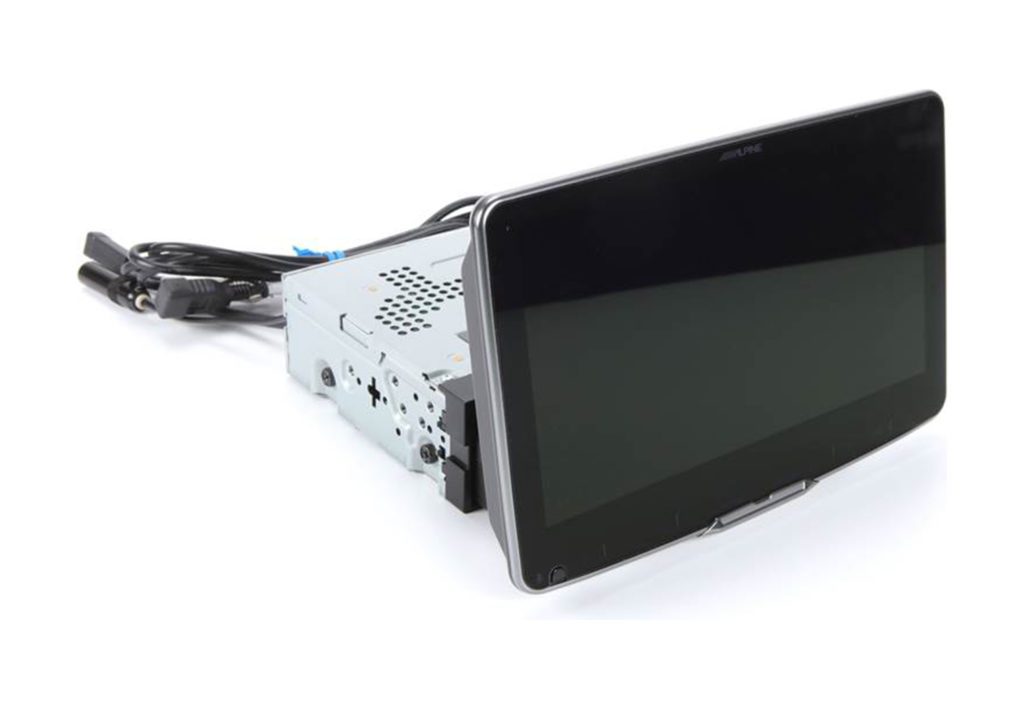
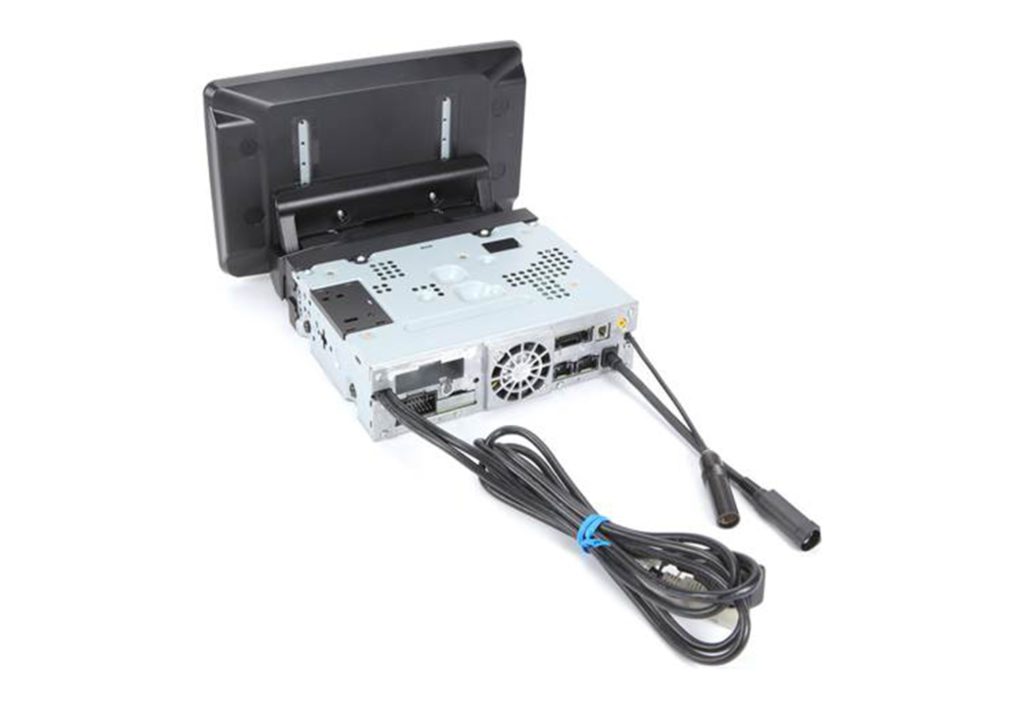
Alpine Halo9 iLX-F509
Modular floating 9″ · 1280×720 · wired/wireless CarPlay/AA · HD Radio + Tidal
CarAudioNow may earn a commission from retailer links. Brands do not influence the recommendations.
Why I picked it
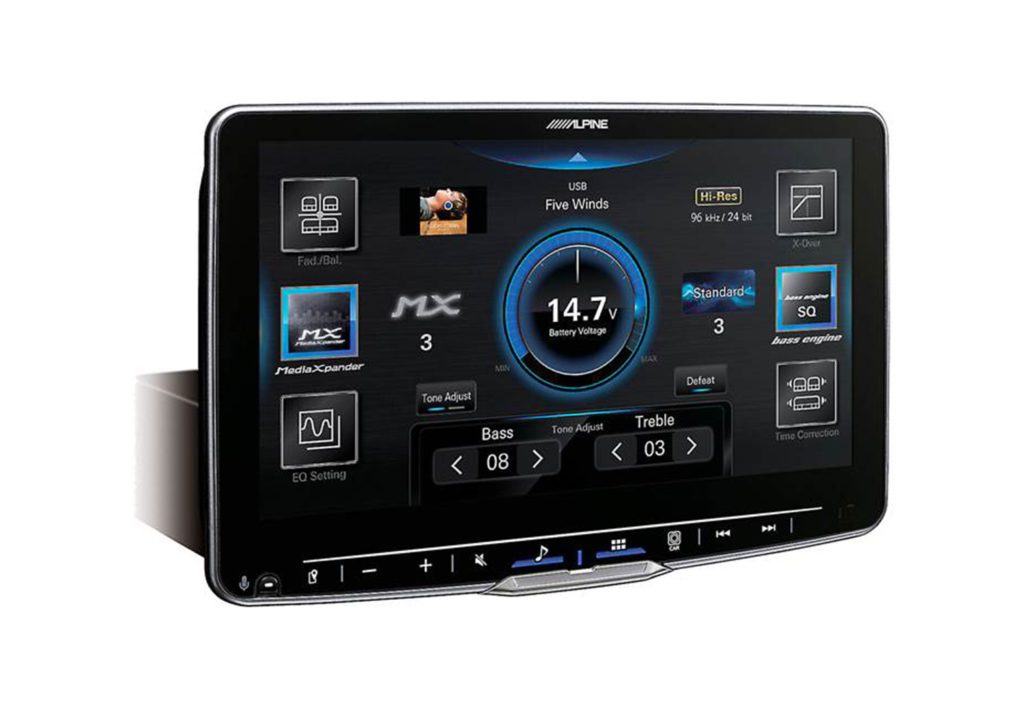
If your dash fights big screens, the Halo9 is the way around the problem. Alpine split it into two pieces: a 9-inch floating display and a slim 2-inch single-DIN control box that can live somewhere else entirely. The screen mounts above, below, or beside the box and tilts 45 degrees forward or 20 back. That's how a 9-inch panel ends up working in a dash that would reject a conventional double-DIN outright.
The 2023 iLX-F509 runs 1280 x 720, adds wired and wireless CarPlay and Android Auto, HD Radio, Tidal, and FLAC hi-res playback, and offers an optional wireless volume and subwoofer knob you can mount wherever your hand naturally falls. It's iDatalink Maestro ready, puts out 18 watts RMS per channel, and carries a 6-channel 4V preamp. Two real cautions: it only takes Alpine cameras without an adapter, and the screen angle is set by mounting screws you can't reach once the dash is back together. Get the angle right on the bench, because there's no adjusting it later.
| Make | Alpine |
| Model | Halo9 iLX-F509 (2023) |
| Head Unit Size | Single-DIN (modular floating screen) |
| Screen Size | 9″ floating |
| Screen Type | Capacitive |
| Screen Resolution | 1280 × 720 |
| Smartphone Integration | Wired & wireless Apple CarPlay / Android Auto |
| CD/DVD | No built-in CD/DVD transport |
| Audio | HD Radio, Tidal, FLAC hi-res |
| Power Output | 18W RMS × 4 (50W peak) |
| Camera Inputs | 1 (Alpine cameras without adapter) |
| iDatalink Maestro | Yes |
| Outputs | 6-ch preamp (4V front/rear/sub) |
Reasons to buy
- Modular design fits a 9-inch screen into dashes that reject a double-DIN.
- Screen tilts 45 degrees forward and 20 back for the sightline you want.
- 1280 x 720 panel with wired and wireless CarPlay and Android Auto.
- HD Radio, Tidal, and FLAC hi-res playback built in.
- Optional wireless volume and subwoofer knob mounts anywhere in the cabin.
Reasons not to buy
- Screen angle is fixed at install and can't be changed afterward.
- Only accepts Alpine cameras without an adapter, and only one input.
- No CD or DVD transport at all.
- 18 watts RMS per channel means amplifiers for anything serious.
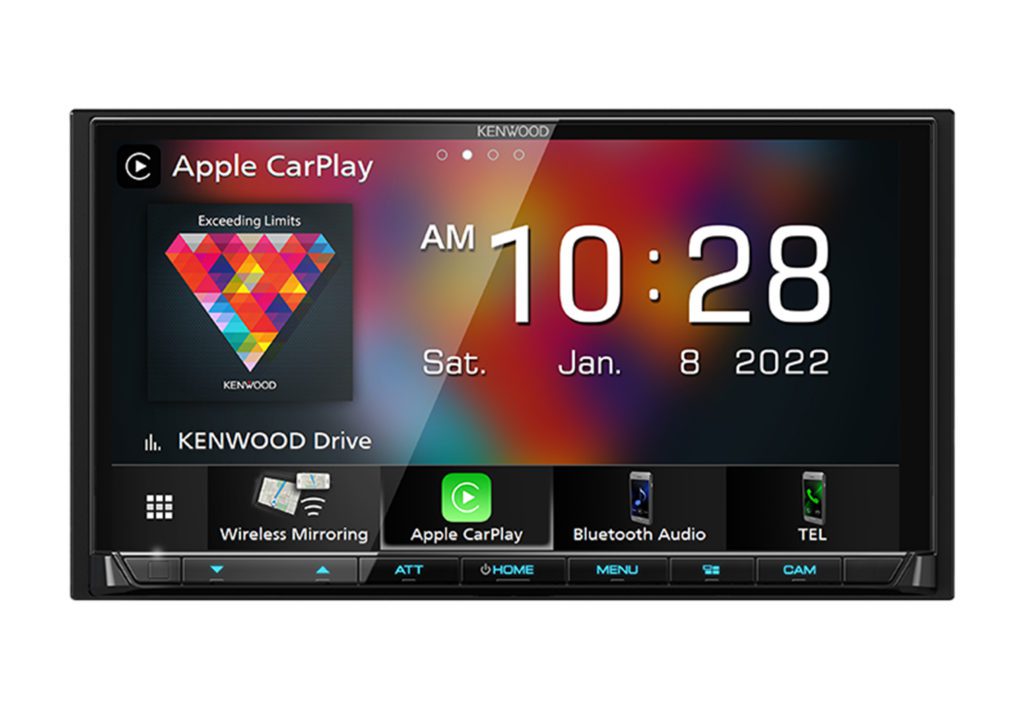
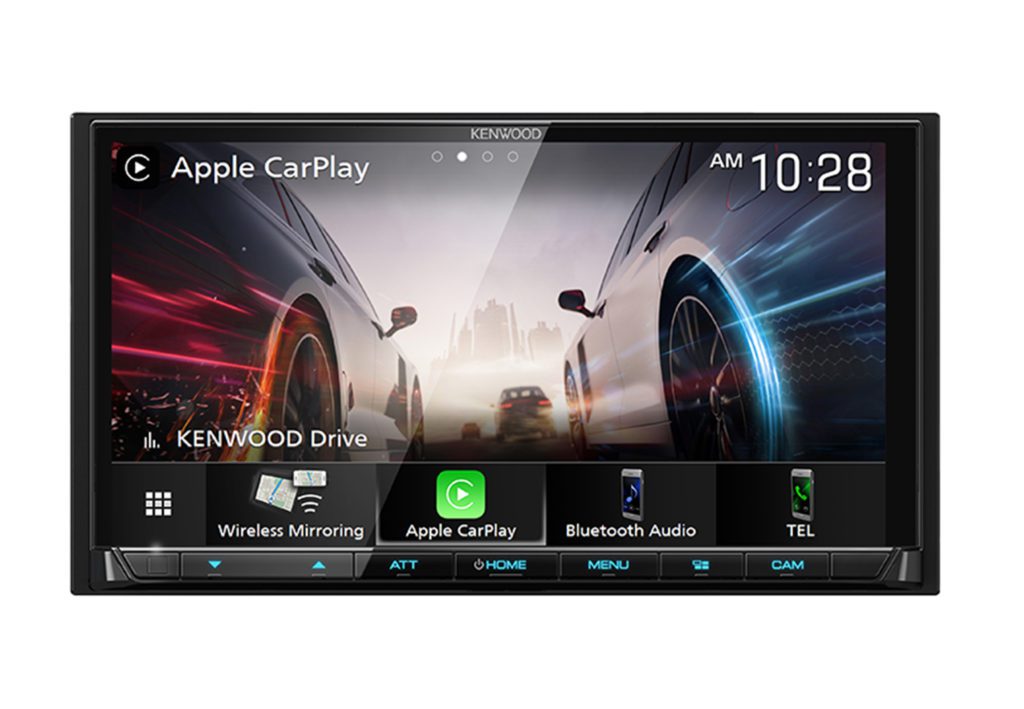
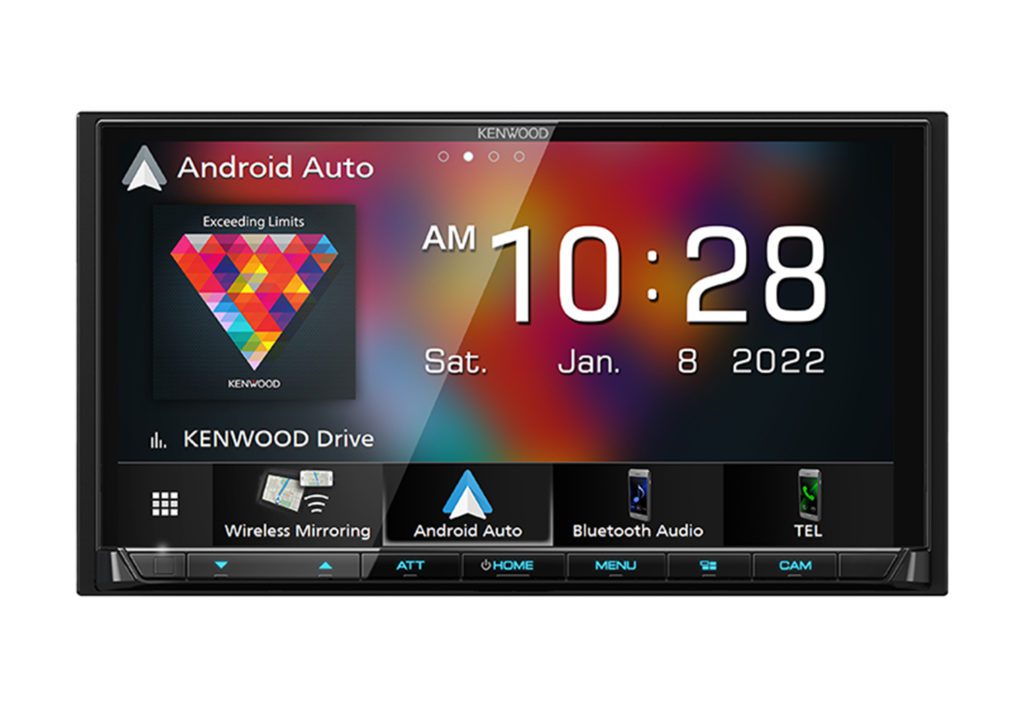
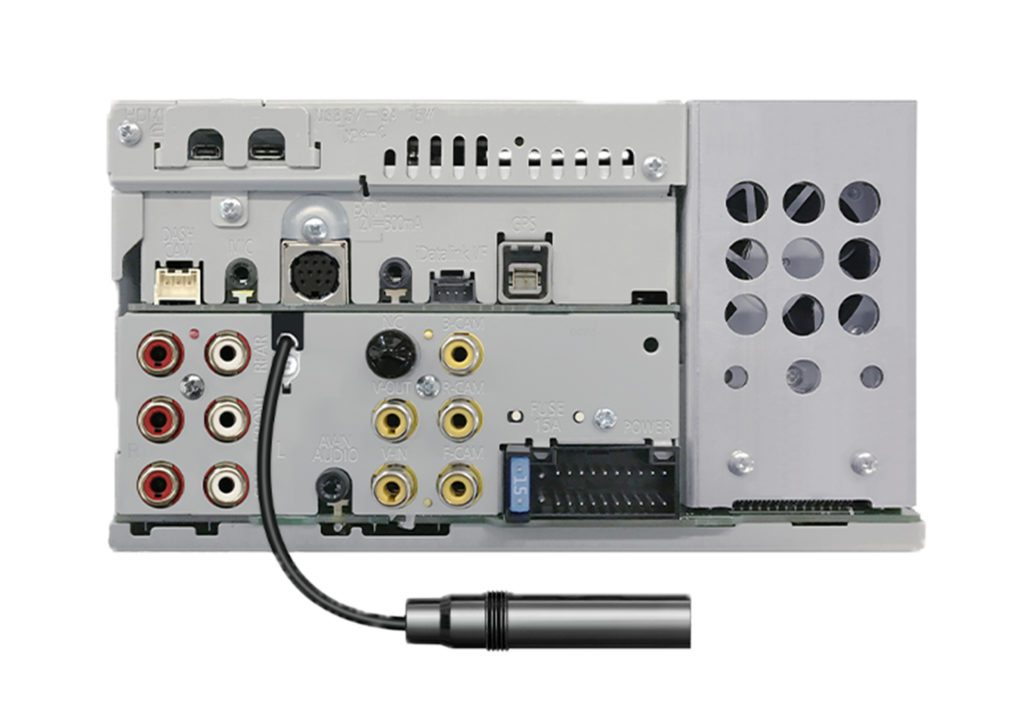
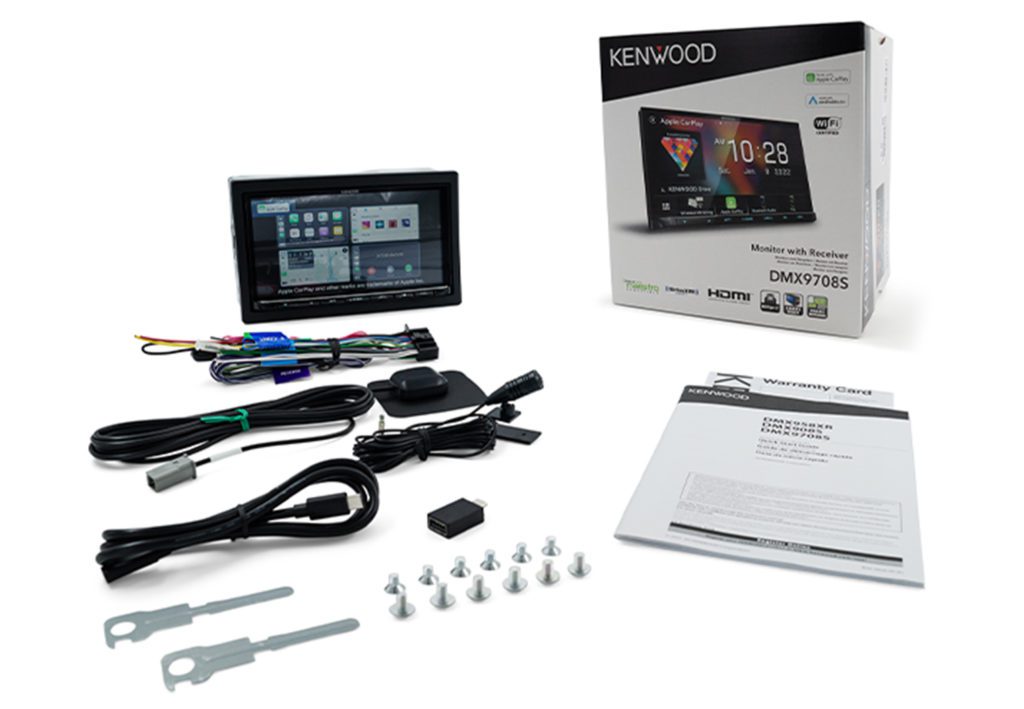
Kenwood DMX-9708S
Double-DIN · 6.95″ · wired/wireless CarPlay/AA · 13-band EQ · 4 cameras
CarAudioNow may earn a commission from retailer links. Brands do not influence the recommendations.
Why I picked it
The DMX-9708S is the value play in this group, and the audio section is why. You get a 13-band EQ with Drive EQ, time alignment, and 4V front, rear, and subwoofer preouts — the tuning tools normally reserved for decks costing more. Add wired and wireless CarPlay and Android Auto, a responsive 6.95-inch capacitive screen, four camera inputs, and an HDMI output. That covers most of what a factory-replacement job asks for.
Its shallow double-DIN chassis is quietly the best part. Depth kills more installs than opening size does, because plenty of dashes have the hole and not the room behind it. As an iDatalink Maestro-ready deck it'll even put K40 or Escort radar alerts on screen. The honest limits: 800 x 480 is low for the money, and the screen picks up glare in direct sun. The mounting angle is fixed too, so what the dash gives you is what you get.
| Make | Kenwood |
| Model | DMX-9708S |
| Head Unit Size | Double-DIN (shallow chassis) |
| Screen Size | 6.95″ |
| Screen Type | Capacitive |
| Screen Resolution | 800 × 480 |
| Smartphone Integration | Wired & wireless Apple CarPlay / Android Auto |
| CD/DVD | No (digital media) |
| Outputs | 4V preouts (front/rear/sub) + HDMI |
| Power Output | 22W RMS × 4 (50W peak) |
| Camera Inputs | 4 |
| iDatalink Maestro | Yes |
Reasons to buy
- 13-band EQ with Drive EQ and time alignment at a mid-tier price.
- 4V front, rear, and subwoofer preouts for a clean amplifier path.
- Shallow double-DIN chassis fits dashes with limited depth behind the opening.
- Four camera inputs plus an HDMI output.
- iDatalink Maestro ready, including on-screen radar-detector alerts.
Reasons not to buy
- 800 x 480 resolution is low for what the deck costs.
- The screen picks up noticeable glare in direct sun.
- Mounting angle is fixed, so a bad dash angle stays bad.
- Frame buttons duplicate on-screen controls and clutter the bezel.


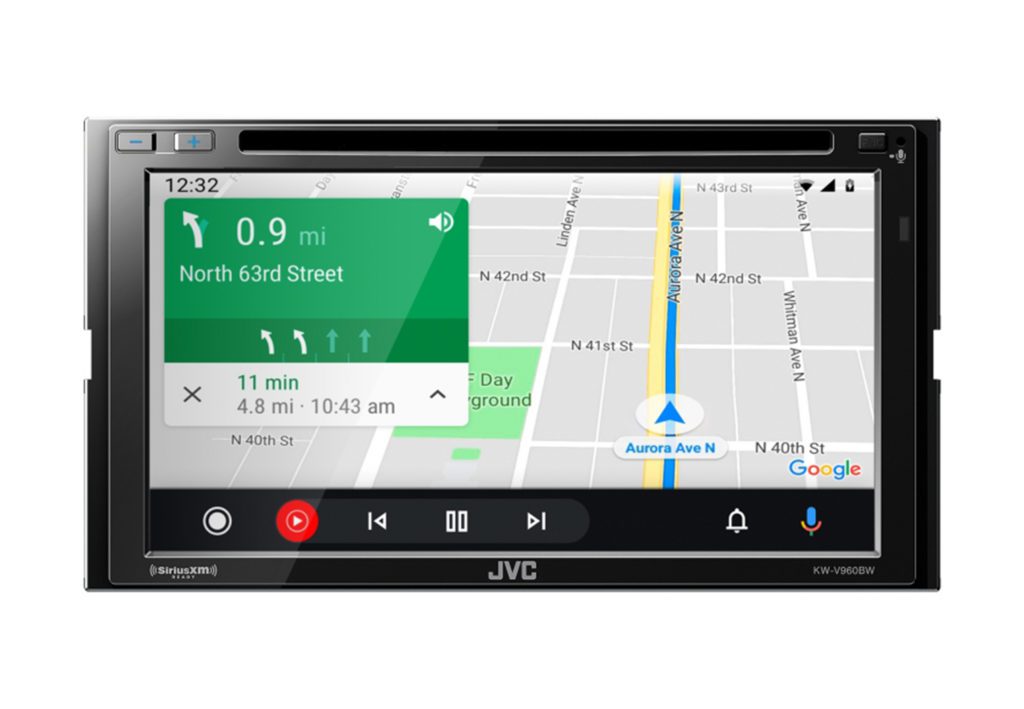
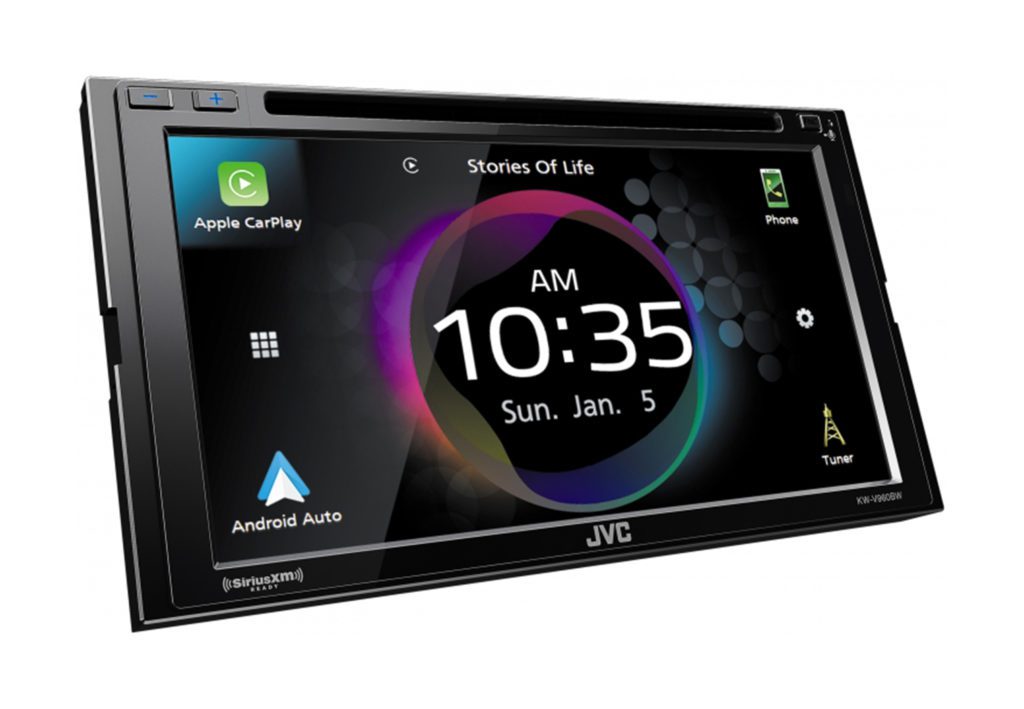
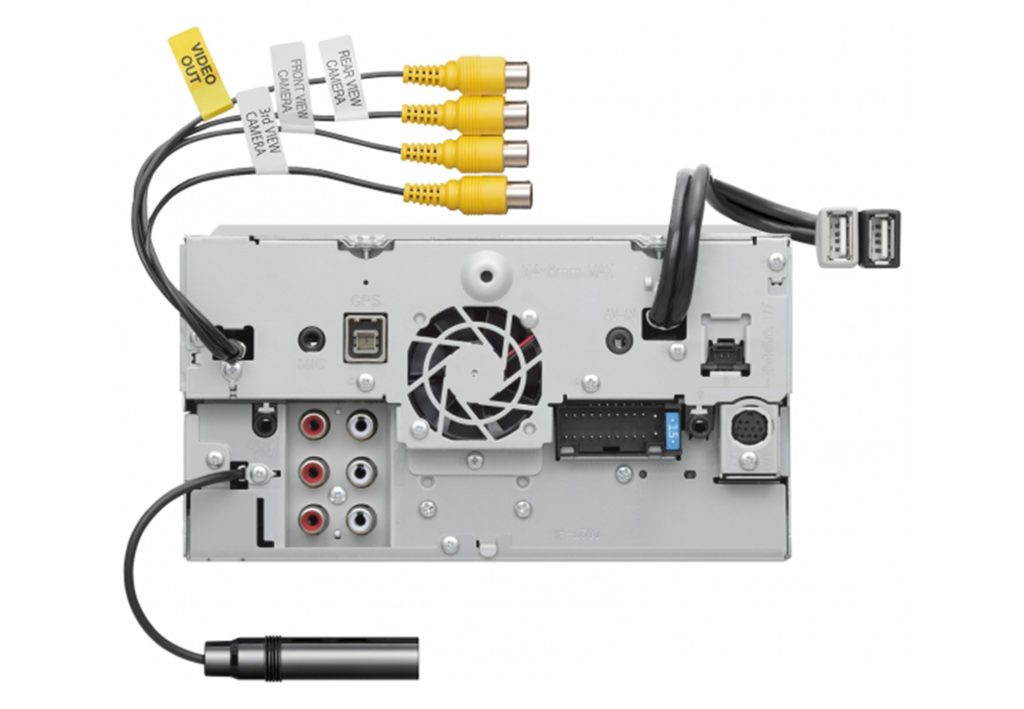
JVC KW-V960BW
Double-DIN · 6.8″ resistive · wireless CarPlay/AA · built-in DVD/CD
CarAudioNow may earn a commission from retailer links. Brands do not influence the recommendations.
Why I picked it
Want wireless CarPlay and a disc slot in the same dash? That's a short list, and the KW-V960BW is the top of it. It's a genuine multimedia deck — DVD and CD playback, four camera inputs, and multi-phone Bluetooth that's handy on a road trip when someone else wants a turn. The audio section runs a 13-band EQ, time alignment, and three pairs of 5V preouts. Power is 22 watts RMS per channel, which is decent for a deck driving factory speakers before you add amps.
The 6.8-inch screen is clear resistive rather than capacitive, so it isn't as slick under a finger as the newer glass panels. It responds well though, and it's the one screen here that works with gloves or a stylus. In a work truck in January that matters. Resolution is 800 x 480, there's no HDMI input, and it needs a double-DIN opening. If you don't need the disc slot, JVC's KW-M865BW is the near-twin without it.
| Make | JVC |
| Model | KW-V960BW |
| Head Unit Size | Double-DIN |
| Screen Size | 6.8″ |
| Screen Type | Clear Resistive |
| Screen Resolution | 800 × 480 |
| CD/DVD | Yes |
| Smartphone Integration | Wireless & wired Apple CarPlay / Android Auto |
| Inputs | Dual rear USB, mini A/V in, 4 camera inputs |
| Outputs | 6-ch preamp (5V front/rear/sub) + A/V out |
| Power Output | 22W RMS × 4 |
| iDatalink Maestro | Yes |
Reasons to buy
- Wireless CarPlay and Android Auto alongside a working DVD/CD transport.
- Four camera inputs, enough for a front, rear, and two side views.
- Three pairs of 5V preouts with 13-band EQ and time alignment.
- Multi-phone Bluetooth so a passenger can take a turn on the music.
- Resistive screen still works with gloves or a stylus in cold weather.
Reasons not to buy
- Resistive glass doesn't feel as quick as the capacitive panels around it.
- 800 x 480 resolution is behind the 1280 x 720 screens in this roundup.
- No HDMI input, so digital video sources are limited.
- Double-DIN only — it won't go in a single-DIN dash.
Make sure the receiver and install parts fit your vehicle
Confirm the vehicle, the factory audio package, the supported Maestro path, and every function you need to retain before you order a receiver or a kit. This is the one category where guessing gets expensive. You can also check your dashboard size.
Best iDatalink & Factory-Integration Car Stereos FAQs
What is the best iDatalink-compatible stereo?+
The Kenwood DAX1050XR is my overall integration-first pick for supported Maestro APX vehicles. It is not universal. For a normal double-DIN or floating-screen replacement, use one of the conventional RR/RR2-ready alternatives.
What is the difference between Maestro APX and Maestro RR or RR2?+
RR and RR2 are interfaces paired with compatible aftermarket receivers. APX is a direct-replacement ecosystem with vehicle-specific kits and deeper integration for supported applications. The required parts and retained functions differ by vehicle.
Does the DAX1050XR work in every vehicle?+
No. It requires a supported Maestro APX application and the correct vehicle-specific kit and hardware. If your vehicle is not on that compatibility path, it is the wrong radio regardless of its feature list.
Will iDatalink keep my factory amplifier and cameras?+
It can in supported vehicles, but the exact functions and adapter path vary by trim, amplifier, and camera format. Verify each feature rather than relying on the Maestro-ready label.
Can I see gauges and climate data on the new screen?+
Some supported combinations can show vehicle information, gauges, and climate data. Availability and layout depend on the receiver, Maestro firmware, vehicle, and trim.
Can I install and program Maestro myself?+
A careful DIY installer can, but the job includes vehicle-specific wiring and firmware configuration. Read my Maestro explainer and the exact kit instructions before committing.
More reviews & comparisons
Use these guides to verify fit, integration, installation, and the rest of the system.
About the author
