
Best Marine-Grade Boat Stereos
The best marine head units I've personally used or installed — quick reviews, hands-on notes and real buying tips so you choose the right system and avoid overpaying. Unlike automotive decks, true marine stereos are built for life on the water: IP ratings, gasketed buttons, corrosion-resistant terminals and sunlight-readable displays. Building a system? Pair one with my best marine speakers, amplifiers, subwoofers and tower speakers.

Why I built this guide
The fastest way to kill a stereo on a boat is to drop a car deck into it. I’ve seen it more than once — an automotive head unit that looked fine in spring, corroded and half-dead by the end of the season. Sun, salt, spray and pounding chop are brutal on electronics that were never sealed or UV-stabilized for life on the water.
So every pick here is a true marine-grade unit I’d actually mount on a boat — conformal-coated boards, gasketed buttons and faces you can read in direct sun. Figure out how you’ll use it — a simple wired source, Bluetooth at the helm, or a full multi-zone system — and the one I’d run for it is below.
Compare my 8 marine stereo picks side by side
| Best for ↕ | My pick ↕ | Form Factor ↕ | Zones ↕ | Rating ↕ | Buy |
|---|---|---|---|---|---|
| Best Overall Boat Stereo | 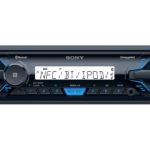 Sony DSXM55BT Sony DSXM55BT | Single-DIN | Buy Now $128.00 on Amazon | ||
| Best for Zone Control | 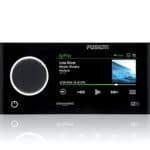 Fusion MS-RA770 Fusion MS-RA770 | Surface-mount glass | 4 + sub | Buy Now $799.99 on Amazon | |
| Best Single-DIN | 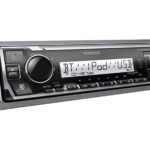 Kenwood KMR-M332BT Kenwood KMR-M332BT | Single-DIN (shallow) | Buy Now $139.00 on Amazon | ||
| Best Gauge-Mounted | 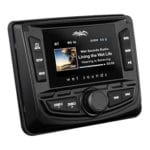 Wet Sounds WS-MC-2 Wet Sounds WS-MC-2 | 3″ gauge-mount | Buy Now $449.99 on Amazon | ||
| Runner-Up Gauge-Mount | 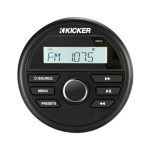 Kicker KMC2 Kicker KMC2 | Buy Now $197.99 on Amazon | |||
| Best Style & Tech | 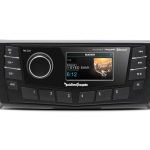 Rockford Fosgate PMX-5CAN Rockford Fosgate PMX-5CAN | True 2-zone / 2-source | Buy Now $489.99 on Amazon | ||
| Most Feature-Packed | 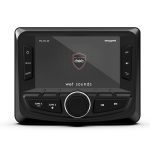 Wet Sounds WS-MC-20 Wet Sounds WS-MC-20 | 2-zone (independent volume + crossover) | Buy Now $539.99 on Amazon | ||
| Best Budget | 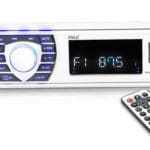 Pyle PLMR23BTW Pyle PLMR23BTW | Single-DIN | Buy Now $38.99 on Amazon |
CarAudioNow may earn a commission from retailer links. Brands do not influence the recommendations.
How I test & choose marine head units
I use the same kinds of marine head units featured here — compact gauge-mounts, full-featured multi-zone stereos and single-DIN media receivers from Fusion, Sony, Kenwood, Clarion, Wet Sounds, JBL and Infinity. Rather than lab-only numbers, I focus on what matters on the water:
Screen brightness/contrast in direct sun, glove-friendly controls, menu logic, and startup/resume behavior after key cycles (kids hitting play again fast).
Multi-zone volume/sub control, dual/triple-zone outputs, wired/transom remote compatibility, and NMEA 2000/network features on premium units.
Bluetooth stability, USB power & file support, AUX/line outputs, Weather Band/SiriusXM readiness, and camera/aux video where offered.
Depth/diameter for gauge-mounts, single-DIN spacing and gasket quality, harness/waterproof connector design, and mounting hardware.
IP ratings, sealed controls, UV-stable materials, corrosion-resistant terminals, and conformal-coated PCBs that survive spray and salt air.
I pair each head unit with common marine amps/speakers to catch noise issues, weak pre-outs or zone-balance problems before recommending it.
Choosing the right marine head unit
- Start with the head unit If you haven't upgraded audio before, the head unit is the right first step — you'll notice the difference immediately, then expand with better speakers, a sub and amps when you're ready.
- Single-DIN, gauge-mount or media center? Single-DIN fits standard dashes; 3″ gauge-mounts go where there's no DIN space for a clean OEM look; modular media centers (brain + display) are for full-boat, multi-zone builds.
- Do you need audio zones? Zones let you keep the music up for riders on the tower without blasting the cabin. If you run separate cockpit/tower/cabin areas, prioritize a multi-zone unit (Fusion RA770, Clarion CMM-30, Wet Sounds MC-1).
- Connectivity that matters Bluetooth is standard; Wi-Fi/AirPlay extend range on open water, and Weather Band/NOAA + a strong tuner matter offshore. Confirm covered USB/AUX and waterproof connectors.
- Plan the system Look at pre-outs (front/rear/sub) and DSP — they decide how cleanly you can add a marine amp, sub and more speakers later.
My top marine head units, by use-case
Sony DSXM55BT
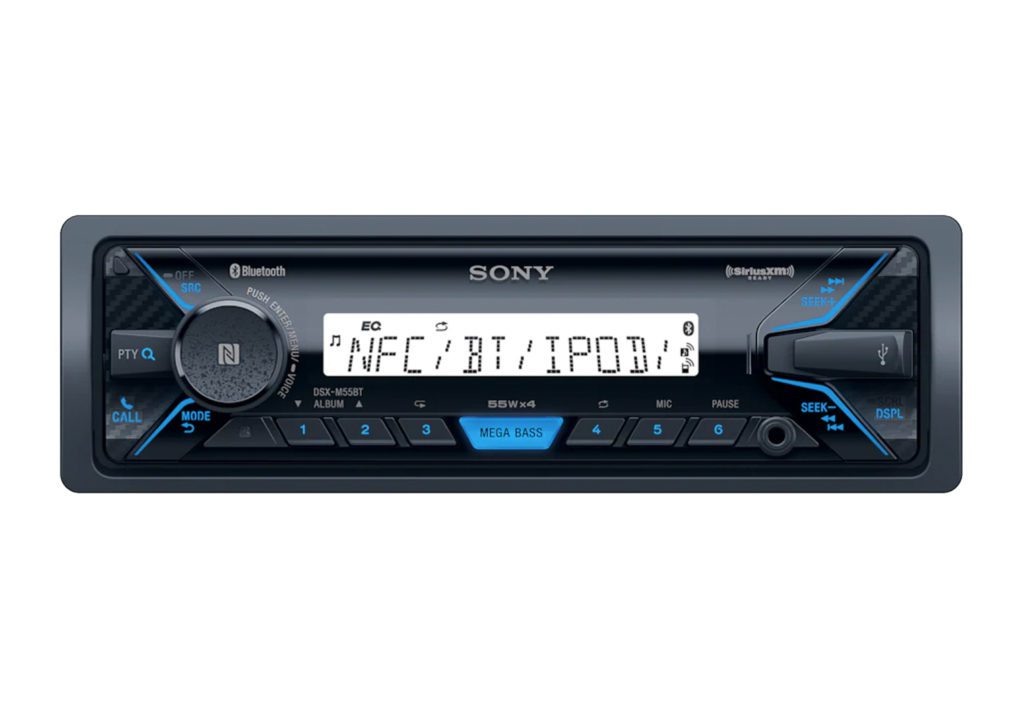
Reliable, budget-friendly Single-DIN built for the water
CarAudioNow may earn a commission from retailer links. Brands do not influence the recommendations.
Why I picked it
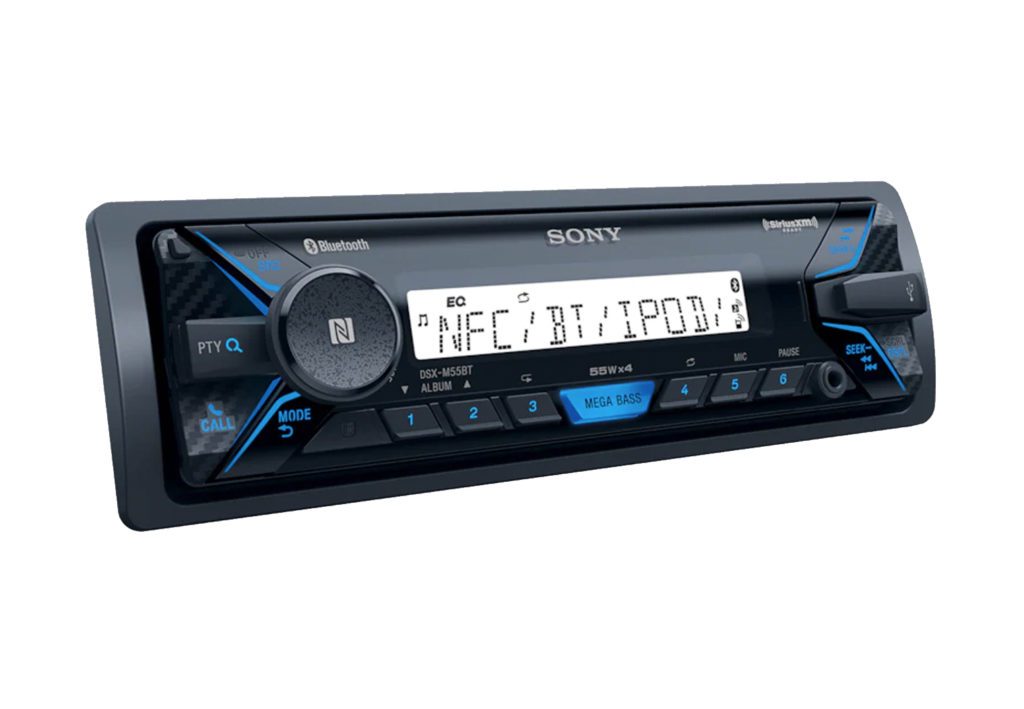
I've put this Sony in a few small runabouts where space and budget mattered. It's simple, reliable and easy to live with on the water. The marine protections do their job—buttons hold up, the face doesn't wash out in sun as badly as many entry-level units, and the coated board avoids the “first-season failure” I often see with non-marine decks.
Connectivity is straightforward: Bluetooth for everyday streaming and a front USB for charging/playing from your phone. Sony's Dynamic Reality amp and “Mega Bass” aren't marketing fluff here; paired with efficient marine speakers you'll get clean volume. And the front/rear + sub pre-outs make adding a marine amplifier and sub painless.
| Make | Sony |
| Model | DSXM55BT |
| Form Factor | Single-DIN |
| Power | ~17W RMS / 55W peak ×4 |
| Pre-outs | Front/Rear + Sub (2V) |
| Connectivity | Bluetooth, front USB |
| Build | Conformal-coated board |
Reasons to buy
- Dependable marine build for the price
- Clean, punchy sound with efficient speakers
- Easy to install and operate
Reasons not to buy
- Blue illumination may not match every helm
- Basic display compared to newer models
Fusion MS-RA770
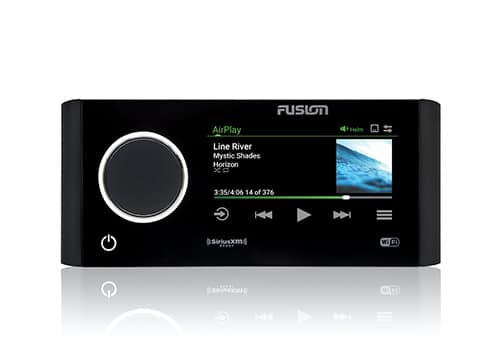
The multi-zone “system brain” with a sunlight-readable touchscreen
CarAudioNow may earn a commission from retailer links. Brands do not influence the recommendations.
Why I picked it
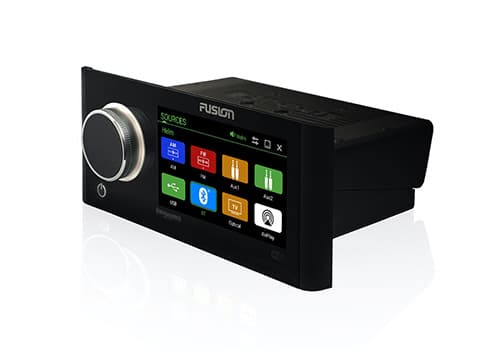
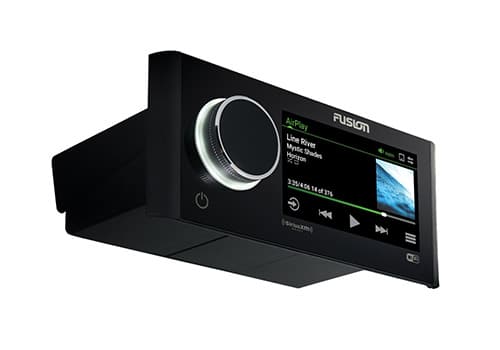
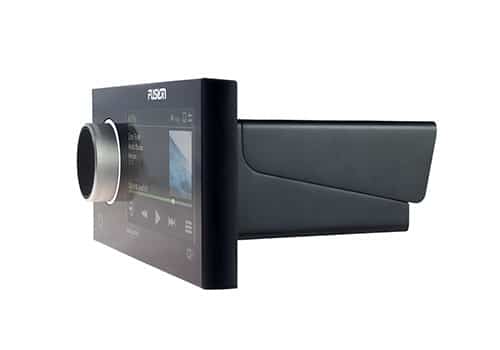
I first tested the RA770 when Fusion launched Apollo. The touchscreen is genuinely usable in sunlight and the UI is leagues better than menu-driven decks. The big win is zone control: I typically split cockpit speakers, tower speakers and sub into separate zones so I can keep the music up for riders without blasting the cabin. Fusion's DSP and app support also take the guesswork out of tuning when paired with Fusion amps/speakers.
Bonus: Wi-Fi and Apple AirPlay extend range over Bluetooth. In my testing on open water, AirPlay remained solid well past typical Bluetooth distances. If you want a “system brain” that's easy to live with, this is it. See my Fusion Apollo MS-RA770 first-look review for the deep dive.
| Make | Fusion |
| Model | MS-RA770 |
| Form Factor | Surface-mount glass |
| Screen | 4.3″ capacitive touch |
| Zones | 4 + sub |
| Connectivity | Wi-Fi + Bluetooth + AirPlay, dual AUX, optical |
| Pre-outs | Multi-zone |
Reasons to buy
- True multi-zone control & DSP
- AirPlay/Wi-Fi + Bluetooth
- One-panel glass face looks premium
- Excellent app ecosystem
Reasons not to buy
- More expensive than basic units
- Touch targets can feel small with gloves
- Boot time is longer than button-only decks
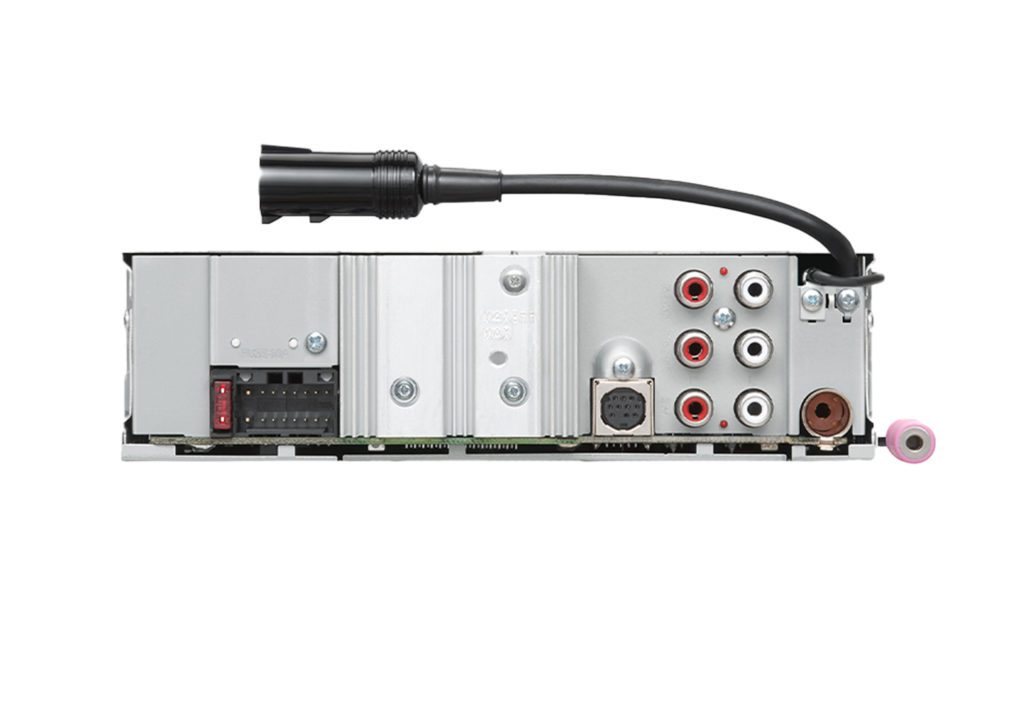
Kenwood KMR-M332BT
Shallow Single-DIN that fits the tightest helms
CarAudioNow may earn a commission from retailer links. Brands do not influence the recommendations.
Why I picked it
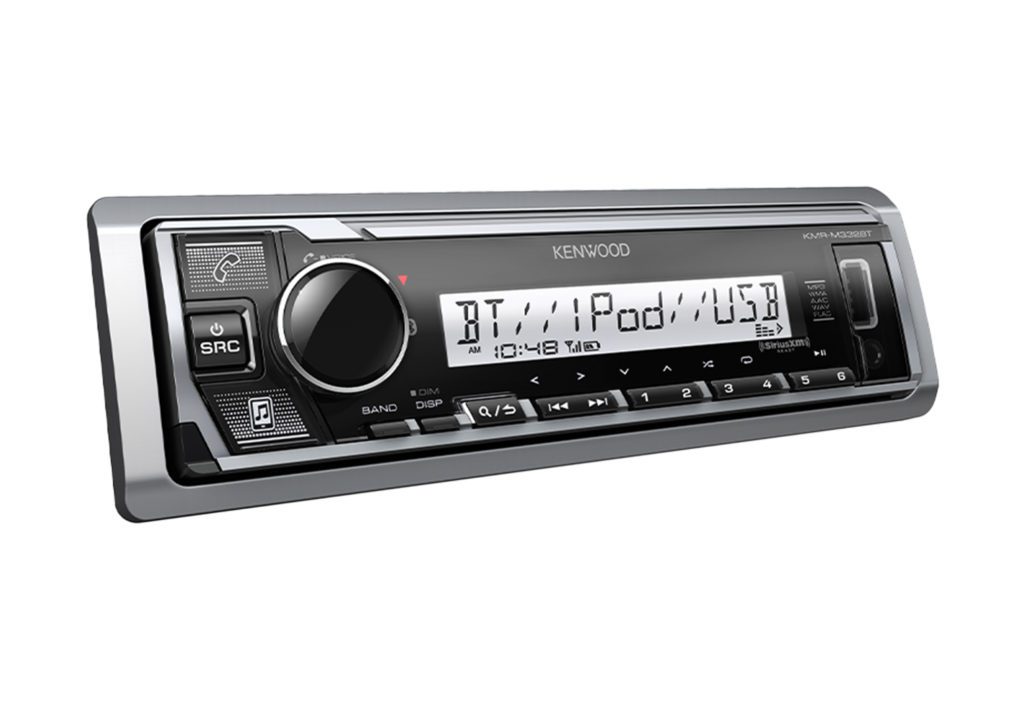
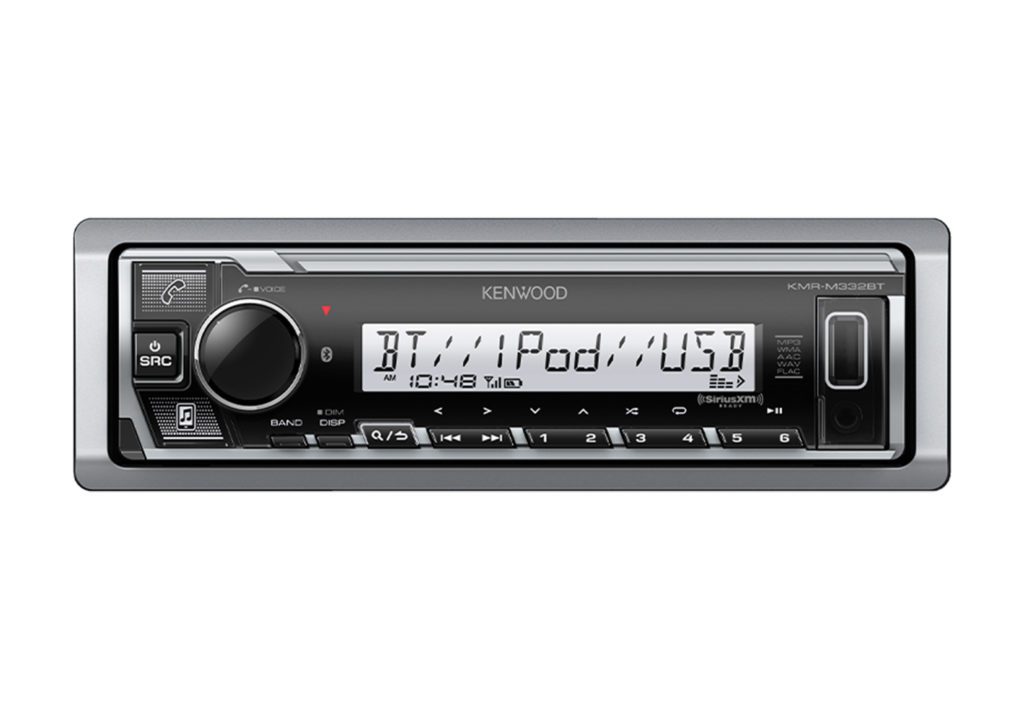
I like this unit for tight helms and ATVs/UTVs that need marine protection. The shallow depth makes installs painless, and Drive EQ helps fight wind and engine noise. If you're running efficient speakers without an amp, the on-board power is respectable. When you're ready to expand, the full set of pre-outs and sub control make system growth easy.
| Make | Kenwood |
| Model | KMR-M332BT |
| Form Factor | Single-DIN (shallow) |
| Power | ~22W RMS ×4 |
| EQ | 13-band + Drive EQ |
| Pre-outs | 6-channel 4V (Front/Rear/Sub) |
| Build | Conformal-coated |
Reasons to buy
- Compact chassis fits where others don't
- Solid Bluetooth & app control
- System-friendly pre-outs
Reasons not to buy
- Basic display/UX compared to premium units
- On-board power is fine, but amps unlock its potential
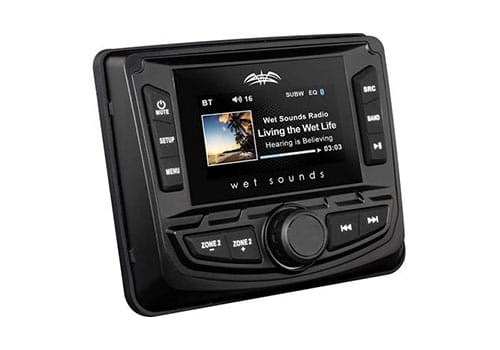
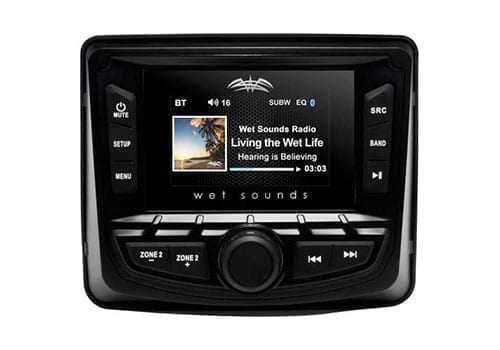
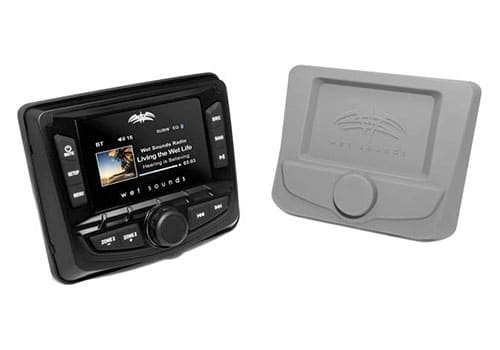
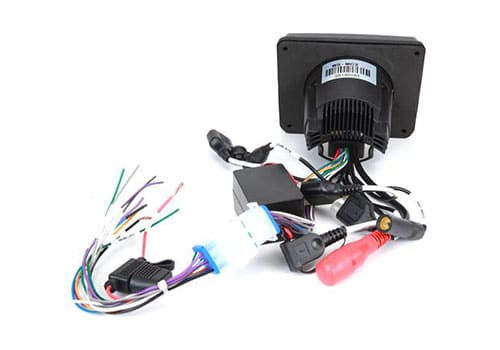
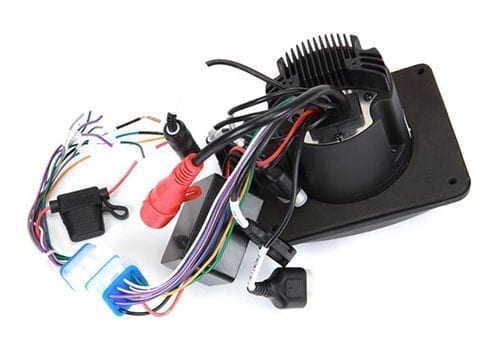
Wet Sounds WS-MC-2
Feature-rich 3″ gauge-mount for helms without DIN space
CarAudioNow may earn a commission from retailer links. Brands do not influence the recommendations.
Why I picked it
If you want a clean, OEM-style helm, gauge-mount is the way to go. I've used the MC-2 on fishing boats and wake boats that didn't have Single-DIN real estate. Despite the compact face, it's feature-rich, drives efficient speakers well, and the display is legible in sun. Add a small marine amp and it becomes a surprisingly capable system hub.
| Make | Wet Sounds |
| Model | WS-MC-2 |
| Form Factor | 3″ gauge-mount |
| Protection | IPX6 front |
| Connectivity | Bluetooth, rear USB/AUX, AM/FM + Weather Band |
| Pre-outs | Front/Rear + Sub |
| Remote | Transom-ready |
Reasons to buy
- Super clean, modern look
- Feature-packed for its size
- Installs where DIN units won't
Reasons not to buy
- Face depth can crowd nearby gauges
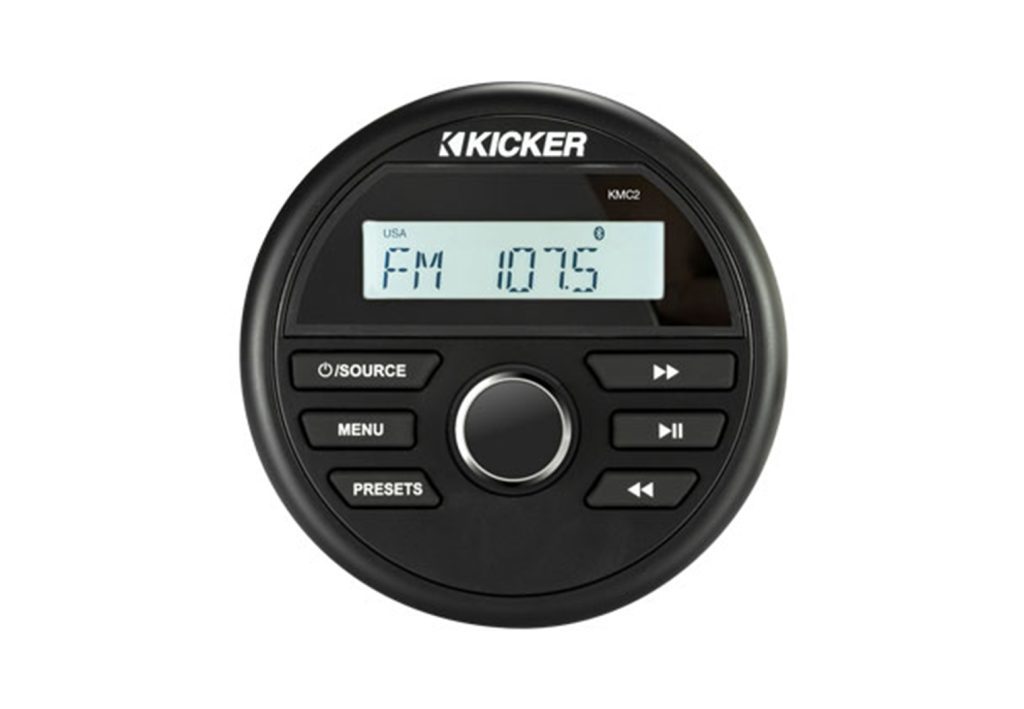
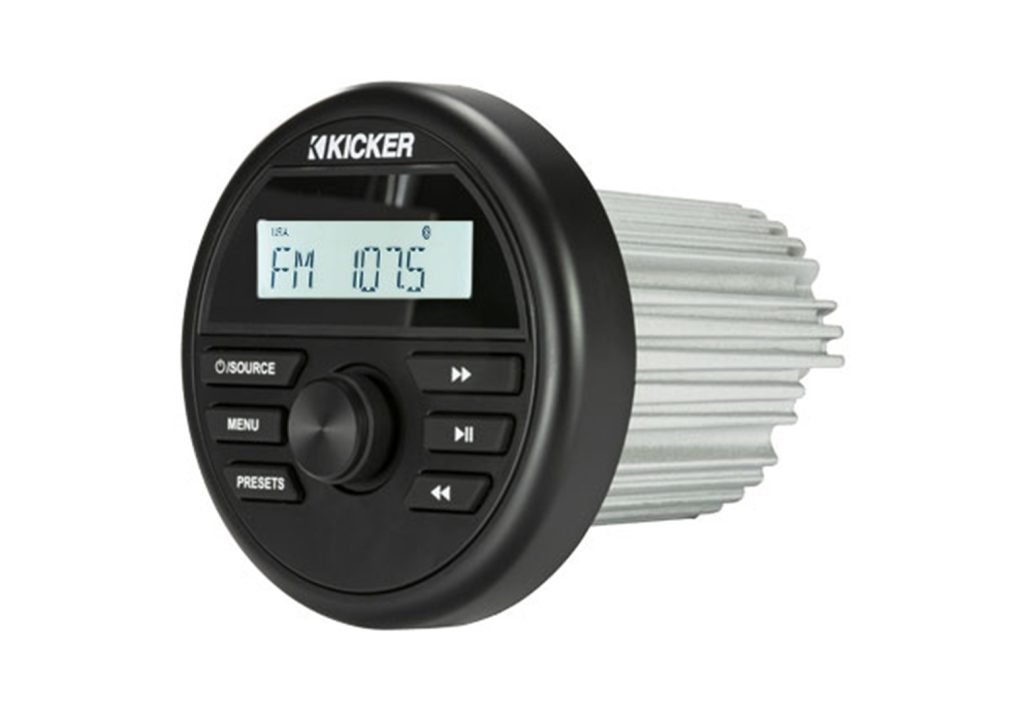
Kicker KMC2
Gauge-mount marine media center — IP67, Bluetooth
CarAudioNow may earn a commission from retailer links. Brands do not influence the recommendations.
Why I picked it
The KMC2 is the gauge-mount pick for anyone who wants a simple, sealed source unit that drops into a standard round gauge hole instead of cutting a big rectangle in the dash. What earns it the runner-up gauge slot over the Clarion it replaces is durability: it's sealed to IP67, so it shrugs off spray, rain and washdowns on an open helm where a lot of stereos slowly die. It keeps the controls straightforward — a clean readout and real buttons you can hit with wet hands — and plays music over Bluetooth, USB, AM/FM or an aux source, with 25 watts x4 built in to drive a basic set of speakers right out of the box. When you're ready for more, the preamp outputs let you add an amplifier without replacing the head unit. Be clear on what it is: this is a compact, no-frills media receiver, not a multi-zone command center, so there's no big color screen or independent zone control. For a center console, jon boat, pontoon or any utility rig where you want reliable sound and a tidy gauge install, that simplicity is the point — and it fits powersports dashes for the same reason. Pair it with a set of marine speakers and, if you like, a compact amp, and it's a clean, weatherproof upgrade that won't overcomplicate the helm.| Type | Gauge-mount marine media receiver |
| Power (RMS) | 25 watts × 4 |
| Water rating | IP67 |
| Connectivity | Bluetooth, USB, AM/FM, RCA |
| Frequency response | 20 Hz – 20 kHz |
| Signal-to-noise | 87 dB |
| Pre-outs | 2.5V line-out |
Reasons to buy
- Sealed to IP67 — handles spray and washdowns
- Drops into a standard round gauge hole
- Simple, glove-friendly controls; built-in 25W x4
- Preouts to add an amp later
Reasons not to buy
- No zones or big color display
- Modest built-in power — add an amp for a bigger system
Rockford Fosgate PMX-5CAN
2.7" color, true 2-zone — NMEA 2000 / CAN-bus ready
CarAudioNow may earn a commission from retailer links. Brands do not influence the recommendations.
Why I picked it
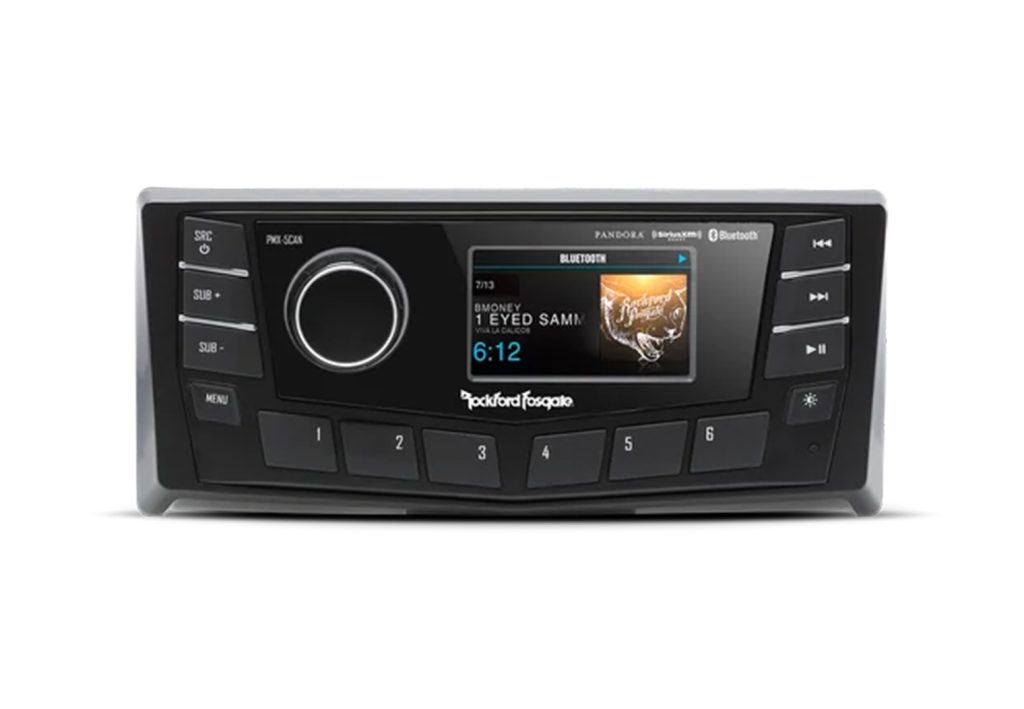
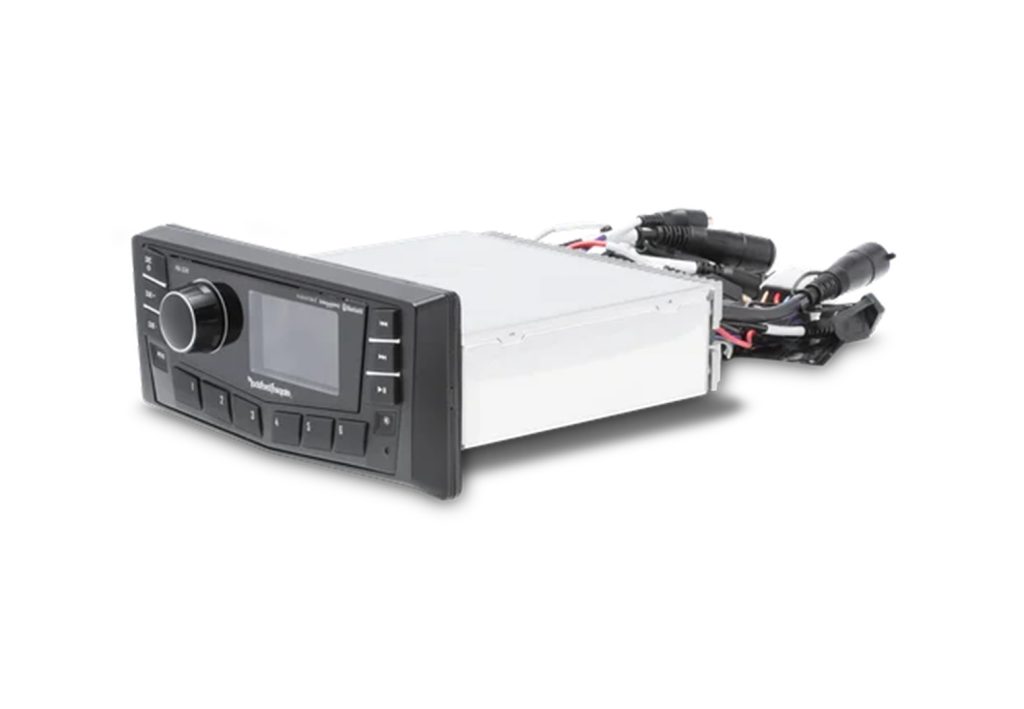
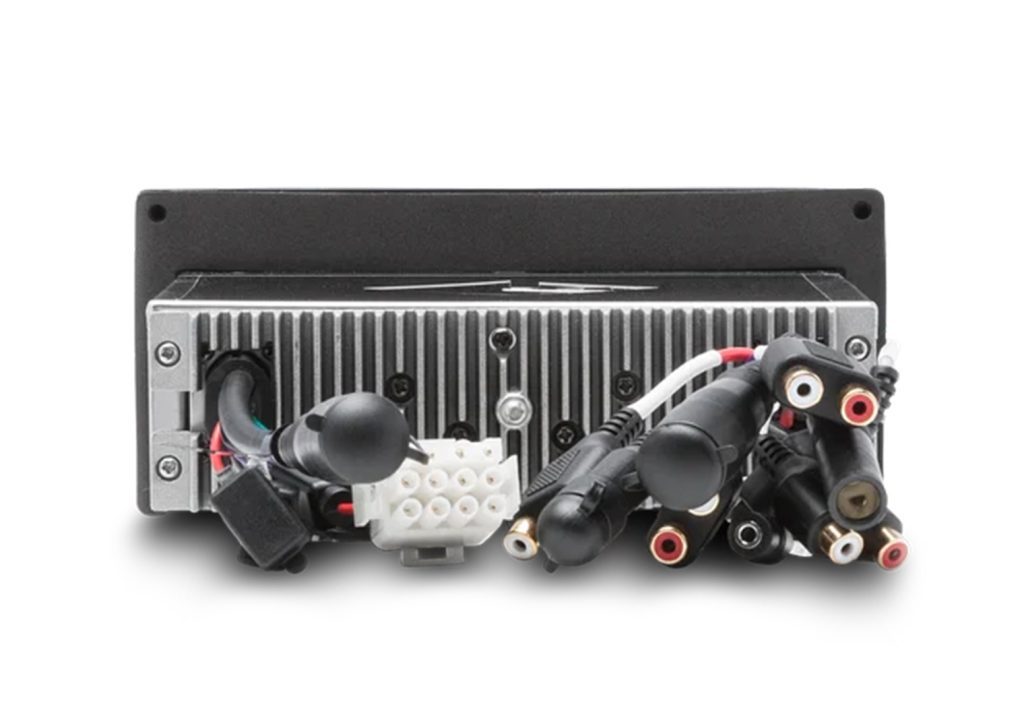
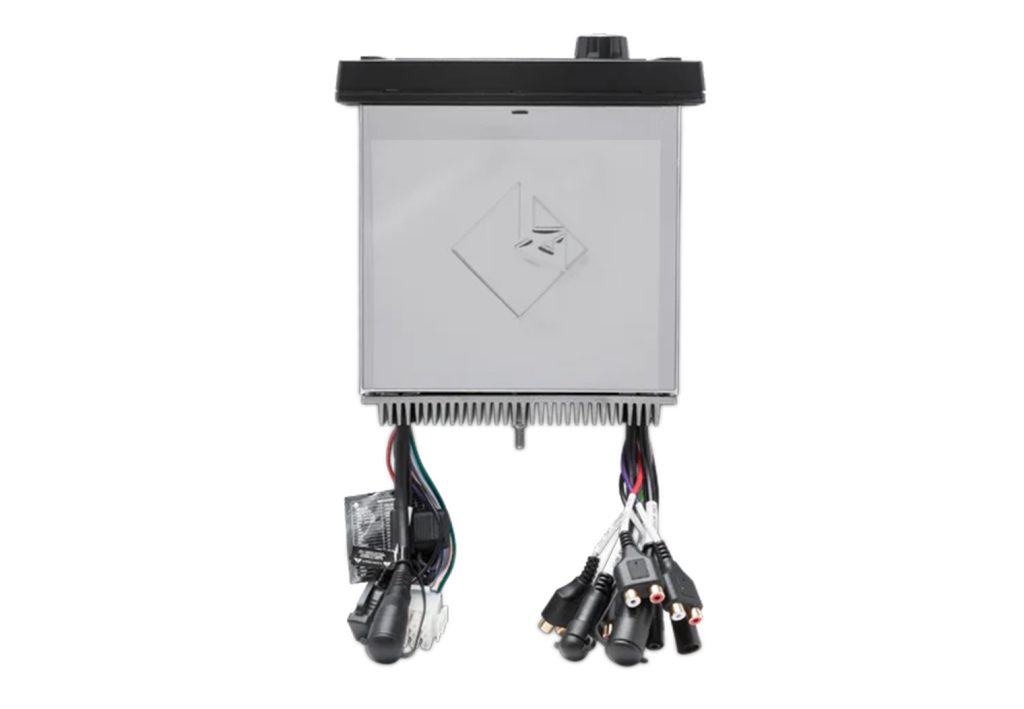
The PMX-5CAN earns the style-and-tech slot on one feature the others here don't have: it speaks NMEA 2000, the network your chartplotter and gauges already run on. Add Rockford's PMX-CAN interface and the stereo ties straight into a compatible multi-function display from Raymarine, Garmin, Simrad and others, so you can see and control your music from the helm screen instead of reaching for a second unit. On its own it's still a sharp piece: a 2.7-inch full-color display that's optically bonded so moisture can't fog it, true two-zone control for running different volumes fore and aft, and an IPX6 rating for open-helm life. You get three sets of 4-volt preamp outputs plus a zone-2 pair, so it's an easy hub for a real amplified system. It puts out 25 watts x4 on its own for a starter setup, but the point of this unit is integration and expansion, not built-in power. Two honest notes: the NMEA 2000 link needs that optional PMX-CAN interface (it's not in the box), and this is a two-zone unit, so a sprawling four-zone party boat is better served by a dedicated multi-zone head. But for a modern helm where you want a clean color display and your audio living on the boat's network, this is the one — a straightforward dash swap with the preouts to grow into.| Type | Marine digital media receiver (1.75-DIN) |
| Display | 2.7" full-color TFT (wet-bonded) |
| Zones | True 2-zone / 2-source |
| Power (RMS) | 25 watts × 4 (50W × 4 @ 2Ω peak) |
| NMEA 2000 | CAN-bus ready (via PMX-CAN, MFD control) |
| Pre-outs | Front / Rear / Sub / Zone 2 RCA |
| Water rating | IPX6 |
| Connectivity | Bluetooth, AM/FM/WB |
Reasons to buy
- NMEA 2000 / CAN-bus — integrates with your chartplotter (via PMX-CAN)
- 2.7-inch wet-bonded full-color display; IPX6
- True 2-zone control + three 4V preout sets
- Clean hub for an amplified system
Reasons not to buy
- NMEA 2000 needs the optional PMX-CAN interface (sold separately)
- 2-zone — a big 4-zone boat wants a dedicated multi-zone head
Wet Sounds WS-MC-20
Premium compact 2-zone — SiriusXM-Ready + NMEA 2000
CarAudioNow may earn a commission from retailer links. Brands do not influence the recommendations.
Why I picked it
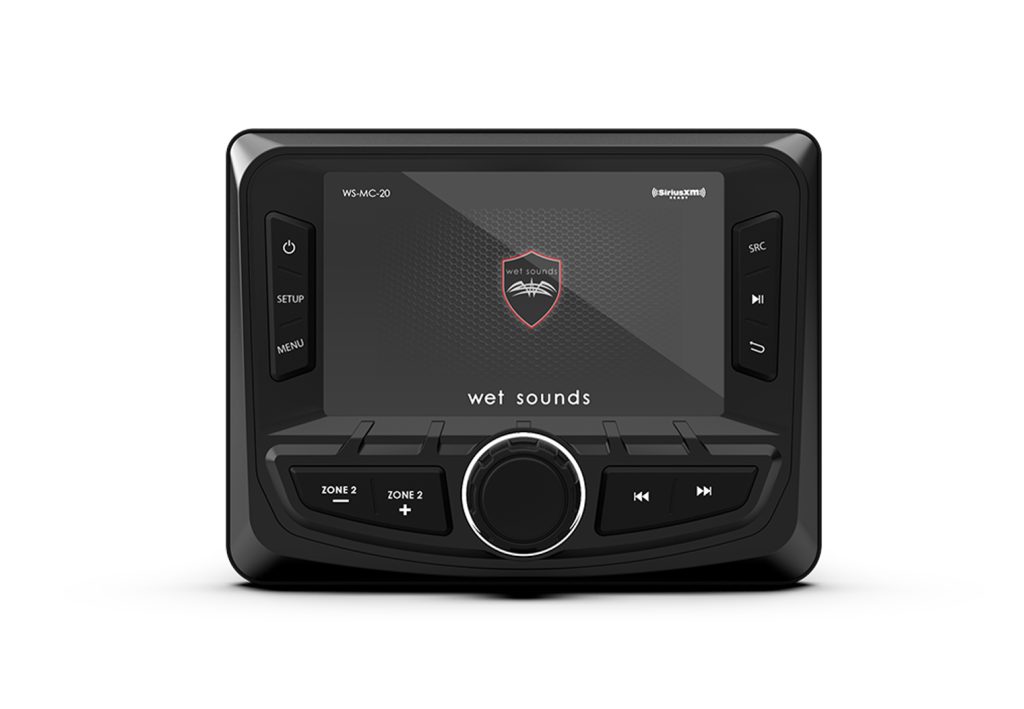
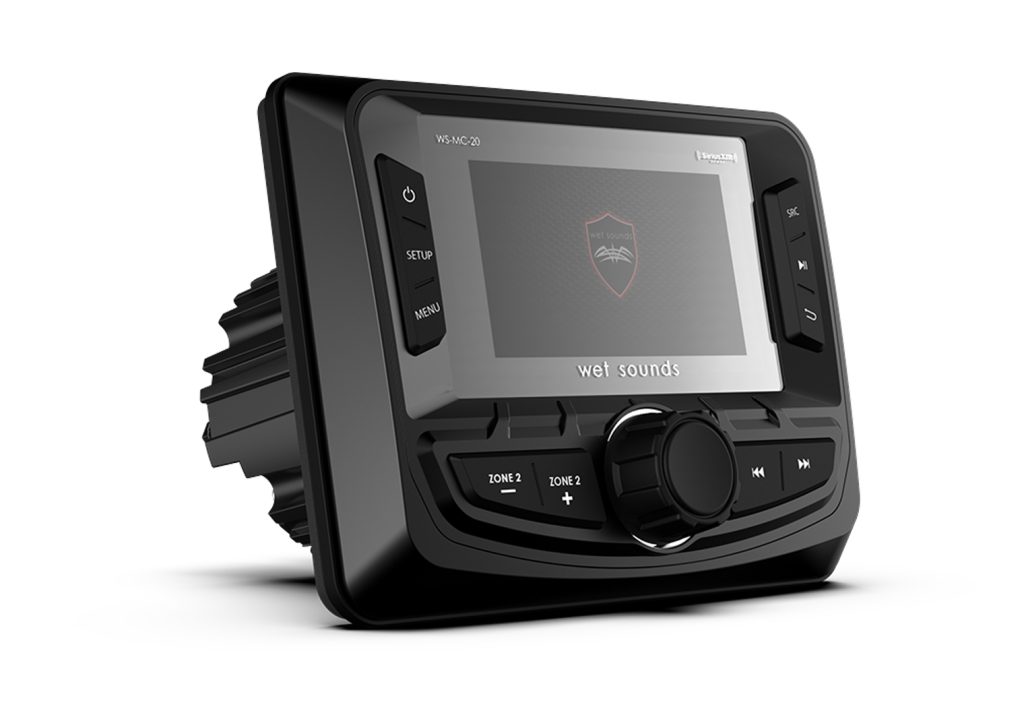
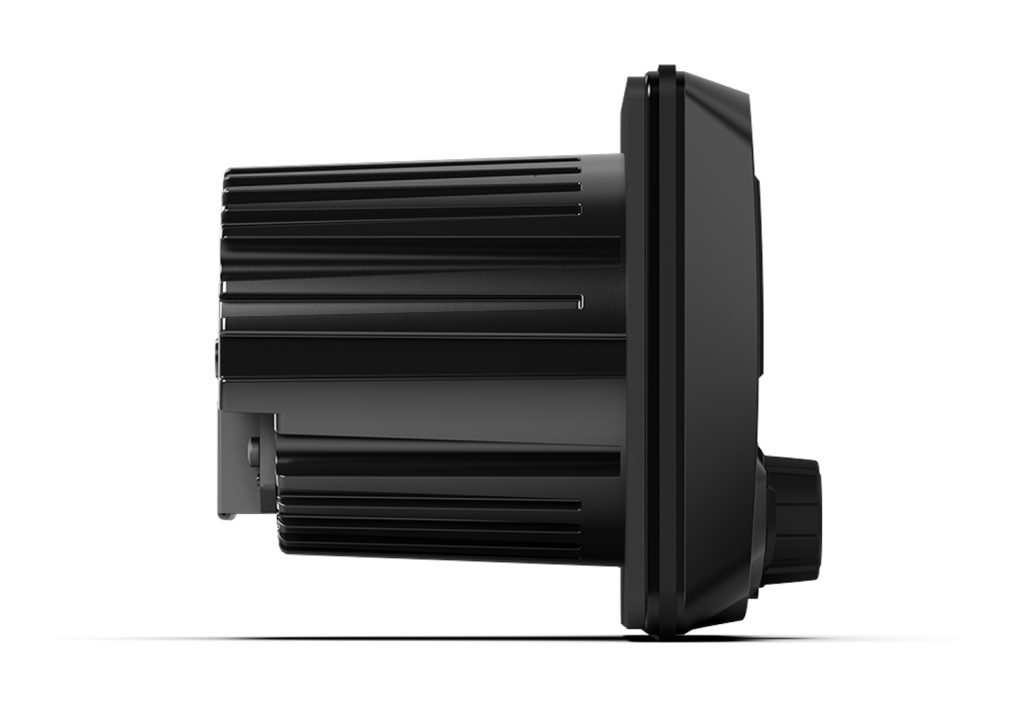
If you want the longest feature list in the smallest box, the WS-MC-20 is the one. Where the Wet Sounds media center it replaces was built around four-zone, full-boat expansion, this unit takes a different angle: it packs nearly everything into a compact chassis that fits helms with no room to spare. The spec sheet is the story — it's SiriusXM-Ready for nationwide satellite radio, it speaks NMEA 2000 to tie into your boat's network, it has a reverse-camera input with a trigger for docking, and a 7-band graphic EQ to actually dial in your speakers. The 3-inch full-color display is IPX6-sealed, and you get true two-zone control with independent volume so the bow and cockpit can run differently. Built-in power is 25 watts x4 (50 x4 at 2 ohms), and customizable front/rear/sub or zone-2 preouts make it an easy anchor for an amplified rig. The honest caveat: this is a two-zone unit, not the four-zone platform the old MC-1 was, so if you're wiring a big multi-zone party boat, Wet Sounds' larger media centers (or the Fusion zone pick above) fit that job better. But for a premium single- or two-zone helm where you want satellite radio, network integration, a backup camera and real tuning in a body that actually fits, nothing else here is this loaded. It's a premium-priced unit, and it earns it on features.| Type | Compact 2-zone marine media receiver |
| Display | 3" full-color TFT (IPX6) |
| Zones | 2-zone (independent volume + crossover) |
| Power (RMS) | 25 watts × 4 (50W × 4 @ 2Ω) |
| NMEA 2000 | Yes (optional interface accessory) |
| Connectivity | Bluetooth, AM/FM/WB (RDS), USB, AUX, SiriusXM-Ready |
| Extras | Reverse-camera input, 7-band digital EQ |
| Pre-outs | Front / Rear / Sub or Zone 2 |
Reasons to buy
- Loaded: SiriusXM-Ready, NMEA 2000, reverse-camera input, 7-band EQ
- 3-inch IPX6 color display; true 2-zone control
- Customizable preouts — easy hub for an amplified system
Reasons not to buy
- 2-zone — not a 4-zone full-boat platform like the MC-1 it replaces
- Premium price; NMEA 2000 may need an interface accessory
Pyle PLMR23BTW
Cheapest way to get Bluetooth playing on the boat today
CarAudioNow may earn a commission from retailer links. Brands do not influence the recommendations.
Why I picked it
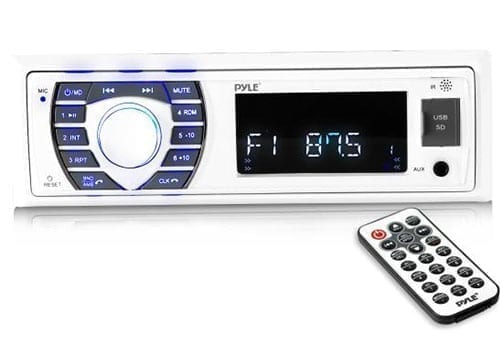
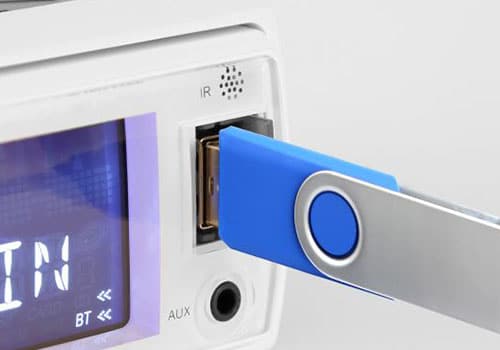
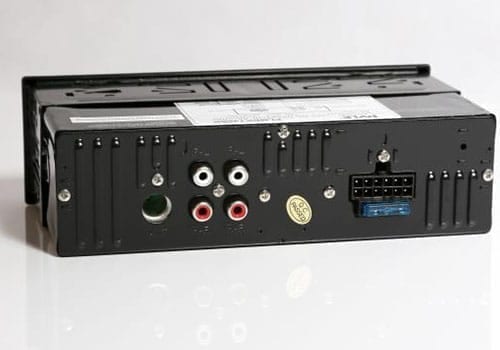
For the price, this Pyle is hard to beat. It's a starter deck that gets you Bluetooth and front-panel media without a big spend. I wouldn't expect long-term durability like the premium brands, but if you need music on a budget this will get your boat or dock playing today, and you can upgrade other components later.
| Make | Pyle |
| Model | PLMR23BTW |
| Form Factor | Single-DIN |
| Connectivity | Bluetooth, front USB/SD/AUX |
| Pre-outs | Basic |
| Build | Marine-grade |
Reasons to buy
- Very affordable entry point
- Surprisingly usable power for the money
- Front I/O makes life easy
Reasons not to buy
- No formal IP rating like higher-end units
- Long-term durability can be hit-or-miss
Explore the rest of my marine audio guides
From marine amps and subwoofers to speakers and tower speakers, my boat-audio hub links every tested guide — so you can power, tune and expand your system the right way.
More marine audio reviews & guides
Go deeper on the gear and installs behind these picks.
Marine stereo questions, answered
Do I need a true marine head unit, or will a car stereo work on my boat?+
Use a true marine head unit. Car decks aren't sealed against spray, salt air and UV, and they tend to die after a season on the water — washed-out faces, corroded terminals, failed boards. Marine units add IP-rated sealing, gasketed buttons, corrosion-resistant terminals, UV-stable materials and conformal-coated PCBs, plus sunlight-readable displays. It's the difference between one summer and many.
Single-DIN, gauge-mount, or media center — which should I get?+
Single-DIN drops into a standard dash opening and gives you the most features per dollar. A 3″ gauge-mount fits helms with no DIN space for a clean OEM look. A modular media center (separate brain + display, like the Wet Sounds MC-1) is for full-boat builds with multiple amps and independent zones. Match the form factor to your dash space and how complex your system will get.
What are audio zones and do I need them?+
Zones let you set different sources/volumes for different parts of the boat — for example, keep the tower up for the rider while the cabin stays mellow. If you only have one pair of speakers, you don't need zones; if you run cockpit + tower + cabin (or a sub), a multi-zone head unit (Fusion RA770, Clarion CMM-30, Wet Sounds MC-1) is worth it.
Will a new head unit actually improve my sound?+
Yes — a marine head unit unlocks better power, cleaner pre-outs, smarter zone control and easier ways to play what you want. The biggest jump comes from pairing it with a quality set of marine speakers and, when you're ready, an amp and sub. You'll hear a bigger improvement than the specs alone suggest.
Why trust CarAudioNow?
