
Best 6X9 Car Speakers (Tested) – 2026 Buyer's Guide
A 6×9 packs more cone area than a 6.5″ in roughly the same footprint — so better mid-bass punch and more output on factory power. My 7 favorite 6×9s, ranked by use-case. A focused deep-dive within my Best Car Speakers guide.

Why I built this guide
The 6×9 is the bass workhorse of the speaker world — that big elliptical cone moves more air than a 6.5″ in roughly the same space, which is why it’s the rear-deck favorite for adding punch without adding an amp. On limited factory power, cone area is your friend.
Here are my favorite 6×9s, ranked by what you want out of them below.
Compare my 7 6×9 picks
| Best for ↕ | My pick ↕ | Power (RMS) ↕ | Sensitivity ↕ | Rating ↕ | Buy |
|---|---|---|---|---|---|
| Best Overall 6×9 |
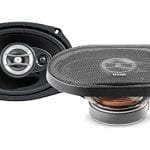 Focal RCX-690 Focal RCX-690
|
80 watts | 92 dB | Buy Now $179.99 on Amazon | |
| Best Three-Way |
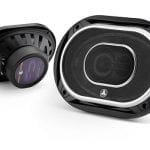 JL Audio C2-690TX JL Audio C2-690TX
|
70 watts | 93 dB | Buy Now $299.99 on Crutchfield | |
| Best for Bass |
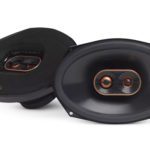 Infinity REF-9633ix Infinity REF-9633ix
|
100 watts | 94 dB | Buy Now $134.99 on Amazon | |
| Best for Clarity |
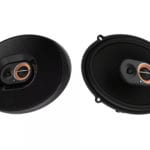 Infinity Kappa 693M Infinity Kappa 693M
|
120 watts | 94 dB | Buy Now $239.95 on Crutchfield | |
| Best for Volume |
 Alpine R2-S69 Alpine R2-S69
|
100 watts | 88 dB | Buy Now $399.95 on Crutchfield | |
| Best Budget/Value |
 Hertz DCX 690.3 Hertz DCX 690.3
|
90 watts | 93 dB | Buy Now $199.99 on Amazon | |
| Runner-Up, Best Low-Cost |
 MTX Thunder693 MTX Thunder693
|
100 watts | 92 dB | Buy Now $189.95 on Amazon |
CarAudioNow may earn a commission from retailer links. Brands do not influence the recommendations.
How we test & choose 6×9 speakers
We install and listen to the same size speakers featured on this page — both coaxials and component sets — in real vehicles. Rather than publish lab graphs, we focus on what matters day-to-day: fitment, sound quality at normal and loud volumes, and whether the speakers perform well on factory power or with a modest amplifier.
Check mounting depth and cutout diameter, tweeter/grille protrusion under factory grilles, and whether adapter rings or simple spacers are required for a clean, rattle-free fit.
Listen on a stock head unit and with a sensible amp upgrade to confirm which picks work great with no amp — and which truly benefit from added power.
Use consistent reference tracks across genres to judge midrange clarity (vocals, guitars), tweeter smoothness (no harshness), and bass fullness appropriate for the size.
Note cone and surround materials, crossover quality, terminal design, and the included hardware that simplifies installation and improves reliability.
What 6×9 Car Speakers Are — and Who This Guide Is For
- What a 6×9 is An oval, full-range speaker that packs more cone area than a 6.5″ in roughly the same footprint — so better mid-bass “punch” and better output on factory power.
- Where they fit Rear decks of sedans and coupes, rear doors of many trucks/SUVs (especially domestic makes), and some front doors with adapters. Unsure? Start with my Interactive Car Speaker Size Chart to confirm fitment and depth before you buy.
- Who this list is for Anyone replacing factory speakers who wants a noticeable jump in clarity, output and mid-bass — whether you’re staying on deck power, adding a compact amp, or building a full system with a sub.
- On factory head-unit power Expect solid volume and a big step up in clarity. Prioritize higher sensitivity (>90 dB), 3–4Ω nominal, and moderate RMS (50–100W).
- Factory deck + a small 4-channel amp Cleaner, louder, better mid-bass. Look for 75–120W RMS; 3Ω designs do well on factory wiring; and quality tweeter materials.
- Full system + sub Hi-fi sound with headroom at volume. Want 100–150W+ RMS, low distortion and good off-axis response — and add a little door deadening.
My top 6×9 picks
I earn a commission when you buy through links on this page — including the Crutchfield links on the product photos. It never affects which products I pick.
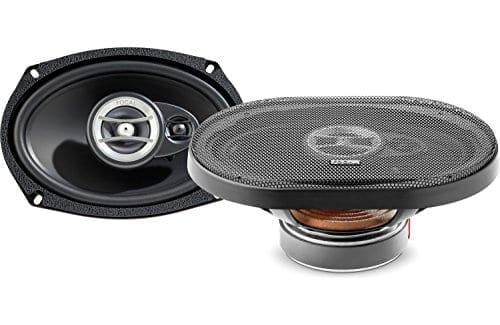
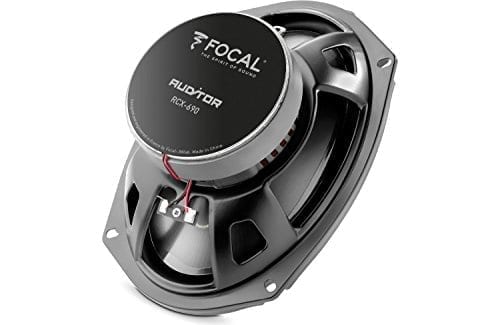
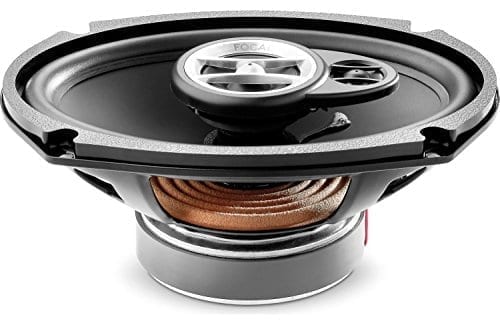
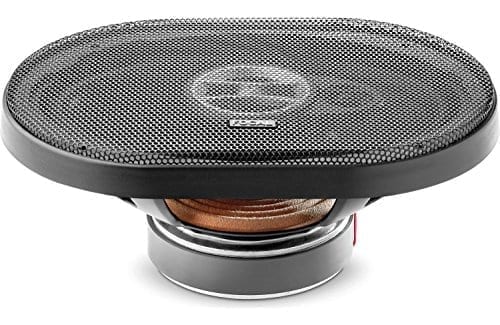
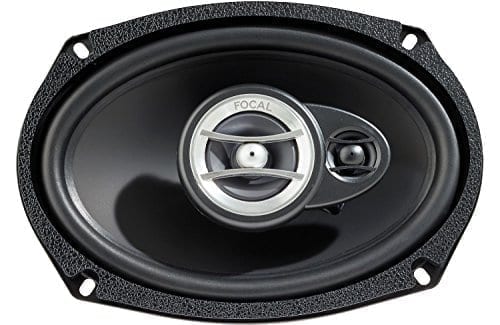
Focal RCX-690
6×9 coaxial · airy highs, tight mid-bass
CarAudioNow may earn a commission from retailer links. Brands do not influence the recommendations.
Why I picked it
If you want a “drop-in and immediately better” upgrade, this is the one I keep coming back to. The RCX-690’s airy highs and tight, realistic mid-bass make factory systems sound more expensive without getting harsh at volume. I’ve used these as rear-deck fills and in front doors (with adapters). On deck power they’re lively; add a small 4-channel and they scale nicely. If you’re chasing the last octave of bass, pair them with a compact sub from my Best Car Subwoofers list. Superb top-end detail without the “splashy” edge, smooth natural mids, and surprisingly good mid-bass for a coax — and they’re forgiving to tune. New to installs? Skim my speaker install guide and consider basic door deadening to tighten mid-bass.| Make | Focal |
| Model | RCX-690 |
| Size/Type | 6×9 Coaxial |
| Power (RMS) | 80 watts |
| Power (Peak) | 160 watts |
| Frequency Response | 50 – 20,000 Hz |
| Sensitivity | 92 dB |
Reasons to buy
- Superb sound quality, particularly at high frequencies
- Smooth sound and nice deep mid-bass for a coax
- Great performance for the price; easy to power
Reasons not to buy
- Require slightly more mounting depth than some factory baskets
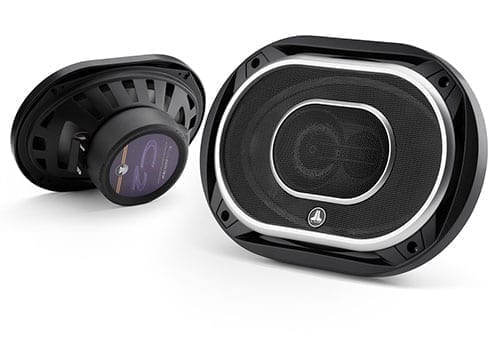
JL Audio C2-690TX
6×9 3-way coaxial · silk dome + super-tweeter
CarAudioNow may earn a commission from retailer links. Brands do not influence the recommendations.
Why I picked it
This three-way remains a favorite when I want “hi-fi” sparkle from a coax. JL’s silk dome tweeter + super-tweeter combo gives cymbals and vocals depth without harshness, while the woofer delivers controlled mid-bass. On a stock deck you’ll notice cleaner highs; add a modest amp and they open up further. If you’re pairing with an amp, review my quick amp-matching guide to get gains and crossover points right. If your doors are shallow, measure depth and consider a spacer ring.| Make | JL Audio |
| Model | C2-690TX |
| Size/Type | 6×9 3-Way Coaxial |
| Power (RMS) | 70 watts |
| Power (Peak) | 225 watts |
| Frequency Response | 53 – 22,000 Hz |
| Sensitivity | 93 dB |
Reasons to buy
- Superb midrange/high-frequency detail with natural tone
- Good bass response, especially with a modest amplifier
Reasons not to buy
- Raised tweeter array and depth can complicate tight door installs
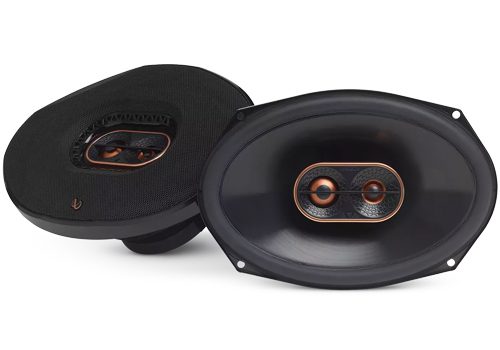
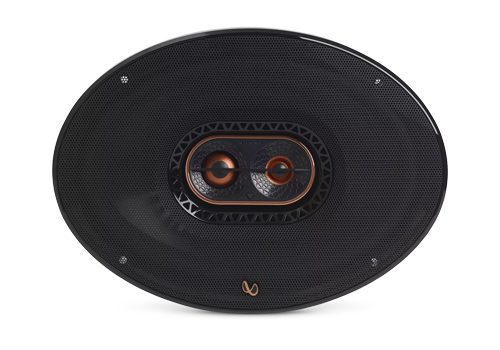
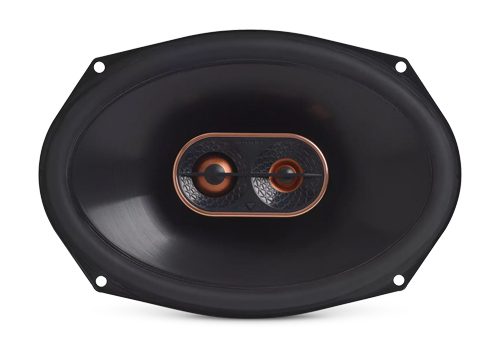
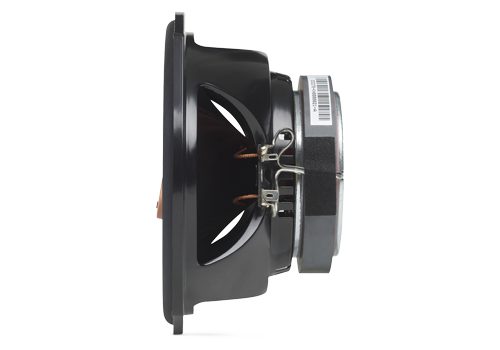
Infinity REF-9633ix
6×9 coaxial · Plus One cone · 3Ω, bass-forward
CarAudioNow may earn a commission from retailer links. Brands do not influence the recommendations.
Why I picked it
If you like a warm, bass-forward balance on factory power, start here. Infinity’s Plus One™ cone area and 3Ω nominal load help you squeeze more output from stock wiring. In my installs, these deliver fuller kick drum and bass guitar than most budget 6×9s without turning the highs brittle. If you plan to add a sub later, they integrate easily — cross them at ~80 Hz and let a mono block handle the heavy lifting (amp picks here).| Make | Infinity |
| Model | REF-9633ix |
| Size/Type | 6×9 3-Way Coaxial |
| Power (RMS) | 100 watts |
| Power (Peak) | 300 watts |
| Frequency Response | 53 – 21,000 Hz |
| Sensitivity | 94 dB |
Reasons to buy
- Fuller, punchier low-end than most in the price range
- 3Ω nominal load plays louder on factory power
Reasons not to buy
- Top-mount height/depth can be tight in some doors — measure first
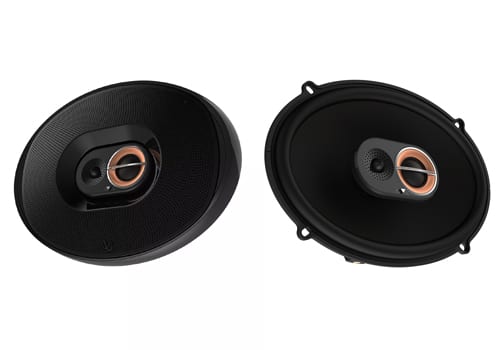
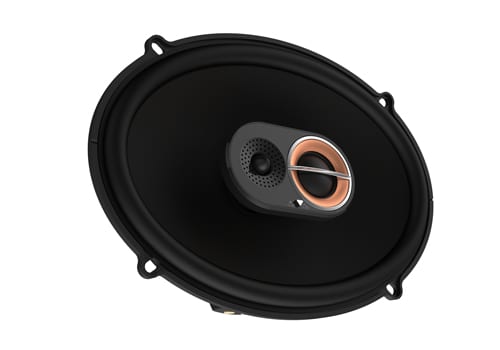
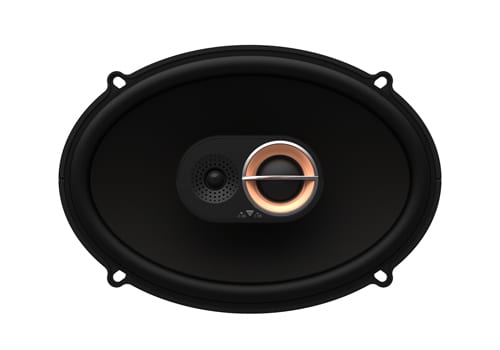
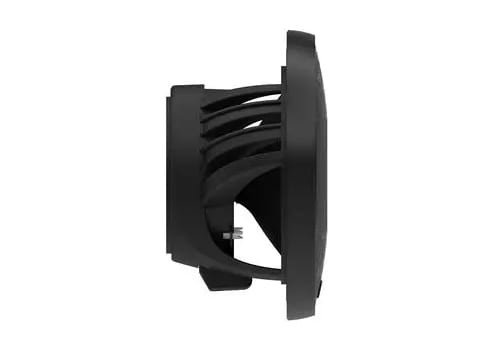
Infinity Kappa 693M
6×9 3-way coaxial · glass-fiber Plus One · refined
CarAudioNow may earn a commission from retailer links. Brands do not influence the recommendations.
Why I picked it
Kappa is Infinity’s “no-compromise” line and the 693M shows it. In my tests, these sound like a high-end home tower — clean, dynamic, and composed when you turn them up. The 3Ω nominal impedance squeezes a bit more power from factory wiring, and the edge-driven textile tweeter stays smooth. If you want the most refined 6×9 on this list for vocals and detail, this is it. It’s a three-way design with an optional midrange bandpass for advanced active setups; planning to amplify? See my amp matching guide.| Make | Infinity |
| Model | Kappa 693M |
| Size/Type | 6×9 3-Way Coaxial |
| Power (RMS) | 120 watts |
| Power (Peak) | 360 watts |
| Frequency Response | 35 – 40,000 Hz |
| Sensitivity | 94 dB |
Reasons to buy
- As tough as they are good-looking
- High-end factory upgrade that scales with power
- Optional bandpass lets advanced users run a true 3-way
Reasons not to buy
- Grille styling is subjective versus the previous model
- Three-way expansion adds complexity some users don’t want
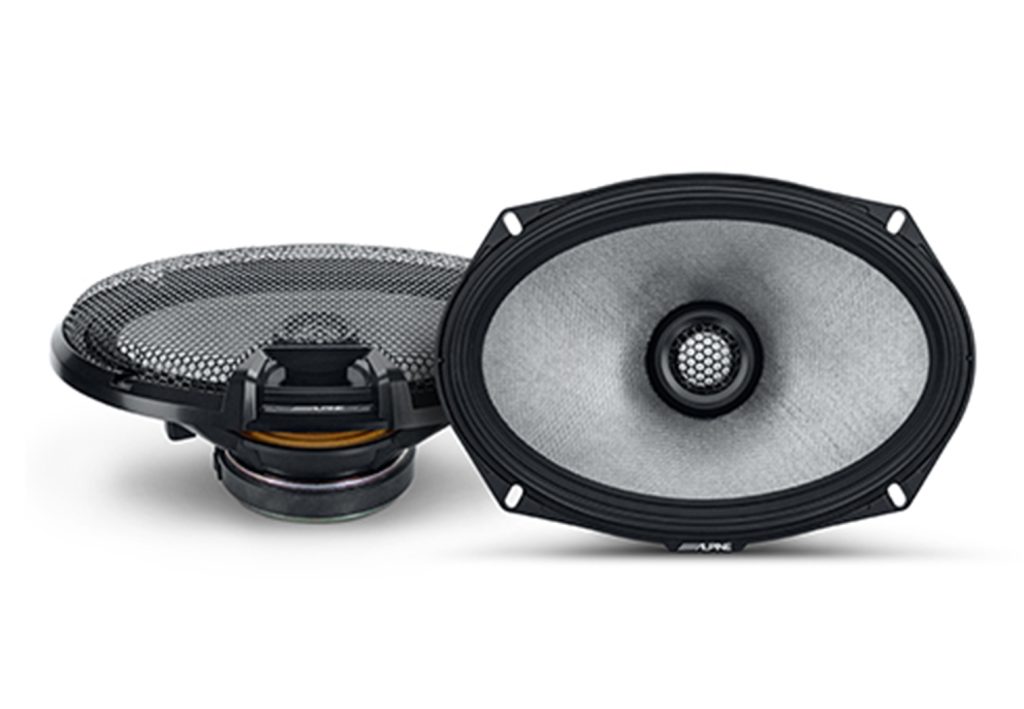
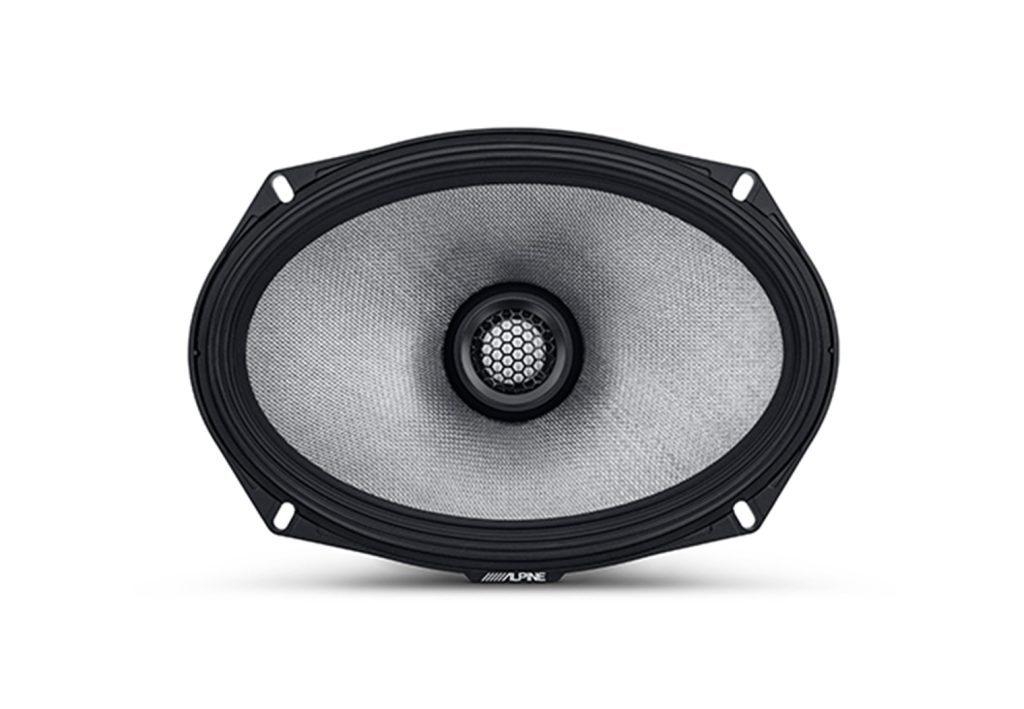
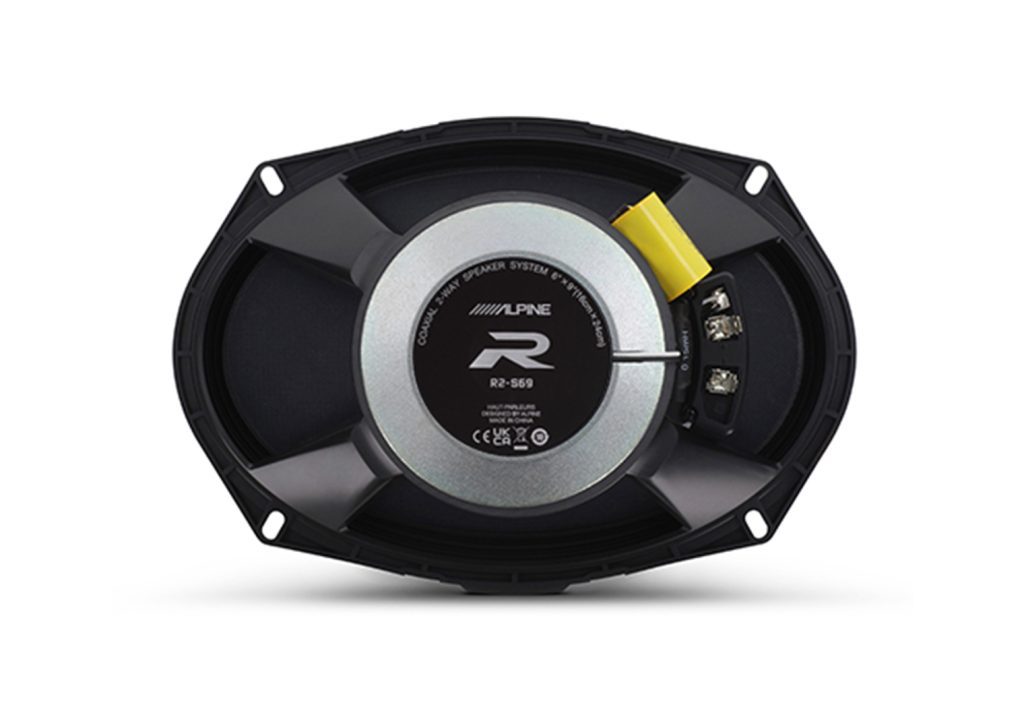
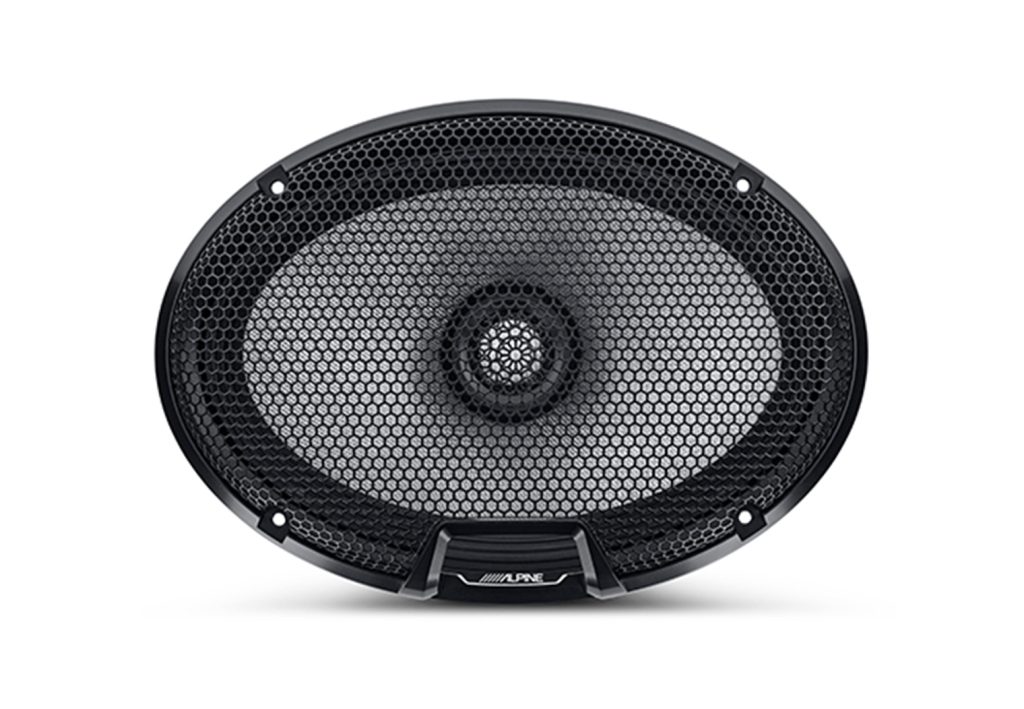
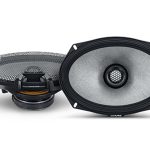
Alpine R2-S69
Next-gen R-Series 6×9" — Hi-Res certified
CarAudioNow may earn a commission from retailer links. Brands do not influence the recommendations.
Why I picked it
Of the picks here, the R2-S69 is the one I reach for when the listening is loud. A lot of coaxials harden up or lose composure when you really push them; the R-Series doesn't, and that control under power is what earns it the volume slot. The glass-fiber-reinforced cone holds its shape when it's working hard, so the sound stays tight instead of getting muddy or distorted as the volume climbs, and Hi-Res certification keeps the highs clean and detailed instead of turning harsh. It leans toward crisp highs and strong bass, which makes it a great rear-deck or rear-door upgrade where you want presence and punch; up front, pair it with a more vocal-forward set or components so the midrange doesn't fall behind. This is a two-way, so it won't have the layered detail of the three-way picks above it — but for sheer clean output, it's the standout. It does its best work with a little power: give it a clean amplifier around 60–100 watts per channel and it really opens up, and once you add a subwoofer, set an 80–100 Hz high-pass so the speakers handle the highs and the sub takes the deep bass. A bit of sound deadening behind the woofer tightens the punch further. On factory power it's still lively, just not its full self. See my install guide for placement.| Type | 6×9" 2-way coaxial |
| Power (RMS) | 100 watts |
| Peak power | 300 watts |
| Impedance | 4 ohms |
| Sensitivity | 88 dB |
| Frequency response | 65 Hz – 40 kHz |
| Hi-Res Audio | Certified |
Reasons to buy
- Holds composure at high volume where a lot of speakers harden up
- Hi-Res certified — highs stay clean, not harsh, when pushed
- Glass-fiber-reinforced cone keeps its shape under power
- Pairs cleanly with a subwoofer
Reasons not to buy
- Two-way: less midrange presence than a 3-way
- Best with an amp; deck power is only adequate
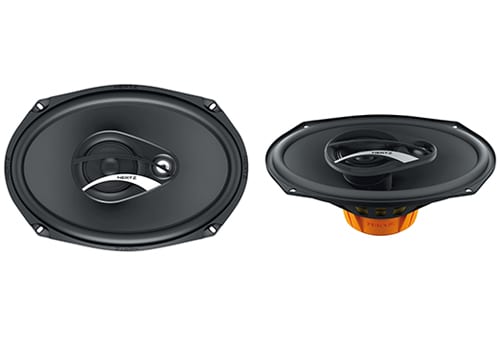
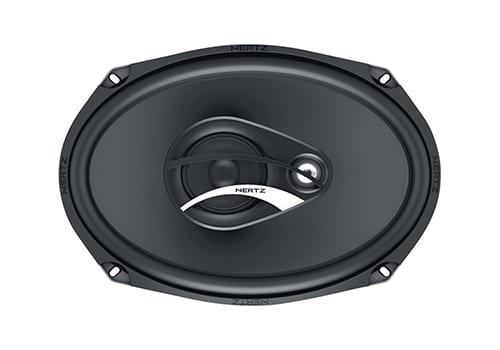
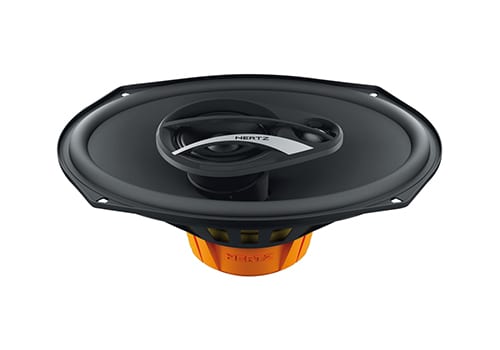
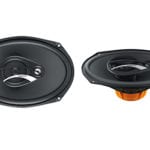
Hertz DCX 690.3
6×9 3-way coaxial · paper cone + PEI dome
CarAudioNow may earn a commission from retailer links. Brands do not influence the recommendations.
Why I picked it
Not the cheapest “budget” 6×9 — but the best bargain on sound. The DCX 690.3 looks OEM, yet Hertz’s tuning makes it feel a class up in clarity and balance. Paper cone + PEI dome combo keeps weight low and dynamics snappy on deck power. Great as an everyday factory replacement when you want an audible upgrade without chasing amps right away. Installing in a truck or SUV? My speaker install how-to shows the typical steps.| Make | Hertz |
| Model | DCX 690.3 |
| Size/Type | 6×9 3-Way Coaxial |
| Power (RMS) | 90 watts |
| Power (Peak) | 180 watts |
| Frequency Response | 45 – 21,000 Hz |
| Sensitivity | 93 dB |
Reasons to buy
- Excellent sound quality from a lightweight, efficient speaker
- High-end tuning at a mid-price = great value
Reasons not to buy
- Deeper magnet may require spacers in tighter door panels
- Price sits just below higher-tier options
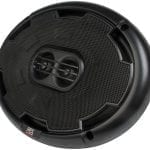
MTX Thunder693
6×9 3-way coaxial · bass-forward tuning
CarAudioNow may earn a commission from retailer links. Brands do not influence the recommendations.
Why I picked it
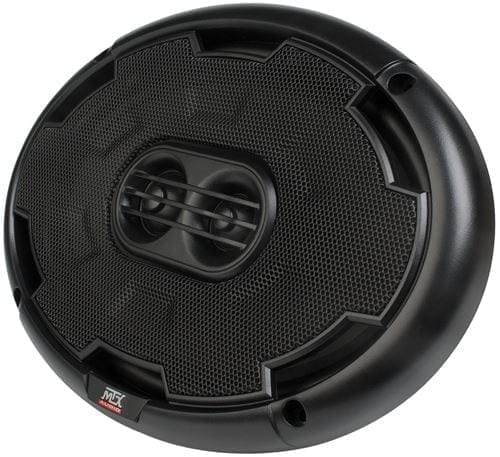
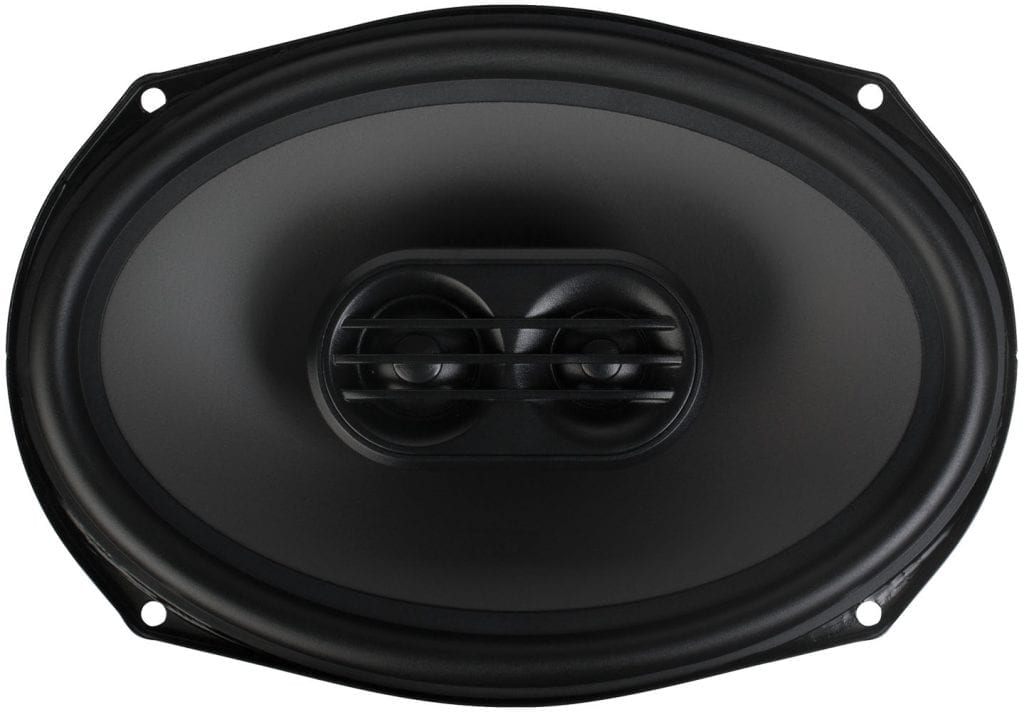
If your complaint with most 6×9s is “not enough bass,” the Thunder693 leans into low-end fun. It’s an easy win for older sedans with rear-deck cutouts where you want a fuller bottom end on deck power. Tuning is bass-forward; mids and highs stay decent but aren’t the star. If you’ll add a sub later, consider a more balanced pick above and let a sub do subwoofer things.| Make | MTX |
| Model | THUNDER693 |
| Size/Type | 6×9 3-Way Coaxial |
| Power (RMS) | 100 watts |
| Power (Peak) | 180 watts |
| Frequency Response | 40 – 20,000 Hz |
| Sensitivity | 92 dB |
Reasons to buy
- Noticeably deeper, fuller bass than many entry 6×9s
- Simple upgrade that doesn’t require a big amp
Reasons not to buy
- Bass-heavy tuning can make mids sound a bit congested at volume
- Close in price to more balanced options above
Confirm fitment & depth before you buy
6×9 locations vary a lot — rear decks, rear doors, even some front doors with adapters. Check your vehicle’s size and mounting depth with my interactive speaker size chart first.
6×9 speaker FAQs
Are 6×9s “better” than 6.5s?+
It depends on goals and fitment. 6×9s offer more cone area (more mid-bass, more output on deck power). 6.5s often image better up front and have broader aftermarket options. Use the fitment tool and match your goals.
Do I need an amp for 6×9s?+
No, but a clean 60–100W/ch amp improves headroom and bass control. See my amp pairing guide.
Should I run 6×9s in the front doors?+
If your vehicle fits them (many trucks/SUVs do), they can be great up front. Prioritize deadening and aim tweeters toward ear level when possible. Otherwise, 6.5″ components up front + 6×9 rear fill is a proven combo.
Will 6×9s replace 6×8 or 5×7?+
Sometimes with an adapter bracket; check the depth and top-mount height. My size chart covers common swaps between 6×8 and 5×7.
More reviews & comparisons
Go deeper on the gear and installs behind these picks.
Why trust CarAudioNow?
