Best Overall 5×7 Speaker Pick
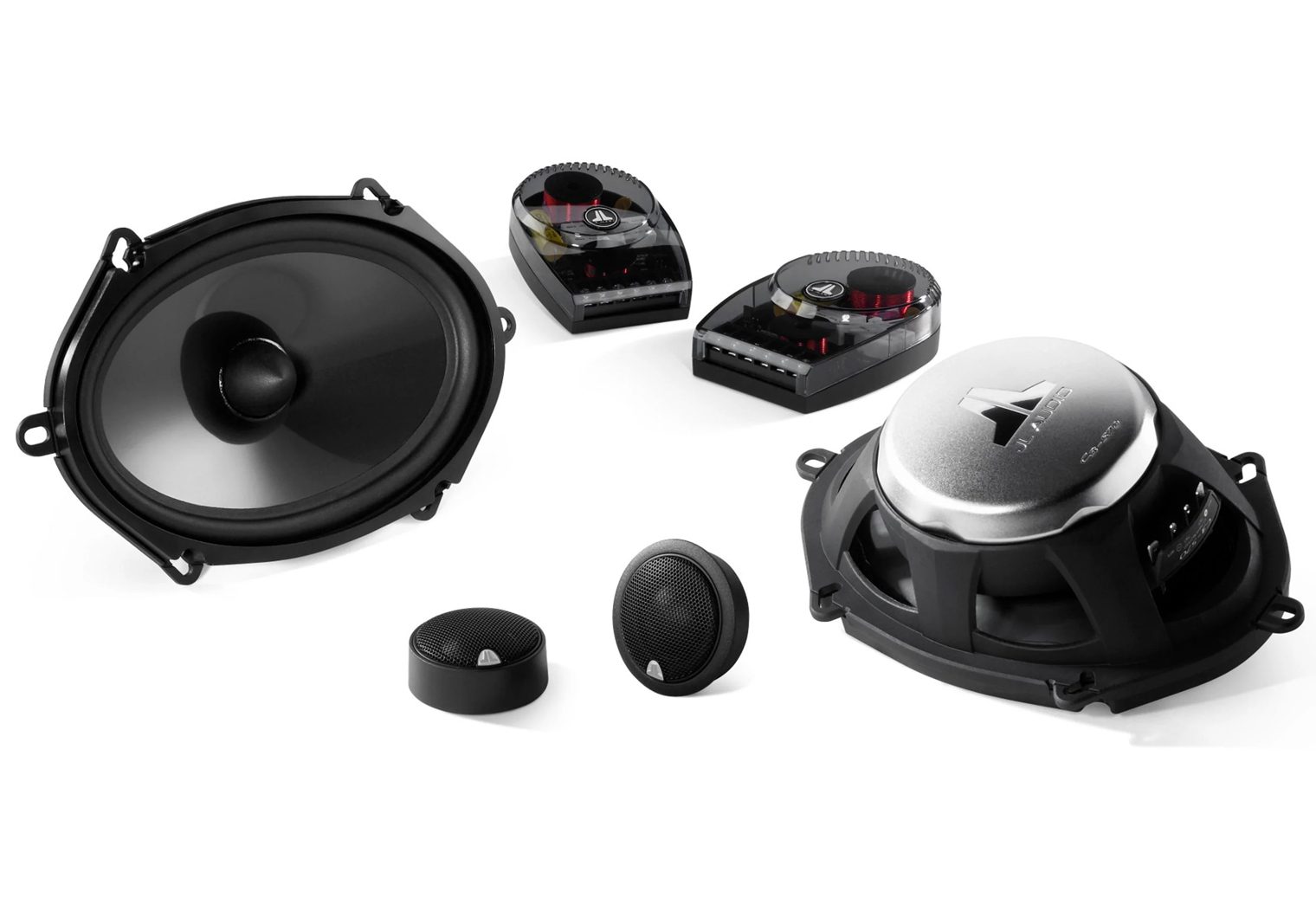
JL Audio C3-570
Latest Prices
Key Features
- Pair of 5×7” speakers
- Convertible coaxial or component design
- Mica-filled polypropylene woofer cone
- 1-inch silk dome tweeter
- Three-way crossovers
- 275W RMS/150W Peak
- Glass-filled frame
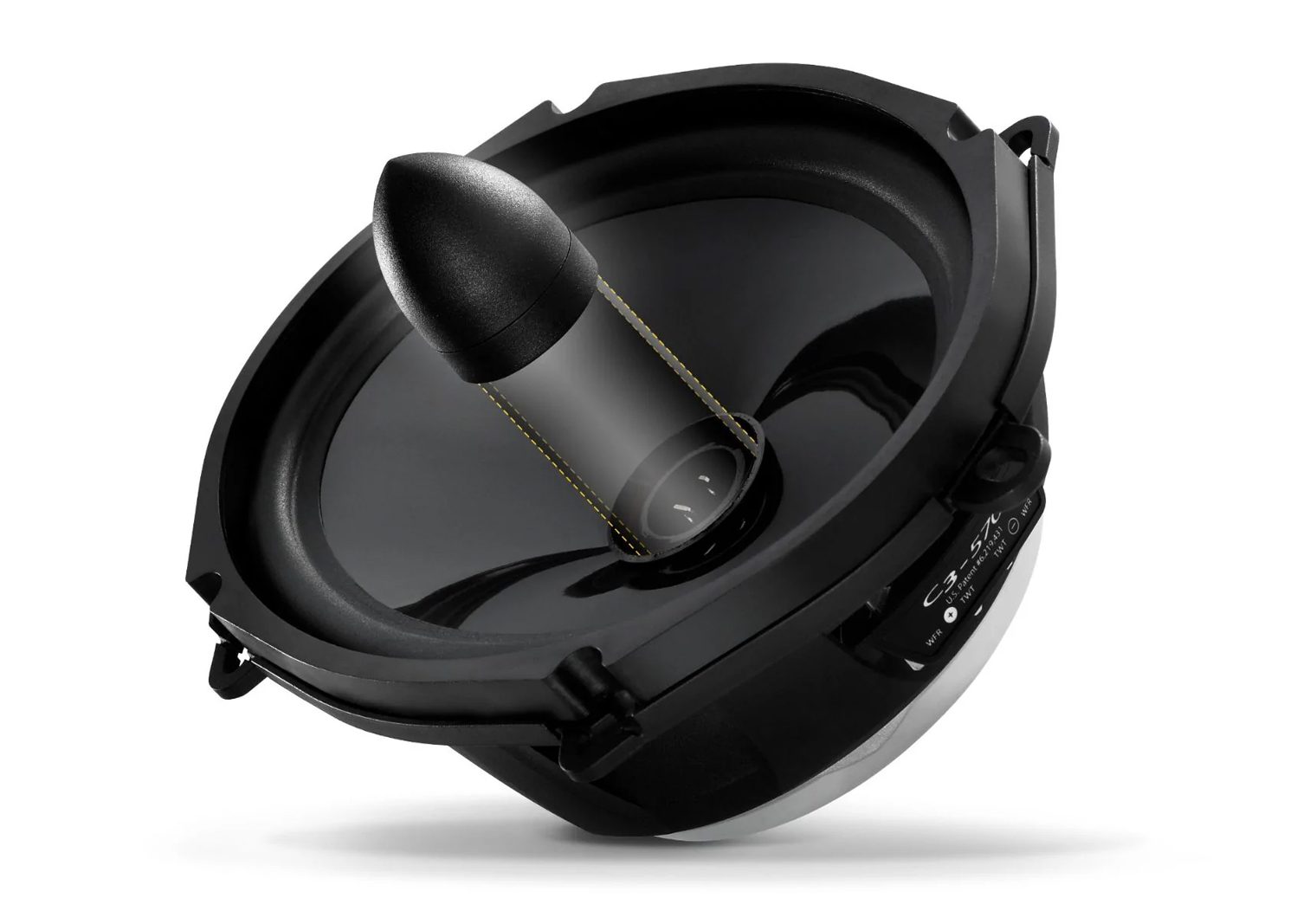
- Includes conical phase plug
- Mounting Depth: 2.5-inches (top-mount)
- 4 ohm resistance
- 48-25k frequency range
JL Audio C3-570 Quick Review
You came to this list looking to see what the best of the best is, and this awesome 5×7” pair of convertible speakers are the top pick. The C3-570 replaces the older C5 and adds some new technologies while keeping the speaker a robust performer ready to rock as a replacement for factory speakers or as a custom upgrade.
Convertible Design
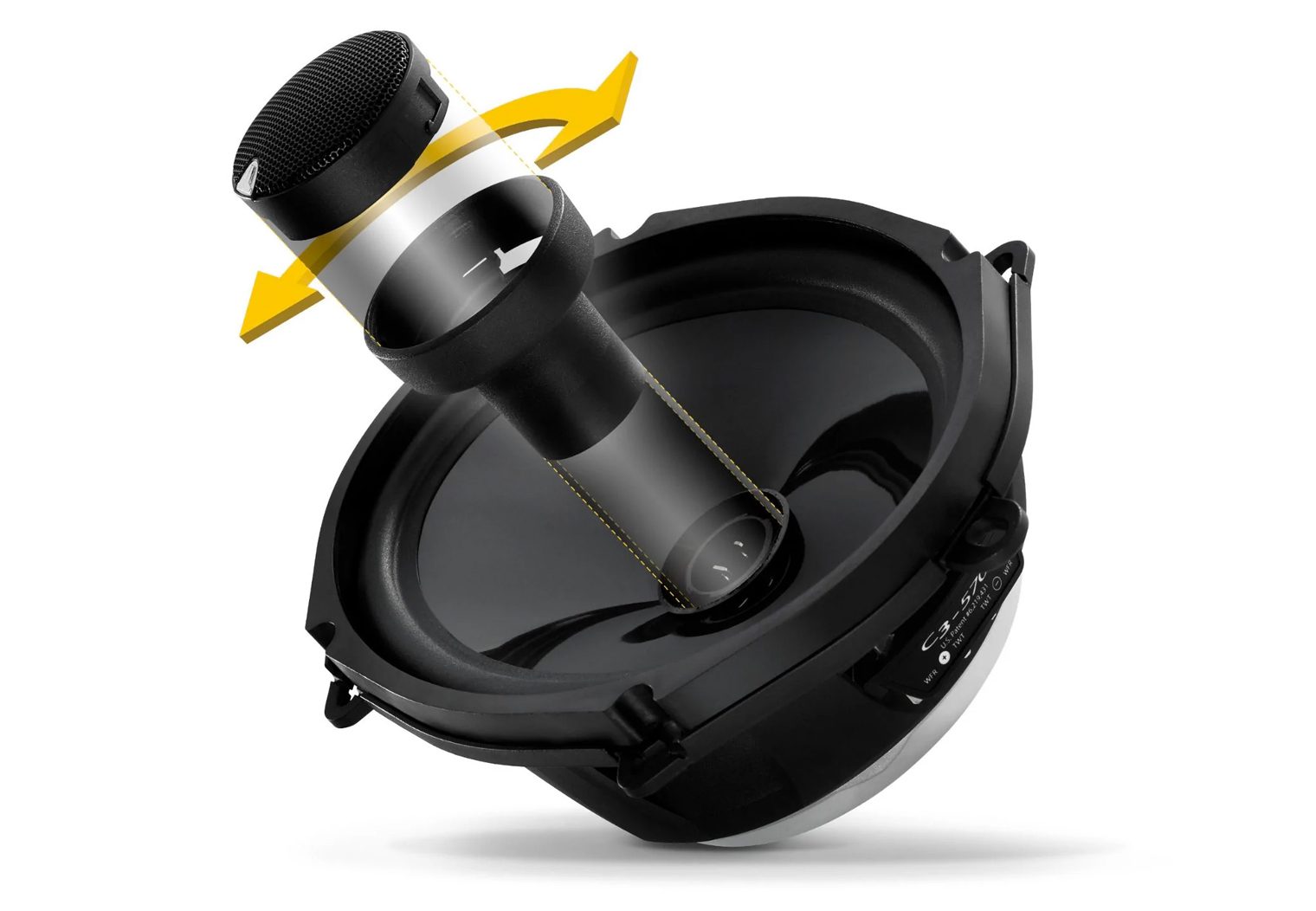
The most important change that JL Audio has made to the C-series is the addition of a convertible tweeter. This set of speakers can be mounted as a coaxial with the tweeter sitting above the woofer, or the tweeter can be removed and mounted remotely to enhance the auditory spectrum.
When removed from the woofer, the area where the tweeter mounts uses a conical phase plug that allows the full dimension of sound from the woofer to fill your car with powerful midrange and strong bass. When mounted as a coaxial speaker, the C3-570 provides stunning upper midrange and a natural, warm tone from the elevated tweeter design that beats speakers with the tweeter buried in the center of the woofer.
Woofer and Tweeter Construction
The woofer cone uses a mica-filled polypropylene construction that yields a rigid and resonant surface perfect for driving powerful and clean sound with low distortion. A rubber surround keeps the woofer flexible while ensuring it stays centered on the spider.
The C3 upgrades the tweeter over the older design. In addition to being remote-mountable, it is also now a full one-inch tweeter that continues to use the proven silk dome design to produce the very highest frequencies without the troublesome harshness and off-sounds that many tweeters create.
Frame Construction
The frame is a unique design that incorporates a glass-filled polymer frame and elevated cooling to ensure that the magnet and voice coil remain cool even when you are throwing lots of power at the speakers. The frame resists distortion and eliminates resonant frequencies caused by movement of the motor assembly during use.
Crossover Network
The C3-570 includes a tuneable crossover network to get the finest possible sound from these speakers. The crossovers offer four tweeter attenuation settings and three midrange presence settings in addition to a low pass filter. The network allows you to direct specific frequencies in the manner you want to compensate for less-than ideal mounting locations. The crossover networks are the key to how these speakers can sound so good.
Reasons to Buy
- Offers the best quality sound in a 5×7 speaker whether installed as a component or as a coaxial
- High-tech construction and crossover network makes fine-tuning audio signals a breeze
- Can handle lots of power, making these ideal for big, bold stereo systems
Reasons Not to Buy
- Significant expense, particularly if installing as front and rear door speaker replacements
- Crossover network requires additional wiring and installation time
- Best if used with an amplifier
Runner Up, Overall Pick:
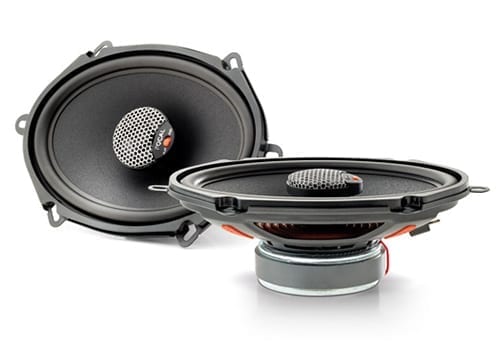
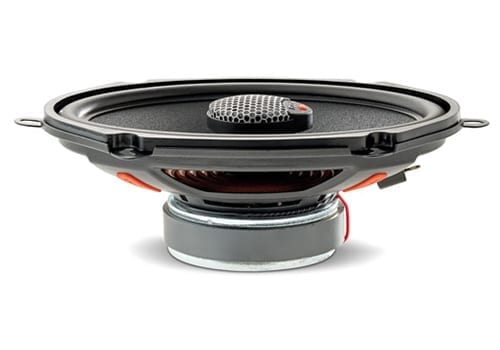
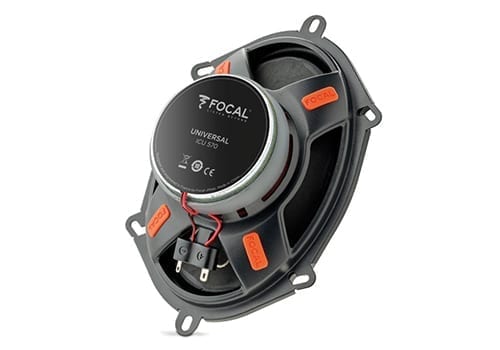
Focal ICU 570
Latest Prices
Key Features
- 5×7”two-way coaxial speakers
- Inverted dome tweeter
- Crossover switch to increase tweeter range
- Shallow depth design
- Polyglass Cone, Butyl Rubber surround
- 60W RMS per speaker/ 120W Peak
- Frequency range: 60Hz-21K Hz
- 94dB sensitivity
- 4-ohm impedance
Focal ICU 570 Quick Review
These speakers provide a warm and natural sound that is uniquely Focal. This 5×7” design is compact so that it fits almost any vehicle. This speaker is all about creating a realistic, audiophile-quality sound environment. While it provides smooth, clean bass, This is the wrong choice for bumping systems. You’ll want this speaker when you are trying to get that natural and warm sound that fills every corner of your car with powerful sound.
Woofer and Tweeter Construction
Focal is always on the cutting edge of woofer cone construction. This speaker uses a unique polyglass construction to enhance the natural sound of music. It provides the proper rigidity and reduces resonant distortion to ensure your tunes are crystal clear even at high volume levels.
The built-in magnesium/titanium tweeter is an inverted dome design that significantly improves the audio output to create a natural high-frequency sound that is also smooth and detailed. The inverted design helps to overcome the shortfalls of a coaxial design to give this two-way coaxial design an exceptional sound profile.
Built-in Crossover
A built-in crossover makes it a snap to easily adjust the tweeter frequencies to compensate for low mounting locations. The crossover improves the audio quality of the speaker by sending the midrange and low frequencies to the woofer and the highs to the tweeter. The design of this crossover means you won’t have to add extra wiring or find spaces to install bulky crossovers.
Frame Construction
The stamped frame uses silicon rubber inserts to prevent unwanted distortion. It offers excellent rigidity and flex-resistance to make sure your music is clear and loud at high volumes without resonance. The frame uses snap-off mounting tabs to meet the needs of a wide range of factory speaker mounting locations.
Reasons to Buy
- Very lifelike, natural, interior-filling sound that provides an audiophile-quality environment
- Built-in crossovers provide frequency changes to make these some of the best for low-mount locations
- Some of the very best speakers for live and acoustic music reproduction
Reasons Not to Buy
- Bass coverage isn't as good as some of the other competitors
- Needs an amplifier to get the most out of the speakers
Best Factory Upgrade 5×7
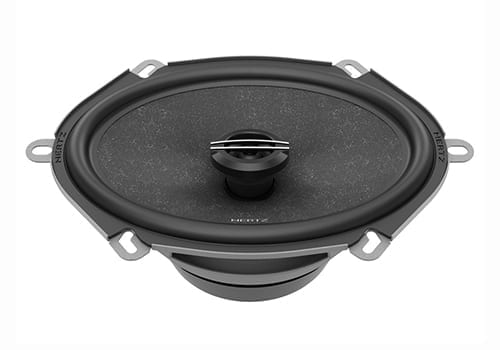
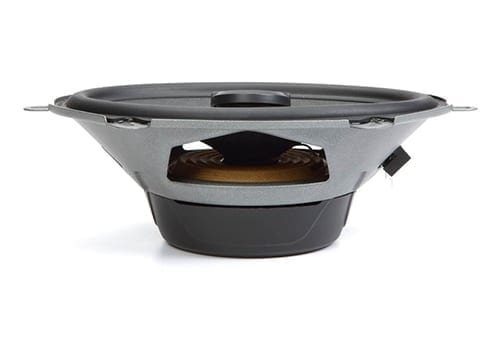
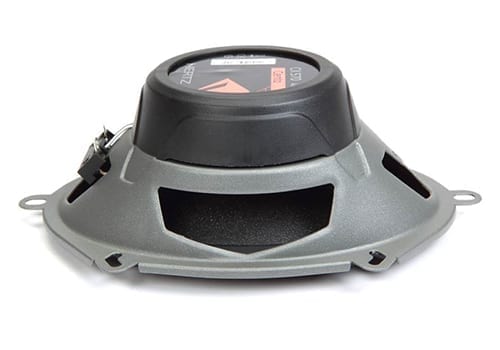
Hertz Cento CX-570
Latest Prices
Key Features
- 5×7”two-way coaxial speakers
- Semi-pressed paper and mica-injected cone
- One inch Tetolon tweeter, adjustable direction
- 70W RMS, 210W peak
- Frequency range: 55Hz-22kHz
- 93.5dB sensitivity
- 4-ohm impedance
Hertz Cento CX-570 Quick Review
The Hertz Cento CX-570 is one of our personal favorite options. It is engineered to provide exceptional audio quality and hits the highs -and lows- better than any comparable round speaker. We think it is one of the very best options for upgrading factory speakers since it will out-perform nearly any 5×7 speaker installed by the factory in any vehicle.
Woofer and Tweeter Construction
The woofer cone uses an interesting semi-pressed paper and mica-infection technique that creates a rigid, dynamic surface to maximize your listening experience. The woofer design and construction does a superior job of reducing resonance and distortion to produce the signature Hertz sound enthusiasts have relied on for years.
The tweeter measures nearly one-inch and features several unique design elements that improve the acoustical performance of these speakers. The tweeter can rotate to accommodate off-axis installations where the tweeter fires at your knees or the side of a seat. The domed tweeter uses Tetolon, a specialized material that blurs the line between hi-fi silk domes and typical aluminum designs to produce the most true-to-life high frequencies possible.
Special Engineering Design
More than anything else, the engineers in the R&D department at Hertz found ways to take advantage of the benefits of a 5×7 speaker, such as reaching a perfect balance between lightweight woofer cones and distortion-free rigidity. Probably nowhere else will you find so much attention paid to the high frequencies, though.
Hertz did things the hard way by conducting numerous tests to determine the best way to overcome the shortcomings of the tweeter-in-a-woofer design. These tweeters use a brand-new material and were modeled to produce the optimum sound in even the most difficult installations. You can even see the results of their testing on the company website.
Reasons to Buy
- Perfect blend of materials and technology to create a beautiful sounding speaker set that is easy to install
- Adjustable tweeter design allows the user to compensate from less-than-ideal factory speaker locations
Reasons Not to Buy
- Woofer cones tend to be more fragile than other designs and these don’t include grills
- Requires more mounting depth than other designs
Best 5×7 Speaker for Harsh Environments
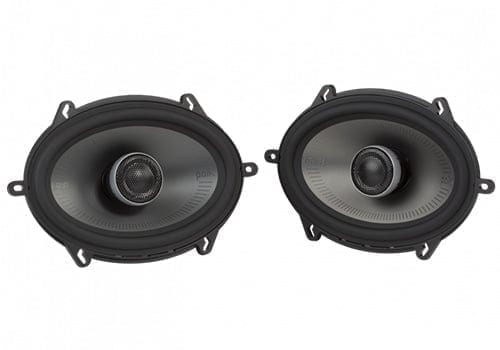
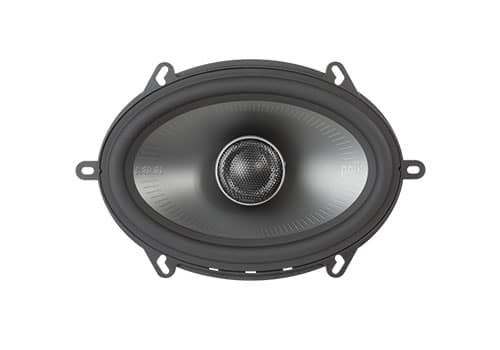
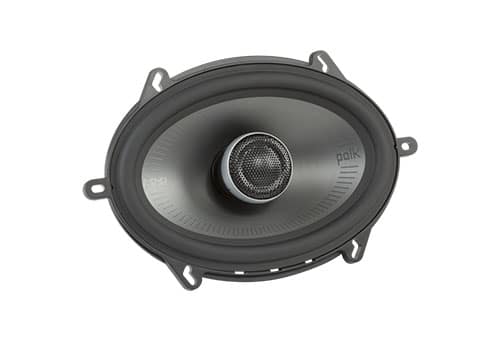
Polk Audio MM572
Latest Prices
Key Features
- 5×7 two-way coaxial speakers
- One inch Terylene fabric tweeter
- IP56-rated for water and dust resistance
- Titanium-plated composite cone
- Santoprene surround
- Fiberglass baskets
- 100W RMS per speaker/ 300W peak
- Frequency range: 35Hz-40K Hz
- 93dB sensitivity
Polk Audio MM572 Quick Review
You’ll find high-end car audio installed in a wide range of atypical vehicles these days. From ATVs to boats and everything in between, the key is finding speakers that can handle the abusive environments. These are our favorite speakers to install when the vehicle is going to be used in harsh conditions.
Special Features
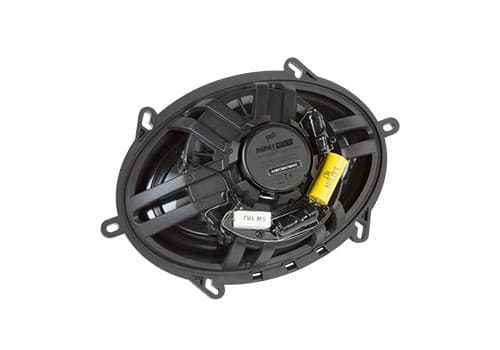
The MM572 speakers are fully-weatherized and carry an IP56 rating that means they can withstand dusty, dirty environments along with sprays of moisture. The woofer cone is titanium coated to prevent discoloration and to provide resistance to the elements. The lightweight, space-saving basket is made of reinforced ABS to prevent rust and corrosion and features weep holes to ensure moisture doesn’t build up. Even the crossovers are epoxy-coated, so you’ll get years of use and abuse from these speakers without worry.
Woofer and Tweeter Construction
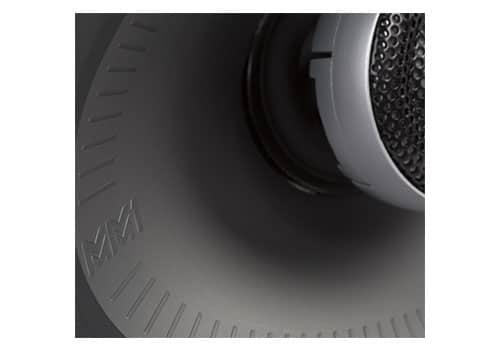
The woofer cone is made from polymer fibers and has a titanium coating. Adding even more durability, the woofer cone has both inner and outer Santoprene surrounds to keep dust and moisture out while ensuring the woofer is properly balanced. This provides a smooth sounding, hard-hitting woofer that is engineered to work great in a variety of environments.
The tweeter uses a special material called terelyne that is similar to silk or other textiles in terms of sound, but as durable as aluminum or titanium. Not only does this design allow the tweeter to produce rich and detailed high frequencies, the tweeter can also rotate to properly focus these sounds where you want them rather than where the speaker happens to end up pointing.
Spider and Motor Engineering
The conex spider is a special design that handles high-heat environments typical of loudspeakers while also being resistant to moisture, dust, and UV rays. The neodymium magnet lets thee speakers save space while ensuring proper motor function while ensuring that you can take advantage of the oversized voice coils.
Reasons to Buy
- Built to handle the harsh environments encountered by Jeeps, boats, and ATVs -but also perfect for a saddlebag speaker on your cruiser bike
- Incredible power handling allows these speakers to get louder than your toys
- Smart and compact crossover design ensures dynamic listening
Reasons Not to Buy
- An amplifier is almost essential to get the best sound from these speakers
- Crossover is not removable and can’t be configured around for active systems
Best 5×7 Speaker for Volume
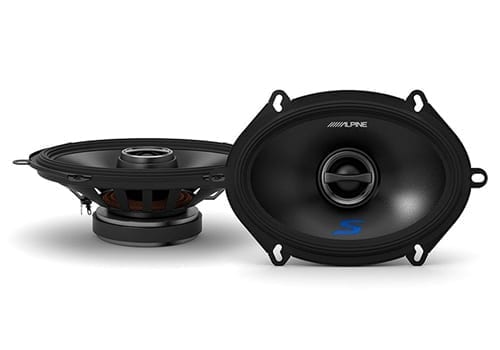
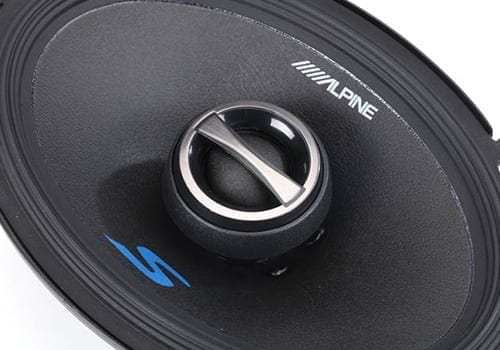
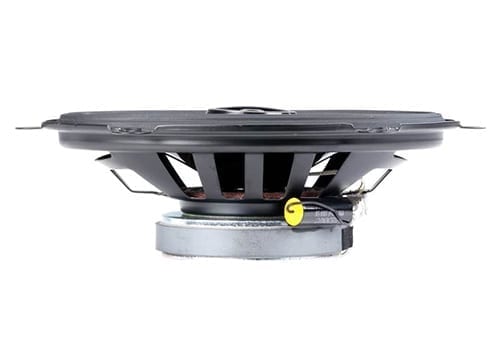
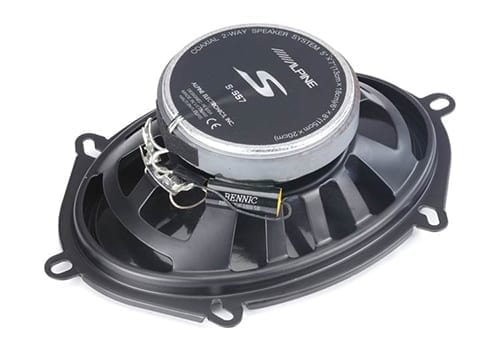
Alpine S-S57
Latest Prices
Key Features
- 5×7” two-way coaxial speakers
- One inch silk dome tweeter
- Carbon fiber-reinforced plastic cone
- 75W RMS, 230W peak
- Frequency range: 75Hz-22kHz
- 88dB sensitivity
- 4-ohm impedance
Alpine S-S57 Quick Review
Sometimes the weak link in your factory high-power car stereo is speakers that aren’t engineered to take as much power as you have. The result is systems that sound muddy when you crank up the volume. If you have the power already and you need a speaker that can get loud, this is a great choice. Alpine builds a rock-solid 5xy coaxial speaker that can handle lots of power and still give you sparkling performance.
Woofer and Tweeter Construction
One of the reasons these speakers can handle tons of power is because of the unique woofer cone construction. Alpine went all-in on durability and crafted a woofer cone from a carbon fiber-reinforced plastic that offers astounding rigidity and superior lightness. A multi-roll surround is the key to making this woofer cone work by allowing the cone to move while absorbing vibrations that cause muddy distortion. Now you can crank it up and still get great sound.
The tweeter measures at a full one-inch and takes advantage of a silk dome to produce realistic high frequencies that make vocals and acoustic instruments stand out while preventing buzzing and screeching pitches (unless that’s what you are listening to).
Reasons to Buy
- Capable of handling lots of power without distortion
- Ideal for factory upgrade options
Reasons Not to Buy
- Some lower-quality components
Best Value 5×7 Speaker Pick
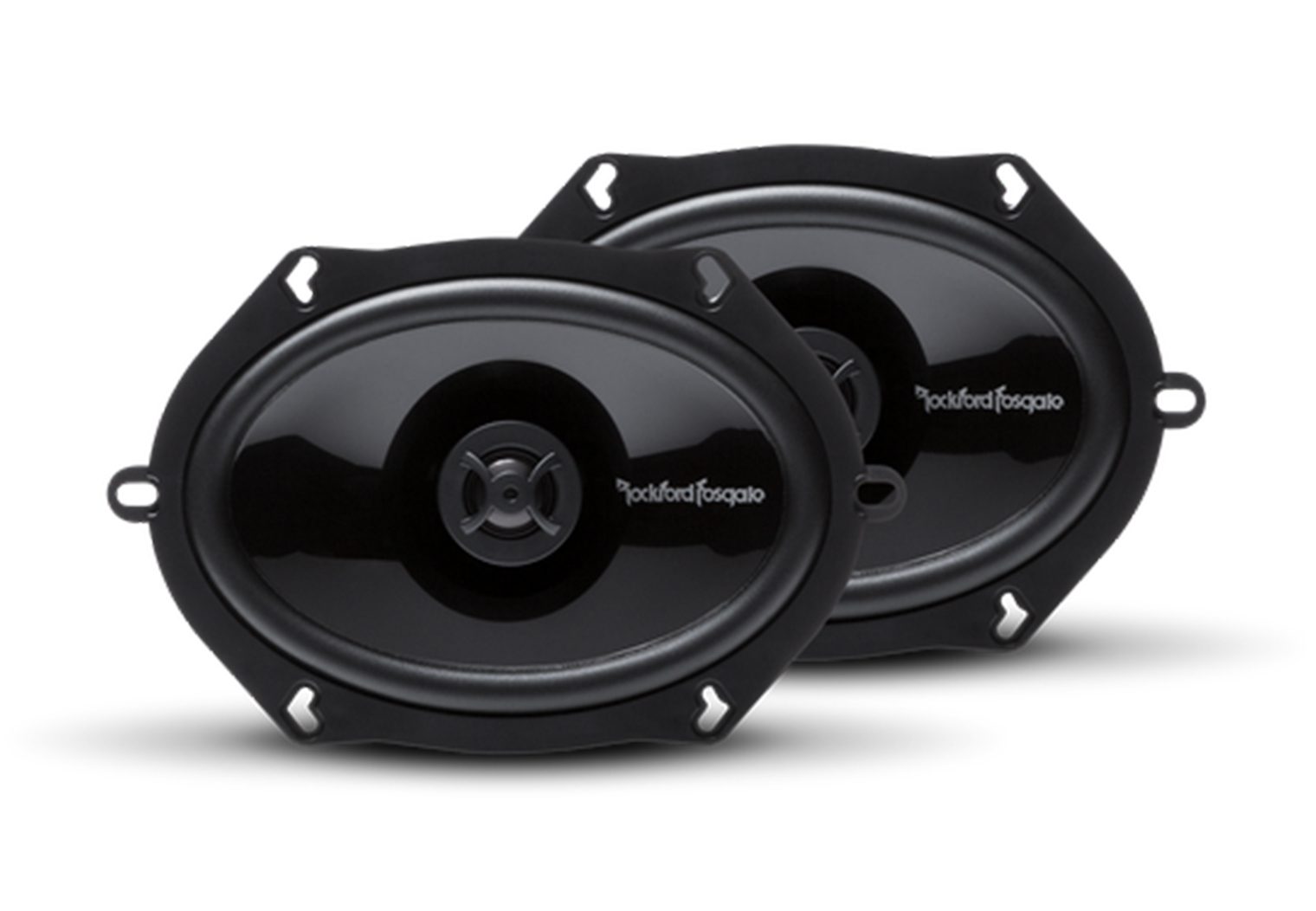
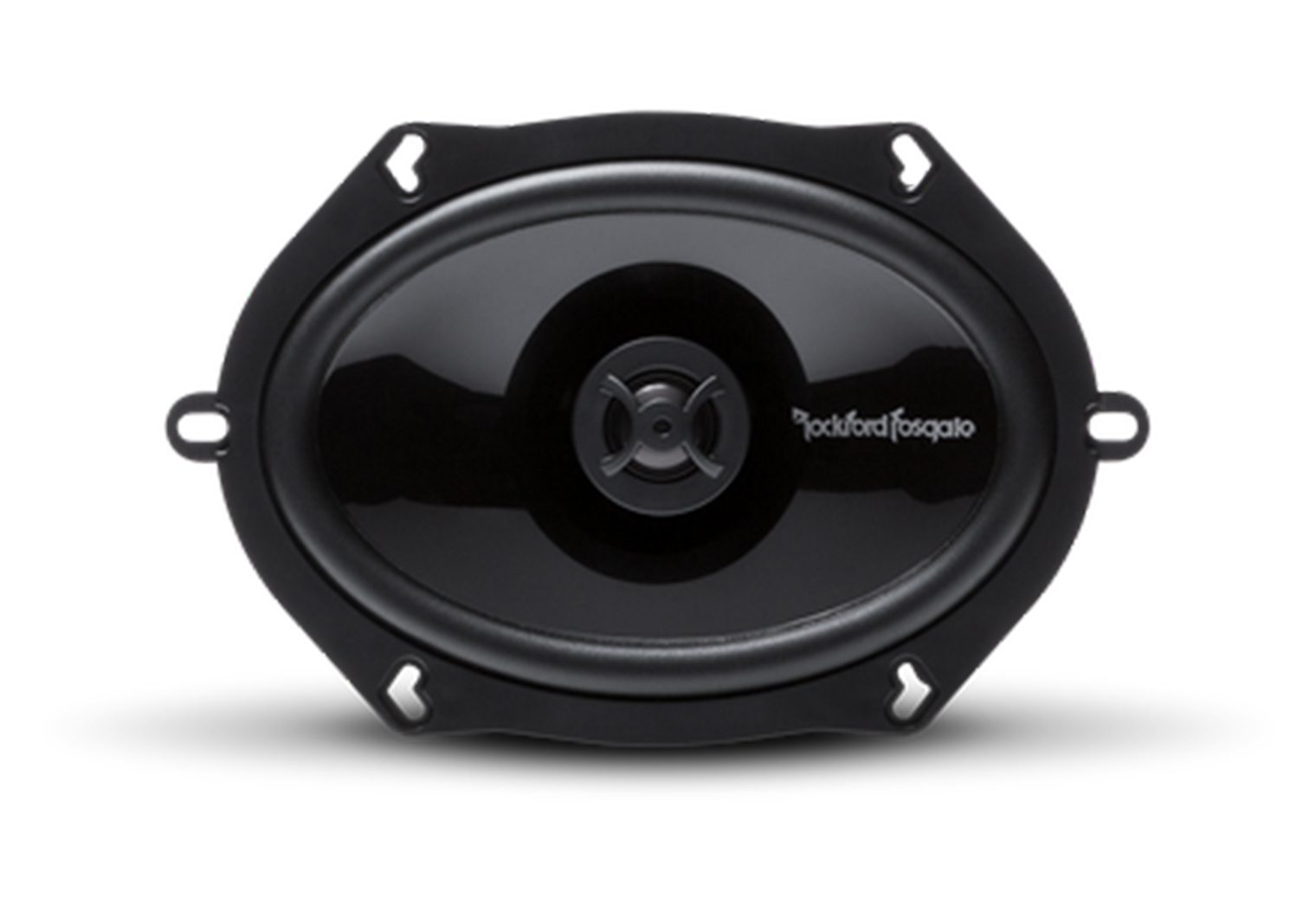
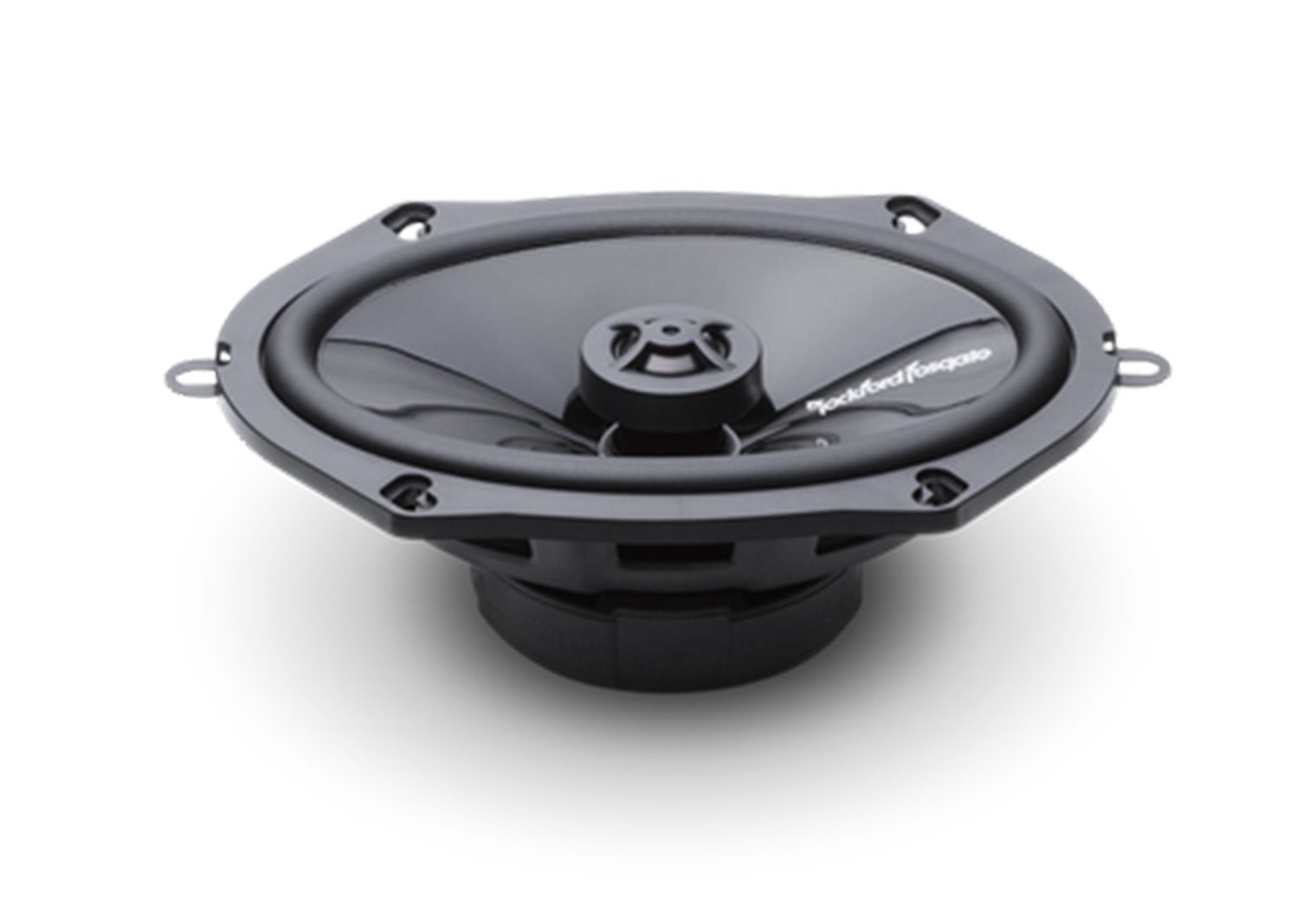
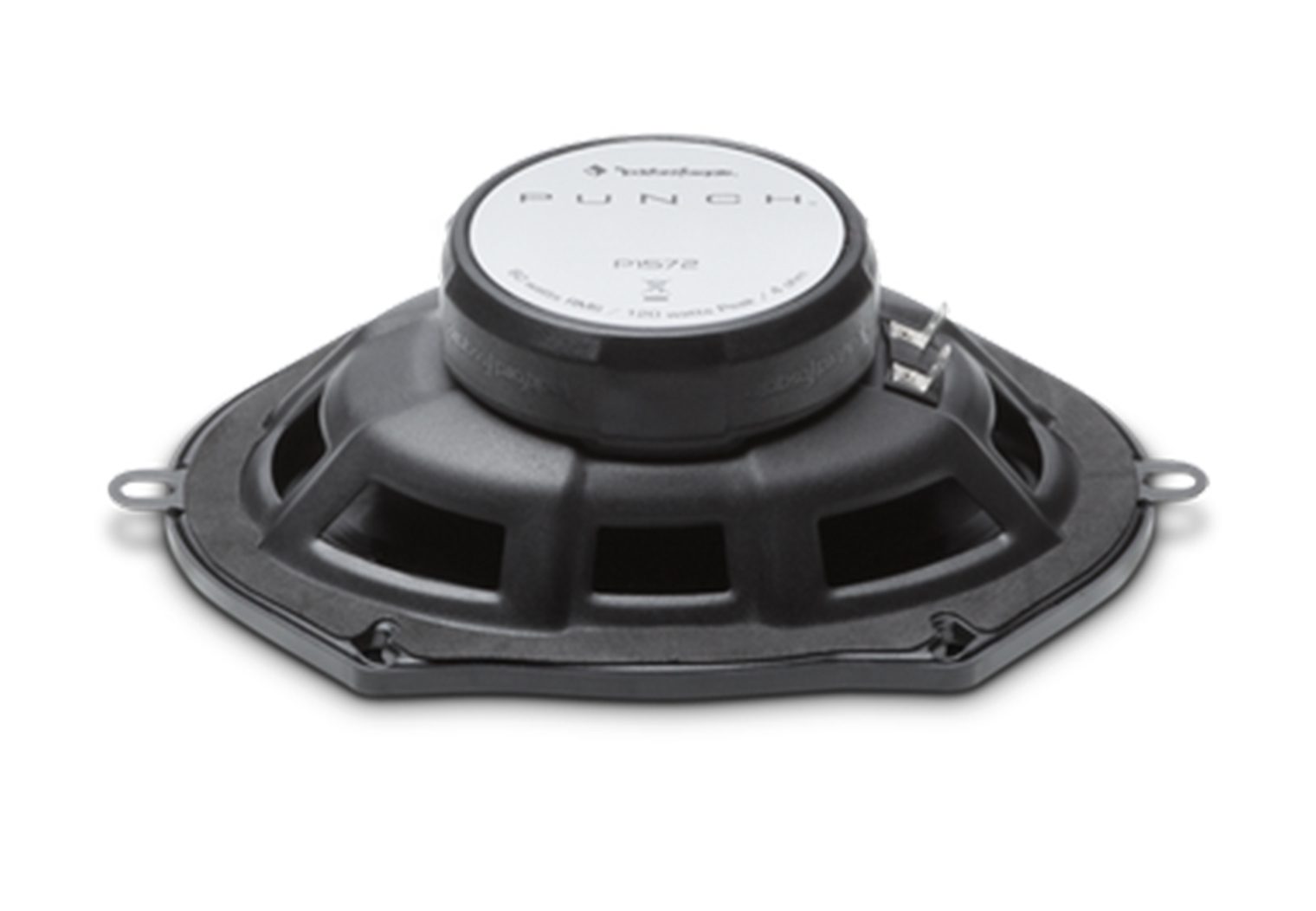
Rockford Fosgate P1572
Latest Prices
Key Features
- Pair of 5×7 coaxial speakers
- Mineral-filled Polypropylene woofer cone
- 0.75-inch PEI tweeter
- VAST technology
- ICC crossovers
- FlexFit basket
- 75-22k Hz frequency response
- 6-60 watts RMS
- 2 5/16-2 9/16 inch mounting depth (top and bottom-mount, respectively)
- 4 ohm resistance
Rockford Fosgate P1572 Quick Review
The Rockford Fosgate P1572 proves that you don’t have to spend a fortune to get great speakers. This set of 5×7 speakers are ideal for replacing factory speakers to improve sound quality without breaking the bank.
Woofer and Tweeter Construction
The woofer cone is made from a mineral-filled polypropylene material and a butyl rubber surround to give the woofer excellent range with low distortion. Rockford Fosgate uses their proprietary VAST (Vertical Attach Surround Technique) design to increase the useable cone area by 25-percent. The design lets this speaker function like a larger speaker without taking up space.
The ¾-inch tweeters are made from polyetherimide thermoplastic (PEI), which gives the tweeter excellent performance at a low cost. PEI is a better choice than mylar or other plastic dome tweeters.
Integrated Crossover
These speakers feature what RF calls integrated concealed crossover (ICC) technology that hides the crossovers inside the basket. This gives the speakers a clean look and makes it easy to mount when there are obstacles in the way of installation.
Reasons to Buy
- Plenty of great features that give this speaker a bigger sound than its price point
- Ideal for replacing factory speakers in vehicles with factory head units or aftermarket ones
Reasons Not to Buy
- Lacks bass response
- Won’t drastically improve sound over many good-quality factory speakers
Runner Up, Best Value 5×7
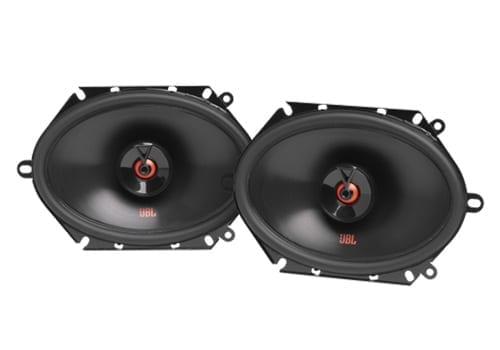
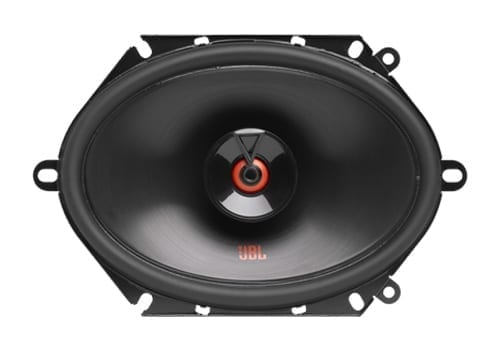
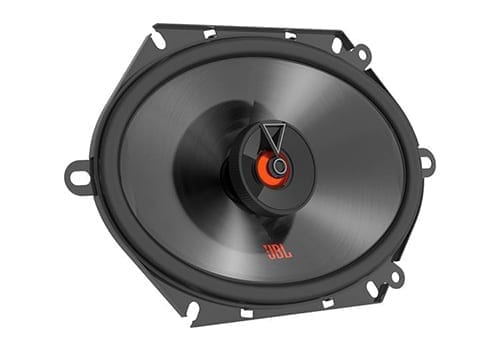
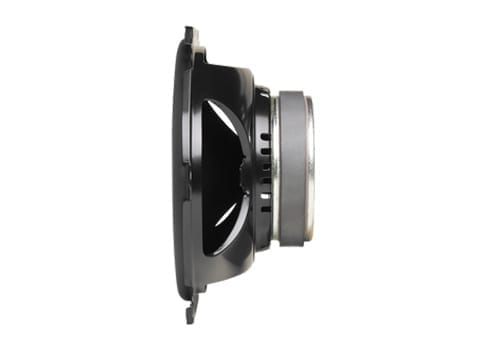
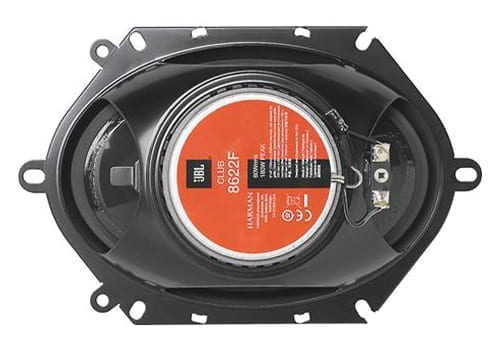
JBL Club 8622F
Latest Prices
Key Features
- 5×7″ two-way coaxial speakers
- Power handling: 60W RMS/ 180W Peak
- Frequency Response: 65Hz – 20kHz
- Impedance: 3-ohms
JBL Club 8622 Quick Review
The JBL Club 8622F speakers are ideal as factory replacements that will instantly upgrade the sound quality in your vehicle. These speakers include technology featured on higher-end speakers at an affordable price point, making the decision to purchase these speakers much easier on the wallet.
Woofer and Tweeter Construction
JBL uses Plus One+ technology with the Club series of speakers that allow the woofer cone to be 20 percent larger than similar speakers to generate deeper bass frequencies and produce clean, clear audio across the frequency range. The woofer cone is made from UV-treated polypropylene that resists cracking when the speaker is installed in a sunny location like the rear deck of your car. The tweeter is an edge-driven silk dome design that produces softer high frequencies.
Special Design Features
JBL went an extra step with the Club series to ensure they produce lots of volume and perform flawlessly for years. These speakers use a low-impedance design that draws just three ohms, allowing the speaker to use more power from low-wattage sources like a factory head unit. That makes these an ideal solution for factory replacements. To get the most performance out of the 8622F speakers, try adding a modest amplifier to maximize the power. These speakers use a larger magnet than competitors to ensure high-volume output and a unique frame design that provides a solid foundation for the speaker. Despite the larger magnet, these speakers are compact enough to easily fit in most factory locations without interference.
Reasons to Buy
- Ideal as a factory replacement speaker that will outperform almost all factory designs
- Lower impedance maximizes the power available to the speaker to make these ideal for factory head units or low-watt systems
Reasons Not to Buy
- Lacks the power handling ability that a robust, amplifier stereo system might produce
- Won’t significantly improve the audio performance of some modern factory-upgraded systems
Best 5×7 Speaker for Older Vehicles
RetroSound R-57N
Latest Prices
Key Features
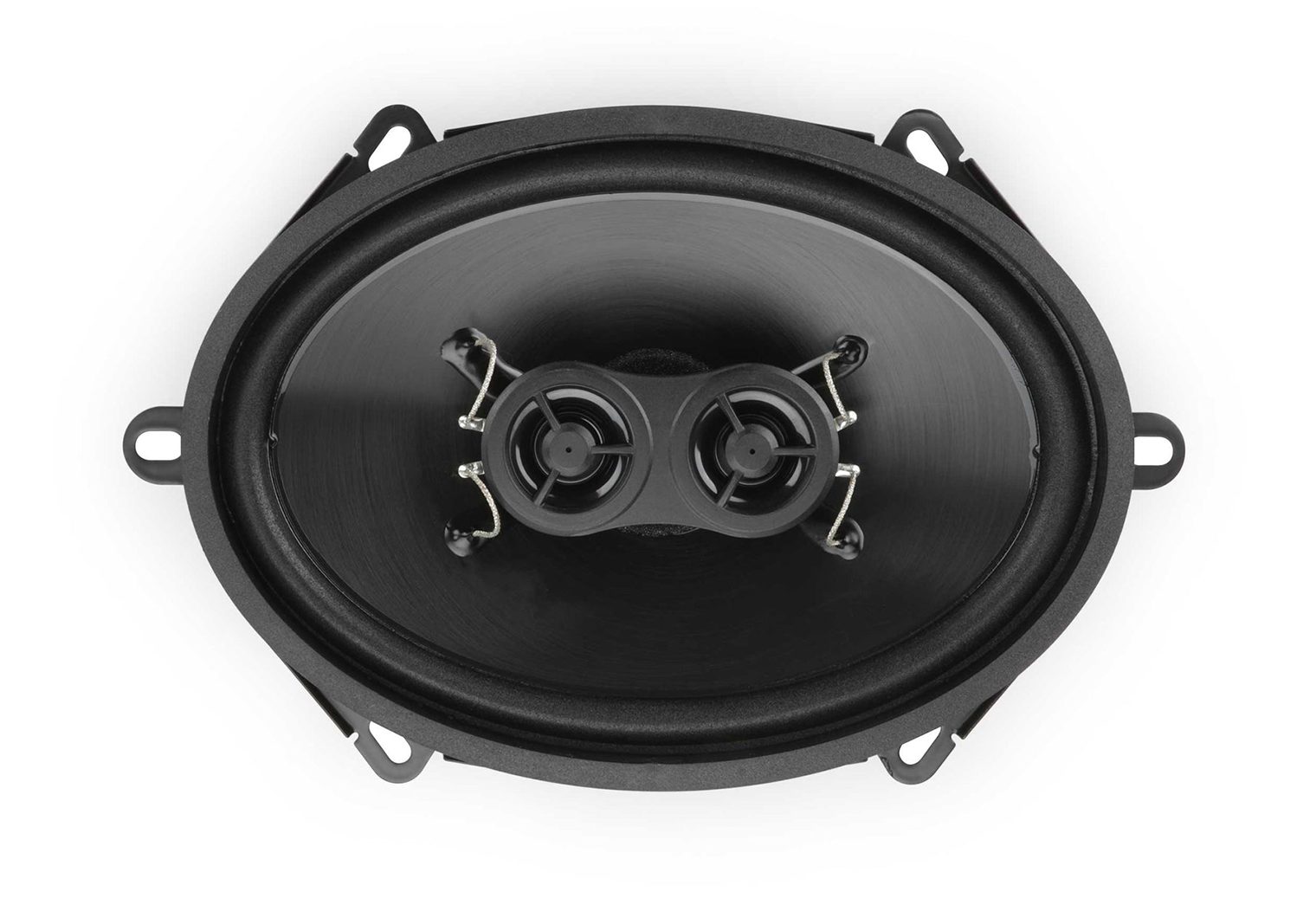
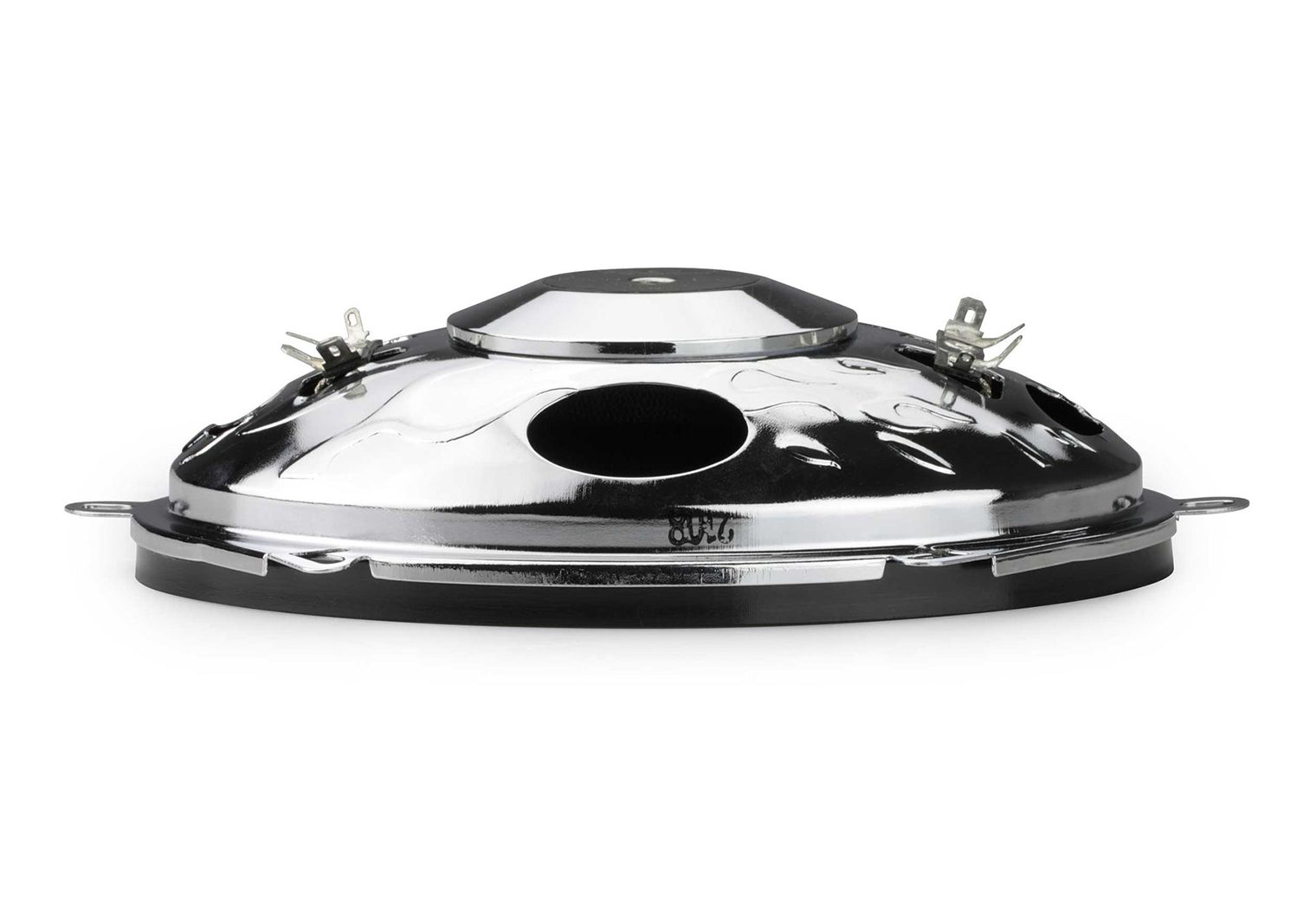
- Single 5×7 dash speaker
- Santoprene surround
- Dual voice coils
- Silk dome tweeters
- 1.9-inch mounting depth (top mount)
- 60 watts RMS, 100 watts peak
- Neodymium magnet with dip cut
- 8 ohm resistance
RetroSound R-57N Quick Review
Classic cars built between the 1960s and the 1980s often had a single speaker in the center of the dash that was often a 5×7 size. It was often impossible to find a quality replacement for the mono speaker as most 5x7s today are designed for stereo installation. RetroSound builds a wide range of speakers and audio components designed specifically for classics, including this coaxial 5×7 that has a special design just for classic car owners looking to improve the performance of their classic factory system.
Woofer and Tweeter Construction
The woofer cone of this speaker is made from a standard pulp-paper composite but uses a Santoprene surround to provide enhanced performance and long-term reliability. The tweeter configuration is what truly makes this speaker special. Rather than a single tweeter and voice coil, the R-57N uses dual tweeters and voice coils to provide stereo-like sound from a mono speaker. When installing this speaker, simply connect the left and right channels from the head unit to the appropriate voice coils. The mylar-dome tweeters provide smooth high frequencies without harshness and are a low-profile design to prevent interference when installed under factory grills.
Special Construction
In years past, we did some weird things trying to get better sound from a single speaker location in many classic vehicles. Whether it was mounting two, small speakers in the space of the single 5×7 or using a single speaker and ignoring the poor audio quality output, the solution was never straight-forward until RetroSound came along and introduced the dual coil design of the R-57N. The speaker uses a polished basket that is so good looking it is almost a shame to bury it in the dash, but the audio performance really makes this speaker sparkle in your classic car or truck. The R-57N can operate on as little as two watts from a factory head unit, a feature few speakers out there will boast about.
Reasons to Buy
- This is a great solution to one of the biggest problems with increasing audio performance in classic cars and trucks.
- Excellent audio quality even when powered with a low-wattage transistor tube factory AM radio or other less-than-ideal factory units
Reasons Not to Buy
- Not much bass response
- May require a mounting strap or bracket to install in some vehicles, sold separately