
Best 5X7 Car Speakers (Tested) – 2026 Buyer's Guide
The 5×7 sets I trust for a clean, drop-in upgrade in Ford & Mazda doors — 8 picks ranked by use-case. A focused deep-dive within my Best Car Speakers guide.

Why I built this guide
The 5×7 is a Ford-and-Mazda oddball, but it has a hidden advantage: it usually shares a bolt pattern with the 6×8, so many of these drop straight into either opening. That makes a clean, no-fabrication upgrade very doable once you pick the right set.
These are my 5×7 picks for a true plug-and-play swap, ranked by use-case below.
Compare my 8 5×7 picks
| Best for ↕ | My pick ↕ | Power (RMS) ↕ | Sensitivity ↕ | Rating ↕ | Buy |
|---|---|---|---|---|---|
| Best Overall 5×7 |
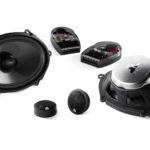 JL Audio C3-570 JL Audio C3-570
|
75 watts | ~90–93 dB (manufacturer/retailer rated) | Buy Now $529.99 on Crutchfield | |
| Runner-Up, Best Overall |
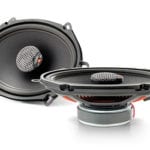 Focal ICU 570 Focal ICU 570
|
60 watts | 94 dB | Buy Now $207.99 on Amazon | |
| Best Factory Upgrade |
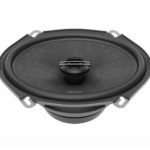 Hertz Cento CX-570 Hertz Cento CX-570
|
70 watts | 93.5 dB | Buy Now $249.99 on Amazon | |
| Best All-Weather |
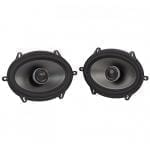 Polk Audio MM572 Polk Audio MM572
|
100 watts | 93 dB | Buy Now $179.00 on Amazon | |
| Best for Volume |
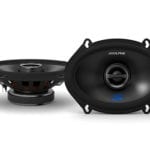 Alpine S-S57 Alpine S-S57
|
75 watts | 88 dB | Buy Now $149.95 on Amazon | |
| Best Value |
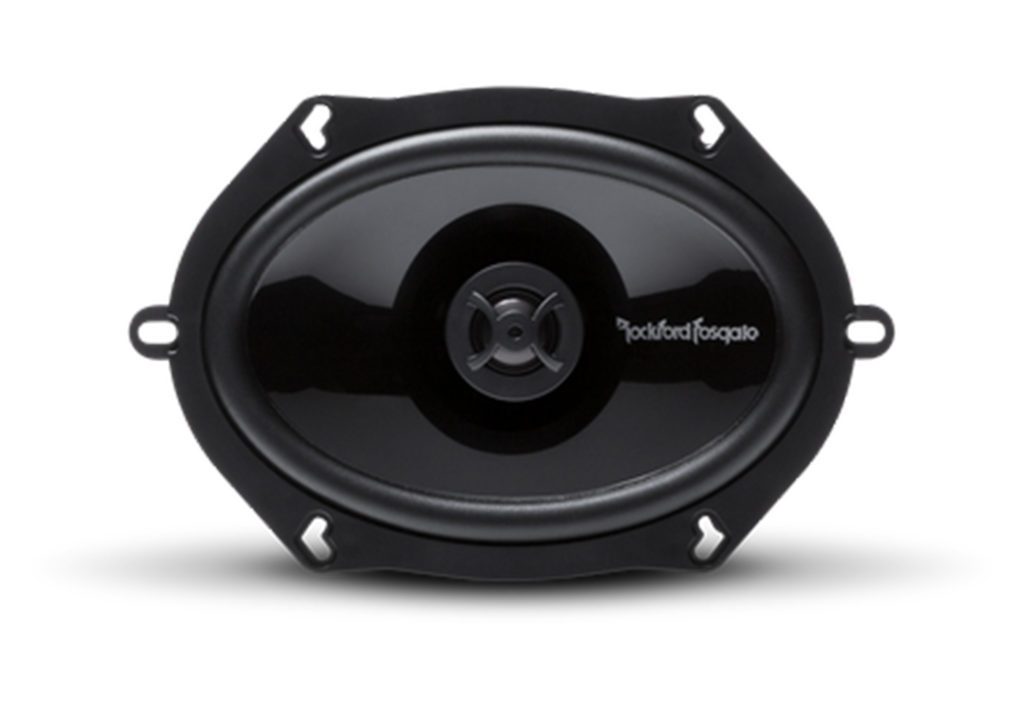
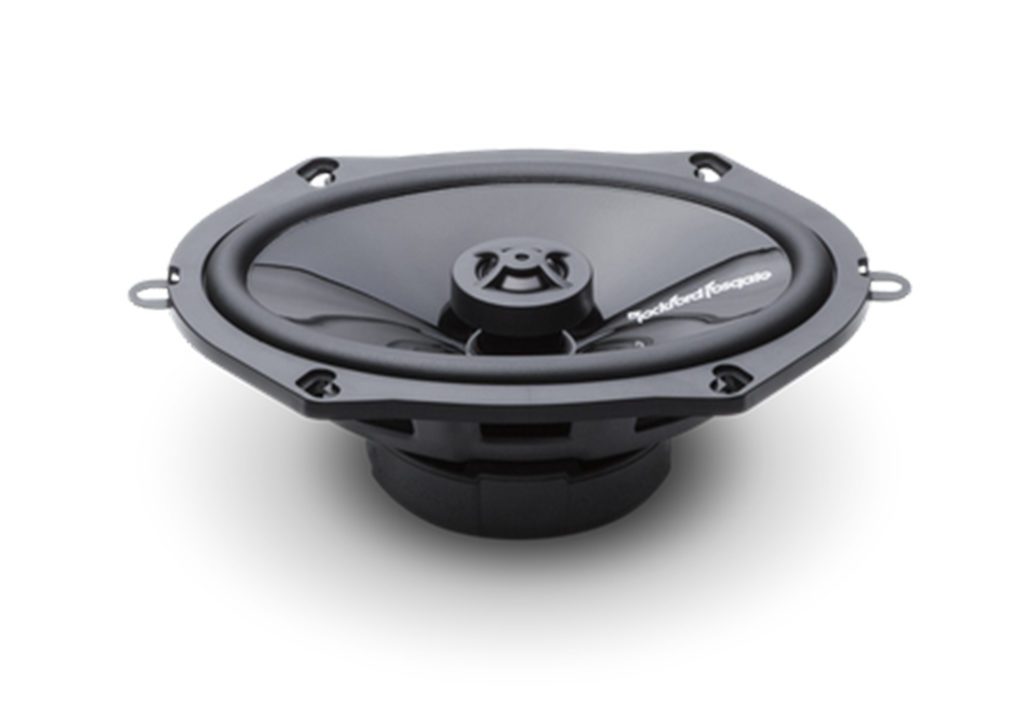
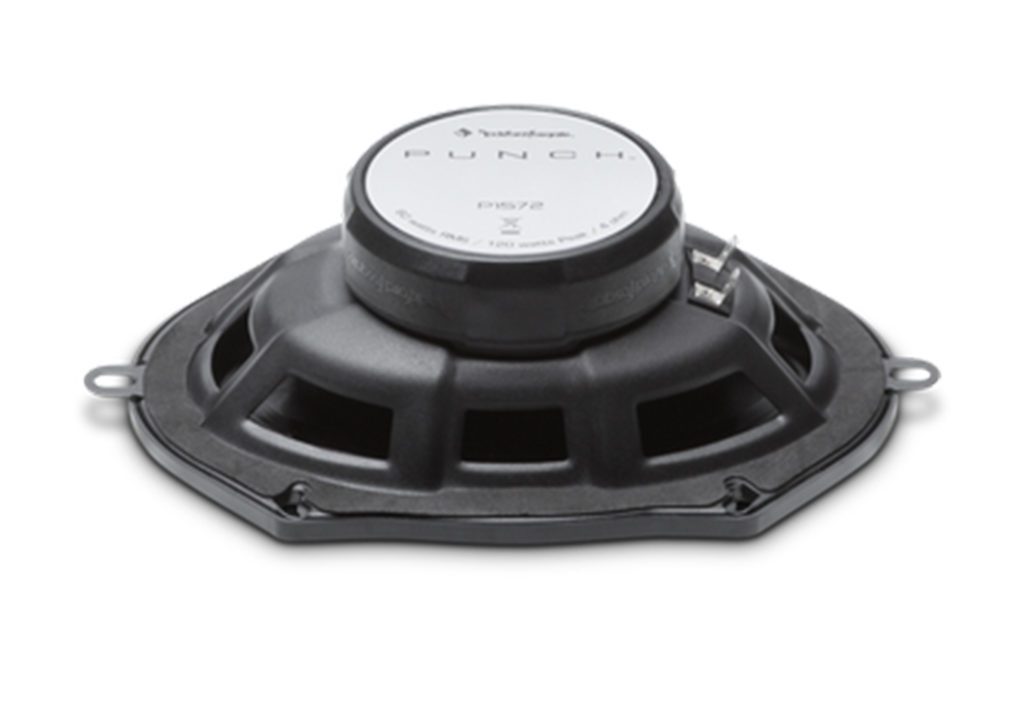
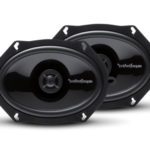 Rockford Fosgate P1572 Rockford Fosgate P1572
|
60 watts | 91 dB | Buy Now $109.99 on Amazon | |
| Runner-Up, Best Value |
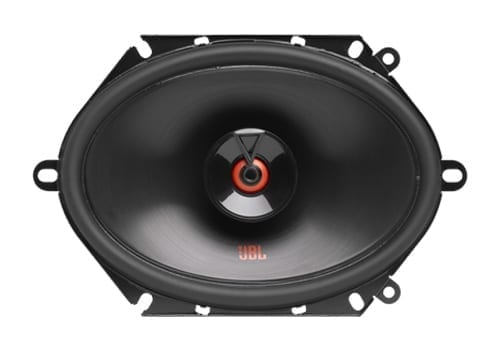
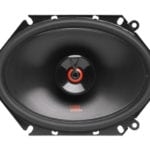 JBL Club 8622F JBL Club 8622F
|
60 watts | 93 dB | View pick → | |
| Best for Older Vehicles |
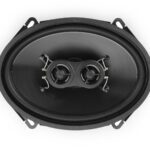 RetroSound R-57N RetroSound R-57N
|
60 watts | 89 dB | Buy Now $80.99 on Crutchfield |
We test gear and may earn a commission from “Check price” links. This never affects our picks.
How we test & choose 5×7 speakers
We install and listen to the same 5×7 sets in real Ford and Mazda doors — on factory power and with a modest amp. Rather than publish lab graphs, we focus on what matters day-to-day: drop-in fitment, off-axis sound from low door locations, and long-term reliability.
Mounting depth, the 5×7/6×8 bolt pattern, tweeter protrusion under grilles, and whether adapters or spacers are needed for a clean, rattle-free fit.
Listen on a stock head unit and with a sensible amp upgrade to confirm which picks work great with no amp — and which truly benefit from added power.
Consistent reference tracks across genres to judge off-axis clarity from low door mounts, tweeter smoothness, and oval-cone mid-bass.
Cone and surround materials, weatherization where relevant, crossover design, and the included hardware that simplifies installation.
Why 5×7 Car Speakers — and Who This List Is For
- You run factory 5×7 (or 6×8) locations Common in Ford and Mazda — F-150, Ranger, Mustang, Fusion, Escape, Edge, Mazda 3/6 and CX models. Not sure? Check my speaker size chart.
- You want a true drop-in upgrade The oval 5×7 cone gives more usable mid-bass than a round 5.25″/6.5″ while staying shallow — no cutting metal or building adapters.
- 5×7 and 6×8 share a bolt pattern Most 5×7 and 6×8 speakers interchange in the same opening; 6×8 adds a little cone area, 5×7 can sit shallower.
- You might add an amp later These respond well to small power bumps — start on head-unit power today and add an amp later for more volume and clarity.
- You want better off-axis sound 5×7s usually mount low in the door, so an aimable or wide-dispersion tweeter matters — and a bit of door deadening tightens mid-bass.
My top 5×7 picks


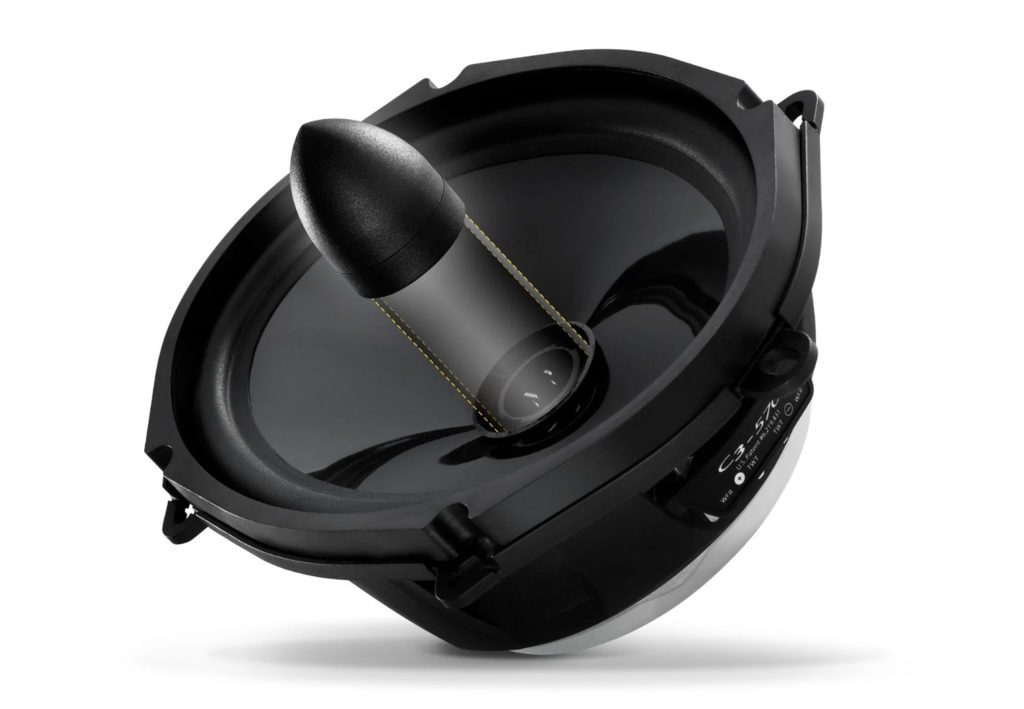
JL Audio C3-570
5×7" Convertible Component / Coaxial
Buy-now clicks support our testing. This doesn't affect our picks.
Why I picked it
JL’s C3 line is clever: run them as a convertible component (separate tweeter + phase plug) or mount the tweeter on the woofer for a coaxial install. The silk dome tweeter is smooth and easy to live with, and the crossover gives you multiple mid/tweeter level options so you can tame dash reflections or brighten a low door position without a DSP. The glass-filled polymer frame with integrated cooling is overbuilt in a good way—these stay composed when you lean on them.| Make | JL Audio |
| Model | C3-570 |
| Size | 5×7" Convertible Component / Coaxial |
| Power (RMS) | 75 watts |
| Power (Peak) | 225 watts |
| Frequency Response | 48 – 25,000 Hz |
| Sensitivity | ~90–93 dB (manufacturer/retailer rated) |
Reasons to buy
- Convertible design simplifies installs and staging
- Multiple mid/tweeter level settings for easy tuning
- Silk dome highs stay smooth at volume
Reasons not to buy
- Deeper basket than some factory 5×7"—check depth before ordering
- Pricier than many 5×7" options
- Benefits from an amp to hit full potential
Focal ICU 570
5×7 coaxial · polyglass cone · inverted-dome tweeter
Buy-now clicks support our testing. This doesn't affect our picks.
Why I picked it
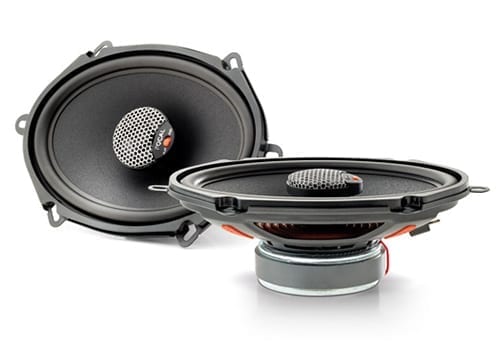
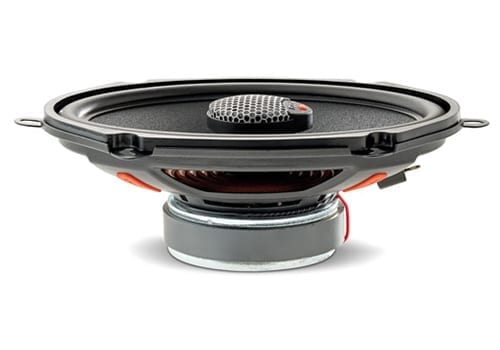
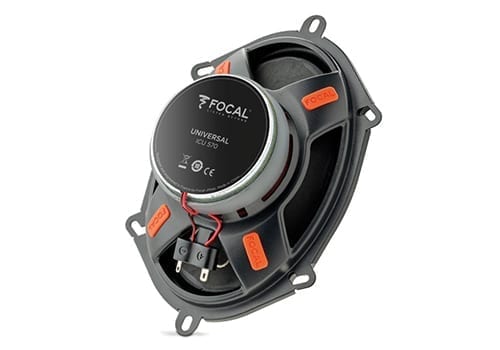
If your goal is an OEM+ upgrade with a warm, hi-fi signature, the ICU 570 nails it. The inverted-dome tweeter adds detail without edge and the shallow frame makes fitment painless in tight Ford door skins. The high-level switch tames reflections from low door placements, and the polyglass mid-woofer keeps distortion low. I like these with a mild DSP bump and a sub handling the bottom octaves; add a compact amp later to open them up.| Make | Focal |
| Model | ICU 570 |
| Size/Type | 5×7 Coaxial |
| Power (RMS) | 60 watts |
| Power (Peak) | 120 watts |
| Frequency Response | 60 – 21,000 Hz |
| Sensitivity | 94 dB |
Reasons to buy
- Clean OEM-friendly fit with refined, non-harsh highs
- Excellent upgrade path: add a compact amp or DSP later
Reasons not to buy
- Not the pick if you want big mid-bass slam without a sub
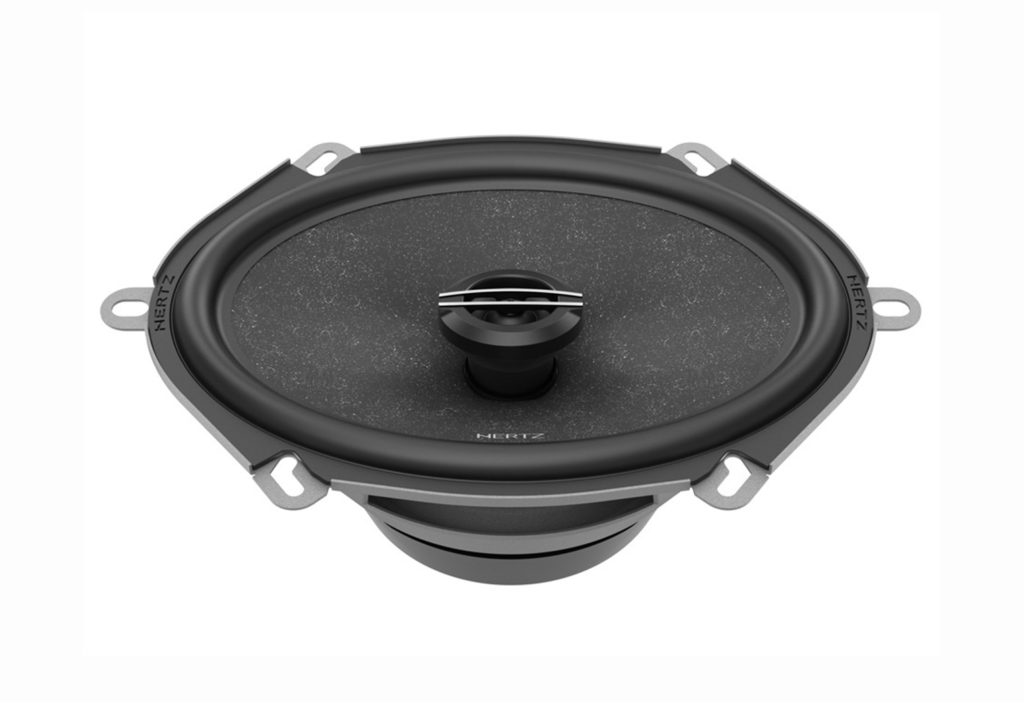
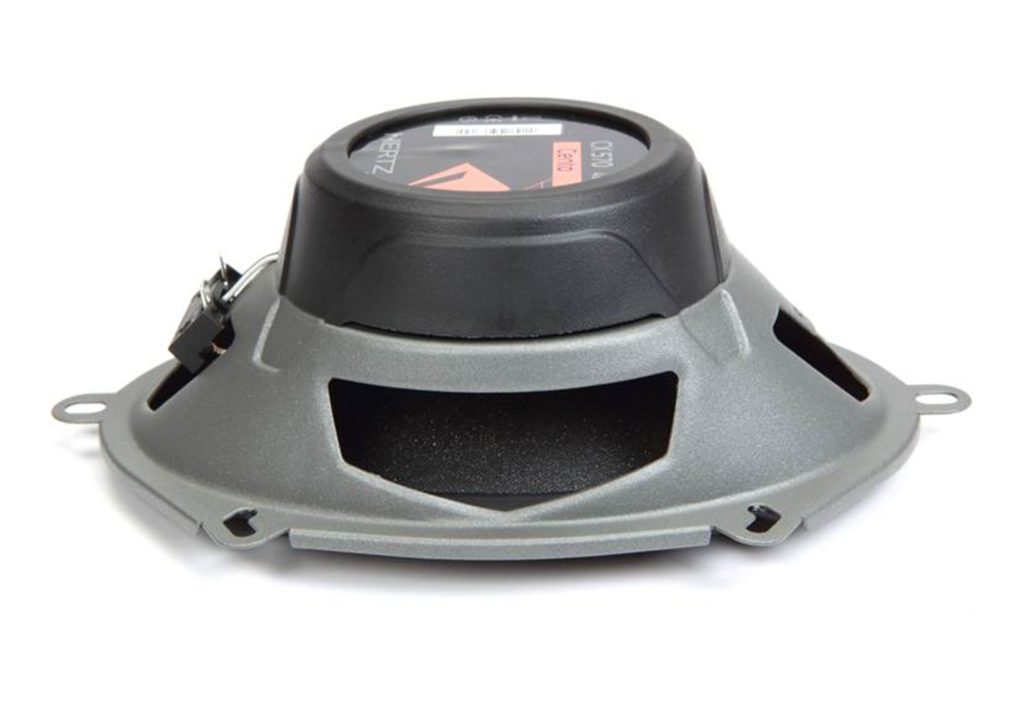
Hertz Cento CX-570
5×7 coaxial · aimable Tetolon tweeter
Buy-now clicks support our testing. This doesn't affect our picks.
Why I picked it
Hertz did the homework on off-axis door installs. The Tetolon tweeter’s aimable design recovers detail when the speaker sits low in a Ford door, and paired with a small 45–75W RMS amp they come alive. Planning an amp later? Start here. Add deadener to the outer door skin (see my install guide) and you’ll pick up audible mid-bass and less door buzz.| Make | Hertz |
| Model | Cento CX-570 |
| Size/Type | 5×7 Coaxial |
| Power (RMS) | 70 watts |
| Power (Peak) | 210 watts |
| Frequency Response | 55 – 22,000 Hz |
| Sensitivity | 93.5 dB |
Reasons to buy
- Aimable tweeter makes factory off-axis locations sound right
- Easy to drive now, scales with an amp later
Reasons not to buy
- Paper/mica cone isn’t as abuse-proof as marine-rated sets
- Needs a touch of EQ for the brightest cabins
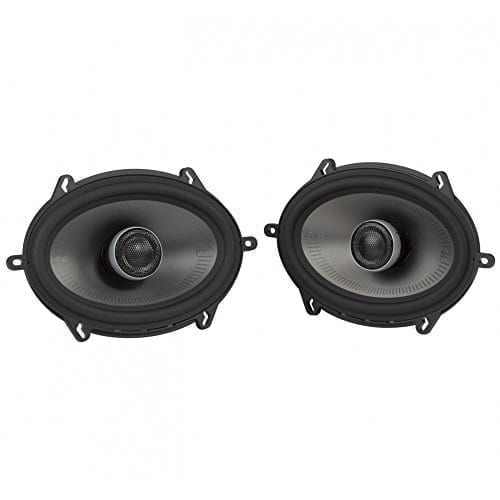
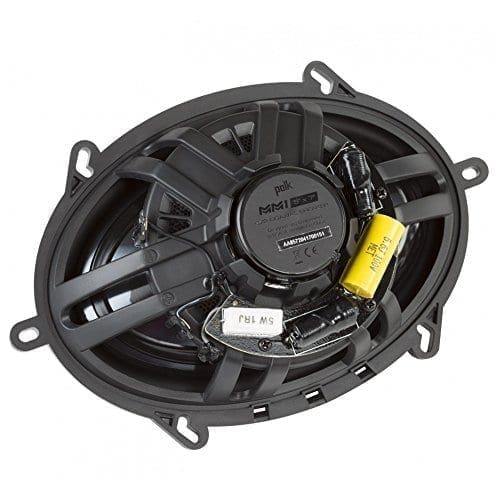
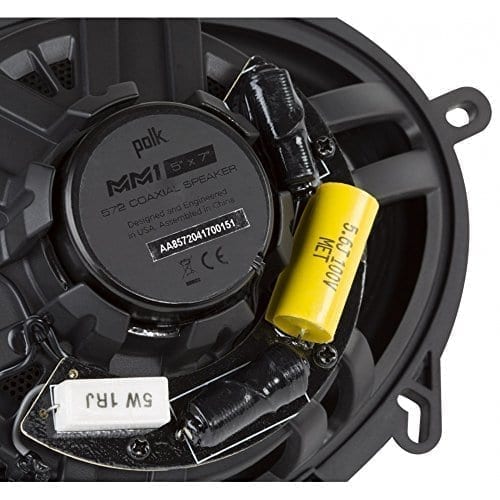
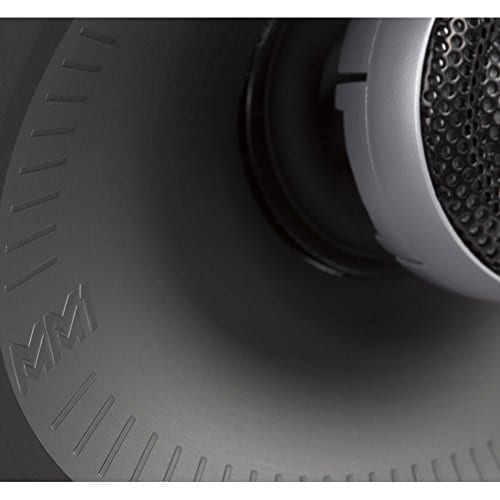
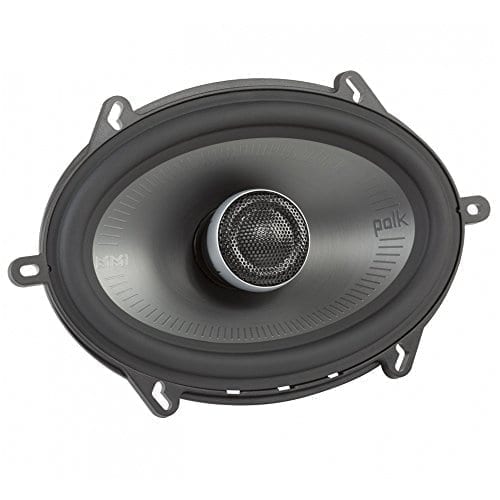
Polk Audio MM572
5×7 coaxial · IP56 · marine/POV-ready
Buy-now clicks support our testing. This doesn't affect our picks.
Why I picked it
When I’m building systems for Jeeps, side-by-sides or boats, I reach for the MM series. The MM572 survives dust, spray and UV (IP56) while still sounding like a real car speaker. Aim the tweeter toward ear level and cross to a sub around 80–100 Hz for a tough, musical setup. Building a full outdoor rig? See my marine speaker picks for the bigger zones.| Make | Polk Audio |
| Model | MM572 |
| Size/Type | 5×7 Coaxial (IP56) |
| Power (RMS) | 100 watts |
| Power (Peak) | 300 watts |
| Frequency Response | 35 – 40,000 Hz |
| Sensitivity | 93 dB |
Reasons to buy
- Legit marine/POV-friendly build that still sounds hi-fi
- Takes real power and gets loud cleanly
Reasons not to buy
- Best with an external amp; factory radios won’t show full potential
- Not the lightest cone — pick a pure SQ set if you never go outdoors
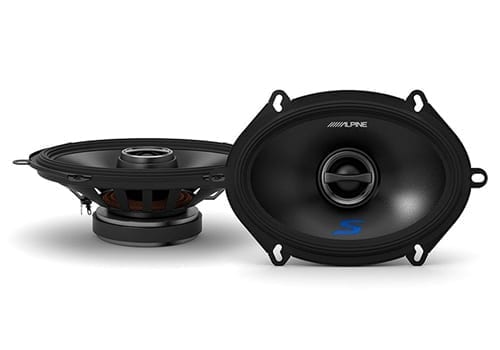
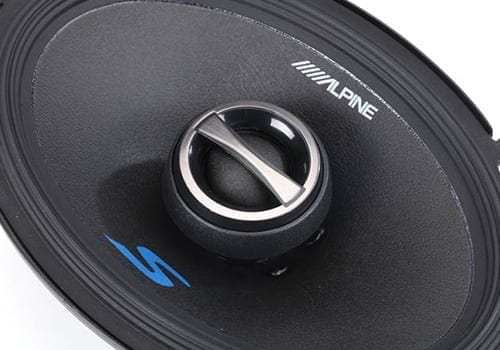
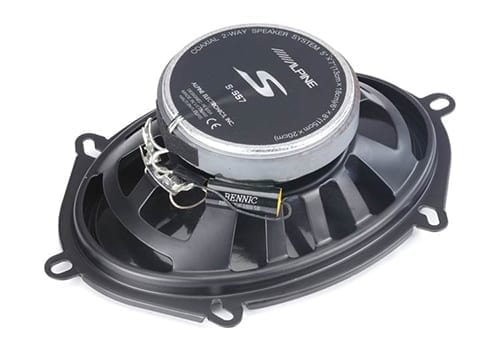
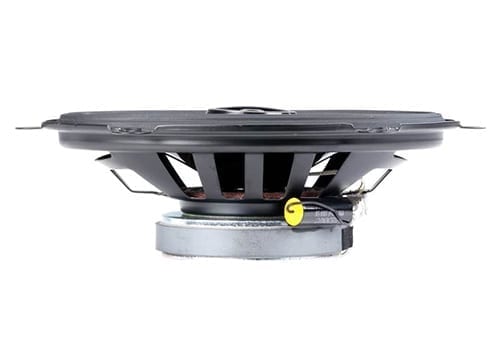
Alpine S-S57
5×7 coaxial · CFRP cone · silk dome
Buy-now clicks support our testing. This doesn't affect our picks.
Why I picked it
When the factory radio has decent power (or you’ve added a compact amp) and you want volume without grit, the S-Series is a safe bet. The CFRP cone is rigid yet light and the multi-roll surround controls excursion, so it stays composed when you turn it up — less cone cry, more music. Cross to a sub around 80–100 Hz for the best dynamics.| Make | Alpine |
| Model | S-S57 |
| Size/Type | 5×7 Coaxial |
| Power (RMS) | 75 watts |
| Power (Peak) | 230 watts |
| Frequency Response | 70 – 22,000 Hz |
| Sensitivity | 88 dB |
Reasons to buy
- Holds composure at high volume; great with compact amps
- Durable cone/surround for daily-driver abuse
Reasons not to buy
- Stock head units alone may leave them sounding restrained
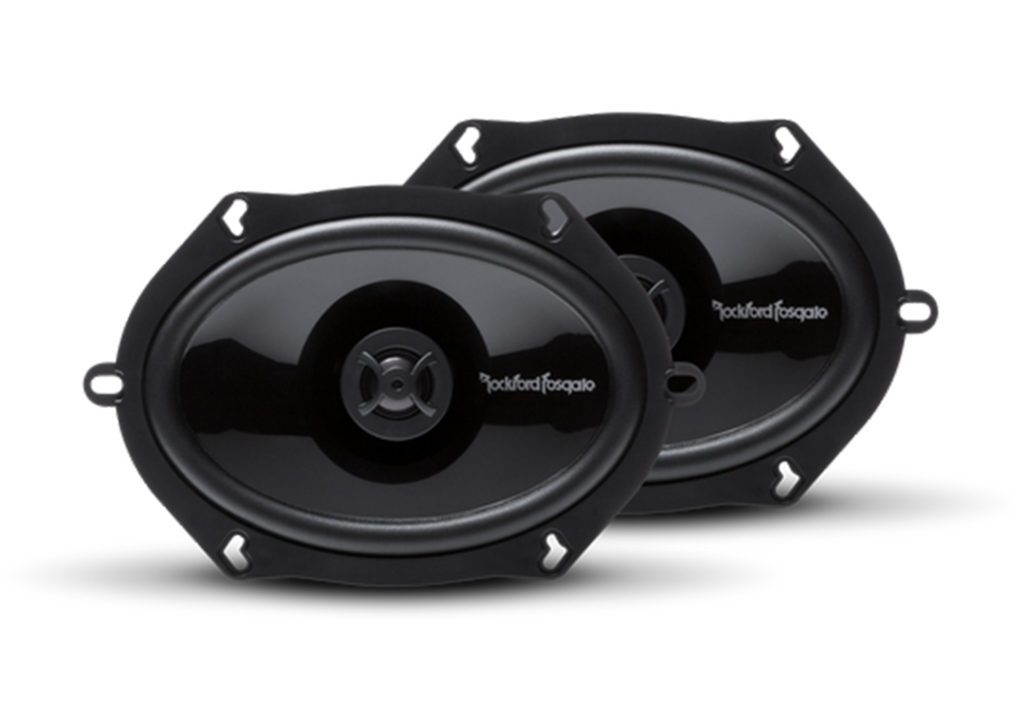
Rockford Fosgate P1572
5×7 coaxial · VAST surround · hidden crossover
Buy-now clicks support our testing. This doesn't affect our picks.
Why I picked it
My go-to budget upgrade when the factory speakers are tired. The P1572s add clarity and output on stock power and don’t need complicated crossovers or spacer rings, thanks to the integrated (hidden) crossover and FlexFit basket. New to upgrading? Pair them with my install guide for a noticeable improvement in an afternoon; add a clean amp later for more.| Make | Rockford Fosgate |
| Model | P1572 |
| Size/Type | 5×7 Coaxial |
| Power (RMS) | 60 watts |
| Power (Peak) | 120 watts |
| Frequency Response | 75 – 22,000 Hz |
| Sensitivity | 91 dB |
Reasons to buy
- Great bang-for-buck clarity and output on factory power
- Install-friendly basket and concealed crossover
Reasons not to buy
- Limited low-bass — pair with a sub for full-range impact
- Won’t outclass modern premium factory systems by itself
JBL Club 8622F
5×7 / 6×8 coaxial · Plus One cone · 3Ω efficient
Buy-now clicks support our testing. This doesn't affect our picks.
Why I picked it
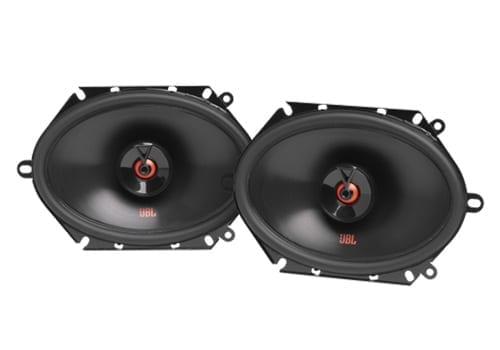
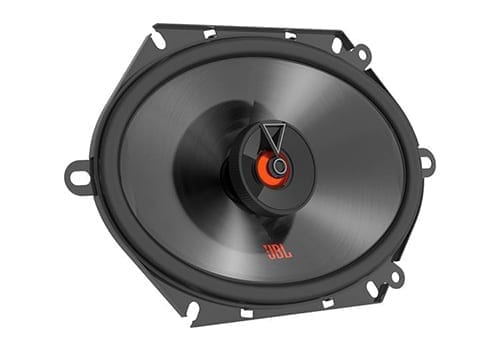
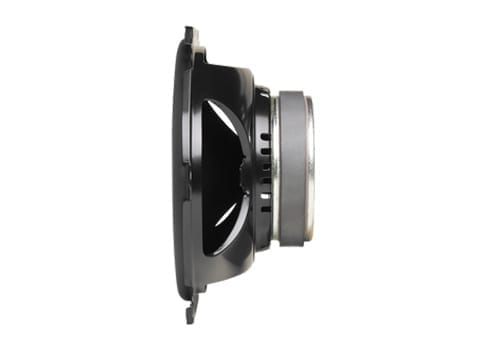
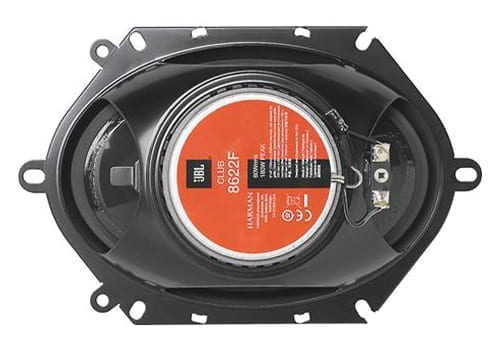
Perfect for budget builds and factory radios. The 3-ohm voice coil lets the Club series pull a little more real-world power from stock head units, and the Plus One™ cone helps bass presence from a modest package. I’ve used these in commuter cars where “clear and reliable” beats “show car.” Adding an amp later? They respond well — just keep gains conservative.| Make | JBL |
| Model | Club 8622F |
| Size/Type | 5×7 / 6×8 Coaxial |
| Power (RMS) | 60 watts |
| Power (Peak) | 180 watts |
| Frequency Response | 65 – 20,000 Hz |
| Sensitivity | 93 dB |
Reasons to buy
- Noticeable clarity bump on stock power thanks to 3-ohm design
- Affordable, easy drop-in with wide fitment
Reasons not to buy
- Not built for high-power SQ builds; limited low-bass reach
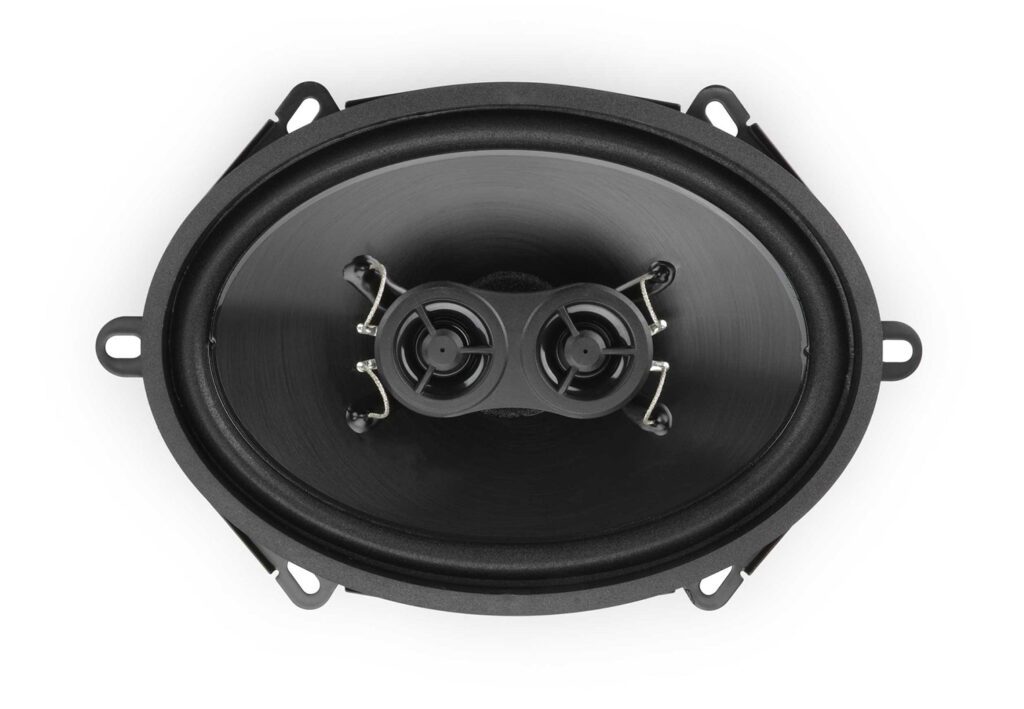
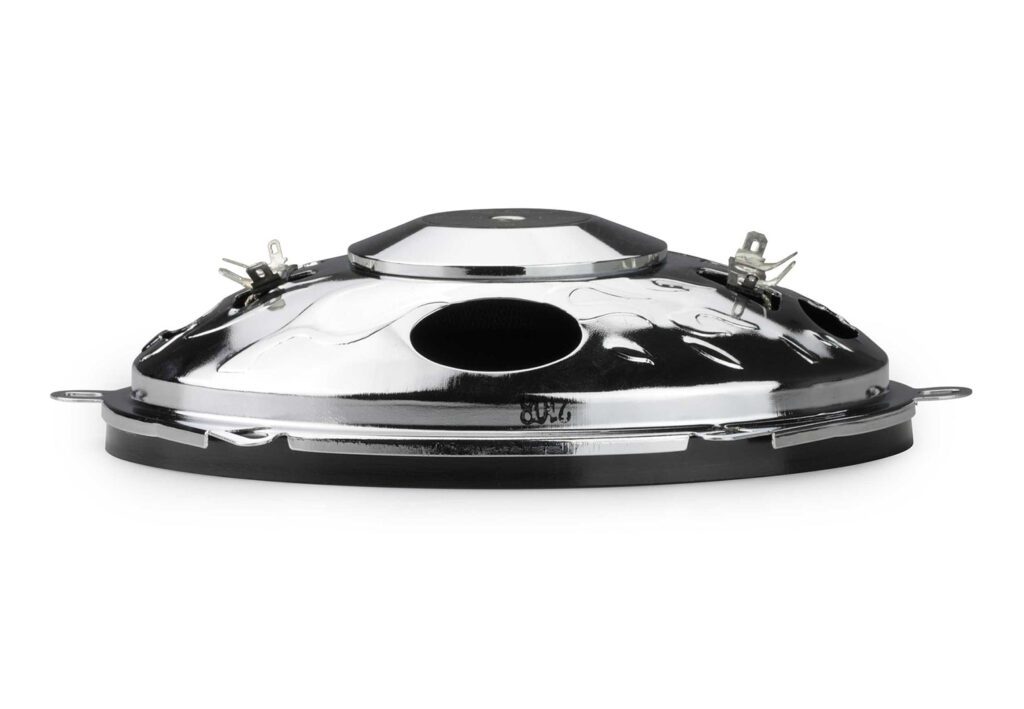
RetroSound R-57N
5×7 dash speaker · dual voice coil · twin tweeters
Buy-now clicks support our testing. This doesn't affect our picks.
Why I picked it
For classic dashes that used a single 5×7 center speaker, this is the clean solution. The dual-voice-coil / twin-tweeter layout gives a pseudo-stereo image from one location without hacking the dash — wire left/right from the head unit to each coil and mind the 8-ohm load. Low-profile tweeters clear factory grilles and the basket won’t rust: a smart, period-correct upgrade. Confirm fitment with my speaker size chart.| Make | RetroSound |
| Model | R-57N |
| Size/Type | 5×7 Dash (dual voice coil, 8Ω) |
| Power (RMS) | 60 watts |
| Power (Peak) | 100 watts |
| Frequency Response | 70 – 18,000 Hz |
| Sensitivity | 89 dB |
Reasons to buy
- Pseudo-stereo image from a single dash location
- Low-profile tweeters clear factory grilles; rust-free basket
- Sensitivity friendly to vintage radios
Reasons not to buy
- Single-speaker dash solution — not a full component upgrade
- 8-ohm load and modest power handling
Get your exact fit & an upgrade path
Confirm your vehicle’s speaker size and depth with my interactive speaker size chart — 5×7 and 6×8 share a bolt pattern, so double-check before you buy.
5×7 speaker FAQs
Will 5×7 and 6×8 speakers interchange?+
Usually yes — they share the same bolt pattern, so most 5×7 and 6×8 speakers drop into the same opening. 6×8 has slightly more cone area; 5×7 can sit a touch shallower. Confirm depth with my size chart.
Do I need an amplifier for 5×7 speakers?+
No — every pick here works on factory power — but they all scale with a clean amp. Even 45–75W RMS per channel noticeably tightens mid-bass and adds headroom.
Which vehicles use 5×7 speakers?+
Mostly Ford and Mazda — F-150, Ranger, Mustang, Fusion, Escape, Edge, older Explorer/Taurus, plus Mazda 3/6 and many CX models (and some Lincoln/Mercury). Not sure? Check my speaker size chart.
Component or coaxial in 5×7?+
Most 5×7s are coaxial for a clean drop-in. Want a real front stage? The convertible JL C3-570 lets you mount the tweeter up high — here’s my components vs coaxials breakdown.
More reviews & comparisons
Go deeper on the gear and installs behind these picks.
Why trust CarAudioNow?

