
Find the audio upgrades that actually fit your car.
Pick your vehicle and I’ll build you a step-by-step upgrade path — the right signal, speaker sizes, bass, and amp for your exact setup, with the gear I’d actually buy.
Start with your vehicle
Two quick questions and your plan is ready.
This is how I tailor the picks and the budget — no long survey, I promise.
2001 Toyota Tacoma
Your 2001 Toyota Tacoma leaves the factory with a replaceable head unit, no amp, and 5x7 coaxials in the front doors and rear side panels — a clean starting point. For a full system build at a premium budget, do everything at once: swap the head unit for a better source, replace all speaker positions front and rear, add a subwoofer in a custom enclosure under or behind the rear seat where your truck's cab has room, and install an amplifier to power every channel properly. The 5x7 front openings with tweeter locations in the door panel make a component set a natural fit up front — separate drivers handle the imaging and detail that make a front stage worth building. A well-matched full system in a truck's cab sounds significantly different from a staged build caught halfway through.
The upgrade path
4 steps · ordered by impact · with DIY difficultyA direct single- or double-DIN swap is the right starting point for a full system build. The factory head unit's low preamp output is a bottleneck for everything downstream — a quality aftermarket unit with strong RCA voltage gives your amp a better signal to work with, which translates directly to lower noise and better dynamic range from your speakers. For a full build, look for a head unit with dedicated front, rear, and subwoofer preamp outputs so you can connect each zone of the amp independently. Since there's no factory amplifier in your 2001 Toyota Tacoma, the signal path is straightforward — RCA out from the head unit, straight to the amp inputs. Get this step right and the rest of the chain benefits.
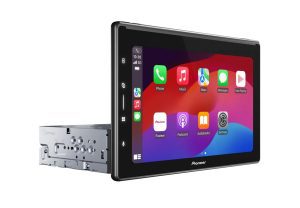
Why it’s the pick: The DMH-WT6000NEX is my big-screen value pick because it puts a current 10.1-inch 1280 by 720 floating display under four figures without gutting the feature list to get there. It…
A full system build means every speaker location in your 2001 Toyota Tacoma gets upgraded now — and with 5x7-inch openings in both the front doors and rear side panels, you're replacing all of them in one shot. Front stage first: go component. A component set separates the tweeter from the woofer, placing the high-frequency driver exactly where it images best — up at ear level in the A-pillar or factory tweeter location. That's the foundation of a proper front stage. Rear side panels get a matching 5x7 coaxial pair; the rears in a truck cab fill in the soundstage and keep the system from sounding hollow behind the front seats. There's no factory amp attenuating the signal, so the head unit drives these directly until you add an aftermarket amplifier. With a DIY install, take time to deaden the doors — even a basic layer of damping material behind each speaker makes a meaningful difference in a truck cab. See the Best Car Speakers by Size guide for picks.
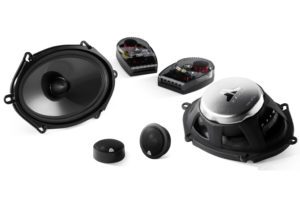
Why it’s the pick: JL’s C3 line is clever: run them as a convertible component (separate tweeter + phase plug) or mount the tweeter on the woofer for a coaxial install. The silk dome tweeter is smoo…
A full system build in a truck starts with the physical reality: no trunk, so the subwoofer lives in the cab — under or behind the rear seat in an enclosure built to that sub's specs. A shallow or compact sub is designed for exactly this constraint; the box tuning is what separates controlled, musical bass from a muddy cabinet resonance. Because you're doing the install yourself on a premium budget, build this step the right way — a proper subwoofer, a custom enclosure, and a dedicated amplifier. That combination integrates with the upgraded front and rear speakers you're already running to deliver a cohesive, full-range sound in your truck's cab. See the Best Slim / Shallow Subwoofers guide for truck-friendly picks.
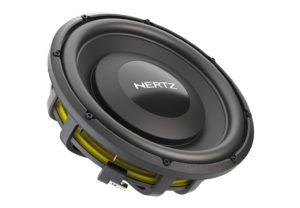
Why it’s the pick: Shallow subs used to be compromises. Not anymore. Hertz re-engineered the MPS for the slim form factor rather than shrinking a standard design, which is why it behaves like a “rea…
For a full system build, the amplifier is what makes every other component perform at its potential. Your 2001 Toyota Tacoma has no factory amp, so you're starting fresh — and at a premium budget, that's an opportunity to do it right from the start. Size the amp (or amps) to the full channel count: one channel per speaker, plus a mono channel for the sub. A multi-channel amp that handles all the speaker channels plus a separate mono sub amp is a common and clean configuration. Run dedicated power and ground cables properly — undersized wiring is a common point where premium builds give up performance. Set gains with a multimeter or oscilloscope, not by ear.
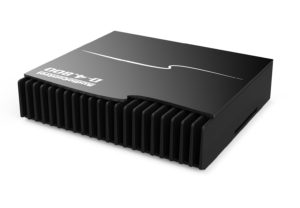
Why it’s the pick: If you’re keeping the factory head unit or a factory-amplified system, the D-Series makes life easy. Active speaker-level inputs and signal summing handle odd factory crossovers,…
2001 Toyota Tacoma audio — common questions
What size speakers fit a 2001 Toyota Tacoma?
The 2001 Toyota Tacoma uses 5×7 + tweeter front speakers and 5×7 rear speakers.
Does the 2001 Toyota Tacoma have a factory amplifier?
No factory amp — the 2001 Toyota Tacoma drives its speakers off the head unit, so adding a compact 4-channel amp later gives the new speakers clean, properly rated power.
What is the best subwoofer setup for a 2001 Toyota Tacoma?
No trunk, so bass lives in the cab — a shallow/compact sub fits under or behind the rear seat, or in a truck-specific enclosure.
What head unit fits a 2001 Toyota Tacoma?
The 2001 Toyota Tacoma has a Single/Double DIN head unit (Replaceable — direct swap), so a matching aftermarket receiver fits with the correct dash kit and harness.
Everything on CarAudioNow for your 2001 Toyota Tacoma
Fitment is a guide, not a guarantee. Speaker sizes and fit details are based on your selected year, make, model, and audio package and can vary by trim, options, and prior modifications — always confirm before buying.
Your plan is guidance built from your selections (vehicle, goal, budget), not a guarantee of fit, sound, or results, and not a substitute for professional installation advice. Prices are pulled from retailers and may change at checkout.
CarAudioNow is reader-supported — some links are affiliate links and we may earn a commission at no extra cost to you. See our FTC disclosure and privacy policy.