
Best 8″ Marine & Boat Speakers
My top 8″ (and 7.7″) marine/boat speakers, with hands-on notes and amp-matching specs. Car speakers can physically fit a boat, but sun, spray and salt take them out fast — for the water you need gear built to live there and get loud over wind and chop. 8″ drivers have gone mainstream: they reach deeper and fill open air better than 6.5″. This is a focused child of my parent boat-speaker guide.

Why I built this guide
Step up to a 7.7–8″ when you have the cutout for it and want fuller mid-bass and more output without going all the way to a tower. The bigger cone moves more air — which matters on the water, where there’s no cabin to contain the sound and you’re fighting wind and engine noise.
Here are my top 8″ (and 7.7″) marine speakers, with amp-matching notes, ranked below.
Compare my 8 picks side by side
| Best for ↕ | My pick ↕ | Power (RMS) ↕ | Sensitivity ↕ | Rating ↕ | Buy |
|---|---|---|---|---|---|
| Best Overall 8″ Boat Speaker | 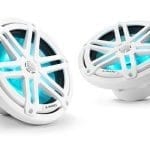 JL Audio M3-770X-S-GW JL Audio M3-770X-S-GW | 70 watts | ~90.5 dB | Buy Now $439.99 on Amazon | |
| Best for Max Volume | 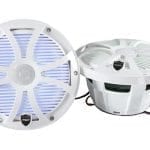 Wet Sounds Revo 8-SWW Wet Sounds Revo 8-SWW | 150 watts | ~92 dB | Buy Now $599.99 on Amazon | |
| Splurge But Worth It | 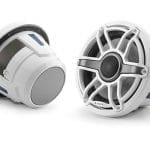 JL Audio M6-880X-S-GwGw JL Audio M6-880X-S-GwGw | 125 watts | 90.5 dB | Buy Now $829.99 on Crutchfield | |
| Best Value | 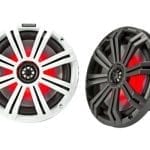 Kicker 45KM84L Kicker 45KM84L | 150 watts | ~92 dB | Buy Now $207.96 on Amazon | |
| Highest Power Handling | 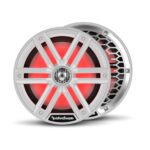 Rockford Fosgate M2-8 Rockford Fosgate M2-8 | 250 watts | 93.1 dB | Buy Now $579.99 on Amazon | |
| Best Convertible (Coax/Component) | 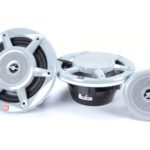 JBL Stadium Marine 82M JBL Stadium Marine 82M | 200 watts | 92 dB | View pick → | |
| Best Budget |  Infinity Reference 822MLT Infinity Reference 822MLT | 150 watts | 92 dB | View pick → | |
| Runner-Up Budget |  MB Quart Nautic NH2-120 MB Quart Nautic NH2-120 | 90 watts | 92 dB | View pick → |
CarAudioNow may earn a commission from retailer links. Brands do not influence the recommendations.
How I test & choose 8″ marine speakers
I install and listen to these on real boats — surf/wake cockpits, cabins and helms — and run them on real marine amp power (75–125W/ch) the way they're meant to be driven. Here's what drives the picks:
I favor brands that publish real UV and salt-fog (ASTM) testing — JL's M-series, for example, is built and endurance-tested in a dedicated marine facility — so the speaker survives seasons of sun, spray and salt.
8″ (and 7.7/8.8″) drivers reach deeper and fill open air better than 6.5″. I judge real midbass and how clean each stays at party volume, on- and off-axis.
I size these to real marine amps (75–125W/ch) and confirm they wake up and tune flat with gentle EQ. The “best” speaker on head-unit power can sound average next to a well-powered budget set.
Some 8″ speakers need larger-than-expected cutouts or extra depth (especially compression horns). I note cutout diameter, mounting depth, and what it takes to upgrade a 6.5″ hole cleanly.
Synthetic spiders and cones, stainless hardware, sealed baskets and conformal-coated crossovers — the parts that actually fail on the water when they're built wrong.
Impedance and RMS/peak power against manufacturer docs, so you don't mismatch amps or zones.
What I check on every 8″ install
- Cutouts & depth Some 8″ speakers need larger-than-expected holes or extra depth (e.g., compression horns). Measure twice; dry-fit once. When upgrading 6.5″ to 8″, plan on proper spacers and sealing rings.
- Power matters The “best” speaker on head-unit power can sound average next to a well-powered budget set. If you can, budget for an amp early — see my best marine amplifiers and how to pair speakers to an amp.
- Protect terminals Tinned marine wire, heat-shrink butt connectors and dielectric grease on terminals dramatically extend life — especially on open bows.
- Tuning After install, a few minutes of gain setting and EQ makes a huge difference. New to it? Start with my how to install & wire an amp and amp tuning quick guide.
- Build the full system Start with a zone-capable marine head unit, match clean power to each speaker's RMS, and add a marine subwoofer for low end that carries across the cove.
My top 8″ marine speakers, by use-case
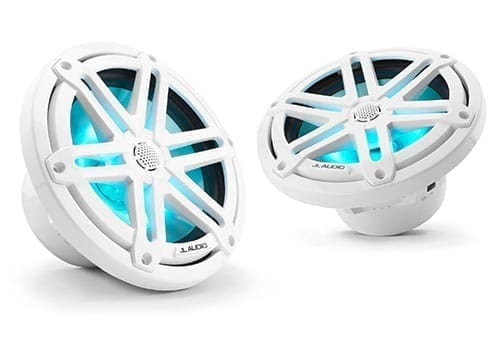
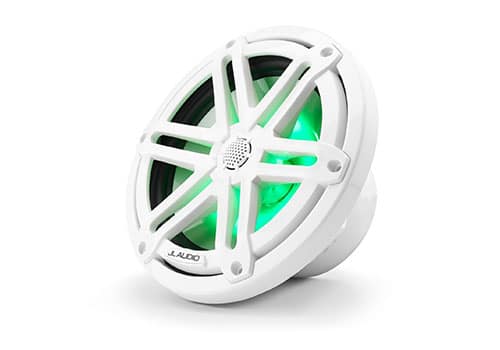
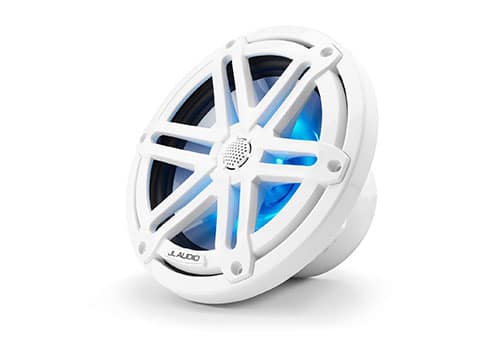
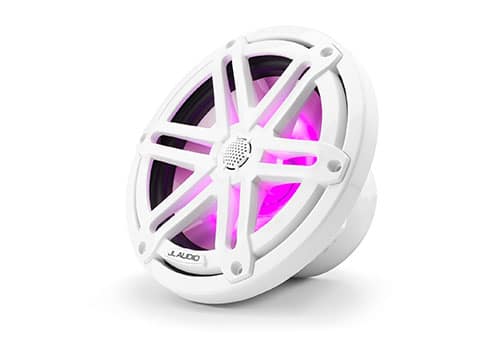
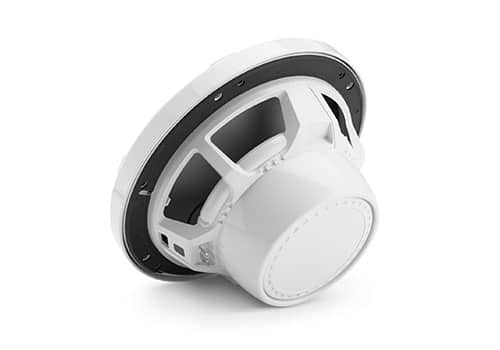
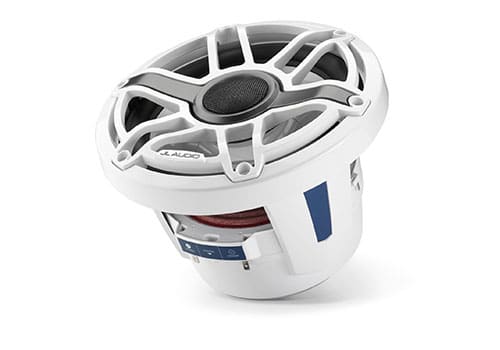
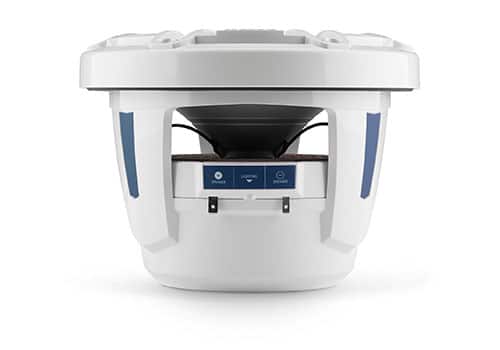
JL Audio M3-770X-S-GW
Sounds bigger than it looks — refined 7.7″ output
CarAudioNow may earn a commission from retailer links. Brands do not influence the recommendations.
Why I picked it
When a boat can't fit true 8.8″ cutouts, the M3-770X is my “sounds bigger than it looks” solution. The 7.7″ cone and efficient motor give you real mid-bass and output, while the treated silk dome tweeter keeps highs clean at volume without the brittle edge some hard-domes bring. JL's marinization and testing ethos are excellent for longevity, and the line plays nicely on 75–100W/ch—ideal for multi-zone setups that need smooth, non-fatiguing sound across the cockpit.
- My notes: Refined voicing, forgiving off-axis, great with or without LEDs.
- Good pairings: 75–100W/ch marine amps; add a marine subwoofer to unlock full low-end.
- Ideal installs: Boats with room for 7.7″ cutouts; owners prioritizing tonal balance over brute SPL.
| Make | JL Audio |
| Model | M3-770X-S-GW |
| Size | 8″ Coaxial (7.7″) |
| Power (RMS) | 70 watts |
| Power (Peak) | 225 watts |
| Sensitivity | ~90.5 dB |
| Frequency Response | 45 – 25,000 Hz |
| Impedance | 4Ω |
| Marine rating | Exceeds ASTM salt-fog & UV standards |
Reasons to buy
- Class-leading sound quality for the size
- Strong marine validation and hardware
Reasons not to buy
- Lower RMS rating than some 8.8″ competitors (still loud with proper power)
- Costs more than budget 8″ options
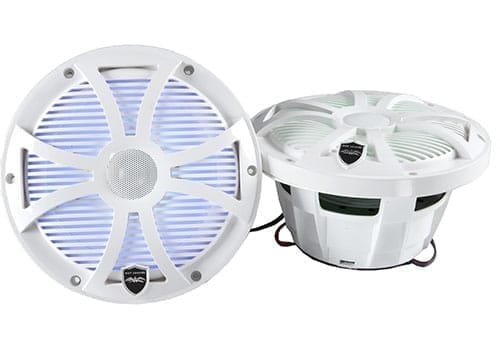
Wet Sounds Revo 8-SWW
Tower-grade intensity in a cabin-friendly 8″ coax
CarAudioNow may earn a commission from retailer links. Brands do not influence the recommendations.
Why I picked it
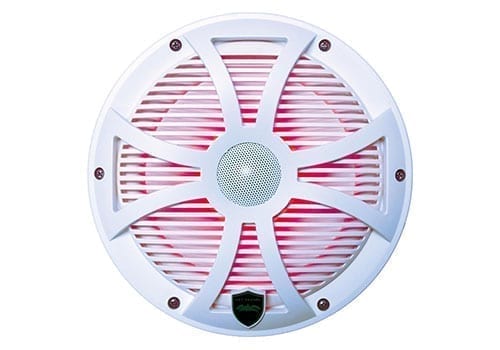
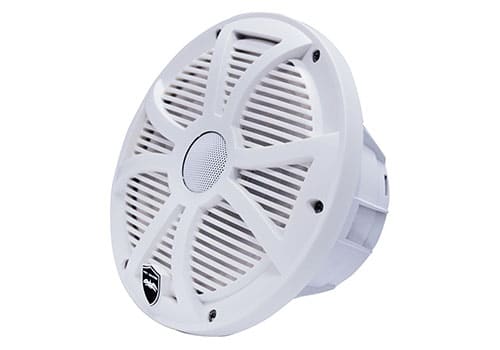
Wet Sounds builds products to get wet. The REVO 8 matches the intensity of their tower speakers but in a cabin-friendly coax that takes real power and stays composed. I like pairing a four-channel marine amp and a sealed or ported enclosure under the helm to really let the 8s breathe. If you want nighttime vibes, the RGB kit integrates cleanly—and you can sync with tower speakers for a unified light show. I installed 6 of the REVO 6 speakers in my personal Nautique G23 if you're looking for a fun read.
| Make | Wet Sounds |
| Model | REVO 8 |
| Size | 8″ |
| Power (RMS) | 150 watts |
| Power (Peak) | 300 watts |
| Frequency Response | ~35–22,000 Hz |
| Sensitivity | ~92 dB |
| Impedance | 4Ω |
Reasons to buy
- Built for harsh marine exposure; durable surrounds/spiders
- Loves power; loud and clean when cranked
Reasons not to buy
- Needs an amplifier to shine; head-unit power alone won't do them justice
- RGB controller is an extra add-on
JL Audio M6-880X-S-GwGw
More cone area, more effortless — the premium 8.8″
CarAudioNow may earn a commission from retailer links. Brands do not influence the recommendations.
Why I picked it
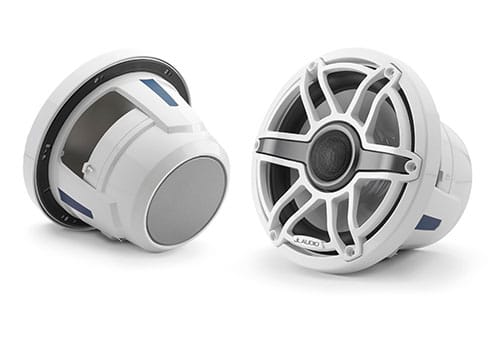
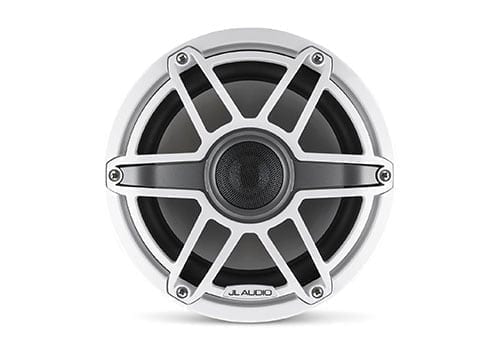
Take everything I love about the M3 and add more cone area and a larger silk-dome tweeter. The M6-880X delivers fuller midbass and a more effortless presentation at cruise volume. I've demo'd these on high-end Nautiques and the clarity at speed is next level. Plan on a healthy, clean 4-channel or two bridged stereo channels (50–250W/Ch recommended) to unlock what you're paying for.
| Make | JL Audio |
| Model | M6-880X |
| Size | 8.8″ |
| Power (RMS) | 125 watts |
| Power (Peak) | 250 watts |
| Frequency Response | 38–20,000 Hz |
| Sensitivity | 90.5 dB |
| Impedance | 4Ω |
Reasons to buy
- Deeper, tighter bass than typical 8″ coaxials
- Refined highs that stay smooth at volume
- Excellent environmental resilience
Reasons not to buy
- Premium price of entry
- Silk tweeters are smoother than titanium but can be more delicate in abusive installs
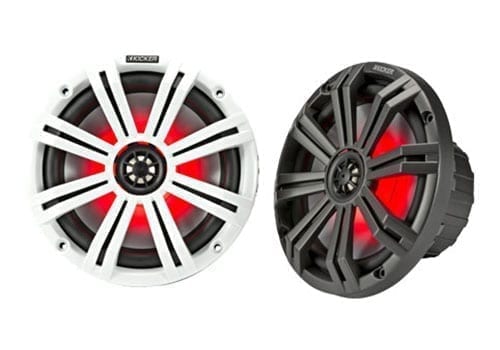
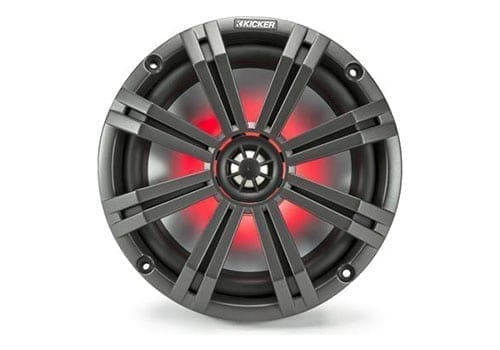
Kicker 45KM84L
Kicker's fun, punchy low-end at a value price
CarAudioNow may earn a commission from retailer links. Brands do not influence the recommendations.
Why I picked it
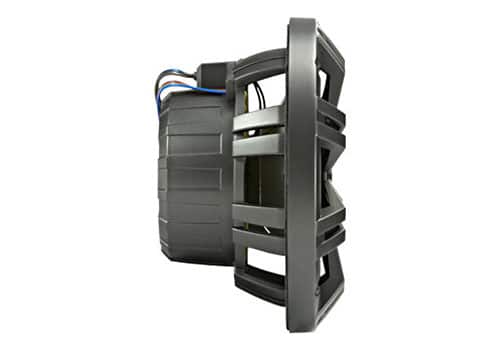
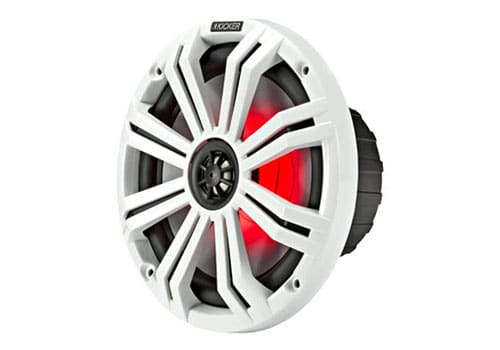
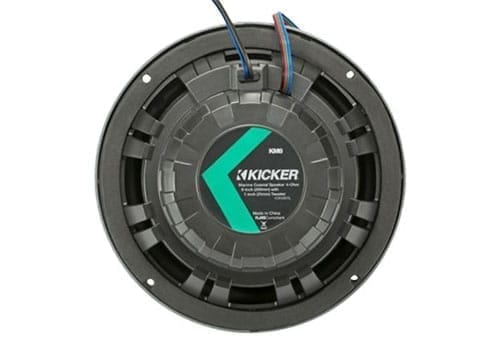
Above all else, Kicker is known for fun, punchy bass. The 45KM84L brings that DNA to a value price point without ditching marine necessities. I've used these in budget-friendly refreshes where the owner still wanted RGB lighting and real power handling—no drama, just reliable performance. Check them out in a 27ft lightning speed boat install or in my hands-on review of these Kicker KM LED series speakers.
| Make | Kicker |
| Model | 45KM84L |
| Size | 8″ |
| Power (RMS) | 150 watts |
| Power (Peak) | 300 watts |
| Sensitivity | ~92 dB |
| Impedance | 4Ω |
| Protection | IP66 |
| Details | 1″ titanium tweeter; UV-treated polypropylene cone w/ Santoprene surround |
Reasons to buy
- Legendary Kicker low-end for the money
- IP66-rated, RGB rings, stainless hardware—solid value
Reasons not to buy
- Highs can get a little edgy at max volume compared to JL/Wet Sounds
- RGB control options are more limited than premium lines

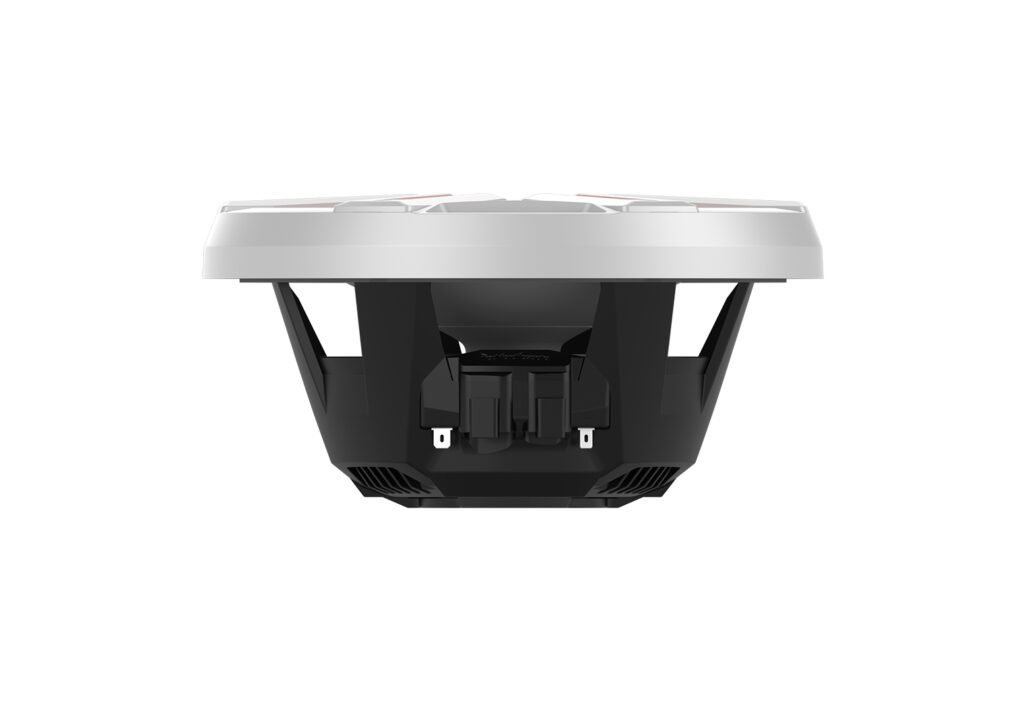
Rockford Fosgate M2-8
Serious output headroom with controlled response
CarAudioNow may earn a commission from retailer links. Brands do not influence the recommendations.
Why I picked it
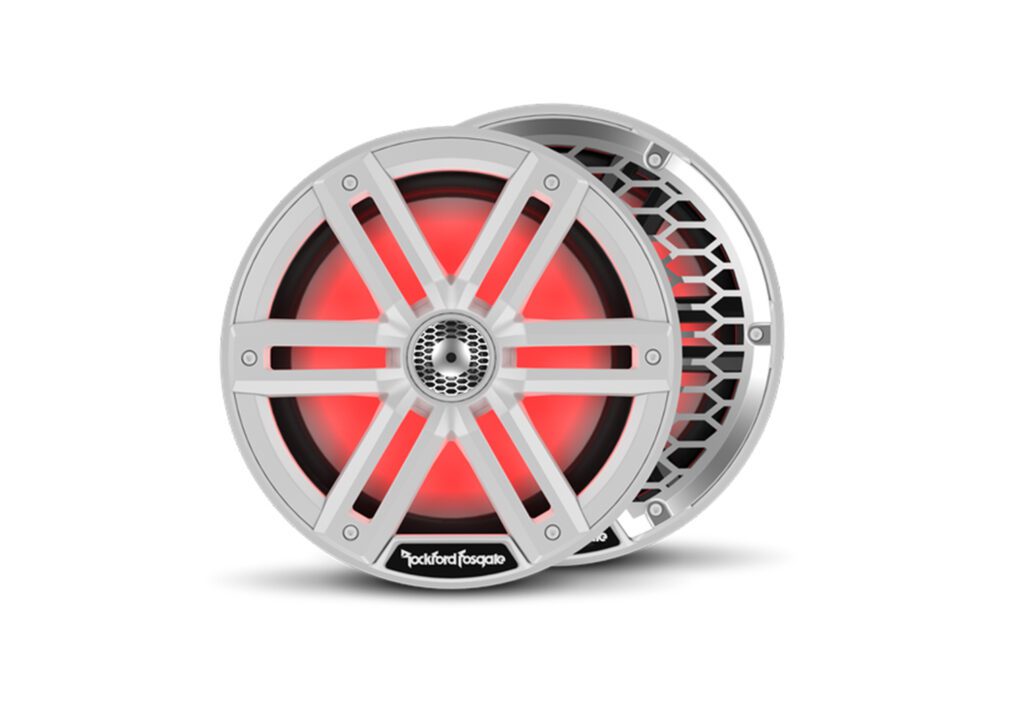
I reach for the M2-8 when the brief is simple: loud, clean and durable. The 250W RMS rating and 93 dB sensitivity mean you can move air without stressing your amp. Rockford's ColorOptix system looks fantastic; just budget for the controller if you want animations and zone sync.
| Make | Rockford Fosgate |
| Model | M2-8 |
| Size | 8″ |
| Power (RMS) | 250 watts |
| Power (Peak) | 1000 watts |
| Frequency Response | 35–24,000 Hz |
| Sensitivity | 93.1 dB |
| Impedance | 4Ω |
| Details | ColorOptix RGB (controller optional); horn-loaded M2-8H variant available |
Reasons to buy
- Serious output headroom with controlled response
- Best-in-class integrated lighting options
Reasons not to buy
- Pricing climbs once you add the lighting controller
- For even more throw you'll want the horn version (M2-8H)
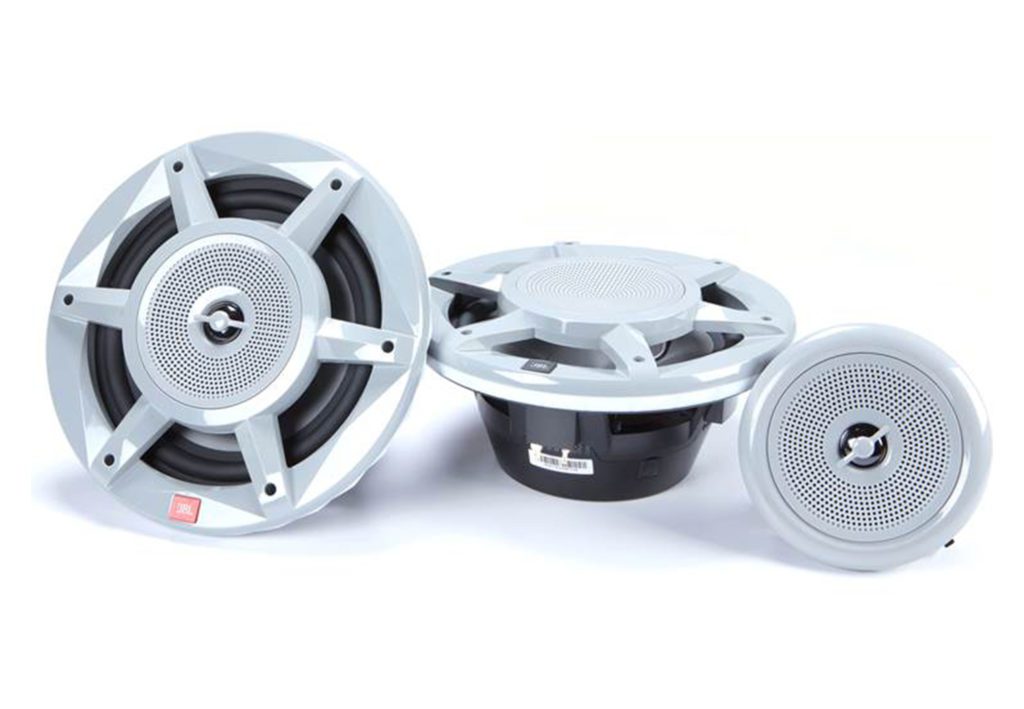


JBL Stadium Marine 82M
Convertible coax/component solves tricky mounts
CarAudioNow may earn a commission from retailer links. Brands do not influence the recommendations.
Why I picked it
Convertible designs are rare in marine. I unboxed and reviewed this Stadium lineup and the modular tweeter/mid lets me solve tricky mounting while keeping imaging clean. The Plus One woofer cone gives you extra surface area for punch, and the dual LED zones (outer ring + cone wash) look fantastic at night. See my JBL Stadium Marine series review for the full rundown.
| Make | JBL |
| Model | Stadium Marine 82M |
| Size | 8″ |
| Power (RMS) | 200 watts |
| Power (Peak) | 500 watts |
| Frequency Response | 30–22,000 Hz |
| Sensitivity | 92 dB |
| Impedance | 3Ω |
| Protection | IPX3 overall (front IPX5) |
| Details | Convertible coax/component; dual-zone LED |
Reasons to buy
- Coax or component: tune your stage to the boat
- Punchy, efficient woofer; slick dual-zone LEDs
Reasons not to buy
- Connector corrosion can creep in if you skip dielectric grease
- Converting between modes needs the included tool and patience
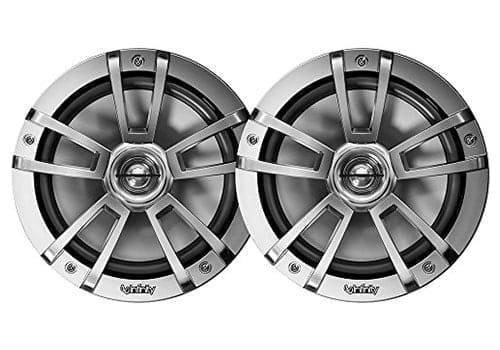
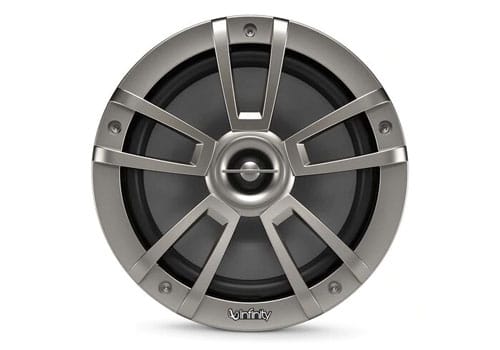
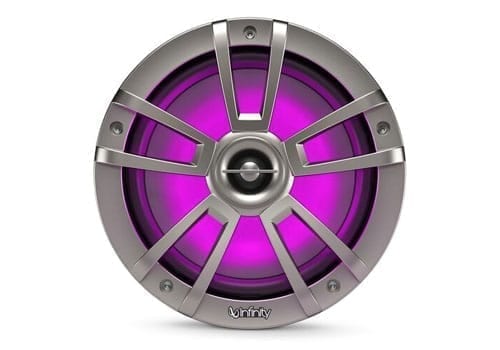
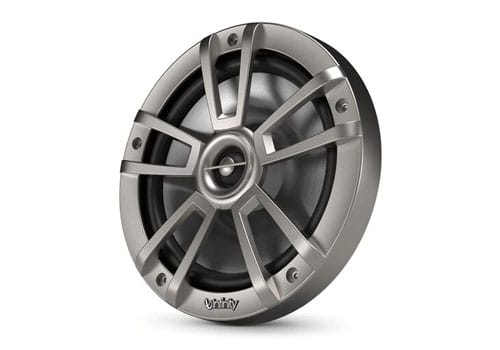
Infinity Reference 822MLT
Balanced, value-priced all-rounder
CarAudioNow may earn a commission from retailer links. Brands do not influence the recommendations.
Why I picked it
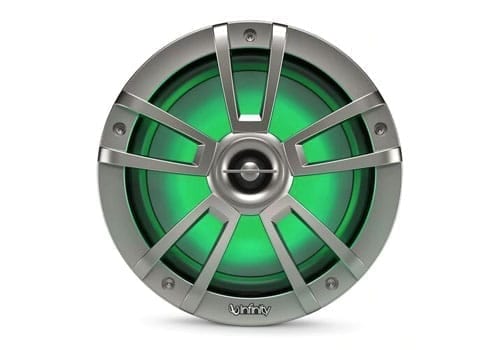
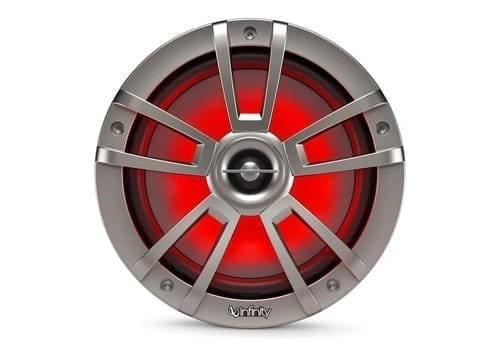
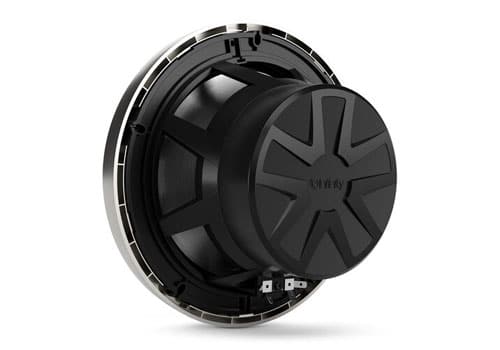
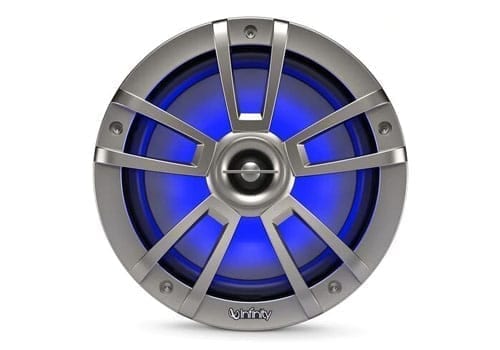
Infinity's Reference line is about balance: solid bass, smooth mids and crisp highs at a reasonable price. The 822MLT keeps that promise in salt and sun. Infinity's abuse testing (thermal, UV, salt/fog) is legit, and these have been a safe recommendation when someone wants LEDs and a friendly price without a big sonic compromise.
| Make | Infinity |
| Model | Reference 822MLT |
| Size | 8″ |
| Power (RMS) | 150 watts |
| Power (Peak) | 450 watts |
| Frequency Response | 30–20,000 Hz |
| Sensitivity | 92 dB |
| Impedance | 4Ω |
Reasons to buy
- Great value; balanced sound signature
- Looks good with integrated lighting
Reasons not to buy
- Bass isn't as authoritative as JL/Wet Sounds
- Average published frequency response


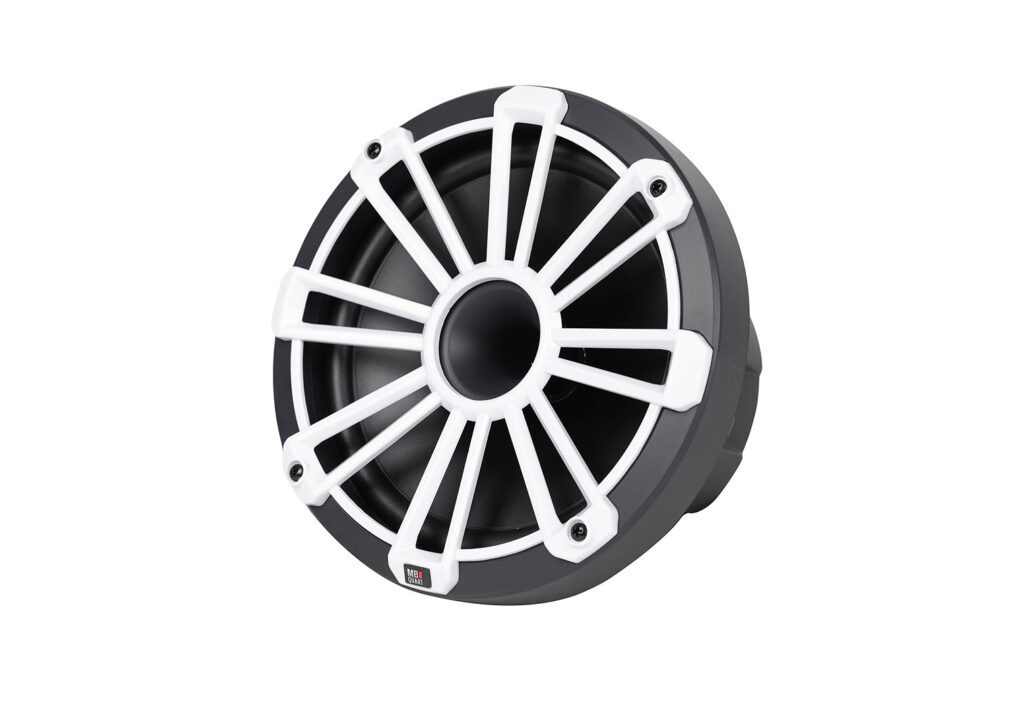
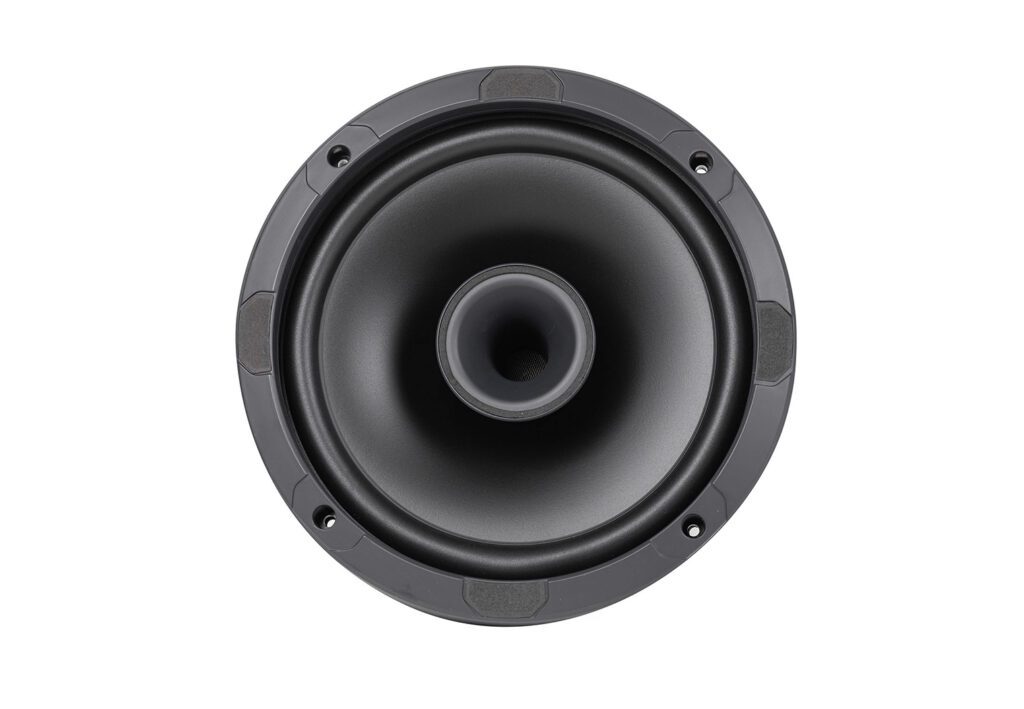

MB Quart Nautic NH2-120
The only compression-horn pick — projection on a budget
CarAudioNow may earn a commission from retailer links. Brands do not influence the recommendations.
Why I picked it
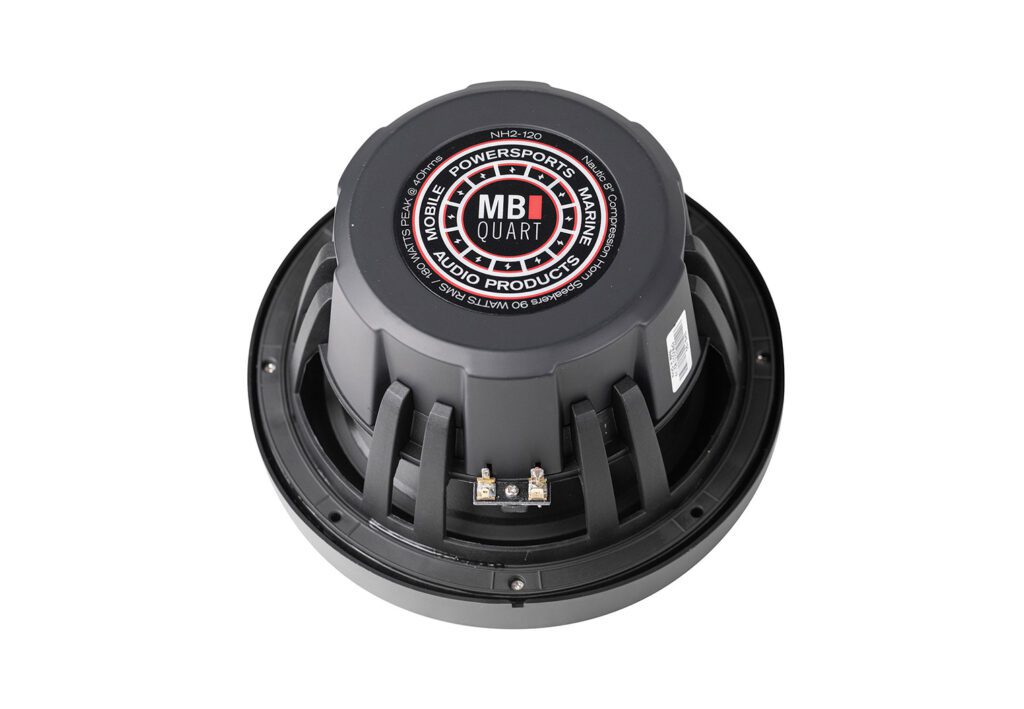
MB Quart's Nautic series brings a studio heritage to the docks. The NH2-120 is the only compression-horn design in this guide, which means excellent vocal projection in open air and strong water/dust sealing. If you routinely anchor-and-party or need throw across a deck, these punch above their price.
| Make | MB Quart |
| Model | Nautic NH2-120 |
| Size | 8″ |
| Power (RMS) | 90 watts |
| Power (Peak) | 180 watts |
| Frequency Response | 20–24,000 Hz |
| Sensitivity | 92 dB |
| Impedance | 4Ω |
| Protection | IP67 |
| Details | Compression horn-loaded tweeter |
Reasons to buy
- Impressive volume and clarity for the money
- IP67 sealing and marine-focused details throughout
Reasons not to buy
- Deeper mounting depth than typical 8″ coaxials
- Horn signature isn't everyone's flavor for nearfield listening
Explore the rest of my marine audio guides
From marine amps and subwoofers to head units and tower speakers, my boat-audio hub links every tested guide — so you can power, tune and expand your system the right way.
More marine audio reviews & guides
Go deeper on the gear and installs behind these picks.
8″ marine speaker questions, answered
Is an 8″ marine speaker worth it over a 6.5″?+
If you have the cutout and depth, yes — 8″ (and 7.7/8.8″) drivers reach deeper, play cleaner at volume and fill open air better than a 6.5″, often without needing a sub right away. The trade-off is fit: 8s need bigger holes and more mounting depth, and upgrading a 6.5″ location means spacers and sealing rings. Measure before you buy.
Do 8″ marine speakers need an amp?+
They benefit from one more than 6.5s do. Most here are rated for 90–250W RMS and only wake up with real power; the volume picks (Wet Sounds, Rockford) genuinely need an amp to shine. A clean 75–125W per channel from a marine amp, gain-set and gently EQ'd, makes a bigger difference than jumping one speaker tier.
Do I really need true marine-rated speakers, or will car speakers work on a boat?+
Use true marine-rated speakers. The water, salt and UV a boat lives in will cook car speakers fast — paper cones, untreated surrounds and steel hardware corrode and fall apart. Real marine speakers use UV-stable cones, synthetic spiders, sealed baskets and stainless hardware, and the good ones publish salt-fog (ASTM) and UV testing. It's the difference between one season and ten.
What size speakers fit my boat?+
Most boats take 6.5″ or 7.7–8″ cabin cutouts, with towers running dedicated 8″ or 10″ enclosures. A 6.5″ is the easiest direct-fit upgrade for most factory holes; step up to 7.7–8″ when you have the room and want more mid-bass. Measure your cutout diameter and mounting depth before you buy — thin gunwales and arches don't always have the depth a bigger speaker needs.