
Best Aftermarket Heads Up Displays (HUD) – 2026 Buyer's Guide
In this article: I compare seven aftermarket head-up displays and pick a winner for each kind of driver, starting with the Lufi X1. Almost every aftermarket HUD under $300 is either a small GPS projector bouncing light off your windshield or a plain OBD-II screen taped to your dash. That is not the OEM-style image floating out past the hood on a new Audi. I split those two designs apart before I recommend anything, because buying the wrong one is the most common way people waste forty bucks here.

The best aftermarket HUD for each kind of driver
If you just want the name, here's the short version by use case. Two questions decide it before any brand does. Do you want engine data? That means an OBD-II unit and a car that'll actually hand over the readings (1996 and newer in the US, and most of these want 2008 or newer). Or just GPS speed that works in anything with power? And do you want a small screen on the dash or a readout reflected on the windshield? All seven are on the comparison table below, and I've researched and verified each one rather than road-tested them.
- Best overall: Lufi X1. A 2.8-inch OBD-II multi-gauge with three display modes, so it works as a dash gauge or flips to reflect on the windshield. Real engine data (speed, RPM, coolant, voltage, and boost where your ECU exposes it) for around $100 to $120.
- Best premium stand-alone monitor: ScanGauge 3. A 4.3-inch direct-view OBD-II touchscreen with up to nine gauges, trip computers, trouble-code tools, and a three-year warranty. Around $250 to $300, and it's a monitor, not a projector.
- Best dual-mode value: Wiiyii P6. OBD-II data on a 3.5-inch dash screen, with a GPS mode that keeps speed and trip data if your car won't talk over the port. Around $40.
- Best inclinometer: AZIJYV P21. Live pitch and roll plus altitude next to the vehicle data, for trail use. Around $40 to $60, and its OBD-II compatibility list is narrow, so check your vehicle first.
- Best GPS windshield projector: AZIJYV M22. A 2.9-inch reflected readout with speed, direction, clock, and trip distance. No OBD-II needed, so it works in an older car or an EV. Around $25 to $35.
- Easiest to read: KINGNEED 6.2-inch GPS speedometer. Big green digits on a direct-view panel for a truck, RV, or van. Around $35 to $50.
- Best low-cost projection: KUOWEIHUD K1. Speed-only GPS windshield reflection for under $25.
How to choose the best aftermarket head-up display for your goal
The Lufi X1 is the best balance of real engine data and placement flexibility in this field. It runs as a normal multi-gauge, flips to inverted, or throws a reflected image onto the glass. It pulls from more than 30 OBD-II parameters when your ECU reports them. The ScanGauge 3 is the pick when you want a documented support trail behind you. The M22 and K1 are the simple windshield projectors.
The aftermarket throws the word HUD at almost anything that sits above the dash. Only the M22 and K1 actually project onto the windshield — the ScanGauge 3, P6, P21, and KINGNEED are physical screens you look at directly, and the X1 does both. A direct-view screen is sharper every time, though it never gives you that eyes-forward feel, because your eyes still have to leave the road to read it.
Something worth knowing before you spend the money. A factory HUD uses a mirror stack to park its image out near the front of the car, so your eyes never change focus. An aftermarket projector bounces straight off the inside of the glass, which puts that image roughly three feet from your face. Your eyes still refocus to read it, and that is the same jump you make glancing down at the speedometer, only higher up and much shorter. It beats dropping your eyes to the cluster, and it is still not what the new Audi is doing.
Will OBD-II or GPS make more sense in your car?
OBD-II buys you engine data, GPS buys you compatibility, and that is the whole decision. Most US passenger vehicles from 1996 on have an OBD-II port, but a port is not the same thing as support. Several of these picks want roughly 2008 or newer, and your ECU decides which readings actually come back out of it. ScanGauge publishes the widest 1996+ path of anything here, while Lufi, Wiiyii, and AZIJYV all publish narrower rules that win no matter how new your car is.
GPS only needs power and a clear view of the sky, which makes it the answer for an older car, an EV, a hybrid, a diesel, or an RV. There is a second reason to like it that nobody advertises. Your factory speedometer is not permitted to read low and is permitted to read high, so nearly all of them carry a deliberate margin. They are calibrated around new tires too, so that margin creeps up as yours wear. GPS measures your actual speed over the ground and does not care about tire diameter at all. An OBD-II display sits in between, reading the vehicle’s own speed signal, which may or may not carry the same bias your cluster shows you. If you want the honest number, GPS is the one to trust.
GPS has its own gremlins though, and it drops out in tunnels, parking garages, and downtown between tall buildings. It can also struggle behind an infrared-reflective windshield — the metallic-coated glass a lot of newer cars use to cut cabin heat. Some of those windshields carry a small uncoated patch up near the mirror for exactly this reason. If a GPS unit will not hold a lock, that patch is the first place to move it.
Why reflective film is sometimes part of the install
Your windshield is not one piece of glass. It is two sheets with a plastic layer laminated between them, so a projector gets two reflections instead of one. Same reason a storefront window hands you a faint second copy of yourself, standing just behind the first. That second image is the ghost. The film that ships with the M22 and K1 merges the two back into one and picks up some daylight contrast on the way.
The X1 does not include film, so budget another ten bucks if you plan to use its reflected mode. And if sticking anything to your glass bothers you, that by itself is a good reason to buy a direct-view screen instead.
Rake angle matters more than people expect. A truck or a van with fairly upright glass throws a clean reflection right where you want it. A modern sedan with the windshield laid way back pushes that image up and forward, and sometimes no dash position puts it anywhere comfortable. Dry-fit before you commit the adhesive.
On price, a speed-only projector runs under $25, dual-mode and larger GPS screens cluster around $35–$60, the X1 sits near $100–$120, and the ScanGauge 3 is a chunk of change at $250–$300. What the extra money buys is support, data depth, and warranty coverage. It does not buy a busier animation, and one or two units in this category clearly spent the budget on the animation.
Compare my 7 aftermarket HUD and monitor picks
| Best for ↕ | My pick ↕ | Display Type ↕ | Data Source ↕ | Buy |
|---|---|---|---|---|
| Best Overall | 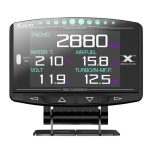 Lufi X1 | 2.8-inch TFT, direct or windshield reflection | OBD-II | Buy Now $105.00 on Amazon |
| Best Premium Stand-Alone Monitor | 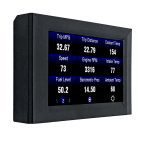 ScanGauge 3 | 4.3-inch direct-view capacitive touchscreen | OBD-II | Buy Now $269.95 on Amazon |
| Best Dual-Mode Value | 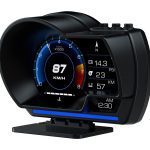 Wiiyii P6 | 3.5-inch direct-view LCD | OBD-II + GPS | Buy Now $38.99 on Amazon |
| Best Inclinometer | 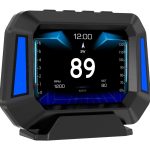 AZIJYV P21 | 3.5-inch direct-view color LCD | OBD-II + GPS | View pick → |
| Best GPS Windshield Projector |  AZIJYV M22 | 2.9-inch windshield projection | GPS + BeiDou | Buy Now $29.99 on Amazon |
| Easiest to Read |  KINGNEED 6.2-inch GPS Speedometer | 6.2-inch direct-view extended display | GPS | Buy Now $49.89 on Amazon |
| Best Low-Cost Projection |  KUOWEIHUD K1 | Speed-only windshield projection | GPS + BeiDou | Buy Now $15.99 on Amazon |
I may earn a commission from Buy Now links. Brands do not influence these recommendations.
My 7 best aftermarket HUDs and line-of-sight monitors for 2026
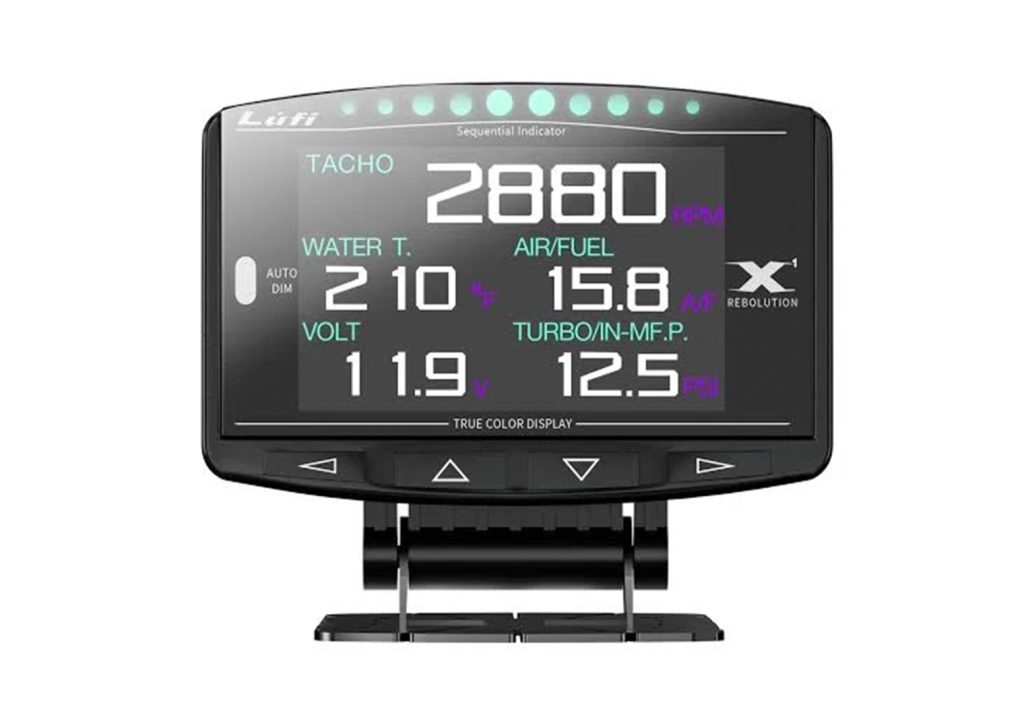
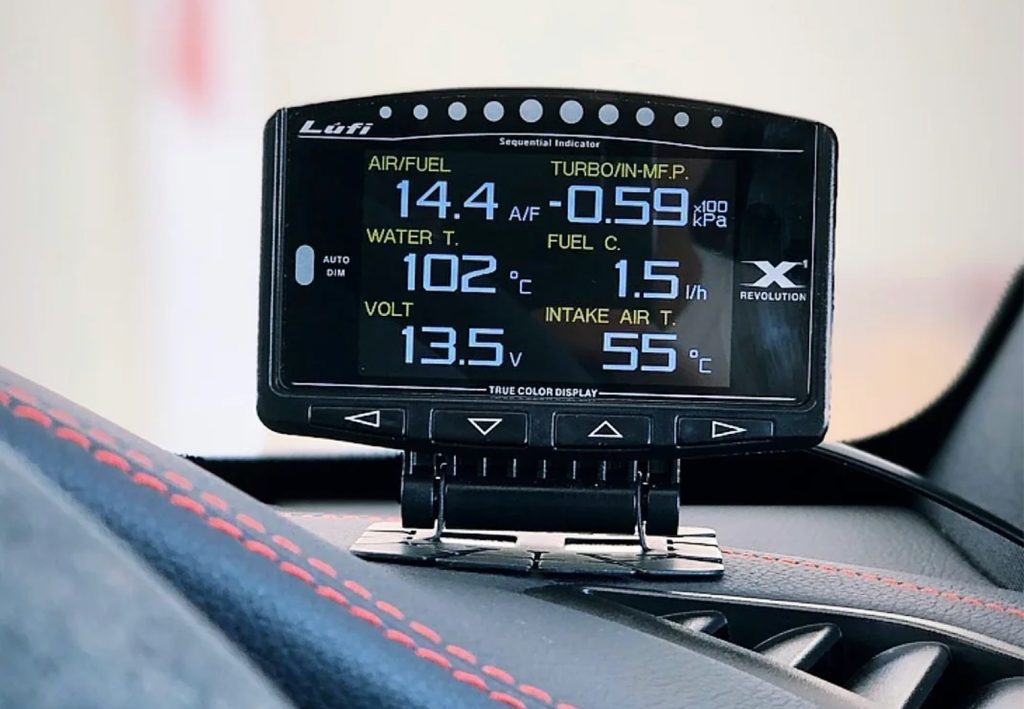
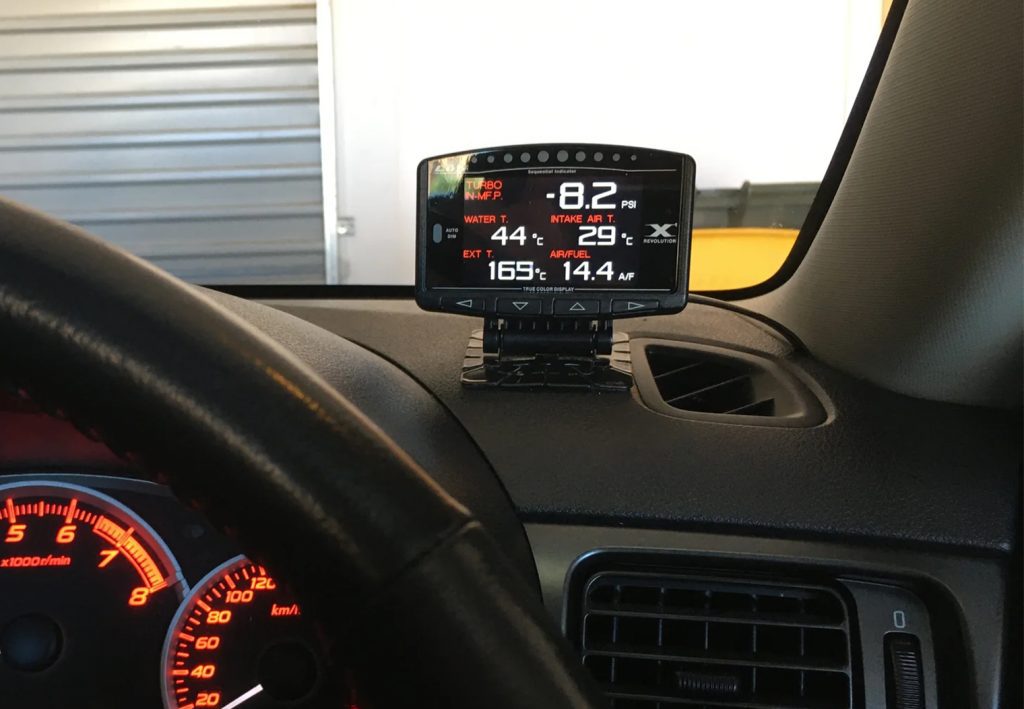
Lufi X1
2.8-inch multi-gauge | OBD-II | three display modes
I may earn a commission when you buy through these links. It never affects which products I pick.
Why I Picked It
The X1 is the only unit here that lets you change your mind about where the data goes. It runs as a normal 2.8-inch gauge, flips to inverted, or throws a reflected image onto the glass. It holds three to six values at once — speed, RPM, coolant, voltage, boost, and whatever else your ECU hands over. Lufi publishes a sleep current of 1mA or less, which is the spec I care about most on anything living in the OBD port. Daylight readability still comes down to where you stick it and how your windshield is raked. At $100–$120 it costs roughly three times what a speed-only projector does, and it earns that if you want gauges first and a reflection second.
Display & Daylight Readability
Three modes — normal, inverted, and reflected — with dimming that tracks the cabin light so it does not blind you at night. Polarized sunglasses are the catch, because an LCD already puts out polarized light. Cross that with a polarized lens and the whole thing can dim toward black at certain head angles, and tilting your head is the tell. There is no film in the box, so reflected mode may cost you another ten bucks.
Data & Accuracy
More than 30 OBD-II parameters are on the menu, but your ECU decides what actually lands on the plate. Speed, RPM, coolant, and voltage are close to universal on anything with the port. Boost, intake temps, and detailed fuel data are the ones that go missing on ordinary economy cars, and there is no way to know for certain until you plug in. Speed and alarm thresholds are both adjustable.
Install & Compatibility
One cable does power and data, which is the whole appeal — no fuse taps, no crimping, no pulling a panel. Route it so it does not swing into your left knee, because the OBD port lives under the dash within about two feet of the steering column and that cable will find your leg every time you get in. Lufi targets most post-2008 vehicles plus a handful of earlier applications, so confirm your exact year and powertrain before you order.
Key Features
- 2.8-inch, 240 x 400 TFT
- Normal, inverted, and reflected modes
- Three layouts with three to six values
- More than 30 possible ECU parameters
- Adjustable visual and audible alarms
- Trouble-code reading and clearing
- 8–18V input, documented sleep at 1mA or less
- Gauge, OBD cable, bracket, hardware, adhesive, manual
- No warranty term published
| Brand | Lufi |
| Model | X1 |
| Display Type | 2.8-inch TFT, direct or windshield reflection |
| Data Source | OBD-II |
| Reads | Speed, RPM, coolant, voltage, boost, fuel data, supported temperatures, DTCs |
| Compatibility | Most post-2008 OBD-II vehicles plus selected earlier models, verify YMM and PIDs |
Reasons to Buy
- Direct or reflected viewing, and it is the only pick here that does both.
- Three to six live values on screen without touching your phone.
- More than 30 possible PIDs, well past a bare speed readout.
- Alarms you can set on coolant, RPM, boost, voltage, and speed.
- 1mA published sleep current, the lowest documented figure in this roundup.
Reasons to Not Buy
- Your ECU decides the parameter list, and economy cars give up the least.
- Polarized sunglasses can dim the TFT toward black at some head angles.
- Reflected mode wants film that is not in the box (about $10).
- No formal warranty term published anywhere I could find.
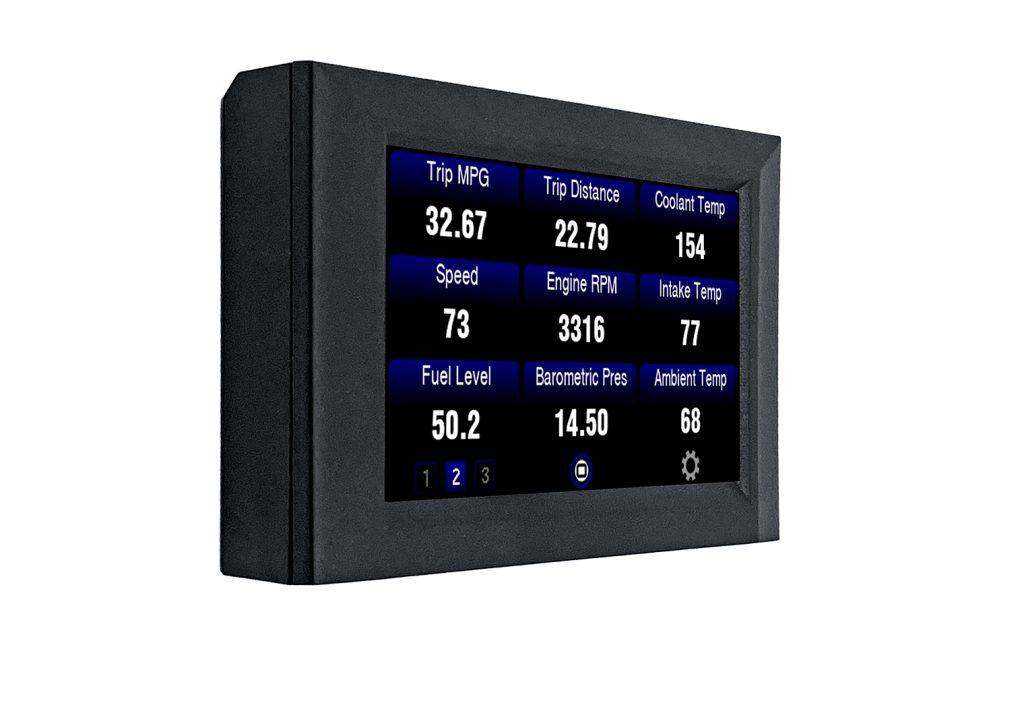
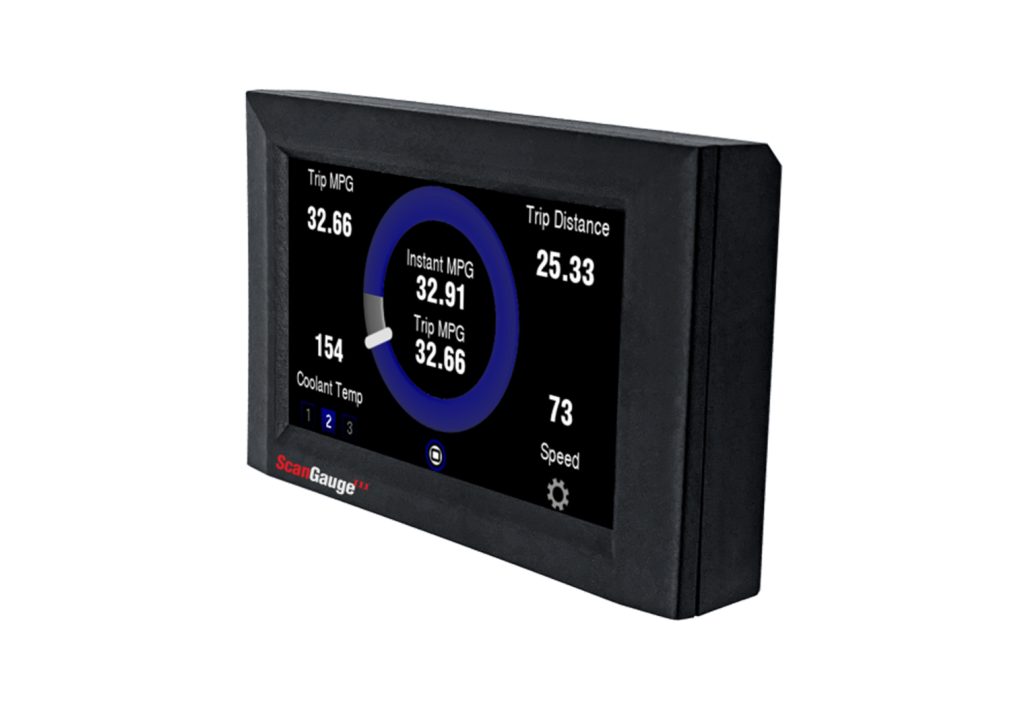
ScanGauge 3
4.3-inch touchscreen | OBD-II | supported premium monitor
I may earn a commission when you buy through these links. It never affects which products I pick.
Why I Picked It
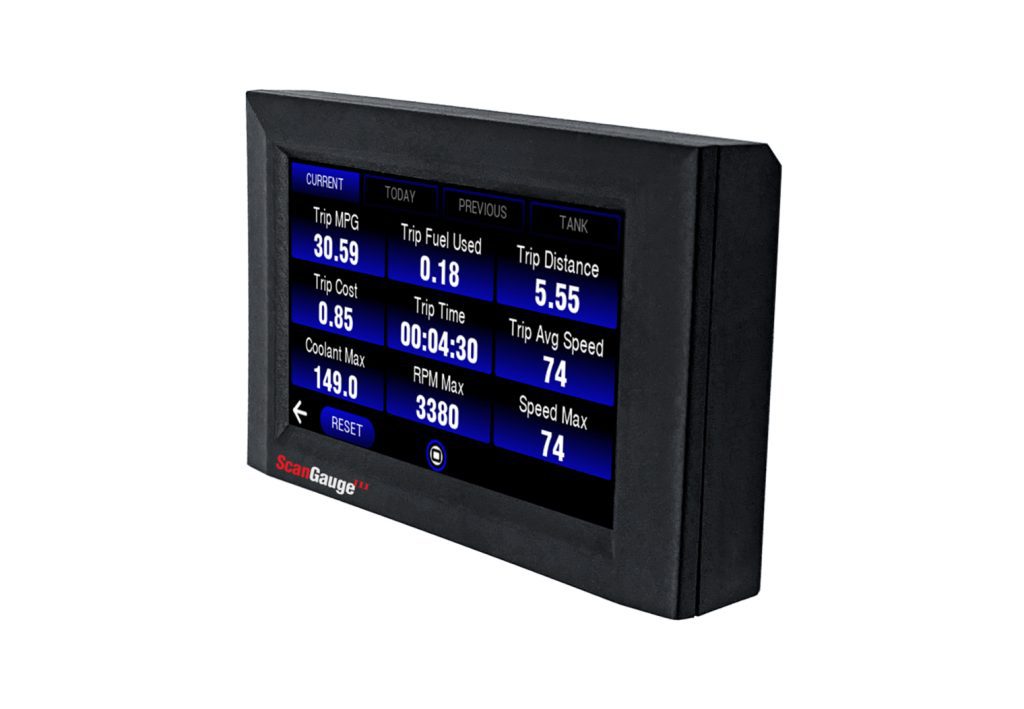
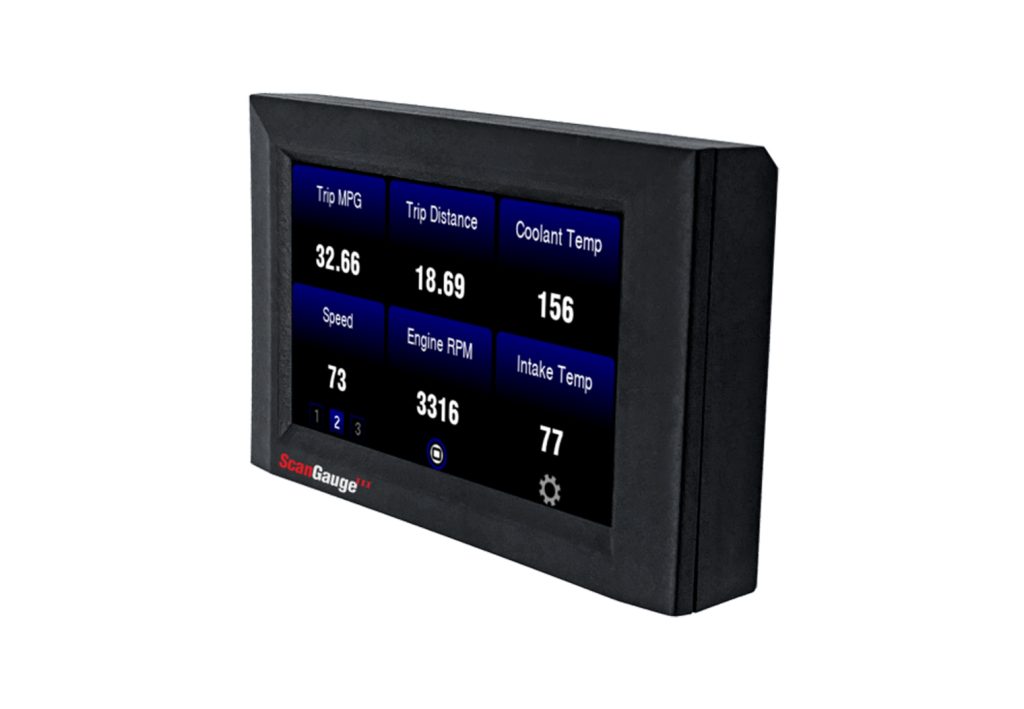
Where the X1 hedges between gauge and reflection, the ScanGauge 3 commits. It is a 4.3-inch touchscreen that sits in your line of sight and never touches the windshield. Nine gauges to a page, five separate trip sets, custom alerts, Wi-Fi updates, and real trouble-code tools with plain-English definitions. I want to be precise about what it is, because the search term drags it in here: this is a direct-view vehicle monitor, not a projector or a combiner HUD. At $250–$300 it costs several times what everything else here does. What the money buys is the support trail — a published 1996+ compatibility path with a documented exception list, and a company that answers the phone.
Display & Daylight Readability
You get real layout room here, and you spend real sightline to get it, because 4.3 inches is a lot of dash on a low cowl. ScanGauge rates it for 0–160 degrees F, which sounds generous until you remember that a black dash in an Arizona July parking lot clears that without much effort. Park it somewhere shaded when you can.
Data & Accuracy
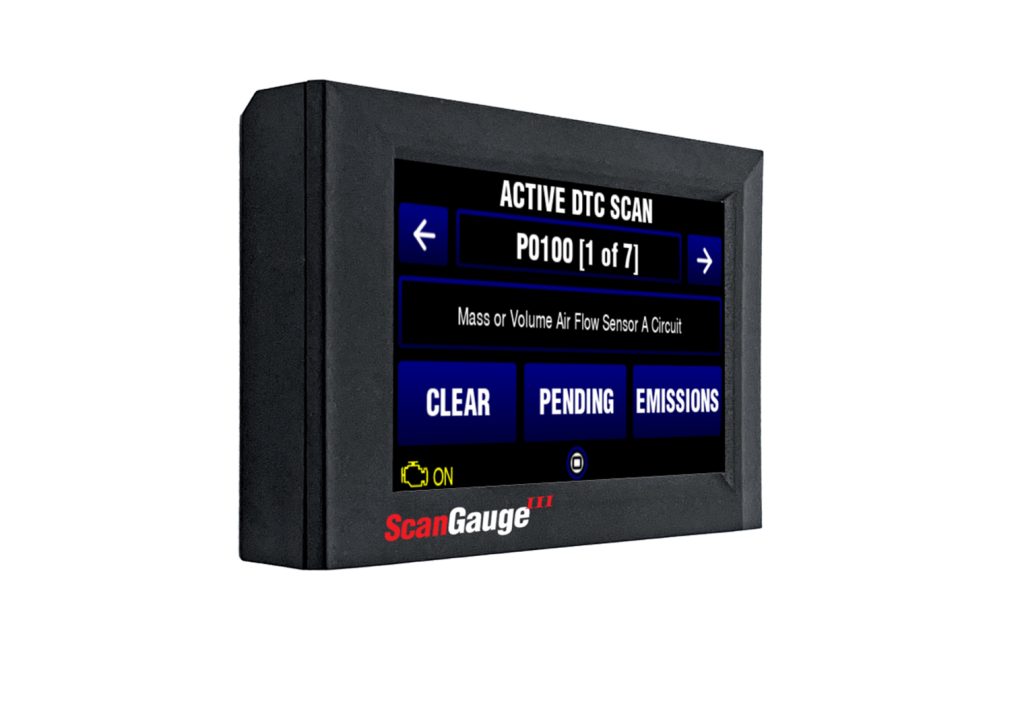
Nine-gauge pages and trip computers you can actually organize, plus readiness monitors, DTCs, and X-Gauges that configure themselves to your vehicle. That last part is the real separator, because X-Gauges pull manufacturer-specific parameters a generic scanner never sees, like transmission temperature on a lot of trucks. That is the sort of number that saves a transmission on a long tow. Your vehicle still sets the ceiling on what exists to read.
Install & Compatibility
The six-foot cable is the quiet win. Most of these units hang off the port on a short pigtail and land wherever gravity puts them. Six feet lets you route up the A-pillar trim or across to the center stack and use the window mount properly. It covers 1996+ OBD-II cars, light trucks, and hybrids, and ScanGauge publishes an exception list. Read yours before you order.
Key Features
- 4.3-inch capacitive color touchscreen
- Up to nine gauges per page
- Five sets of trip data
- DTC reading, definitions, and clearing
- Automatic vehicle-specific X-Gauges
- Custom visual and audible alerts
- Free Wi-Fi software updates
- Unit, six-foot cable, deluxe window mount
- Three-year limited warranty, 30-day guarantee
| Brand | ScanGauge |
| Model | ScanGauge 3 / SG3 |
| Display Type | 4.3-inch direct-view capacitive touchscreen |
| Data Source | OBD-II |
| Reads | Up to nine gauges, trip and fuel data, readiness, alerts, DTCs, supported X-Gauges |
| Compatibility | 1996+ OBD-II cars, light trucks, and hybrids, available PIDs vary |
Reasons to Buy
- Nine gauges on one page, organized the way you want them.
- Published 1996+ support with a real exception list, not a vague claim.
- X-Gauges reach manufacturer-specific data like transmission temperature.
- Six-foot cable and a removable mount open up where it can live.
- Three-year limited warranty, the only serious coverage in this roundup.
Reasons to Not Buy
- It never projects onto the glass, so it is not a HUD in the strict sense.
- 4.3 inches will crowd a shallow dash or a low cowl.
- It costs about seventeen times the K1, and most of that is support, not hardware.
- 1996+ compatibility still does not guarantee any specific sensor.
Wiiyii P6
3.5-inch LCD | OBD-II plus GPS | ten interfaces
I may earn a commission when you buy through these links. It never affects which products I pick.
Why I Picked It
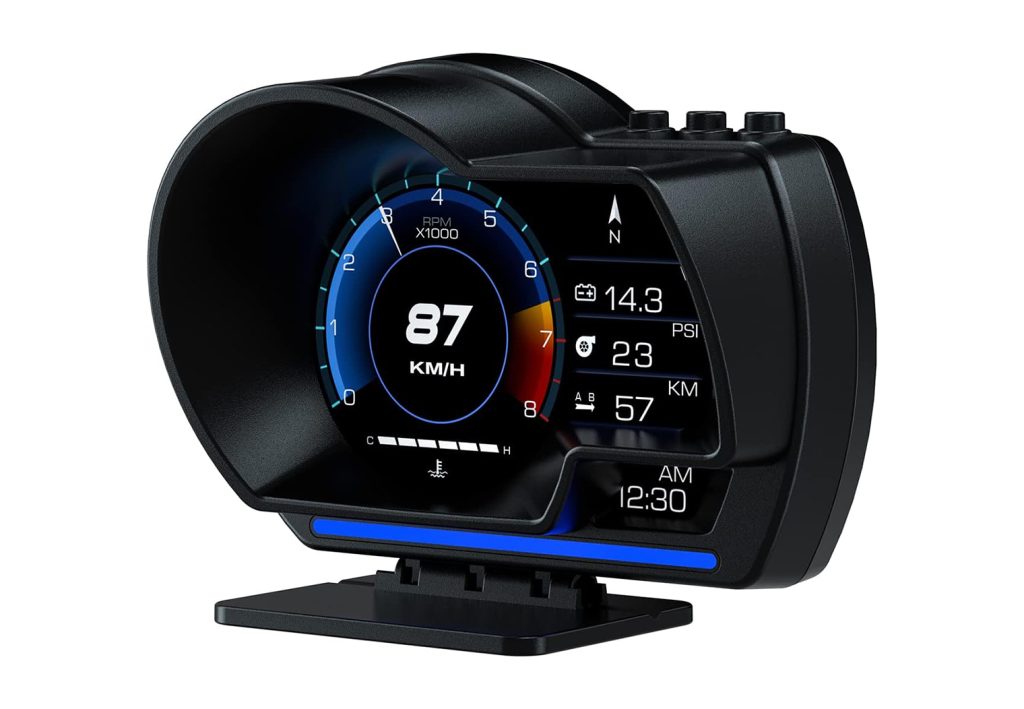
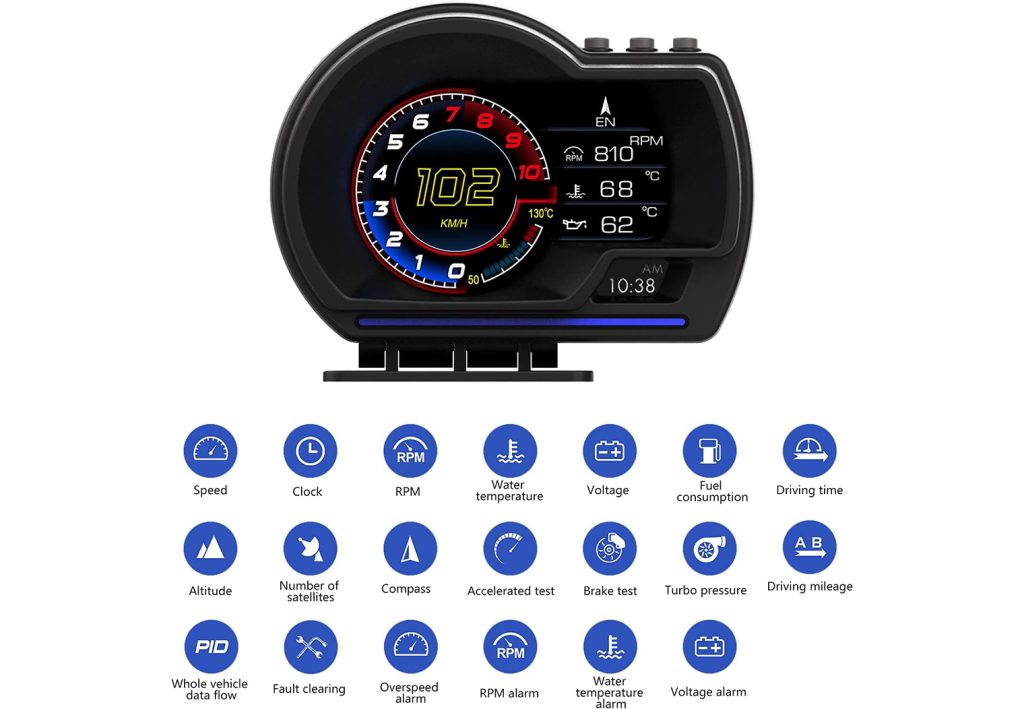
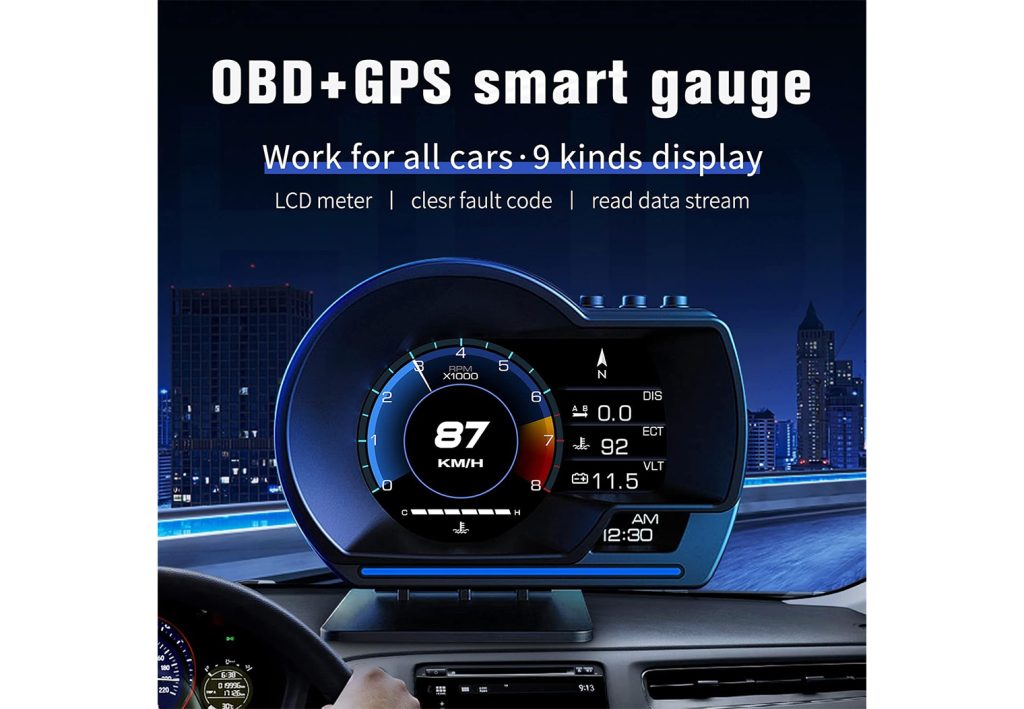
What do you do when you want engine data but your car might not cooperate? The P6 is my answer, because it does not force the bet. Its 3.5-inch, 800 x 480 LCD carries ten layouts. It switches between an OBD mode with vehicle data plus fault codes, and a GPS mode that keeps speed, heading, time, altitude, and trip data alive when the port comes up empty. The parameter list is broad on paper, covering speed, RPM, coolant, voltage, and fuel, but what actually appears is still your ECU's call. At around $40 that fallback is the whole argument for it over an OBD-only screen at the same money.
Display & Daylight Readability
Ten interfaces is more than anyone needs, and two or three of them are genuinely good while the rest are there to look busy on the product page. The ambient bar changes color during an alarm, which your peripheral vision picks up faster than it reads a number. This is a physical LCD, so placement is doing all the work and windshield optics never enter into it.
Data & Accuracy
Speed and fuel both take a fine adjustment, which matters more than it sounds given that your cluster is probably the optimistic one. GPS mode drops in covered areas the way all GPS does. OBD mode is only ever as good as the PIDs your car reports back.
Install & Compatibility
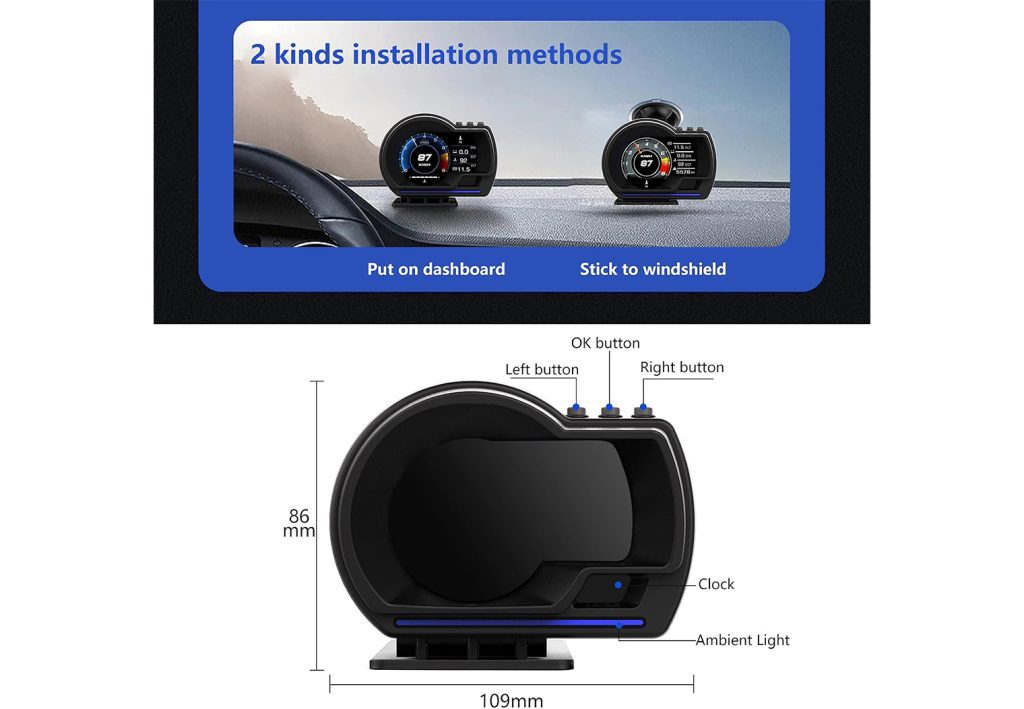
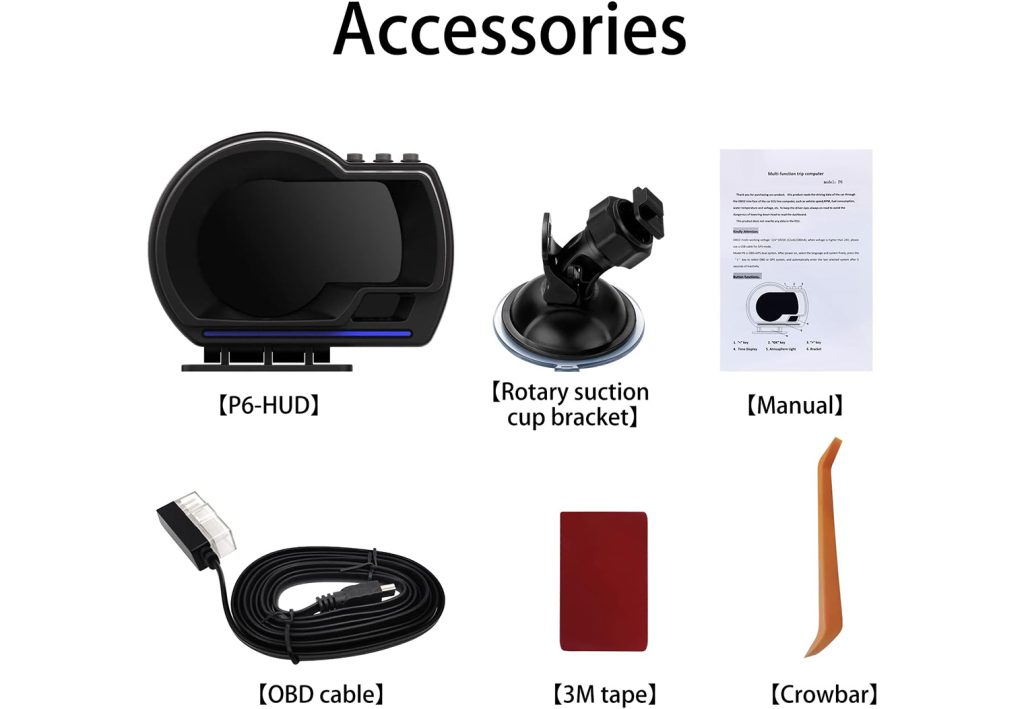
OBD cable for vehicle data, USB for GPS mode, and the box includes both plus a trim tool. That trim tool is a small thing that tells you somebody was thinking about the install rather than just the listing photo. The manual calls for roughly 2008+ OBD-II/EOBD, so check yours before you count on the engine side.
Key Features
- 3.5-inch, 800 x 480 LCD
- Selectable OBD-II and GPS systems
- Ten display interfaces
- Speed and fuel fine adjustment
- RPM, coolant, voltage, intake, trip data
- DTC reading and clearing
- Adjustable sleep-voltage setting
- Unit, bracket, OBD cable, USB cable, tape, trim tool, manual
- No warranty duration published
| Brand | Wiiyii |
| Model | P6 |
| Display Type | 3.5-inch direct-view LCD |
| Data Source | OBD-II + GPS |
| Reads | Speed, RPM, coolant, voltage, fuel and intake data, trip and compass data, DTCs |
| Compatibility | OBD-II/EOBD vehicles around 2008+, GPS mode for unsupported vehicles |
Reasons to Buy
- GPS mode keeps speed and trip data alive when OBD gives you nothing.
- Ten layouts run from a single big number to a full data page.
- Speed and fuel fine adjustment let you match the cluster or beat it.
- The OBD side reads live streams and clears codes, not just speed.
- Both cable types, a bracket, tape, and a trim tool in the box.
Reasons to Not Buy
- Your ECU still caps what OBD mode is able to show you.
- Start-stop vehicles may need the sleep-voltage setting adjusted (it is in the menu).
- Ten interfaces is clutter if all you ever wanted was speed.
- No published warranty duration.
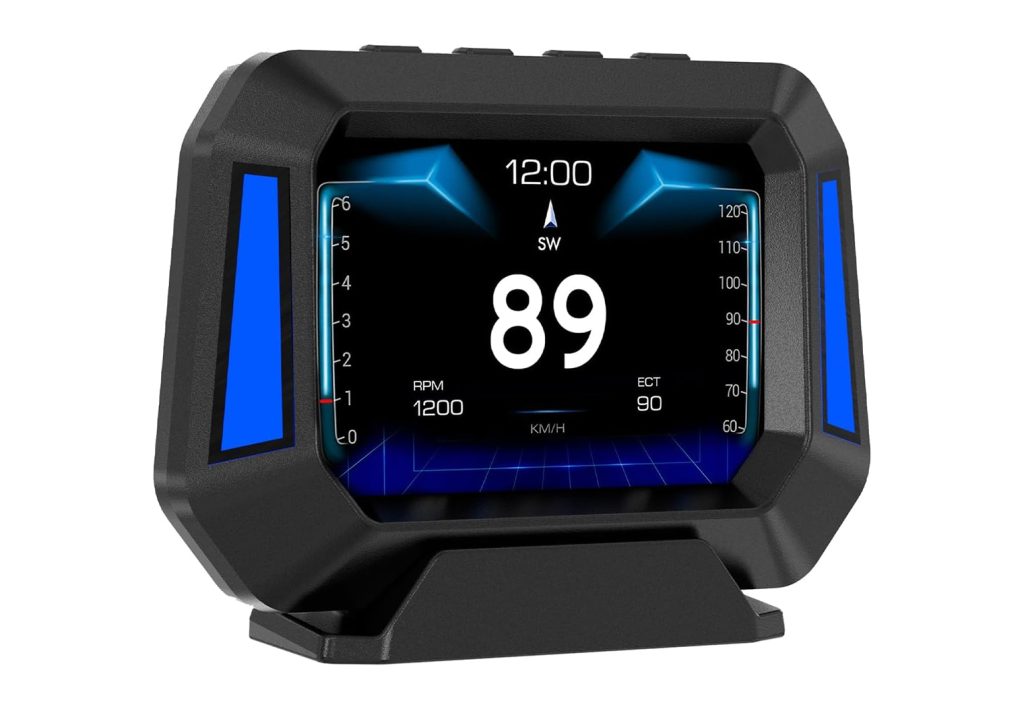
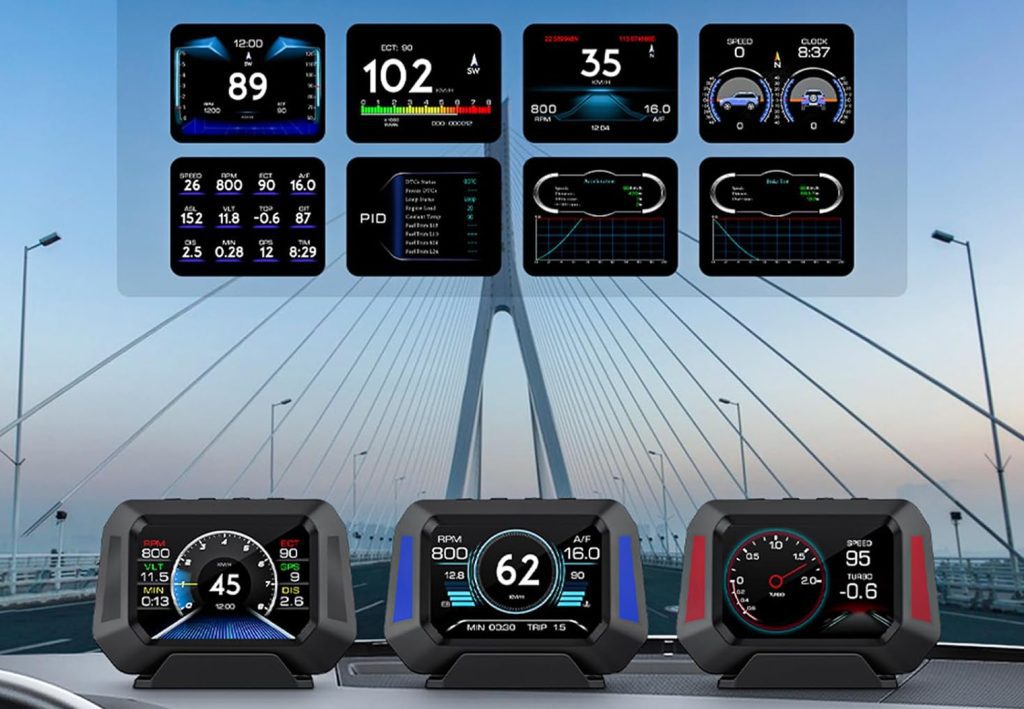
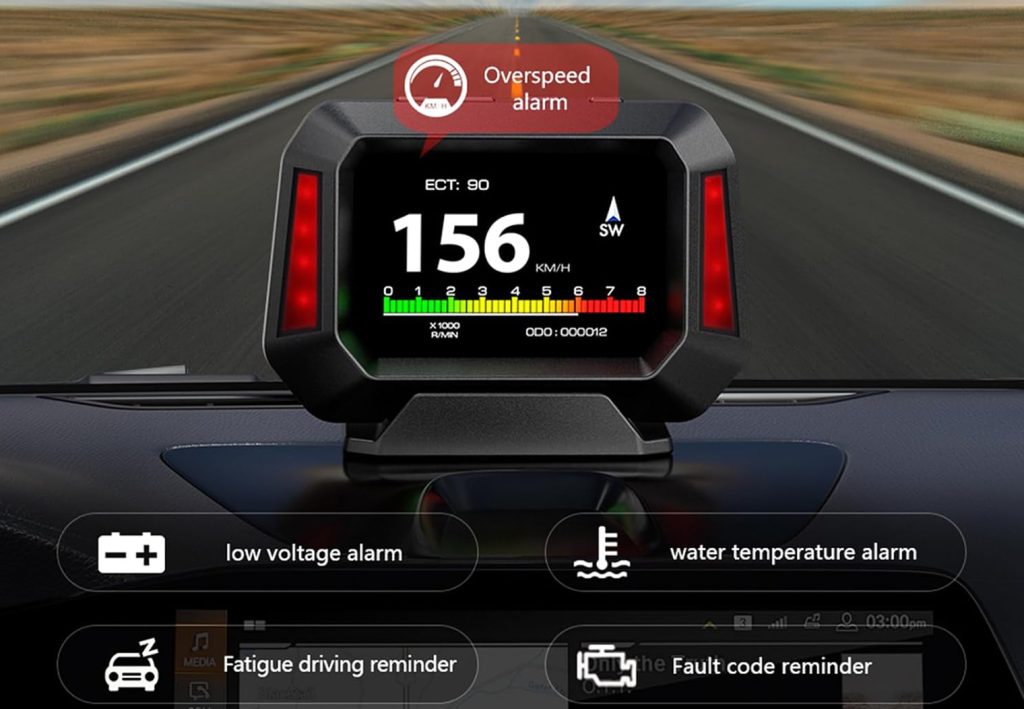
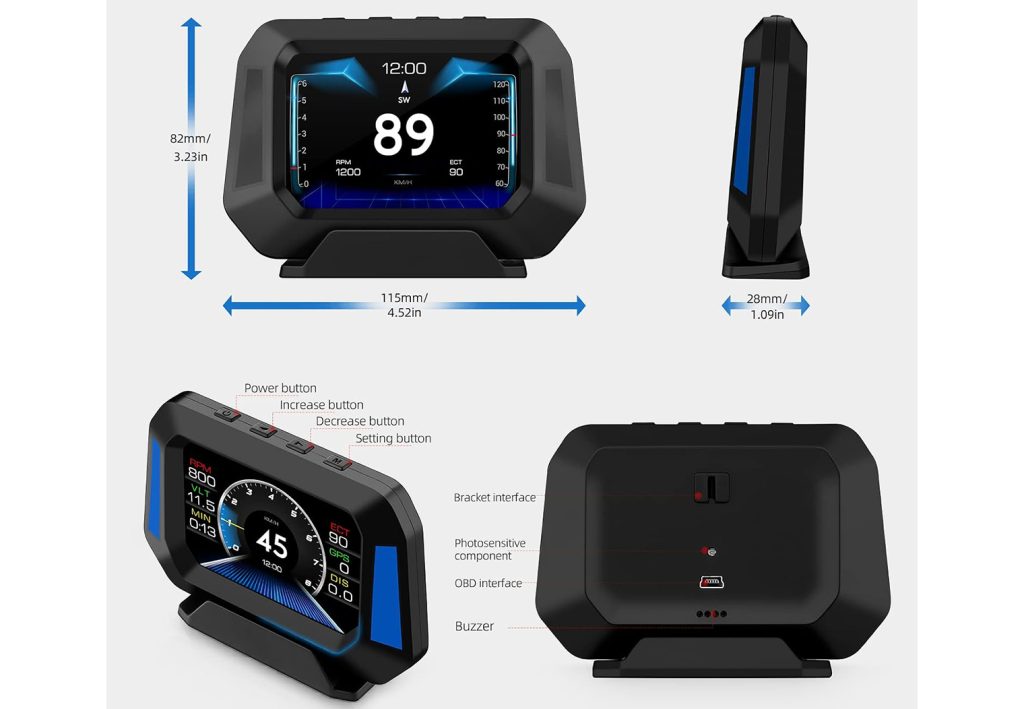
AZIJYV P21
3.5-inch LCD | pitch and roll | OBD-II plus GPS
I may earn a commission when you buy through these links. It never affects which products I pick.
Why I Picked It
The P21 is on this list for one reason, and it is a good one: live pitch and roll in both OBD and GPS modes. If you wheel a trail, tow, or just want to know how sideways you actually are on an off-camber section, an inclinometer earns its spot. This one keeps working when the port does not. Its 3.5-inch screen runs eleven interfaces and will stack altitude and compass data alongside whatever gauges your vehicle supports. I would not buy this as a general-purpose OBD-II monitor. AZIJYV's own exclusion list drops diesels, hybrids, pickups, RVs, modified vehicles, and several whole brands — which is most of the audience that wants an inclinometer in the first place. At $40–$60, buy it for the angles and treat any engine data as a bonus you might not get.
Display & Daylight Readability
Direct-view LCD, so there is no ghosting and nothing stuck to your glass. The bracket will take a dash or a windshield mount. AZIJYV publishes no brightness figure at all, which is the honest answer to how it holds up in direct sun: nobody knows, and that includes me.
Data & Accuracy
In OBD mode you get the engine list your car allows. GPS mode holds speed, altitude, heading, trip data, and the angles, and the angles are the part that never depends on your ECU at all. Temperature, boost, and fuel readings are the usual casualties when a vehicle falls outside the list.
Install & Compatibility
Suction cup or adhesive mat, your choice, and the mat is the better call on a textured dash where suction gives up as soon as it gets hot. OBD support starts around 2009 and gets restrictive fast, so read the exclusion list against your exact vehicle before you expect a single engine reading out of it.
Key Features
- 3.5-inch color LCD
- Eleven selectable interfaces
- OBD-II and GPS modes
- Pitch, roll, altitude, and compass
- Twelve interface languages
- Speed, RPM, coolant, voltage, intake data
- DTC reading and clearing
- Unit, suction bracket, OBD cable, mat, manual
- No warranty term published
| Brand | AZIJYV |
| Model | P21 |
| Display Type | 3.5-inch direct-view color LCD |
| Data Source | OBD-II + GPS |
| Reads | Pitch, roll, speed, altitude, compass, trip data, supported engine data, DTCs |
| Compatibility | GPS works with powered vehicles, OBD targets 2009+ gasoline vehicles with extensive exclusions |
Reasons to Buy
- Pitch and roll stay live in both OBD and GPS modes.
- Eleven interfaces, and the angle screens are the ones worth having.
- GPS mode holds trail data with no ECU support at all.
- Suction and adhesive mounts both in the box for glass or dash.
- OBD mode reads and clears trouble codes.
Reasons to Not Buy
- The exclusion list drops diesels, hybrids, pickups, RVs, and modified vehicles.
- It is a screen rather than a projector, so there is no windshield image.
- No published brightness figure and incomplete heat limits.
- No published warranty duration.
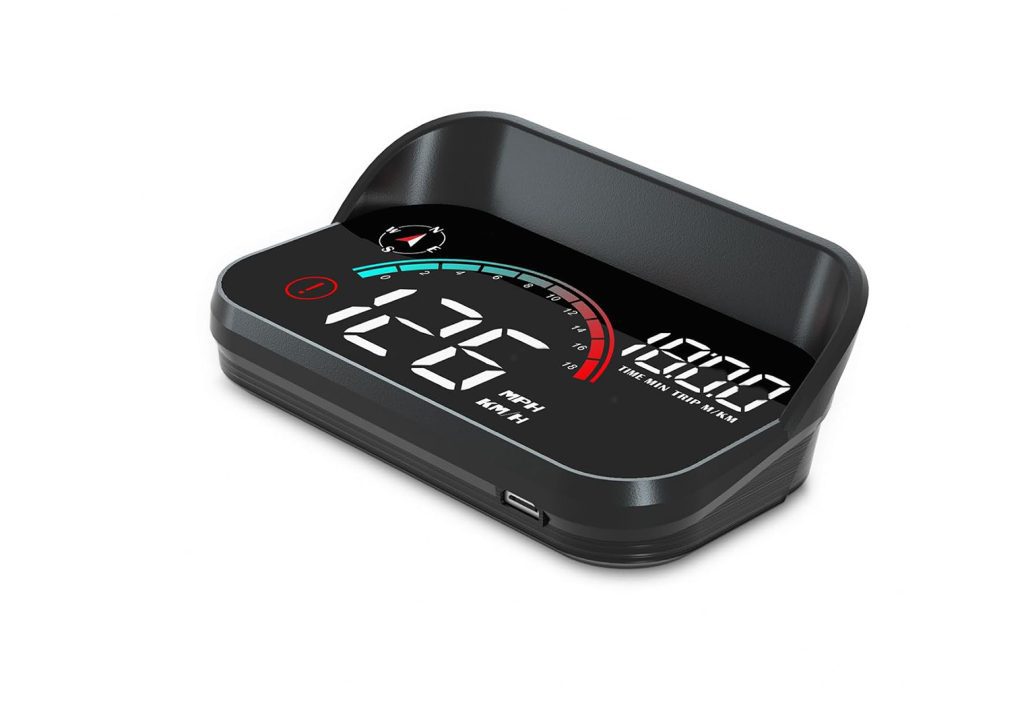
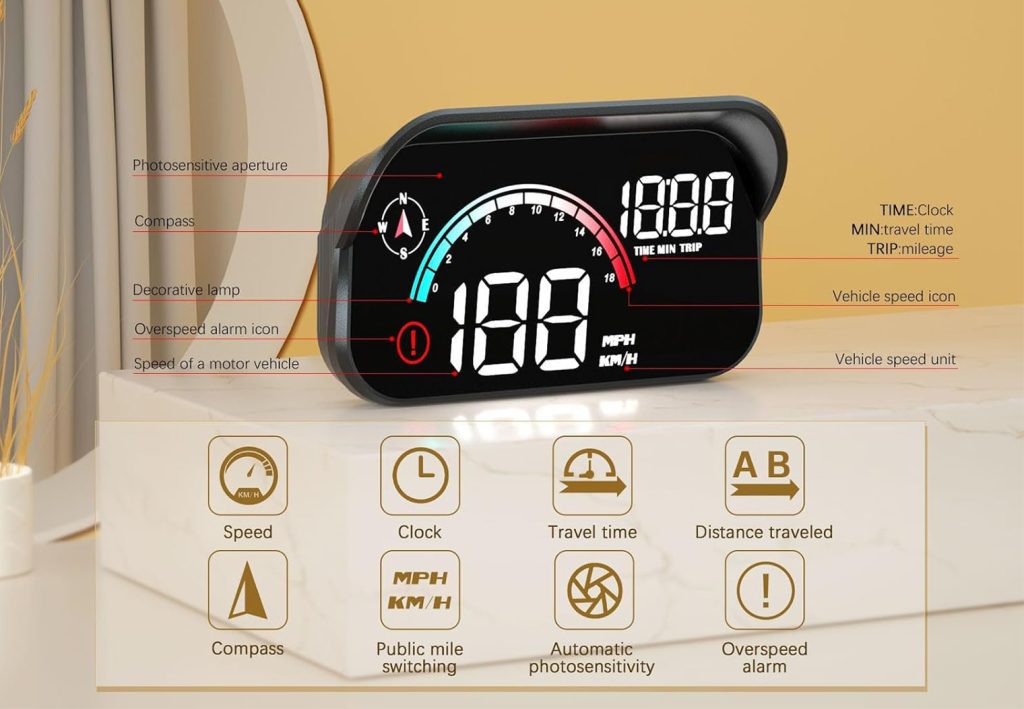
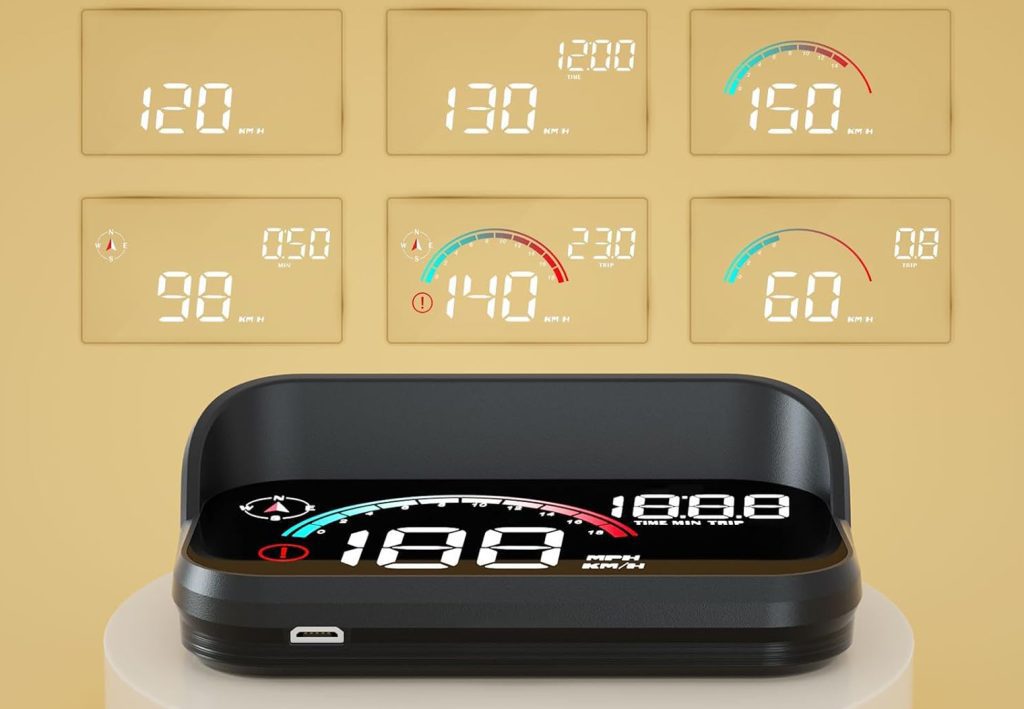
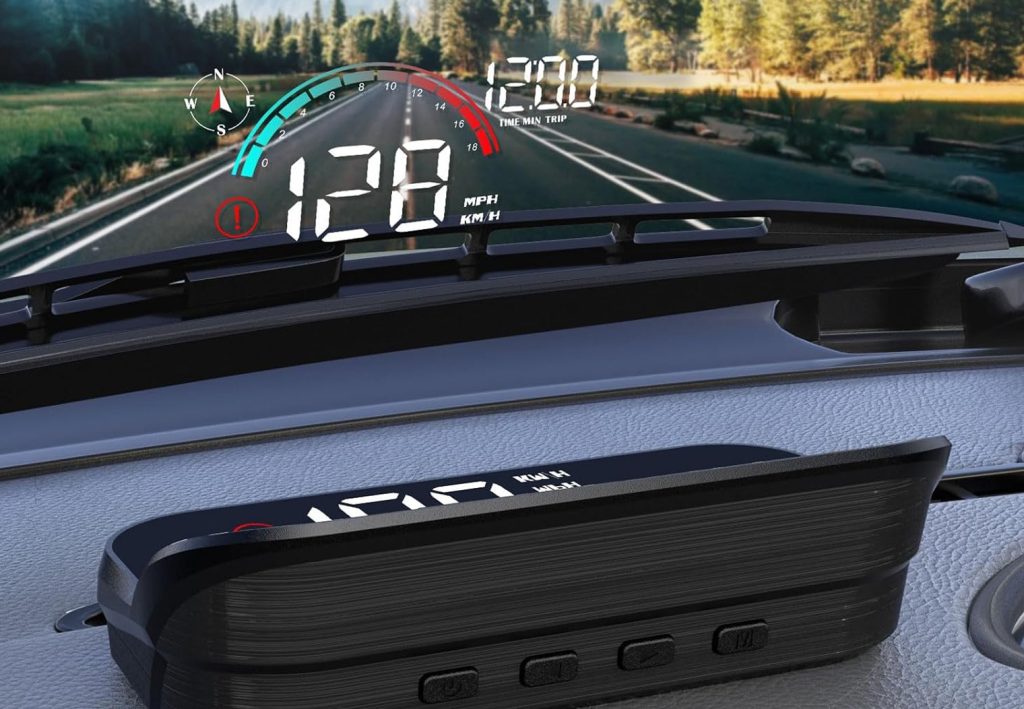
AZIJYV M22
2.9-inch projector | GPS + BeiDou | trip and compass data
I may earn a commission when you buy through these links. It never affects which products I pick.
Why I Picked It
Most cheap windshield projectors show you one number and call it a day. The M22 is the one that gives you a little more. Its 2.9-inch unit runs GPS and BeiDou for speed, clock, trip distance, and heading, with auto brightness, eleven manual steps, and a speed adjustment for when it disagrees with your cluster. It takes 5V USB power, so there is no compatibility question to answer at all, which makes it the default pick for an older car or an EV. Image quality is the variable here, because your glass angle and laminate decide how clean that reflection lands, and AZIJYV includes film for when ghosting shows up. At $25–$35 it is the most display you can get without ever touching the OBD port.
Display & Daylight Readability
Your glass does half the work here and you do not get a vote in it. Auto brightness handles the swing from a tunnel to full sun without you reaching for anything, and the eleven manual steps are there for when it guesses wrong. Use the included film if you see a double image or the daylight contrast goes soft. That is exactly what it is for, and skipping it is the number one reason people call these things junk.
Data & Accuracy
Speed, time, distance, and heading, plus an offset adjustment for when it reads a couple of miles an hour off your cluster. Nine times out of ten the HUD is the honest one in that argument. Expect it to go dark in tunnels, parking garages, downtown canyons, and behind a coated windshield.
Install & Compatibility
USB power means no vehicle network, no protocol check, and no exclusion list to read. Plug it in and it works in a 1994 pickup or a 2026 EV. It needs very little dash, about 3.7 x 1.9 inches, plus a stable angle. Give it a clear view of the sky, then give yourself a few minutes to find the spot where the image sits over the hood instead of in the middle of your view.
Key Features
- 2.9-inch windshield projector
- GPS and BeiDou receiver
- Speed, clock, trip time, distance, compass
- Audible overspeed alert
- Automatic plus 11-step manual brightness
- MPH/KM/H switching and speed adjustment
- 5V USB power, automatic ignition behavior
- Unit, USB cable, pad, reflective film, instructions
- No warranty term published
| Brand | AZIJYV |
| Model | M22 |
| Display Type | 2.9-inch windshield projection |
| Data Source | GPS + BeiDou |
| Reads | Speed, clock, trip time, distance, compass, overspeed alert |
| Compatibility | Vehicles with 5V USB power, satellite and windshield-film limitations apply |
Reasons to Buy
- Speed, trip, clock, and heading above the dash, not just a speed number.
- GPS and BeiDou, so there is no OBD-II compatibility to check.
- Speed calibration corrects a consistent offset against your cluster.
- Auto brightness plus eleven manual steps for changing light.
- The 3.7 x 1.9-inch body asks for almost no dash space.
Reasons to Not Buy
- Ghosting and weak daylight contrast can make the film mandatory rather than optional.
- Satellite lock disappears in garages, tunnels, and behind coated glass.
- No engine data and no fault codes, because it never sees your ECU.
- No published warranty coverage.
KINGNEED 6.2-inch GPS Speedometer
6.2-inch display | GPS | trip and altitude data
I may earn a commission when you buy through these links. It never affects which products I pick.
Why I Picked It
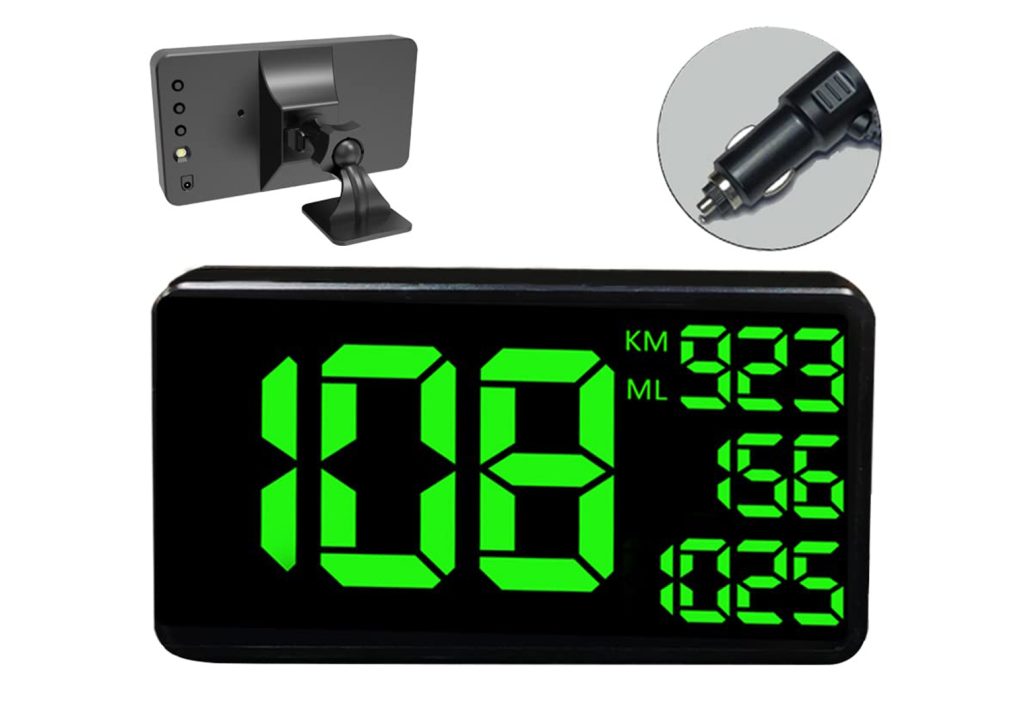
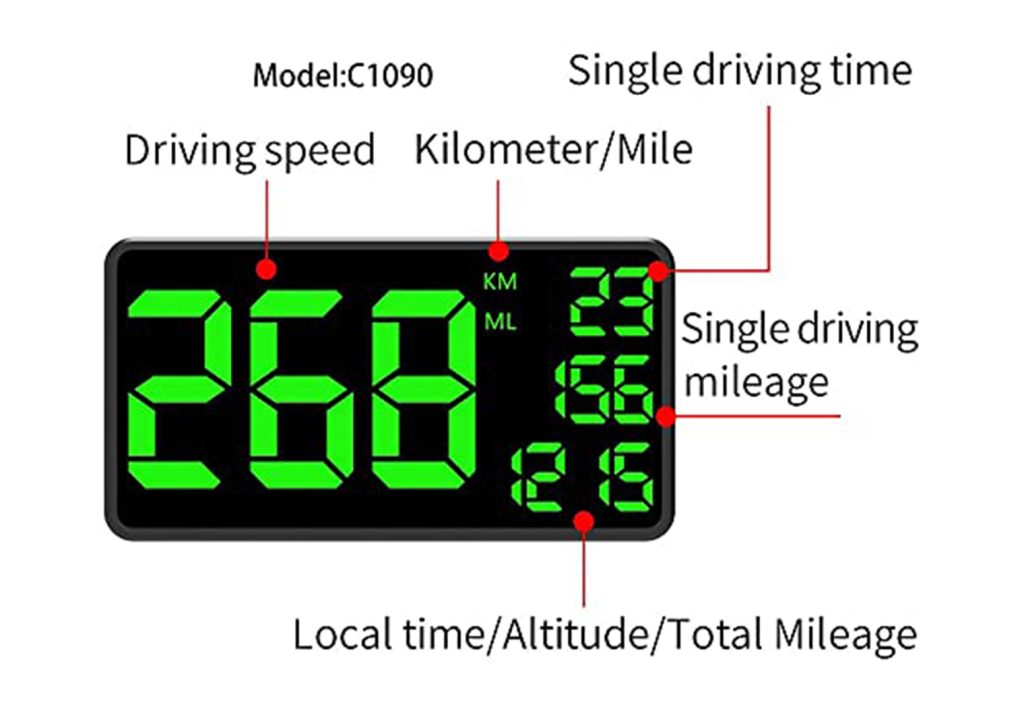
This one is for the driver who has stopped pretending small is better. The KINGNEED runs a 6.2-inch panel with big green digits, carrying speed, trip and cumulative mileage, altitude, time, and alerts. At arm's length across a truck cab, that legibility is the whole product. KINGNEED publishes no brightness figure, so let me be straight about the basis for this award. It wins on size and a clean layout, not on a measured promise about low-angle sun. At $35–$50, put it in a truck, an RV, a van, or an older car with the dash depth to take it. Skip it if your cowl is shallow.
Display & Daylight Readability
Biggest panel here by a wide margin, and the layout does not fight you — green digits on black with nothing else competing for attention. Because you look at it directly there is no ghosting and no film to align. The flip side is that a 6.2-inch slab on a flat dash throws its own reflection into your windshield after dark, so mind the angle when you set it.
Data & Accuracy
Speed, time, distance, and altitude, all of it from satellites with no ECU involvement at any point. There is no published calibration procedure, so a gap against your cluster is permanent. As noted above, the cluster is usually the one bending the truth.
Install & Compatibility
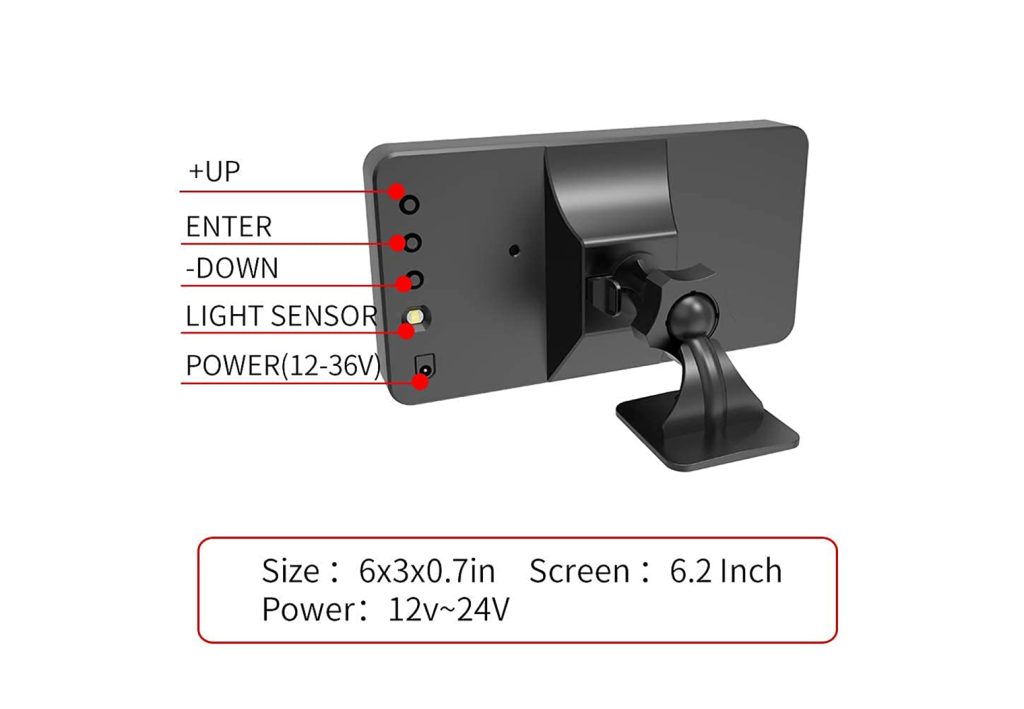
It plugs into a 12V accessory socket, which means no OBD port and no compatibility list to work through. Measure twice before you buy this one. Six-point-two inches of screen has to sit outside your forward sightline and outside the airbag deployment path, and there is no polite way to discover you got that wrong.
Key Features
- 6.2-inch direct-view display
- Large green speed digits
- GPS-derived speed and altitude
- Single-trip time and mileage
- Cumulative mileage and local time
- Overspeed and fatigue alerts
- 12V accessory-socket power
- Published box contents incomplete
- No warranty term published
| Brand | KINGNEED |
| Model | 6.2-inch GPS Speedometer |
| Display Type | 6.2-inch direct-view extended display |
| Data Source | GPS |
| Reads | Speed, trip time, trip and cumulative mileage, altitude, local time, alerts |
| Compatibility | Vehicles with a 12V accessory socket and room for a 6.2-inch display |
Reasons to Buy
- A 6.2-inch panel, the largest here by a wide margin.
- No OBD protocol, no PID list, and no compatibility to verify.
- Trip and cumulative mileage give the speed number some context.
- Direct viewing means no ghosting and nothing stuck to the glass.
- 12V accessory power suits cars, trucks, vans, and RVs alike.
Reasons to Not Buy
- That much screen will block sightlines on a shallow dash.
- No engine or diagnostic data of any kind.
- No published calibration procedure and no measured brightness.
- Warranty term and full box contents are not documented.
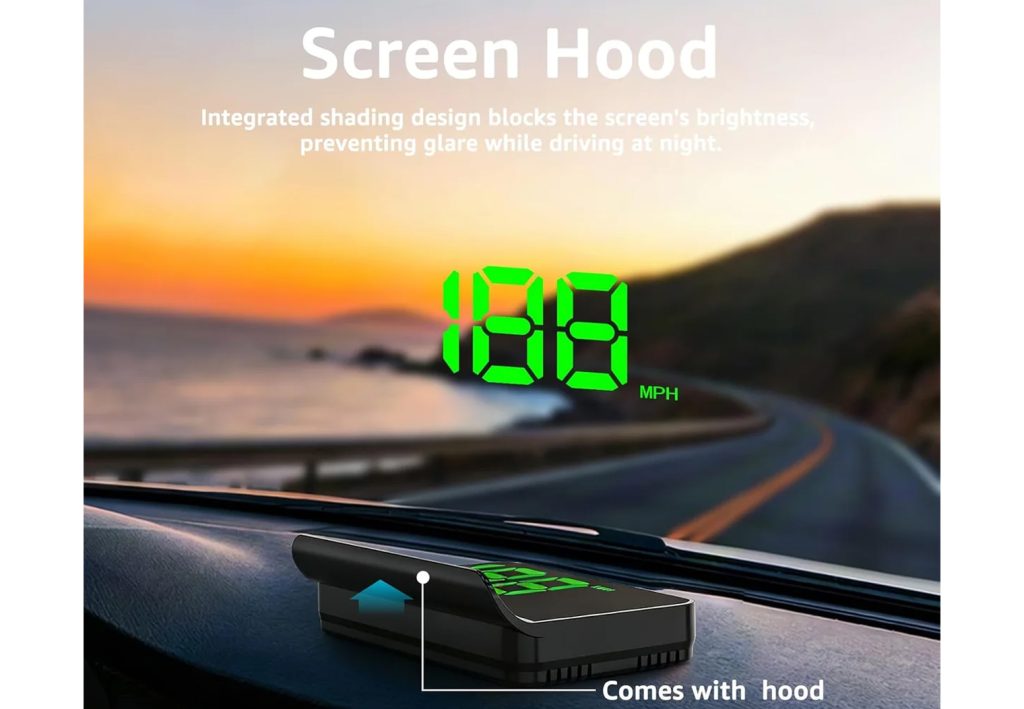
KUOWEIHUD K1
Speed-only projection | GPS + BeiDou | USB power
I may earn a commission when you buy through these links. It never affects which products I pick.
Why I Picked It
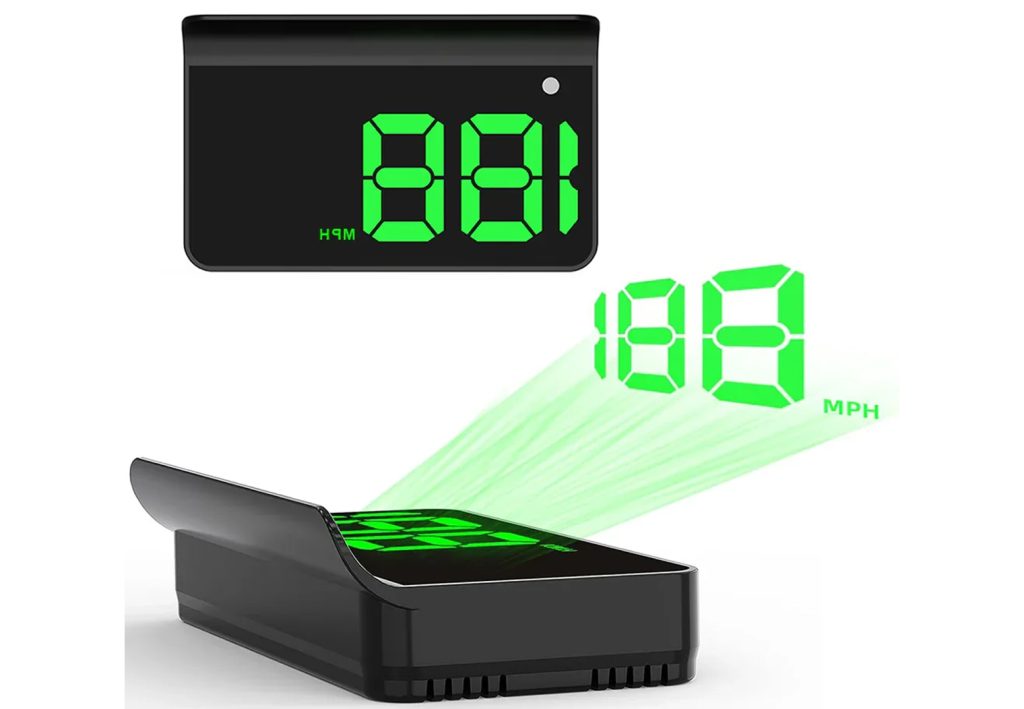
The K1 does one job. It puts a big speed number on your windshield for under $25, with no trip data, no compass, no gauges, and no menu to get lost in. It runs GPS and BeiDou off 5V USB with automatic brightness, and the film comes in the box. KUOWEIHUD advertises a 10Hz update rate, which I pass along as a published claim rather than something I measured. The documentation is clear that speed calibration and unit switching are both off the table. Order the correct MPH or KM/H version the first time, because the unit is fixed and you cannot change it later. Take this over the M22 only when you genuinely want nothing but speed.
Display & Daylight Readability
One large speed value, automatic brightness, and that is the entire interface, which is more of a feature than it sounds like when you are actually driving. The film is included and you should assume you will need it, because the double image your laminated glass produces is not a defect. It is physics.
Data & Accuracy
Speed from satellites, and nothing else. You cannot fine-tune it, so a disagreement of a mile or two with your cluster is permanent. Worth remembering that the HUD is probably the accurate one. Reception drops in tunnels, garages, heavy weather, and behind metallic film.
Install & Compatibility
It needs a flat spot on the dash and 5V USB, and the body is genuinely tiny at 2.76 x 1.69 inches. Twelve months of defect coverage is published, which is more than most of this field manages. Dry-fit it, drive with it for a day, and only then commit the tape.
Key Features
- Speed-only windshield projection
- GPS and BeiDou receiver
- Claimed 10Hz update rate
- Automatic brightness sensor
- Fixed MPH or KM/H version
- 5V USB power
- 2.76 x 1.69 x 0.79-inch body
- Unit, USB cable, tape, reflective film, manual
- Twelve-month manufacturing-defect warranty
| Brand | KUOWEIHUD |
| Model | K1 |
| Display Type | Speed-only windshield projection |
| Data Source | GPS + BeiDou |
| Reads | Speed |
| Compatibility | Vehicles with 5V USB power, choose MPH or KM/H version before purchase |
Reasons to Buy
- One big speed number and no menu to get lost in.
- GPS and BeiDou, so no OBD-II port is required at all.
- Automatic brightness handles the day-to-night swing on its own.
- Film, cable, tape, and instructions all in the box.
- A published 12-month defect warranty, which is rare at this price.
Reasons to Not Buy
- Speed cannot be calibrated, so any gap against your cluster is permanent.
- MPH and KM/H are separate versions, so order carefully.
- No trip, compass, or engine data of any kind.
- Clean projection will most likely require the windshield film.
How I test and choose aftermarket head-up displays
I start with the job the display has to do, then split optical projection from a physical screen before comparing a single feature. Those two designs fail in completely different ways. Years of installing mobile electronics professionally shape how I judge placement, cable routing, power behavior, and compatibility. When I did the head-unit install in my Toyota Tundra, display angle and dash clearance had to be locked in before anything went back together. A HUD is that same problem in a smaller package. For this guide I worked through every product page, seller, manual, compatibility note, and warranty term. I qualified every claim that depends on your specific vehicle or your specific windshield. Where a manufacturer does not publish a number, I say so instead of guessing. That keeps this anchored to what these units actually document and what they actually cost you in the real world, rather than a score I made up.
I look at panel size, layout, brightness control, windshield ghosting, film requirements, and what the documentation admits about polarized sunglasses. Bigger is not automatically easier to live with, and a large screen that blocks the road or washes out at four in the afternoon is a worse buy than a small one you can actually read.
I separate GPS values from ECU data, because they come from different places and disagree for real reasons. I check whether speed can be calibrated, and I treat every temperature, pressure, fuel, and boost claim as PID-dependent unless the vehicle support is spelled out. Thirty possible readings mean nothing if your car only reports twelve of them.
I compare the mount, the cable path, the dash footprint, the windshield rake, the power source, and the published protocol limits. This is the same placement discipline I use for dash work, and it is where most of these purchases go wrong. I also hunt for the exclusions, because older vehicles, hybrids, diesels, pickups, RVs, start-stop systems, and metallic windshield coatings each break something different.
I check auto on/off behavior, documented sleep current, voltage thresholds, cable type, operating-temperature guidance, warranty terms, and the controls you will still be reaching for a month in. A dash display has to survive a closed car in August and shut itself down without draining your battery, not just photograph well in a listing.
Six questions that decide which aftermarket HUD fits your car
- Do you want a windshield image or a physical screen? Take the M22 or K1 if a true reflection is the reason you are shopping at all. Take the Lufi X1, ScanGauge 3, Wiiyii P6, P21, or KINGNEED if you would rather have a screen with hard edges. Several of them carry a lot more data behind that screen. Neither type floats an image out past your hood, because that is the factory trick and it needs a mirror stack no forty-dollar unit is going to carry.
- Does your car actually support the OBD data you want? A 16-pin connector confirms the port, not a single sensor behind it. Check the product's year rule, powertrain rule, and exception list against your exact vehicle before you count on any engine reading. As a rule of thumb, speed, RPM, coolant, and voltage turn up almost everywhere. Boost, intake temps, and detailed fuel data are the first things missing on an ordinary economy car.
- Will the windshield create two images? Laminated glass has two reflective surfaces, so a faint second image is normal rather than a defect, and it gets worse at night. Use the film when the projector's instructions call for it, or sidestep the whole issue with a direct-view screen. Rake angle matters too. Upright truck glass reflects cleanly, while a steeply laid-back sedan windshield can push the image somewhere you do not want it.
- Where can the display sit without competing for your view? Measure the dash, keep the unit clear of the airbag deployment path, and check your full sightline from your normal seating position before any adhesive touches anything. Dry-fit and power-test first. Cheap foam tape also lets go once a black dash bakes in August, so when you do commit to a spot, commit with decent automotive-grade tape. If you are also mounting one of my dash camera picks or a radar detector, plan all three positions and cable routes at once. Finding the conflict on the third install is the hard way to do it.
- Will it shut down cleanly in your vehicle? An OBD-II port can stay live after you pull the key, so auto-sleep behavior is the spec that decides whether you come back to a dead battery. Push the plug in straight and do not force it, because bent pins in that connector turn into an expensive afternoon. Watch the first few shutdown cycles and set the sleep-voltage threshold if the unit gives you one. Pull anything that keeps waking up, or that keeps the vehicle network awake with it.
- Are you trying to add speed data, navigation, or a camera view? Almost nothing here does turn-by-turn maps, and none of it takes a camera input. If navigation and phone apps are the actual goal, go compare my best car stereos or keep the factory screen and add a wireless CarPlay or Android Auto adapter instead. For seeing behind you, buy a real rear-view camera, because a speed HUD is never going to grow a video input.
Start with the vehicle and factory audio layout
Use the fit guide to confirm what your exact vehicle came with and where the upgrade path goes from there. Then take the HUD's own manual and a tape measure to the dash and verify OBD support, clearance, film, power, and the airbag path yourself. That ten minutes is what separates a clean install from a returned box.
Best aftermarket head-up display questions, answered
Do aftermarket head-up displays really work?+
Yes, though it is worth managing the expectation. An aftermarket HUD genuinely moves speed or vehicle data closer to your normal sightline, and that is a real gain over dropping your eyes to the cluster. What it does not do is reproduce a factory HUD. That one uses a mirror stack to park its image out near the front of the car, so your eyes never refocus. The M22 and K1 reflect off the glass and may need the included film to control ghosting. The Lufi X1 does either, while the ScanGauge 3 and the other screens trade the floating image for a panel that is always sharp.
How does a head-up display connect to my car?+
Through the OBD-II port, through USB or 12V power with GPS, or through both. The Lufi X1 and ScanGauge 3 pull power and vehicle data from the OBD-II port under your dash. The M22, KINGNEED, and K1 only need power and get their speed from satellites. The Wiiyii P6 and AZIJYV P21 switch between the two, which is why they are the safer picks when you are not sure what your car will give up.
Will a HUD work on my car?+
A GPS unit will work in nearly anything with a power source and a view of the sky. OBD-II support is the part that needs checking, and most US passenger vehicles have had the port since 1996. But Lufi, Wiiyii, and AZIJYV all publish narrower year and powertrain rules, and AZIJYV excludes diesels, hybrids, pickups, and RVs outright. ScanGauge publishes the widest documented 1996+ path in this roundup. Even on a fully compatible car, which readings exist is still up to your ECU.
Do I need reflective film on the windshield?+
You need it if the projector throws a double image or washes out in daylight, and that is common enough that I would plan on it. Your windshield is two sheets of glass with a laminate between them, so it produces two reflections. The ghost is the second one, not a fault in the unit. The M22 and K1 include film while the Lufi X1 does not, and a direct-view screen avoids the question entirely, because it never uses your glass as the image surface.
Can an OBD-II HUD drain the battery?+
Yes, and it is the failure I would worry about most. Plenty of vehicles keep the OBD-II port powered after the key is out. The unit has to put itself to sleep properly, or it sits there pulling current all night. The Lufi X1 publishes 1mA or less, which is negligible. The Wiiyii P6 lets you set the sleep-voltage threshold, which is the fix on start-stop and hybrid vehicles where the voltage behavior confuses these things. Watch the first few shutdowns after you install one, and unplug anything that stays awake or keeps waking the vehicle network with it.
What can a car HUD display?+
Anywhere from one number to a full gauge cluster. The K1 shows speed and nothing else, the M22 adds clock, trip distance, and heading, and the P21 stacks pitch, roll, and altitude on top of that. The OBD-II units can add RPM, coolant temperature, voltage, boost, fuel data, and stored fault codes, when your ECU actually reports those PIDs. The ScanGauge 3 goes furthest with X-Gauges, which reach manufacturer-specific values like transmission temperature that a generic scanner never sees. Nothing in this roundup does turn-by-turn navigation.
Is there an aftermarket HUD with turn-by-turn navigation?+
Not in any form I would recommend, and that is worth saying plainly because it is one of the most common searches in this category. The units that claim it mirror your phone screen onto the glass, which is dim, laggy, and usually illegal to watch while driving. The rest lean on an app that stops being updated. None of the seven picks here does turn-by-turn, and I would rather tell you that than sell you a workaround. If navigation is the actual goal, put the map on a proper screen with my best car stereos or a wireless CarPlay or Android Auto adapter. Let the HUD handle speed.
Are aftermarket HUDs hard to install?+
Powering one is easy. Placing one well is not, and that is where people get it wrong. You need a stable spot on the dash or glass, and a cable route that stays clear of pedals and controls. The unit also has to sit outside the airbag zone. A windshield projector adds film alignment and a brightness pass on top of that. Dry-fit it, live with it for a day or two, and only then commit the adhesive. Use decent automotive tape while you are at it, because the cheap foam that ships in some of these boxes gives up the first hot afternoon.
Is an OBD-II HUD better than a GPS HUD?+
Neither is better outright, because they answer different questions. OBD-II wins when you want engine data and your vehicle supports the unit, since nothing else will show you coolant temp or a fault code. GPS wins on compatibility, because it does not care what your car is or how old it is. There is one more wrinkle worth knowing. Your factory speedometer is not permitted to read low and is permitted to read high, so most carry a deliberate margin that grows as your tires wear. GPS measures actual speed over the ground and ignores tire diameter completely. If accuracy is what you are after, GPS is the honest one, and the Wiiyii P6 splits the difference by doing both.
Will a HUD block my view of the road?+
It can, and the 6.2-inch KINGNEED is the one to be careful with. The K1 and M22 take up almost no dash at all. Before you commit anything, sit in your normal driving position and mark the footprint with a piece of tape. Confirm you can still see the road, your mirrors, and your warning lights, with nothing sitting in an airbag path. Check it at night too, because a bright panel on a flat dash will throw its own reflection onto the inside of your windshield. If the display pulls your eyes off the road instead of keeping them up, move it or take it out.
More car-tech guides
Why trust me?
