
Best Factory Stereo Integration Adapters (Tested) – 2026 Buyer’s Guide
Keep the factory screen and still upgrade the sound — I’ve organized the best integration adapters by the job they do, from a $30 line output converter for a single sub up to a plug-and-play DSP amp that replaces the factory amp outright.

Why I built this guide
Modern cars killed the old ‘just rip out the radio’ move. The factory screen now runs your climate, your backup camera and half the car’s settings, so on most newer vehicles the smart play is to keep the OEM head unit and build great sound around it. The catch is that pulling a clean signal out of a factory system is its own skill — get the adapter wrong and you get hiss, weak bass, or dead steering-wheel controls.
The right box depends entirely on what your car hands you — a basic deck, a factory amp, or a fully processed premium system — so I laid these out as a ladder, from a simple line-output converter up to a full DSP-amp. Figure out which rung your car is on (the fit guide below will tell you), and the pick I’d use is there.
Compare my 8 integration picks
| Integration Path ↕ | My pick ↕ | Channels | Best for ↕ | Channels ↕ | Signal Correction ↕ | Rating ↕ | Buy |
|---|---|---|---|---|---|---|---|
| 2-Ch Active LOC | 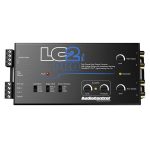 AudioControl LC2i Pro AudioControl LC2i Pro | 2-Ch Active LOC | Adding an amp or sub to a non-amplified factory deck | 2-channel | AccuBASS | Buy Now $157.80 on Amazon | |
| 2-Ch Sub LOC | 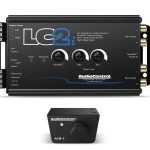 AudioControl LC2i AudioControl LC2i | 2-Ch Sub LOC | A single clean sub on a factory deck | 2-channel | AccuBASS | Buy Now $98.99 on Amazon | |
| 6-Ch Summing LOC | 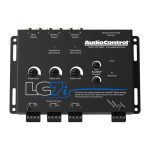 AudioControl LC7i Pro AudioControl LC7i Pro | 6-Ch Summing LOC | Factory-amplified, multi-channel systems | 6-channel | AccuBASS + summing | Buy Now $289.00 on Amazon | |
| OEM Interface | 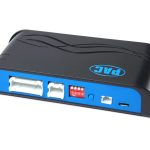 PAC AmpPro AP4 PAC AmpPro AP4 | OEM Interface | Processed / data-bus factory-amped cars | Front / Rear / Non-Fading | DSP signal clean-up | Buy Now $246.72 on Amazon | |
| Auto-Correct | 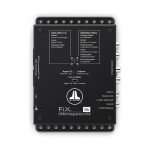 JL Audio FiX 86 JL Audio FiX 86 | Auto-Correct | Time-aligned premium factory systems | 8 in / 6 out (Front / Rear / Sub) | Auto time-alignment + EQ + summing | Buy Now $529.99 on Crutchfield | |
| Best Integration DSP-Amp | 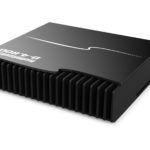 AudioControl D-Series AudioControl D-Series | 4-ch · 125W×45-ch · 100×4 + 3006-ch · 125W×6 | Replacing the factory amp with one tunable box | From $645.00 on Amazon | |||
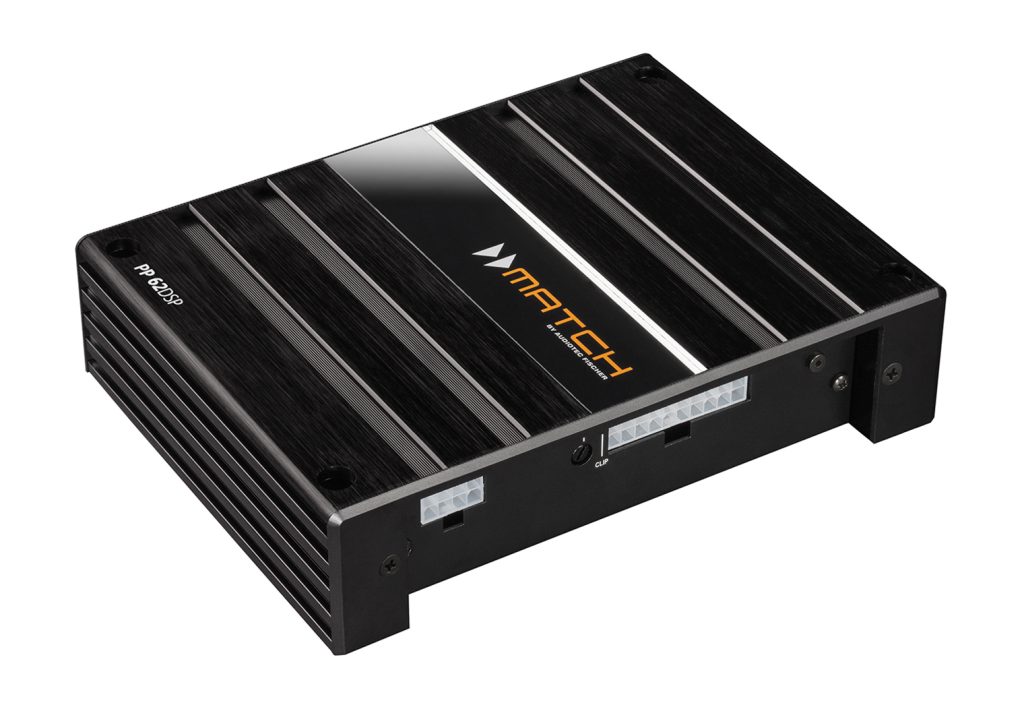
| PnP DSP Amp | 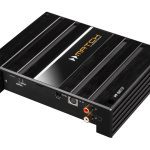 MATCH PP 62DSP MATCH PP 62DSP | PnP DSP Amp | A pro-tuned upgrade with no laptop | 5/6-channel (8 DSP ch) | 56-bit DSP (preset / PC-Tool) | View pick → | |
| Budget LOC | 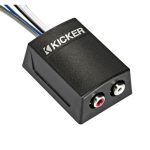 Kicker 46KISLOC2 Kicker 46KISLOC2 | Budget LOC | The cheapest clean signal off a factory deck | 2-channel | None (passive) | Buy Now $19.99 on Amazon |
CarAudioNow may earn a commission from retailer links. Brands do not influence the recommendations.
How we test & choose factory integration hardware
We don’t judge an integration adapter on a bench — we judge it wired into a real factory system, by how clean the signal is on the other side. The right box depends entirely on what your car hands you: a basic deck, a factory amp, or a fully processed premium system. Here’s what we look at.
We listen to what comes out: the noise floor, the output voltage, and whether the bass survived. A good converter or interface hands your amp a flat, full-range, hiss-free signal — and bass restoration like AccuBASS is the difference between a sub that hits and one that fades at volume.
We confirm the dash keeps everything — volume, fade, balance, chimes, steering-wheel controls — and that the turn-on is clean. On processed and data-bus systems we check that it de-equalizes back to flat without throwing speaker-fault codes.
I wire these into real vehicles — my own <a href="https://www.caraudionow.com/f-150-car-audio-install/">F-150 build</a> runs amps off the factory signal — so I judge fitment on whether the harness drops in, how many factory channels it can sum, and whether it tucks behind the dash. The right part for a factory-amped car is rarely the right part for a basic one.
We match the device to the system. A non-amplified deck needs a simple LOC; a processed, time-aligned premium system needs summing, de-EQ, or auto-correction. Recommending a $30 passive LOC for a Harman Kardon car would be malpractice — and so would a $700 DSP-amp for a base radio and one sub.
Why integration hardware — and who this list is for
- What this gear actually does It gets a clean, full-range signal out of a factory radio you can’t (or don’t want to) replace, and into aftermarket amps, speakers, and subs. That’s the whole job — it’s the bridge between your stock head unit and a real system.
- Do you have a factory amp? This decides everything. A non-amplified deck just needs a line output converter. A factory-amplified or processed system needs summing, an OEM interface, or a DSP-amp. Not sure which you’ve got? My Vehicle Fit Guide will tell you.
- Keep the radio, or replace it? If you’d rather swap the head unit, that’s a different path — start with my best car stereos guide. This guide is for everyone keeping the factory screen, whether by choice or because the dash can’t be replaced.
- How much signal cleanup do you need? Adding one sub is the simple end — an active LOC with bass restoration does it. A premium system that EQs and time-aligns every speaker is the deep end — that wants de-EQ, auto-correction, or a full DSP-amp.
- Who this is for First-timers adding a sub to a factory deck, all the way to installers integrating a complex, de-EQ’d factory-amped system. I’ve laid the picks out as a ladder so you can find your rung.
My factory integration picks
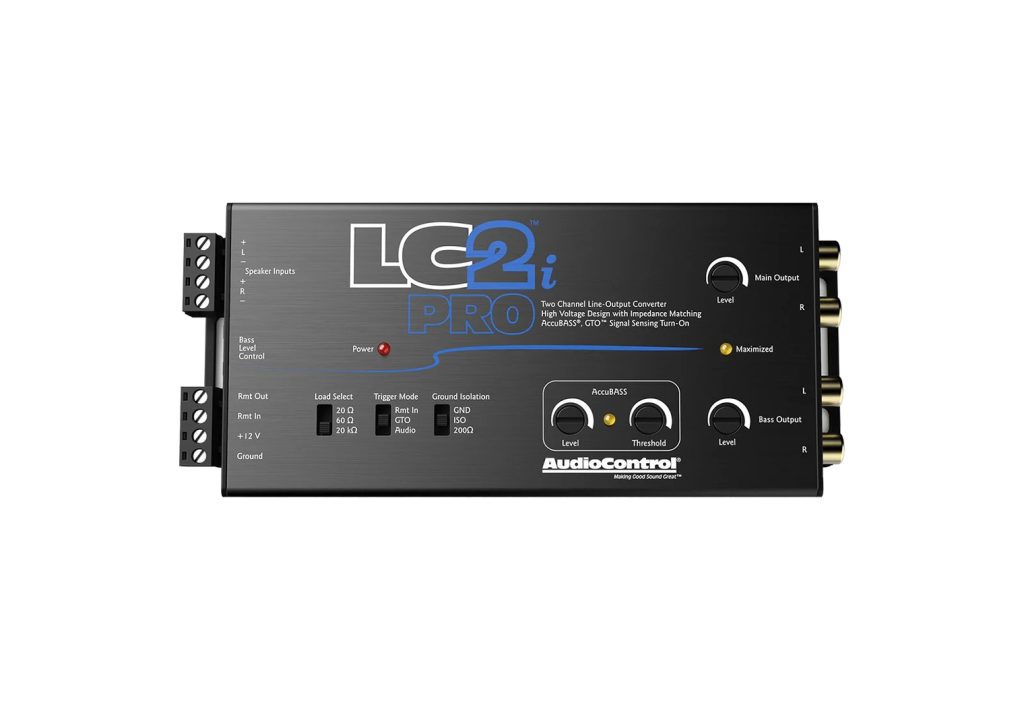
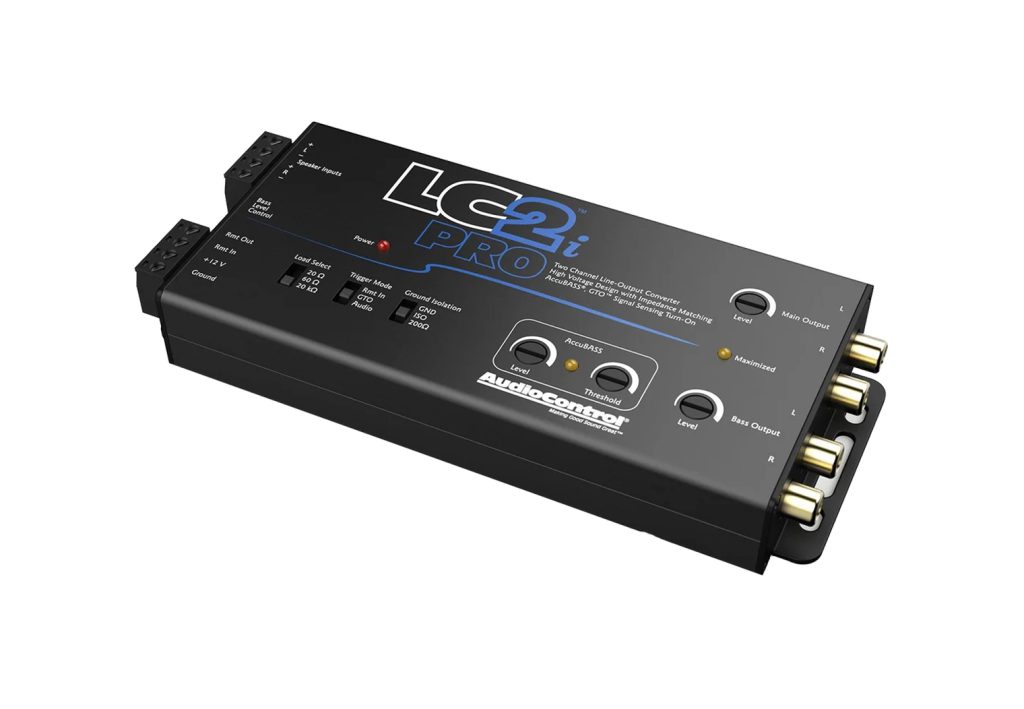
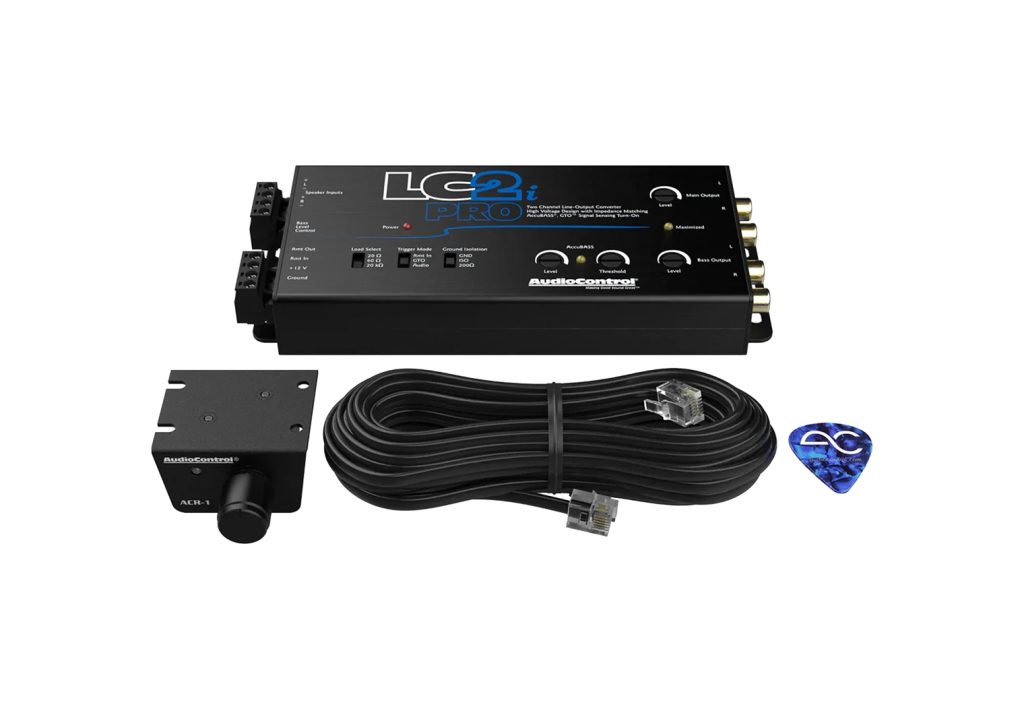
AudioControl LC2i Pro
2-channel active line output converter w/ AccuBASS
CarAudioNow may earn a commission from retailer links. Brands do not influence the recommendations.
Why I picked it
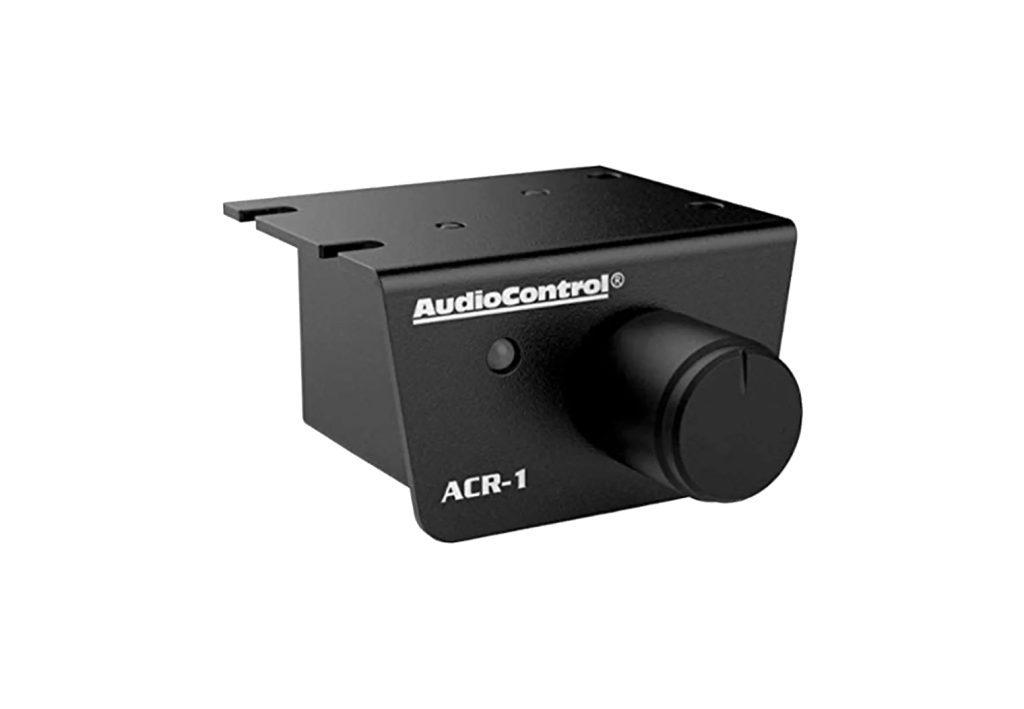
This is the converter I reach for first on any factory deck that isn’t already amplified. It takes the speaker-level signal off the back of the radio (up to a hot 40V/400W per channel) and hands your amp a clean 9.5V preamp signal, where most cheap LOCs top out around 2–4V. That extra output is what keeps the signal quiet over a long run to the trunk. Factory radios roll the bass off as you turn up to protect the stock speakers, so AudioControl’s AccuBASS detects that and adds it back, and the included ACR-1 puts a bass knob on your dash. Set the GTO signal-sense turn-on and you don’t even have to find a remote wire. If there’s any chance you’ll grow past a single sub, this is the one I’d buy.| Make | AudioControl |
| Model | LC2i Pro |
| Type | 2-channel active LOC |
| Channels | 2-channel |
| Max Speaker Input | 40V / 400W per channel |
| Max Preamp Output | 9.5V RMS |
| Signal Correction | AccuBASS |
| Turn-On | GTO signal-sense / audio / 12V remote |
| Bass Remote | ACR-1 included |
Reasons to buy
- 9.5V preamp output for big headroom and a quiet signal even on a long run to the trunk
- AccuBASS automatically restores factory bass roll-off (dash ACR-1 knob included)
- 40V / 400W-per-channel input handling taps even hot factory outputs
- GTO signal-sense turn-on, so no hunting for a remote-on wire
- Load-selection + ground-isolation switches tame finicky, noisy factory systems
Reasons not to buy
- Overkill (and pricier) if a single sub is all you’ll ever add. The standard LC2i covers that for less
- Only 2 channels, so it can’t sum a multi-speaker factory-amped system (step up to the LC7i Pro)
- AccuBASS needs a few minutes to dial in, and it’s not plug-and-forget
- Converts and restores, but doesn’t de-equalize a heavily processed premium signal (that’s an AmpPro/DSP job)
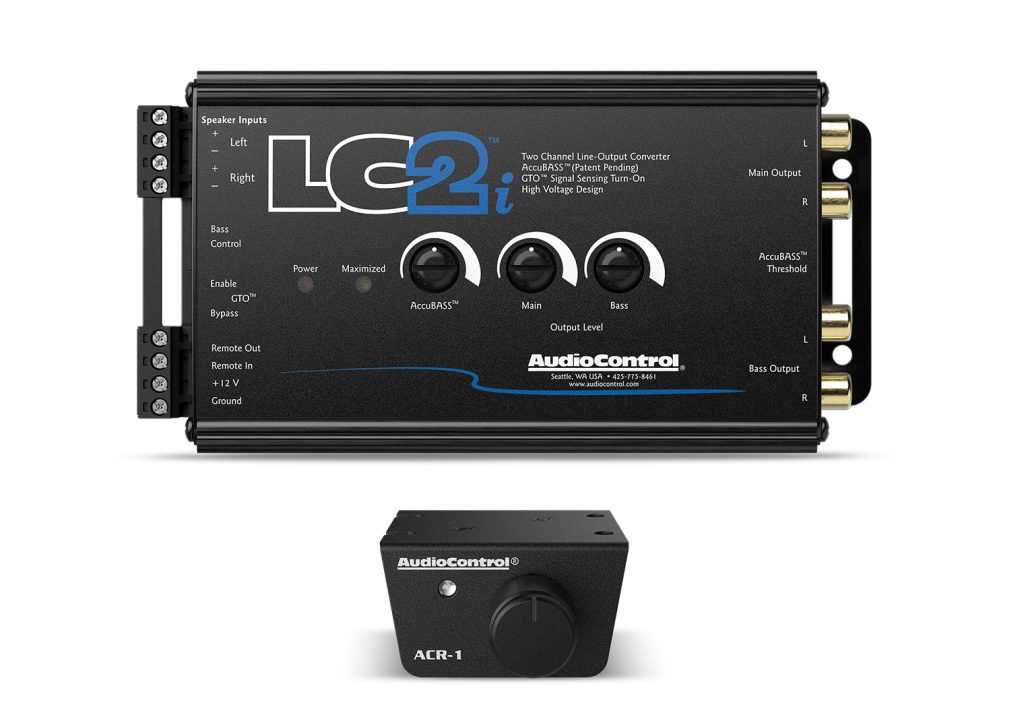
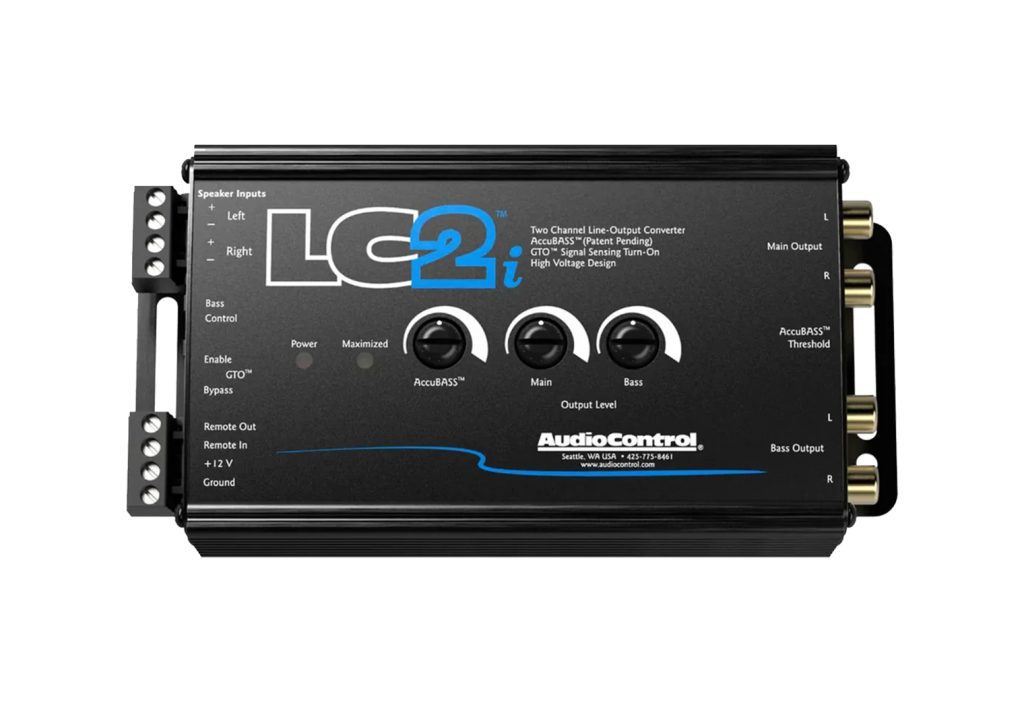
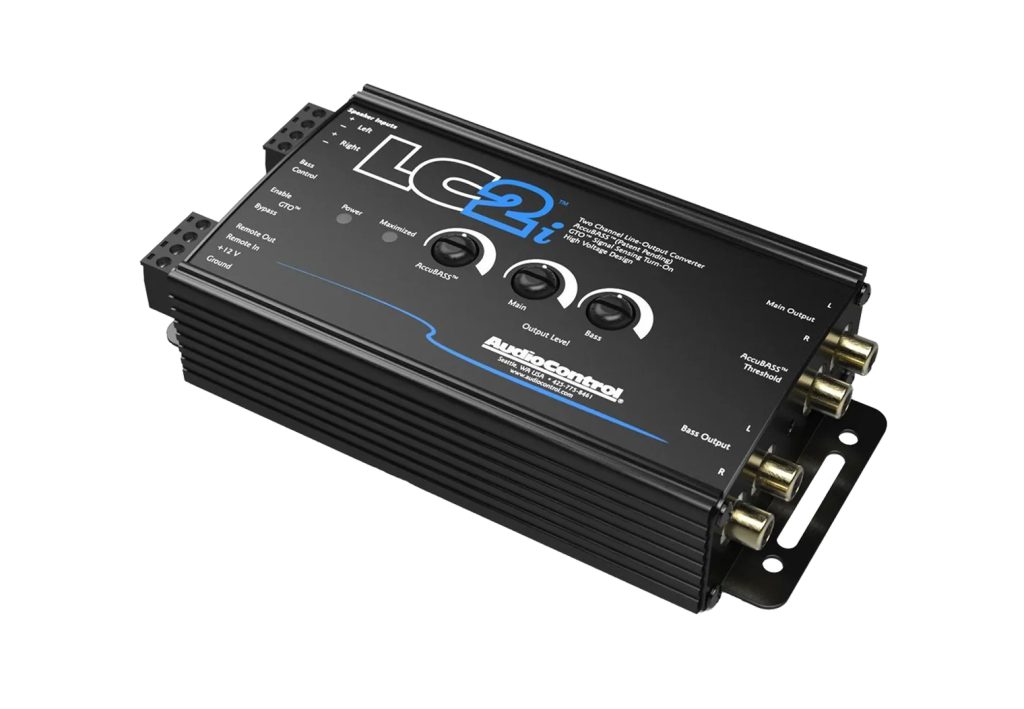
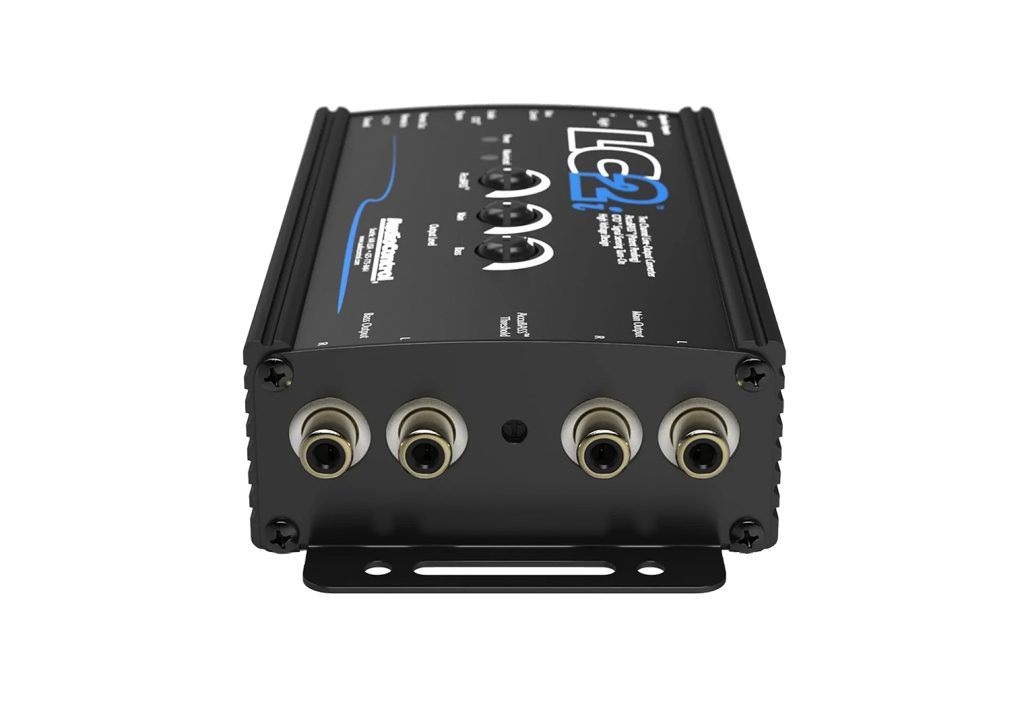
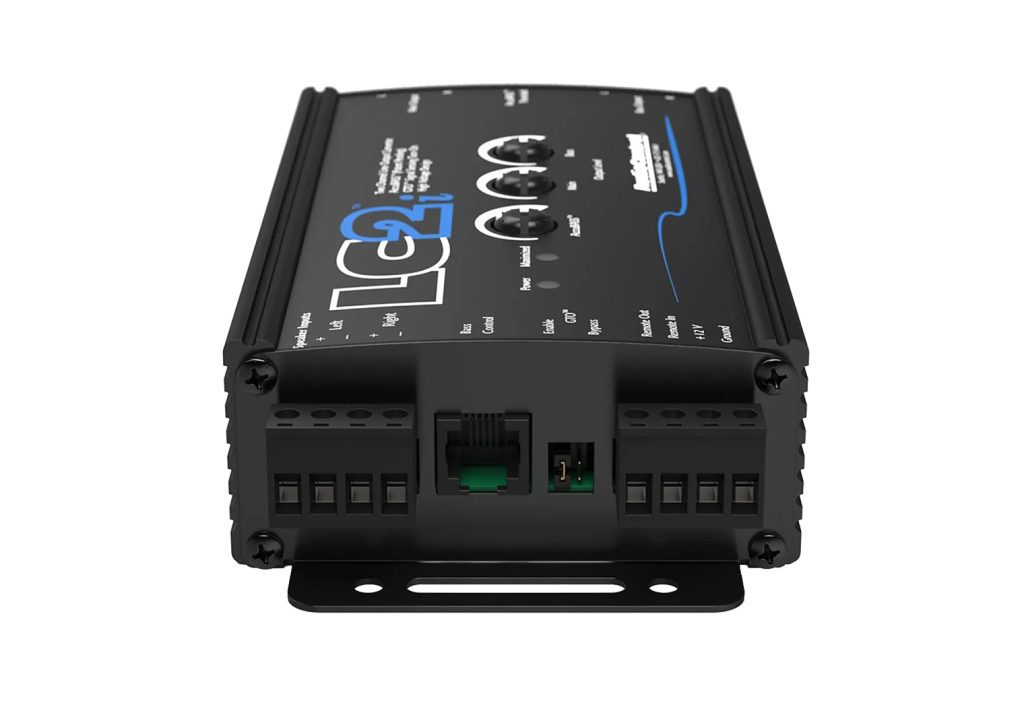
AudioControl LC2i
2-channel active LOC w/ AccuBASS — the single-sub specialist
CarAudioNow may earn a commission from retailer links. Brands do not influence the recommendations.
Why I picked it
If the only thing you’re adding is a subwoofer, this is the smart-money pick. You sum its two channels down to your mono sub amp, and AccuBASS fixes the exact problem that makes a factory-fed sub go limp when you turn it up (that built-in bass roll-off), while the included ACR-1 gives you a bass knob on the dash. It still handles up to 400W per channel of factory input, so it’s not a toy. It’s essentially the LC2i Pro’s value sibling: the same hot 9.5V output and AccuBASS, just without the Pro’s load-selection and ground-isolation switches, for about $40 less — and every bit as good at the one-sub job. Spend the difference on the Pro only if you think you’ll feed more than one amp down the road.| Make | AudioControl |
| Model | LC2i |
| Type | 2-channel active LOC |
| Channels | 2-channel |
| Max Speaker Input | 40V / 400W per channel |
| Max Preamp Output | 9.5V RMS (13V peak) |
| Signal Correction | AccuBASS |
| Turn-On | GTO signal-sense / audio / 12V remote |
| Bass Remote | ACR-1 included |
Reasons to buy
- AccuBASS fixes the weak-at-volume bass problem on factory-fed subs
- Includes the ACR-1 dash bass knob
- Handles up to 400W per channel of factory input
- GTO signal-sense turn-on, so no remote-on wire is needed
- About $40 less than the Pro while doing the single-sub job just as well
Reasons not to buy
- No load-selection or ground-isolation switches like the Pro. Fine on most systems, but the Pro tames the noisiest, most finicky factory setups better
- Only 2 channels, with no multi-channel summing for factory-amped systems
- AccuBASS takes a few minutes to set and isn’t plug-and-forget
- Still needs a proper ground and a few settings, since it’s active, not a dumb passive tap
AudioControl LC7i Pro
6-channel active LOC w/ AccuBASS + channel summing
CarAudioNow may earn a commission from retailer links. Brands do not influence the recommendations.
Why I picked it
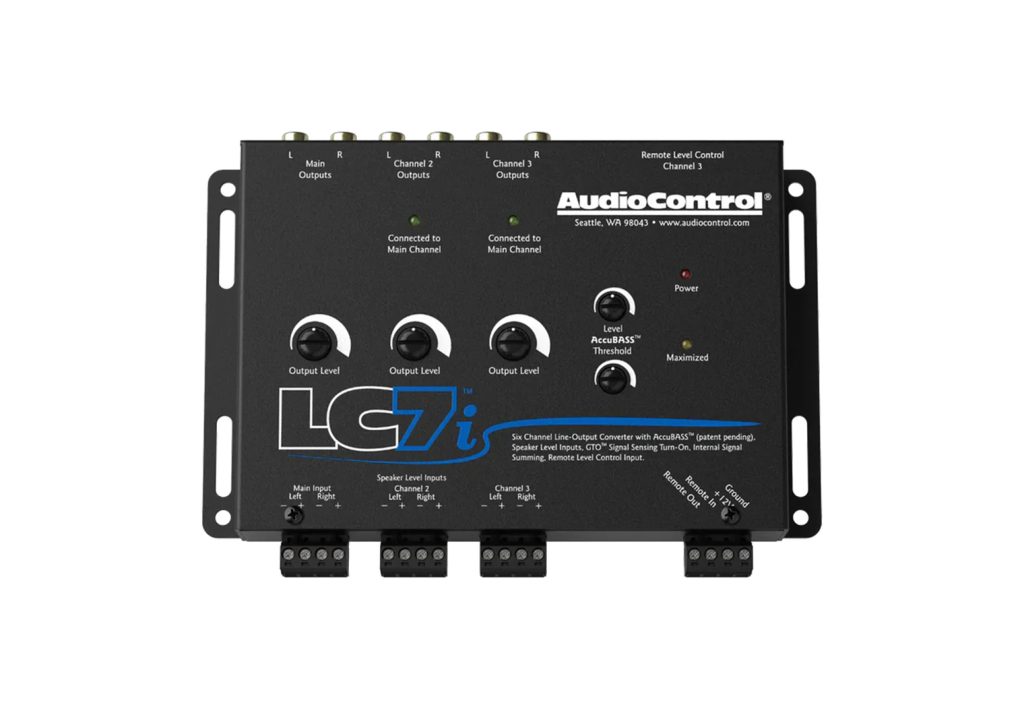
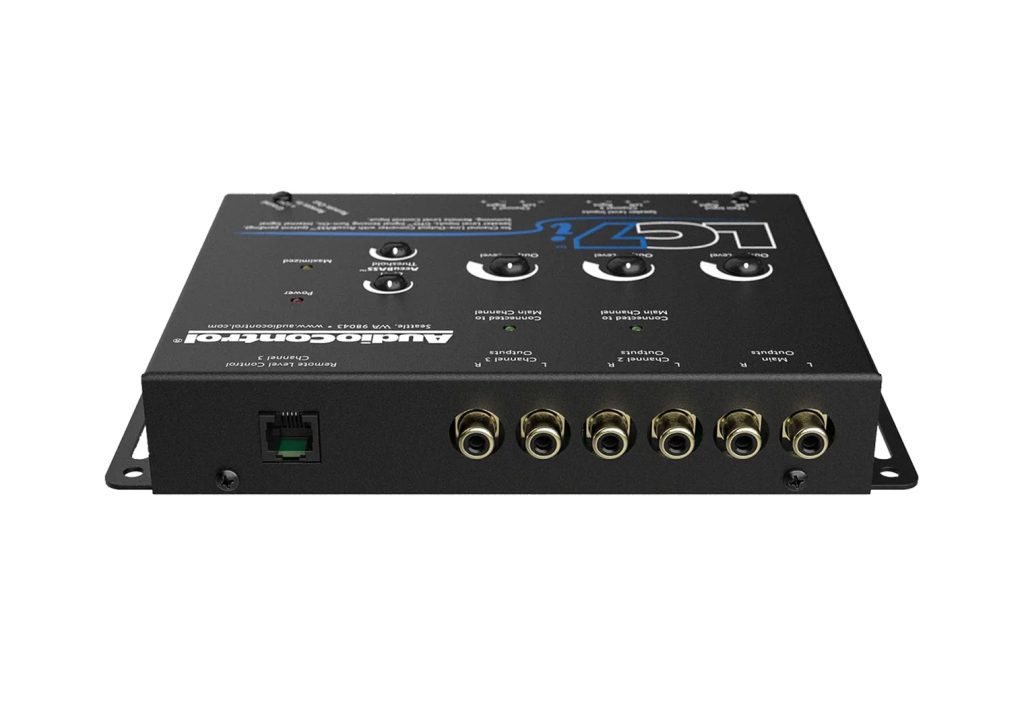
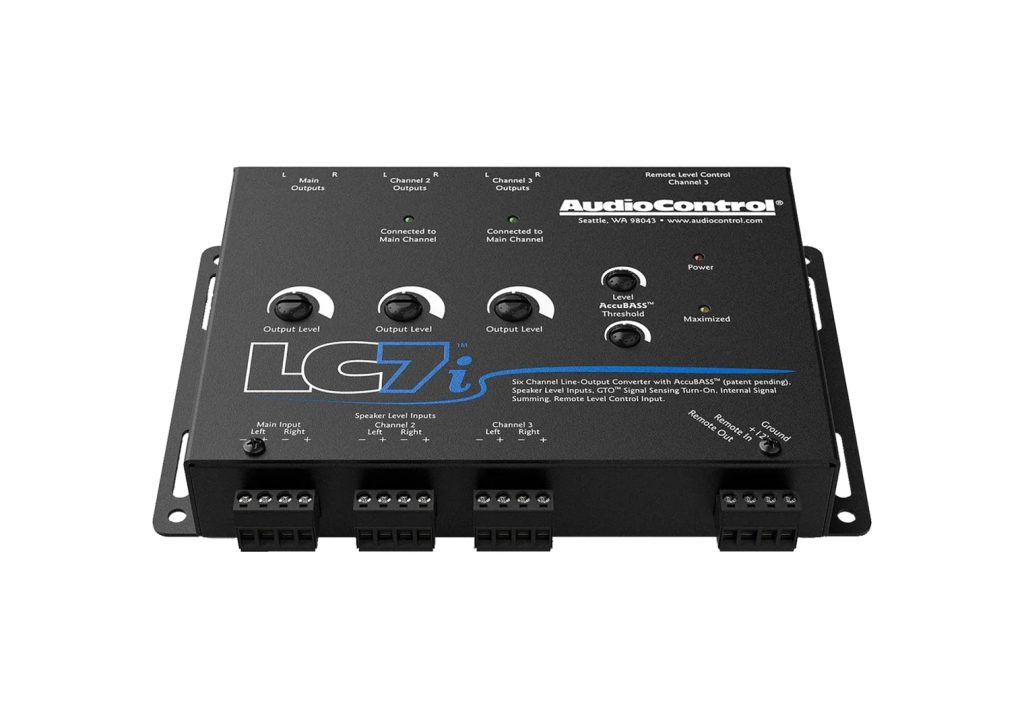
When the factory system is amplified and split into separate front, rear, and sometimes sub feeds — often with crossovers already baked in — a 2-channel LOC can’t put it back together. The LC7i Pro takes up to six speaker-level inputs, sums them back into a full-range signal, restores the low end with AccuBASS, and hands your amps or DSP a clean 8.5V feed with ±15 dB of gain to play with. You flip the channels to Sum/Bus and it recombines those crossed-over factory outputs into something an aftermarket amp can actually use. It’s the right LOC for a factory-amped, multi-speaker car when you’re not going all the way to a full DSP.| Make | AudioControl |
| Model | LC7i Pro |
| Type | 6-channel active LOC |
| Channels | 6-channel |
| Max Speaker Input | 40V per channel |
| Max Preamp Output | 8.5V RMS (±15 dB gain) |
| Signal Correction | AccuBASS + summing |
| Turn-On | GTO signal-sense / audio / 12V remote |
| Bass Remote | ACR-1 included |
Reasons to buy
- Six channels of high-level input handle multi-way factory-amplified systems
- Internal summing recombines crossed-over factory channels into full-range
- AccuBASS restores roll-off across the summed signal
- 8.5V output with ±15 dB gain feeds amps or a DSP cleanly
- GTO signal-sense turn-on + ACR-1 bass knob included
Reasons not to buy
- More LOC than a simple non-amplified system needs
- Summing helps, but can’t undo aggressive factory EQ/time-alignment — a processed premium signal still wants an interface or DSP
- Six channels of wiring takes planning
- No EQ or time-alignment of its own — it’s a LOC, not a DSP
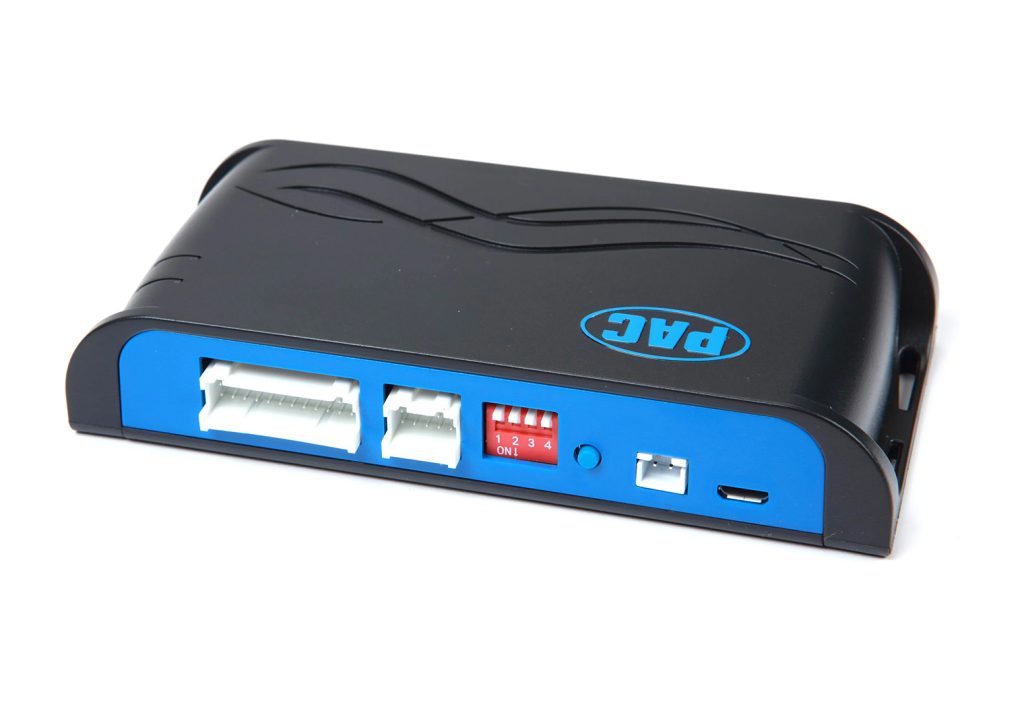
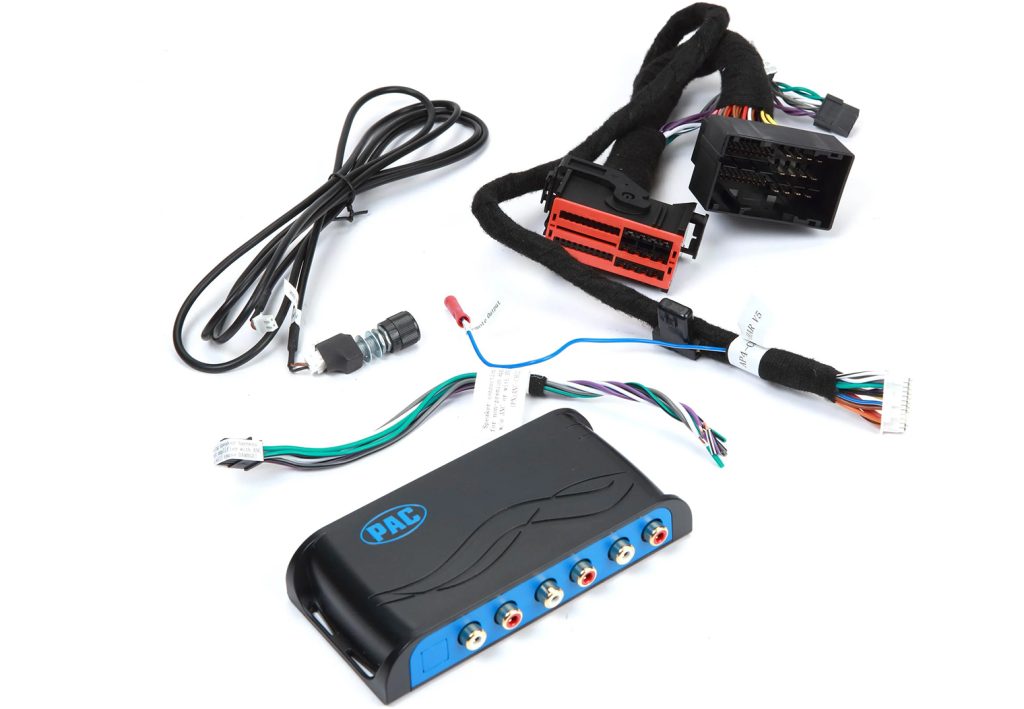
PAC AmpPro AP4
Vehicle-specific OEM amplifier integration interface (de-EQ + turn-on)
CarAudioNow may earn a commission from retailer links. Brands do not influence the recommendations.
Why I picked it
On a lot of late-model cars the factory radio doesn’t put out a normal speaker signal you can just tap — it’s equalized, sometimes time-aligned, and often sent over a data bus to a hidden factory amp. The AmpPro plugs into that car’s specific harness, talks to the radio, runs the signal through its DSP to clean it up and hand you clean, full-range 5V RCAs (switchable down to 4V) plus a real remote turn-on, all while the dash keeps its volume, fade, balance, chimes, and steering-wheel controls. Depending on your vehicle it either keeps the factory amp in the loop or cleanly replaces it, so the car doesn’t throw error codes or kill features. You buy the exact part number for your year, make, model, and sound system; on a processed factory-amped car, this is the cleanest keep-the-screen path there is.| Make | PAC |
| Model | AmpPro AP4 (vehicle-specific) |
| Type | OEM amplifier integration interface |
| Channels | Front / Rear / Non-Fading |
| Max Preamp Output | 5V RMS (DIP-switch to 4V) |
| Signal Correction | DSP signal clean-up |
| Feature Retention | Steering-wheel controls, chimes, ANC |
| Turn-On | Remote-out |
| Fitment | Vehicle-specific part # required |
Reasons to buy
- Vehicle-specific harness = true plug-and-play, no cutting the factory loom
- Cleans up the factory signal through its DSP into a clean, full-range output
- Retains steering-wheel controls, chimes, and factory features
- Built-in remote turn-on output, so no signal-sense guesswork
- Switchable 5V / 4V output matches most aftermarket amps and DSPs
Reasons not to buy
- You must buy the exact part number for your year/make/model/system, with no universal version
- Coverage is broad but not every car or trim is supported
- It cleans up and integrates but doesn’t tune, so pair it with a DSP if you want EQ or time-alignment
- Price varies by vehicle and runs above a plain LOC
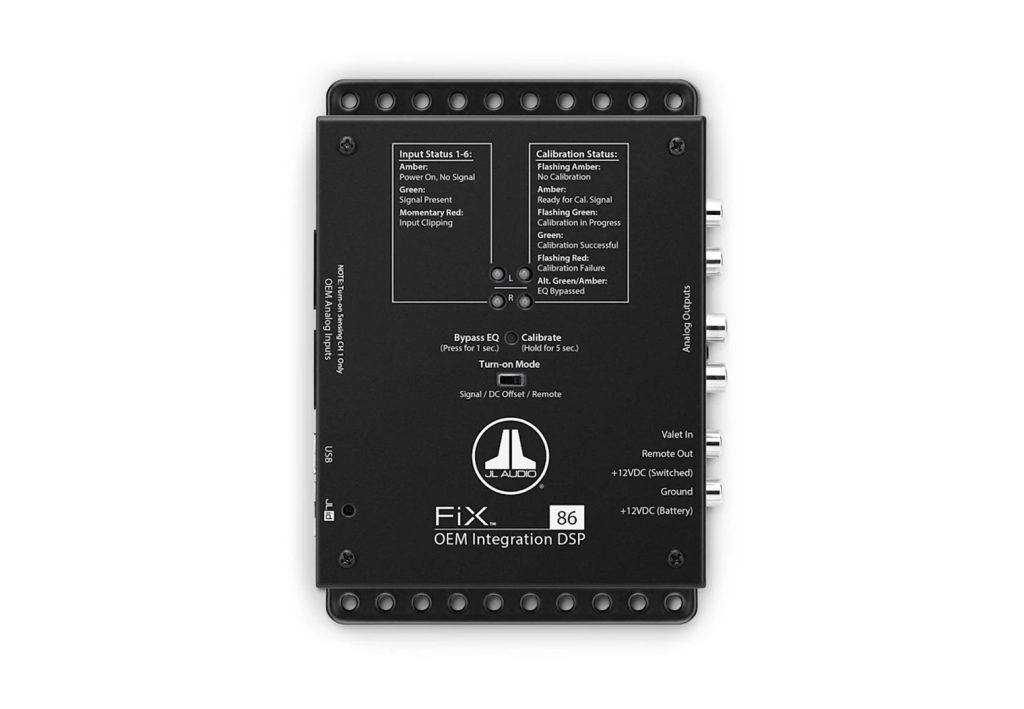
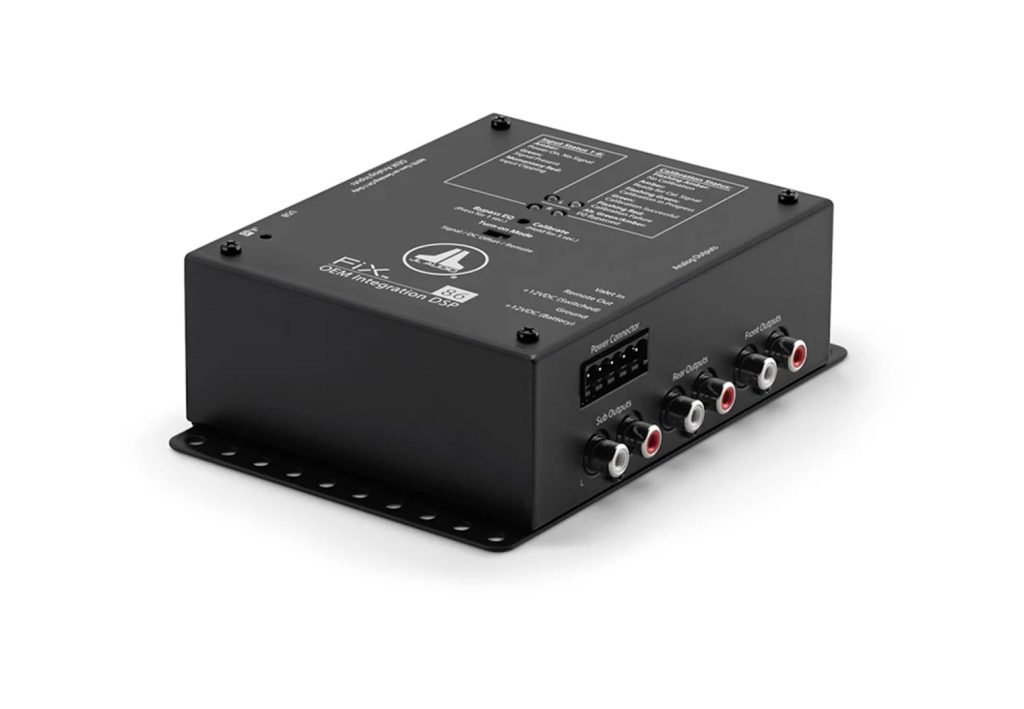
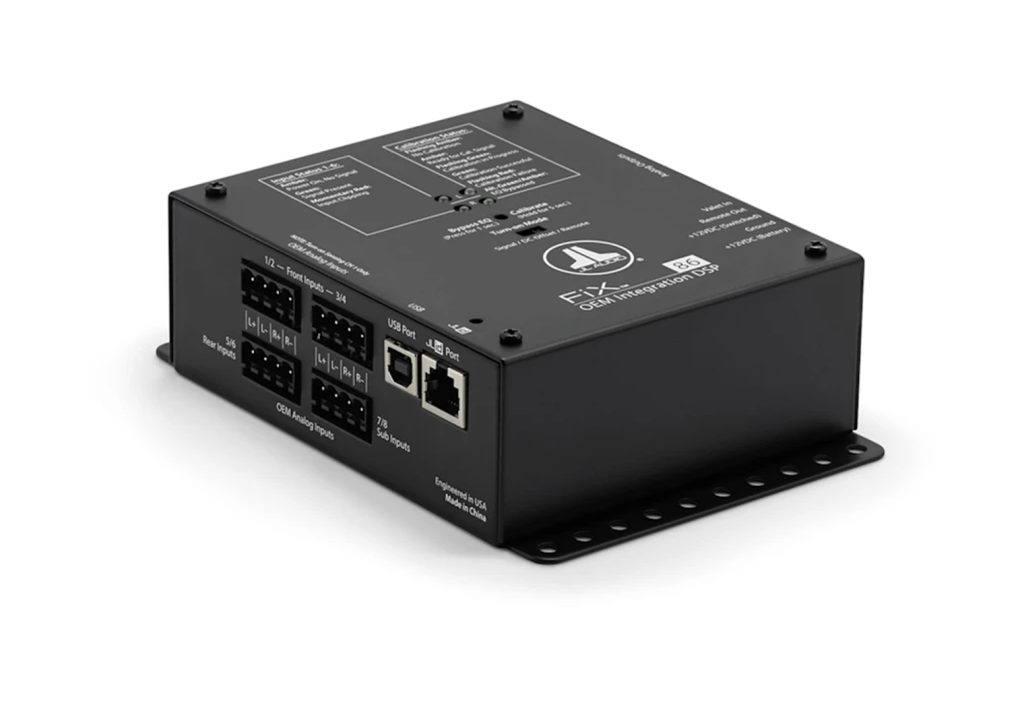
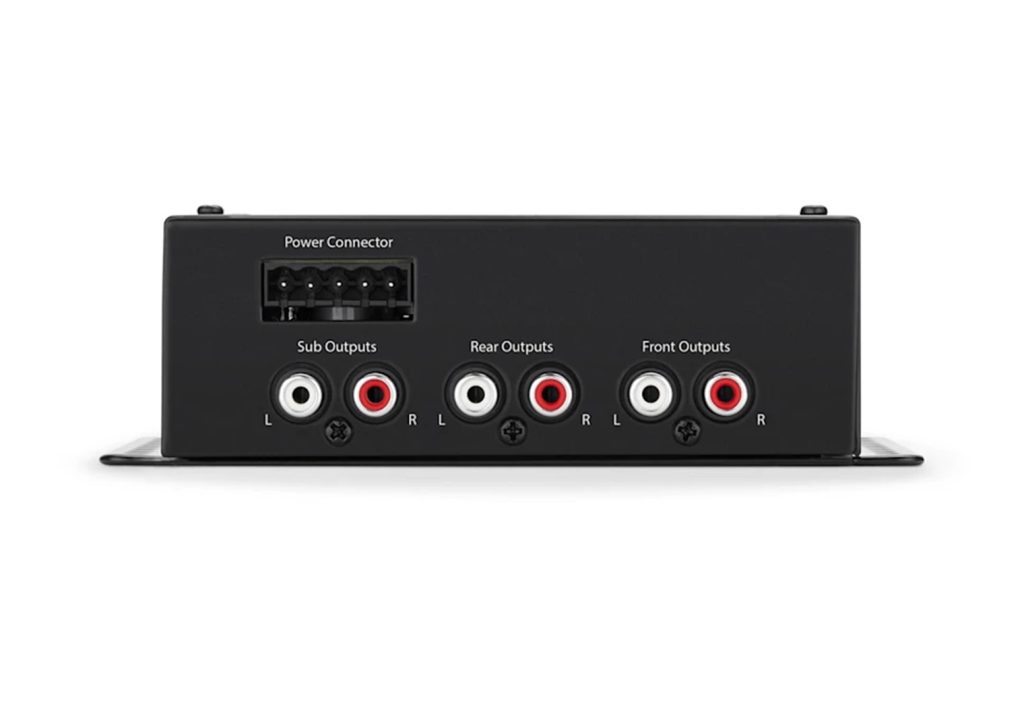
JL Audio FiX 86
OEM-integration processor w/ automatic time correction + EQ
CarAudioNow may earn a commission from retailer links. Brands do not influence the recommendations.
Why I picked it
Some factory-amped systems don’t just EQ the signal — they time-delay each speaker so the stock setup images correctly, and that absolutely wrecks the sound if you just sum it back together. The FiX 86 measures the factory output, automatically pulls that time-alignment back out, corrects the EQ to flat, and sums everything into clean front, rear, and sub feeds in about a 30-second, one-button calibration with no laptop and no microphone skills. That auto time-correction before summing is the thing a passive or active LOC simply can’t do. It reads up to eight factory channels (3-way front + 2-way rear) and even gives you a digital output to feed a DSP or amps. Think of it as the smart middle tier: more than a LOC, simpler than a tunable DSP. If you’d rather tune by hand, that’s the next step up in my DSP processors guide.| Make | JL Audio |
| Model | FiX 86 |
| Type | OEM-integration signal processor |
| Channels | 8 in / 6 out (Front / Rear / Sub) |
| Processing | 24-bit DSP |
| Signal Correction | Auto time-alignment + EQ + summing |
| Tuning | Single-button auto-cal (~30 sec) |
| Output | Analog + digital |
Reasons to buy
- Automatically removes factory time-alignment before summing, something no LOC can do
- One-button ~30-second calibration with no laptop, mic skills, or tuning software
- Eight inputs handle up to 3-way front + 2-way rear factory systems
- 24-bit processing with a digital output to feed an aftermarket DSP or amps
- Retains OEM fader control
Reasons not to buy
- It corrects automatically but isn’t a user-tunable DSP, with no manual EQ/crossover playground
- Priced like an entry DSP, well above a LOC
- Outputs are fixed once it’s calibrated
- Overkill on a simple non-amplified system
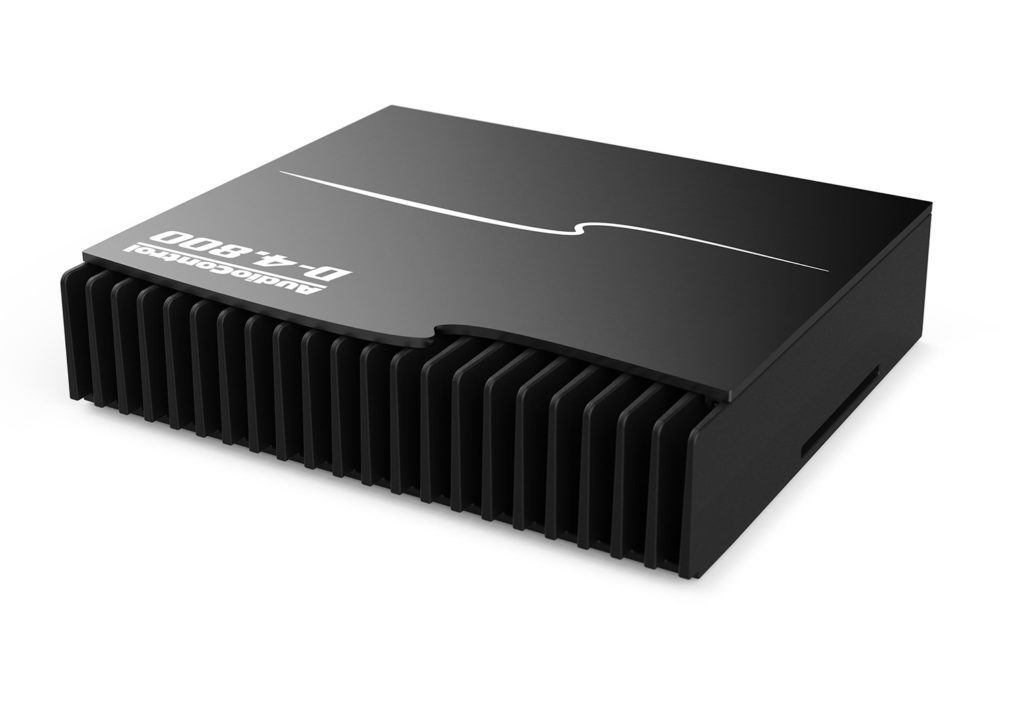
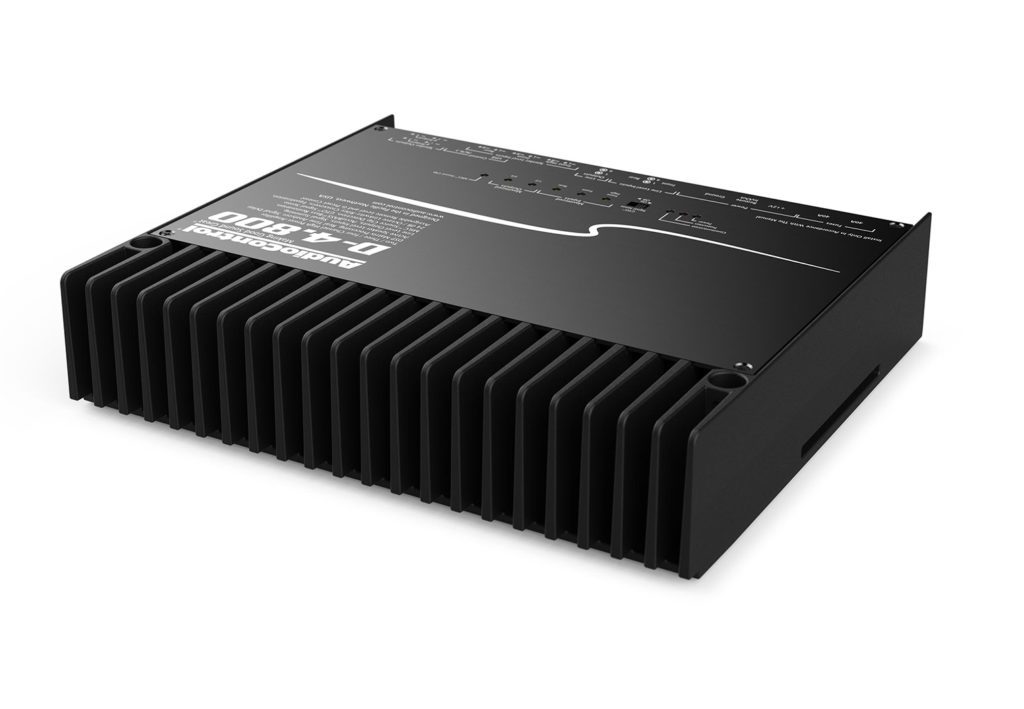
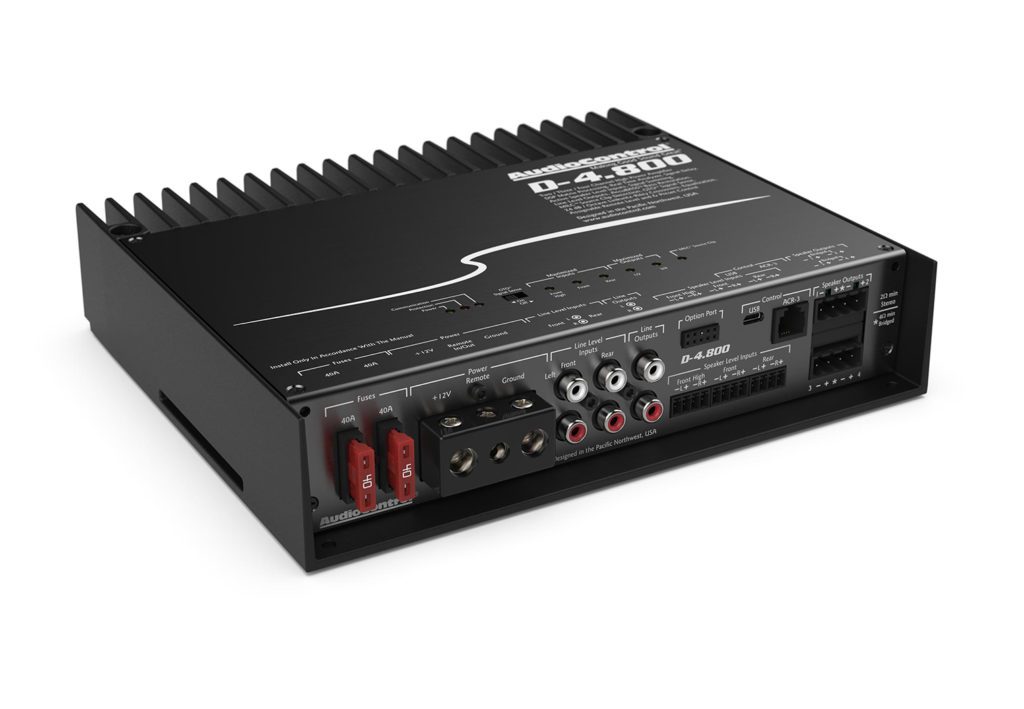
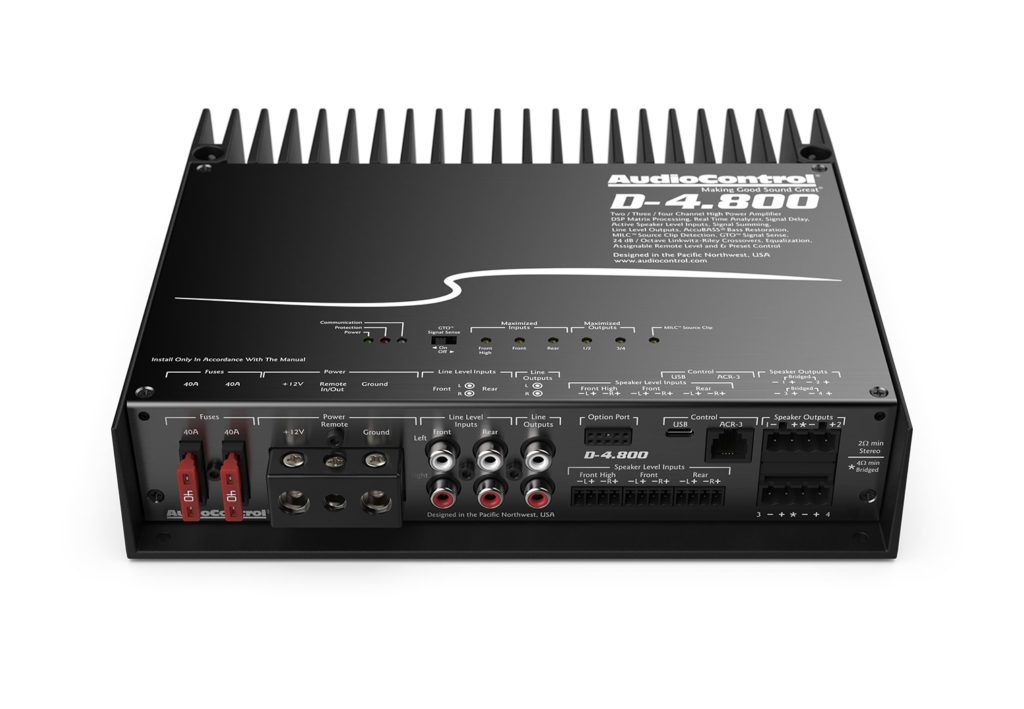
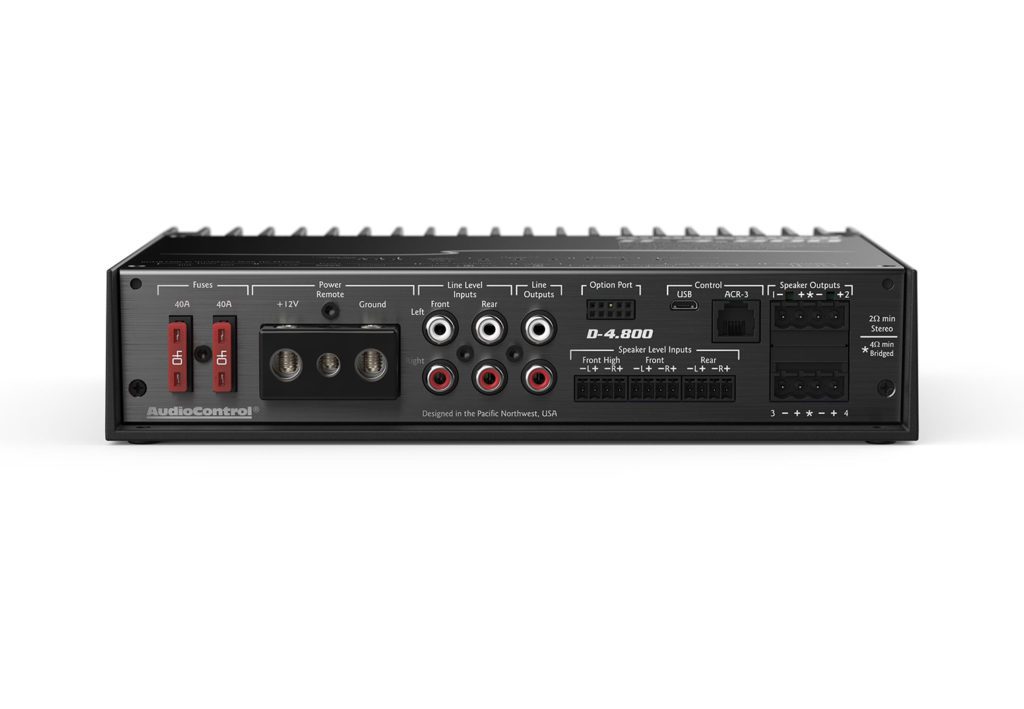
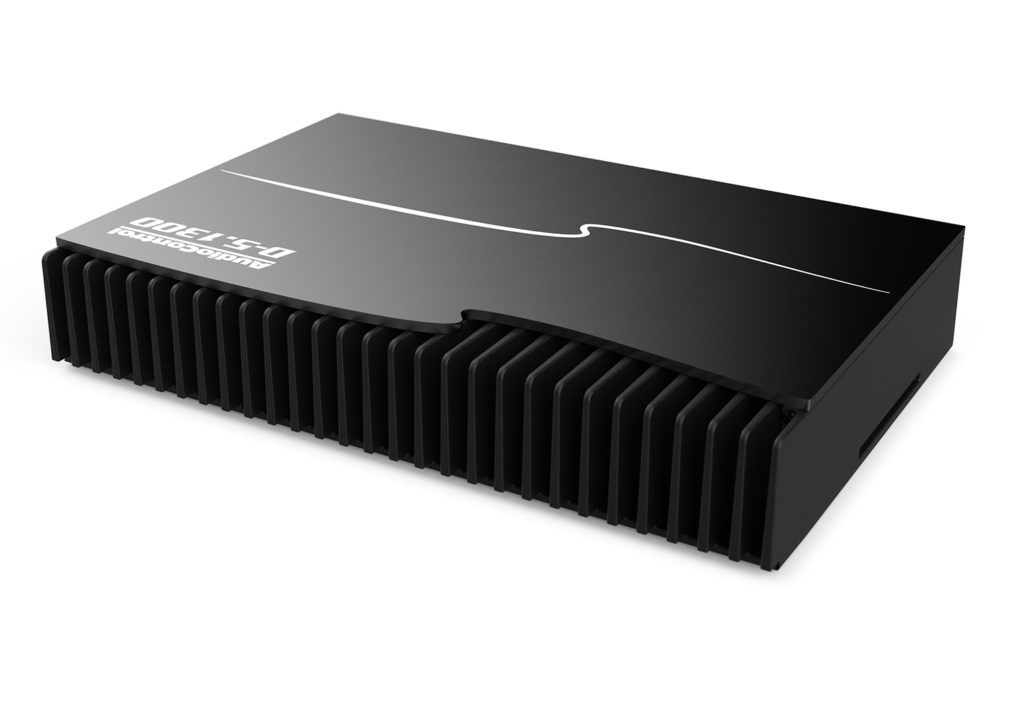
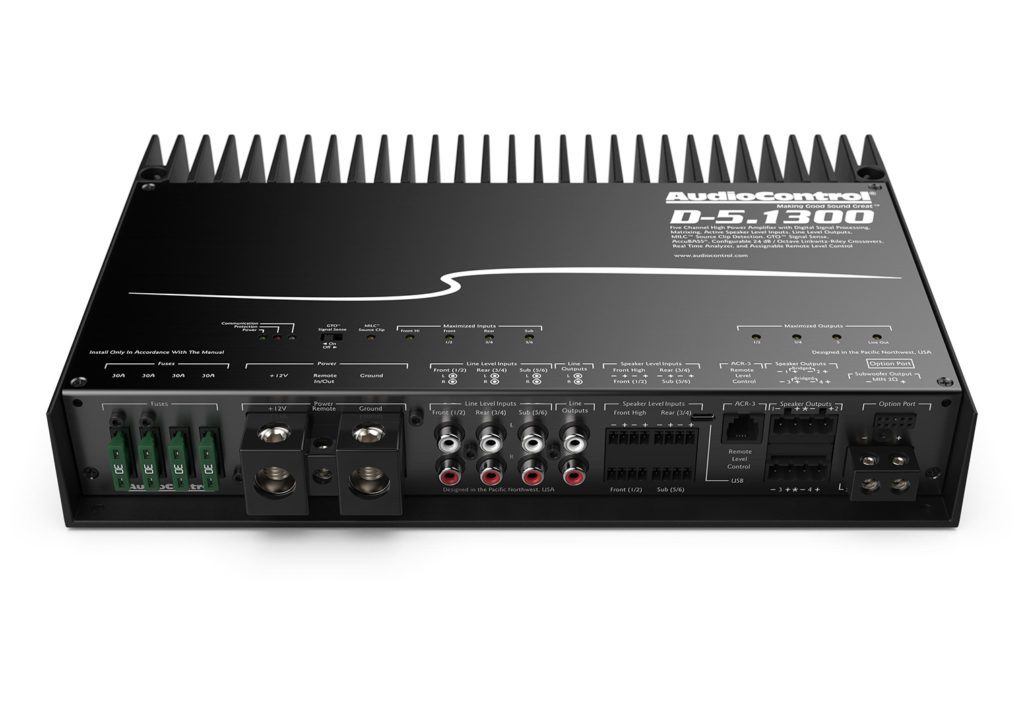
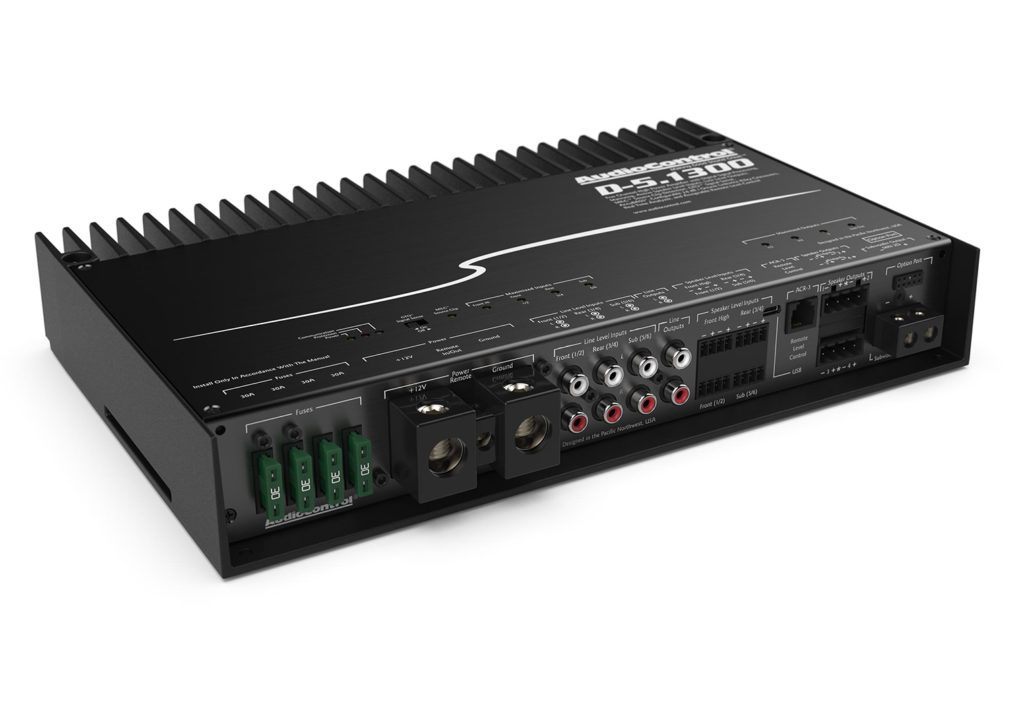
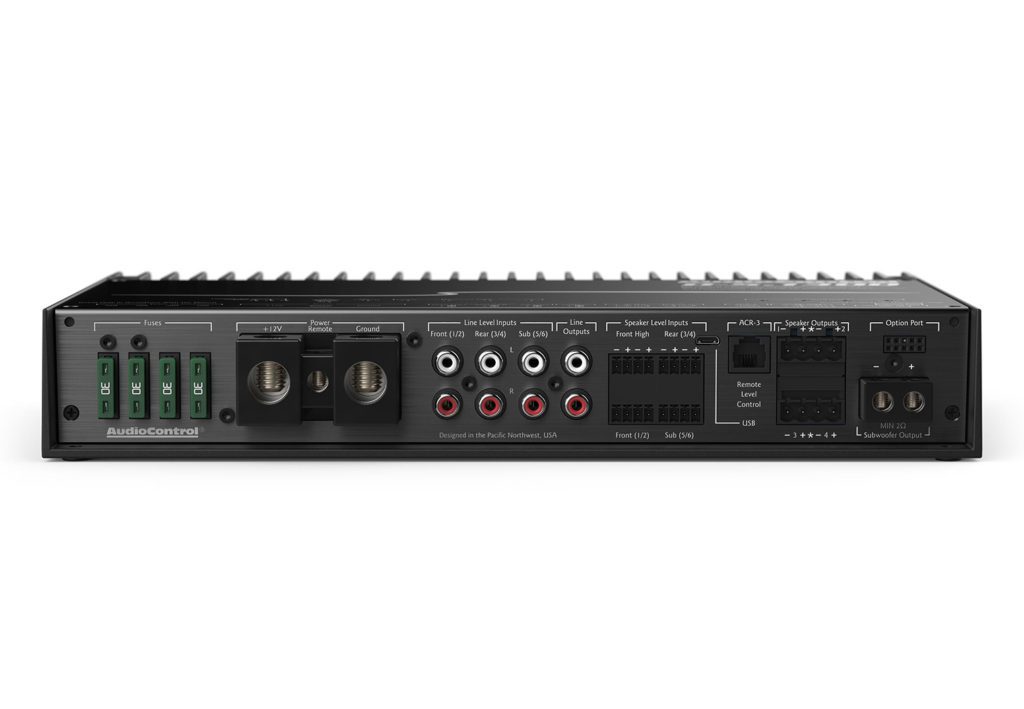
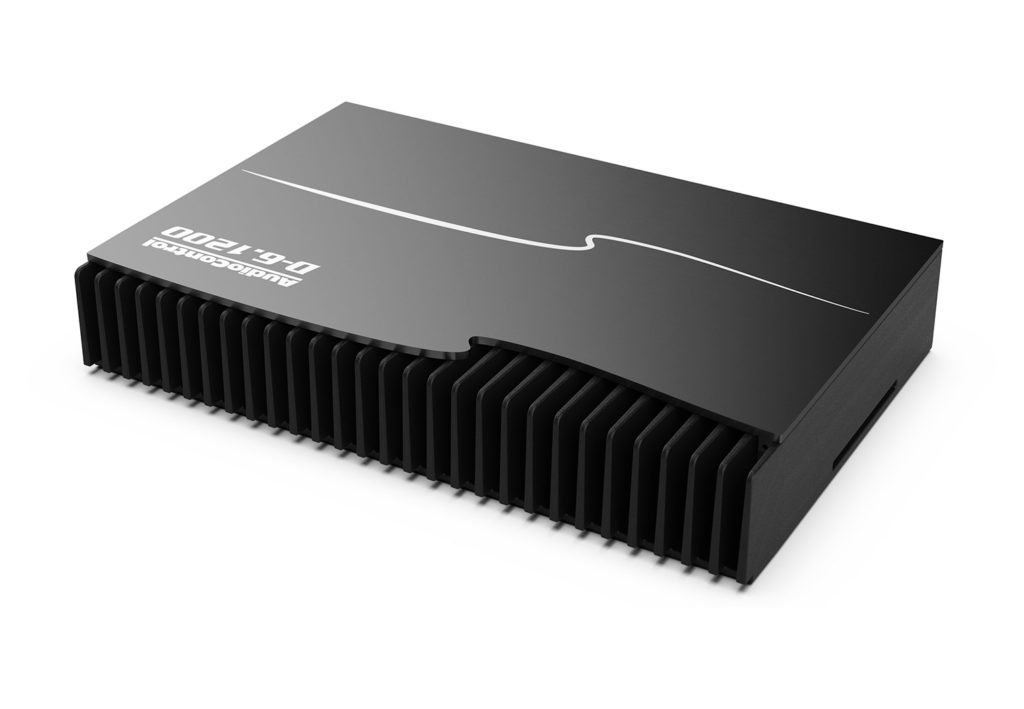
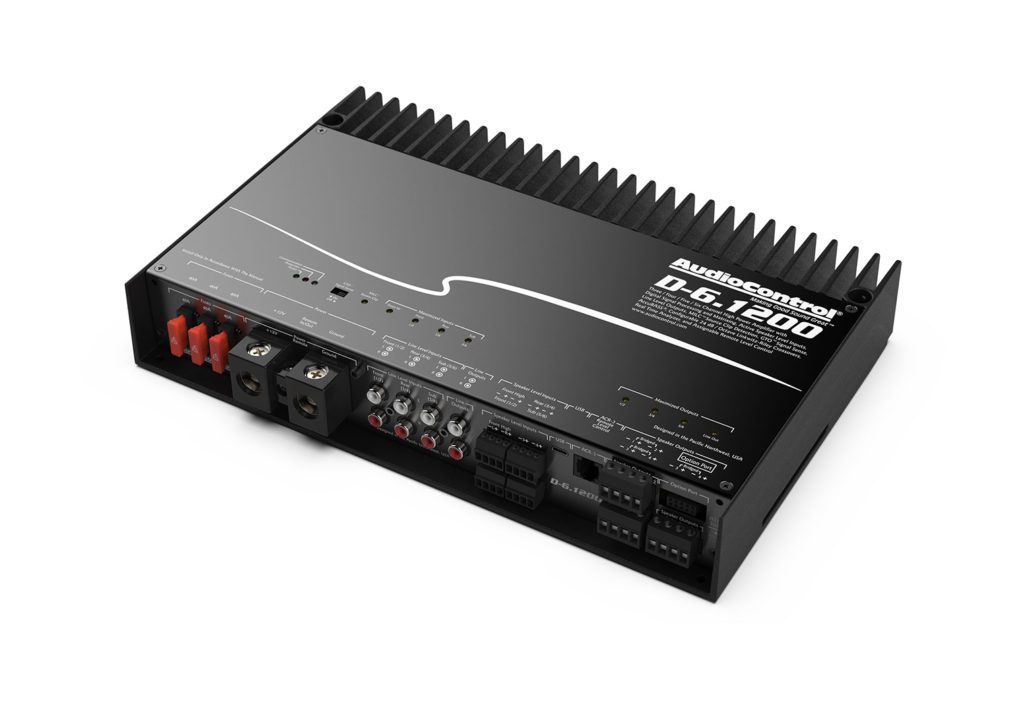
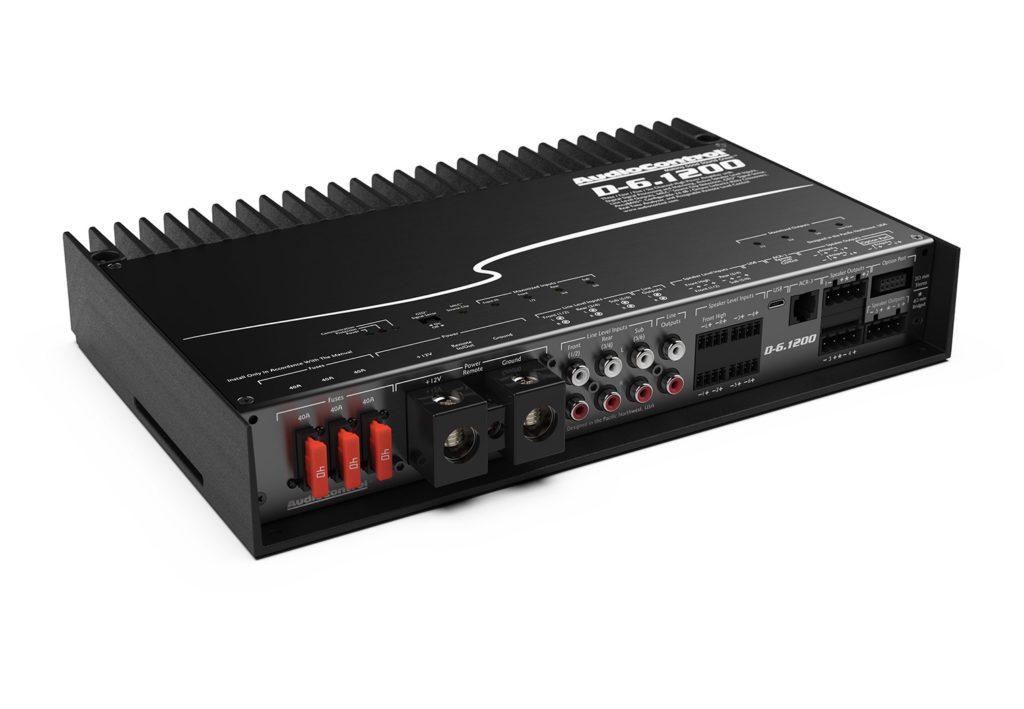
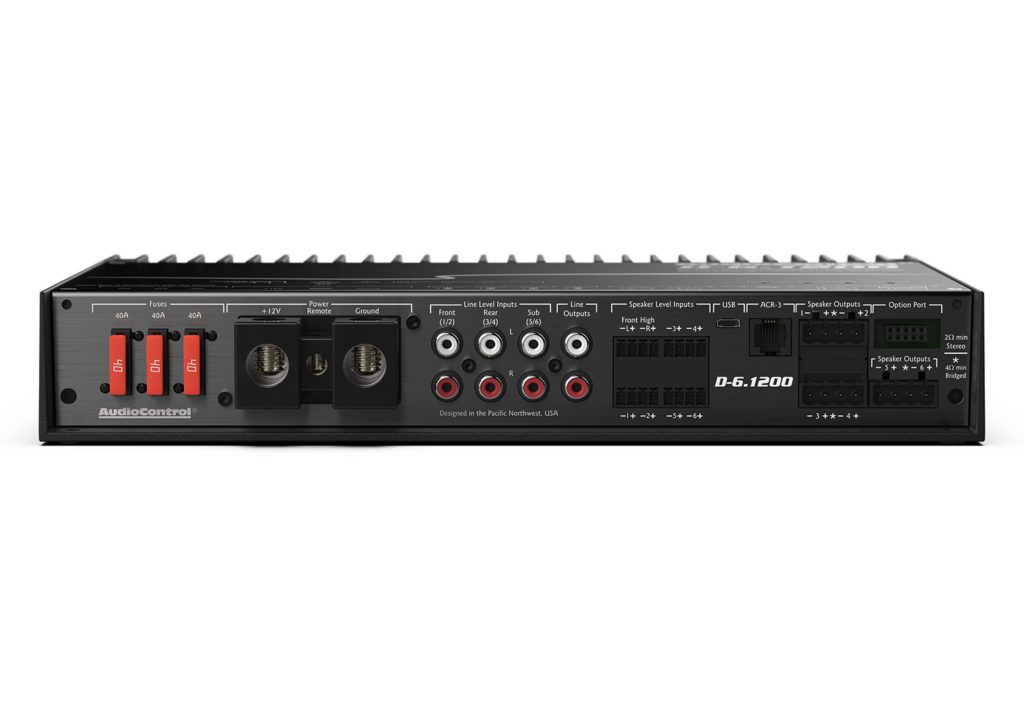
AudioControl D-Series
OEM-friendly amp line with onboard DSP · 4–6 channel
CarAudioNow may earn a commission from retailer links. Brands do not influence the recommendations.
Why I picked it
If you’re keeping the factory head unit or a factory-amplified system, the D-Series makes life easy. Active speaker-level inputs and signal summing handle odd factory crossovers, GTO™ signal-sensing turn-on reduces the need for a remote lead, and AccuBASS™ restores low end if the OEM source rolls it off at higher volume. The software is straightforward — great for a first DSP experience — yet gives me the control I need for daily SQ: time alignment, flexible crossovers, parametric EQ, and saveable profiles.
To nail the setup, I always set gains with a meter or detector before touching EQ — here’s my SMD DD-1 gain-setting walkthrough. For an OEM-integrated example with the same process, see my F-150 installation & tuning.
| Make | AudioControl |
| Model | D-Series |
| Class | Class-D |
| Onboard DSP | Yes |
| Top Power | 100×4 + 300×1 |
| Channels offered | 4–6-ch |
Reasons to buy
- OEM-friendly: high-level inputs, summing, AccuBASS™ and GTO™ cover most factory systems
- Beginner-friendly DSP workflow with the right controls for daily SQ
- Channel options that make full front stage + sub builds practical
Reasons not to buy
- Software UI is practical, not flashy — fewer “advanced” filters than high-end standalone DSPs
- Chassis isn’t as tiny as minimalist non-DSP amps if space is ultra-tight
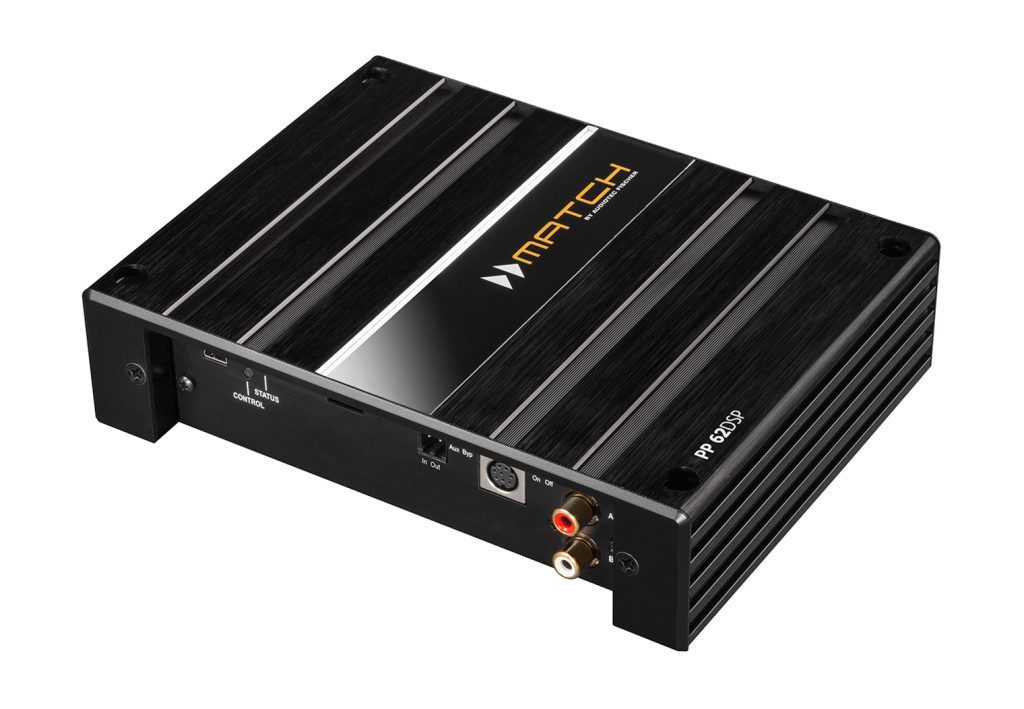
MATCH PP 62DSP
Plug-and-play 5/6-channel amp + 56-bit DSP w/ downloadable car tunes
CarAudioNow may earn a commission from retailer links. Brands do not influence the recommendations.
Why I picked it
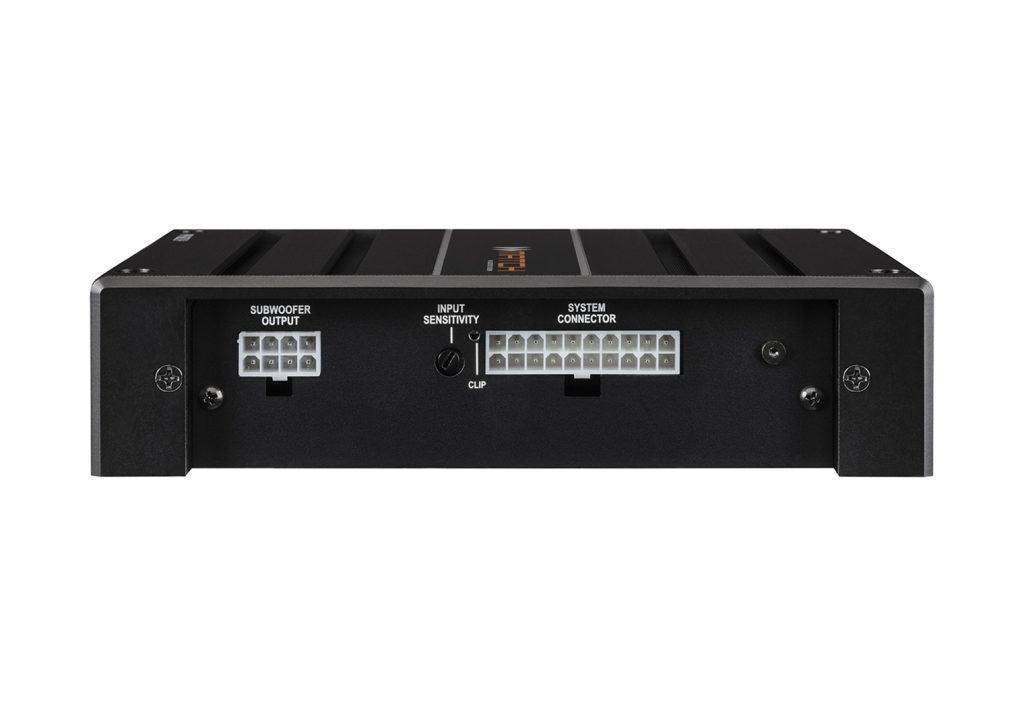
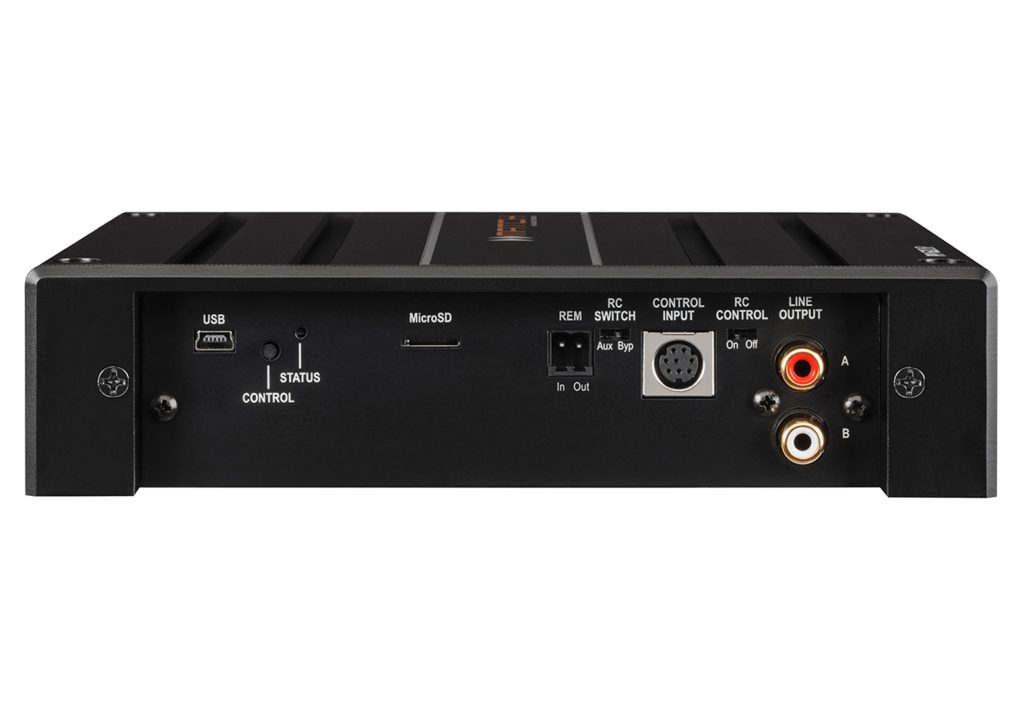
This is the turnkey path. The PP 62DSP plugs into your car’s factory harness with the included vehicle-specific adapter cable (nothing gets cut), and you load a ready-made, car-specific tune from MATCH’s online database onto a MicroSD card. Drop the card in, it programs itself, and you’ve got a professionally voiced 56-bit DSP plus a 5/6-channel amp without ever opening tuning software. The ADEP.2 smart high-level input keeps late-model radios from throwing speaker-fault errors, and there’s a MEC slot if you want to add Bluetooth or an optical input later. Be honest with yourself about power, though — it’s a Class AB amp at 4×35 watts RMS with a 160-watt bridged sub channel, so this is about clean, dialed-in sound, not slam. There’s a 2-channel preout to add a bigger sub amp when you want one.| Make | MATCH (Audiotec Fischer) |
| Model | PP 62DSP |
| Type | Plug-and-play DSP amplifier |
| Channels | 5/6-channel (8 DSP ch) |
| Power @4Ω | 4×35W RMS |
| Power @2Ω | 4×50W + 160W sub (bridged) |
| Signal Correction | 56-bit DSP (preset / PC-Tool) |
| Setup | Vehicle-specific harness + MicroSD car tunes |
| Inputs | 4 high-level (ADEP.2) + MEC slot |
Reasons to buy
- True plug-and-play: included vehicle-specific harness, nothing gets cut
- Downloadable car-specific DSP setups load via MicroSD, no laptop required
- 56-bit DSP with BurrBrown converters voices the system properly
- ADEP.2 smart high-level input avoids factory speaker-fault errors
- MEC expansion slot adds Bluetooth / optical / HD-USB later
Reasons not to buy
- Modest power: 4×35W RMS + a 160W bridged sub channel (Class AB), so it’s about sound, not slam
- You’ll likely add an outboard amp for a real sub (there’s a 2-ch preout for that)
- A perfect car-specific tune isn’t available for every vehicle
- Costs more than a LOC-plus-amp for similar power
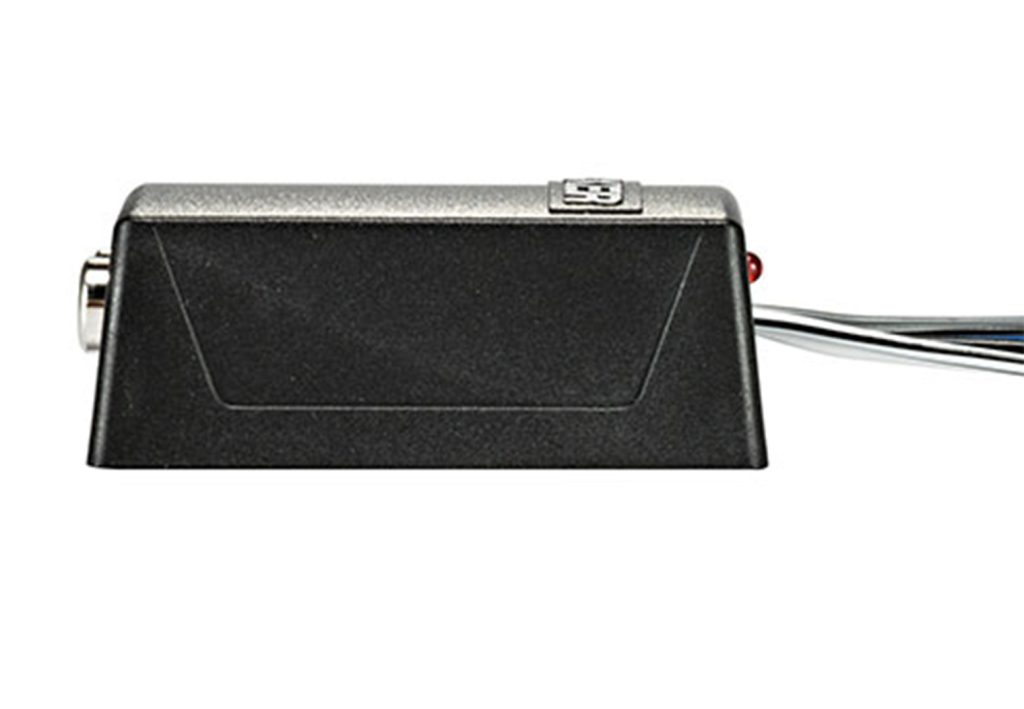
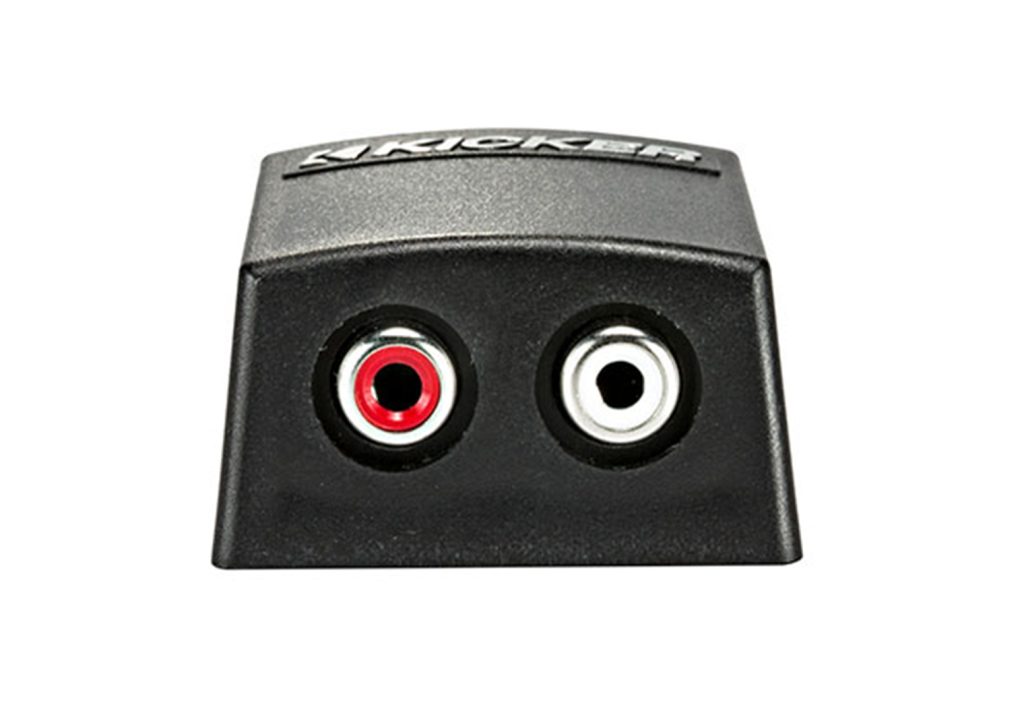
Kicker 46KISLOC2
2-channel passive line output converter w/ remote turn-on
CarAudioNow may earn a commission from retailer links. Brands do not influence the recommendations.
Why I picked it
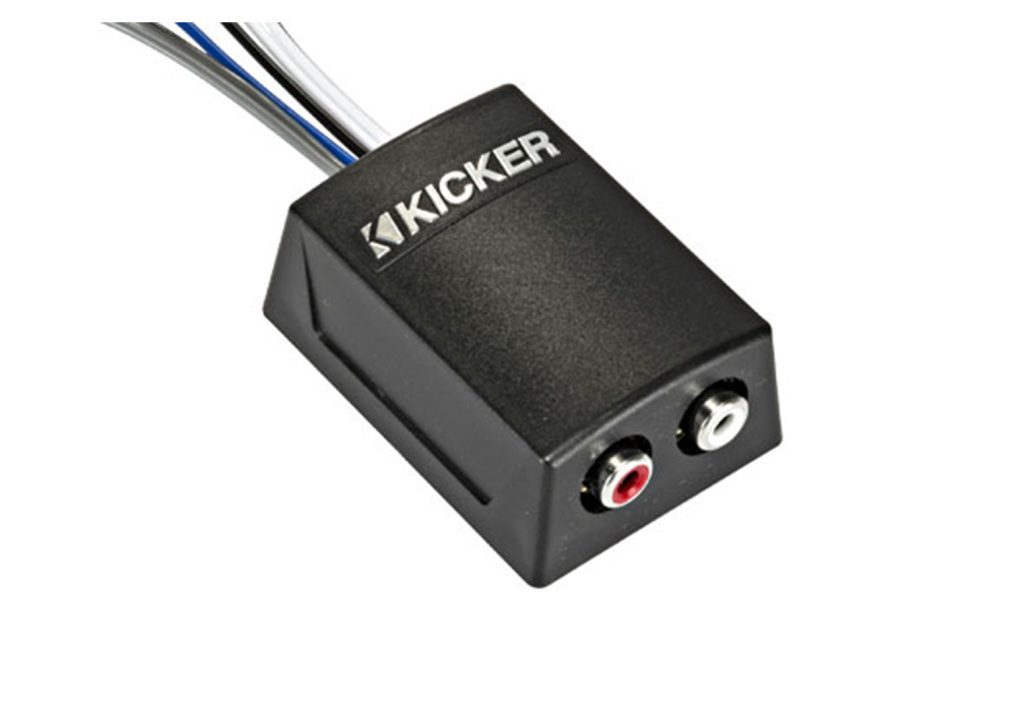
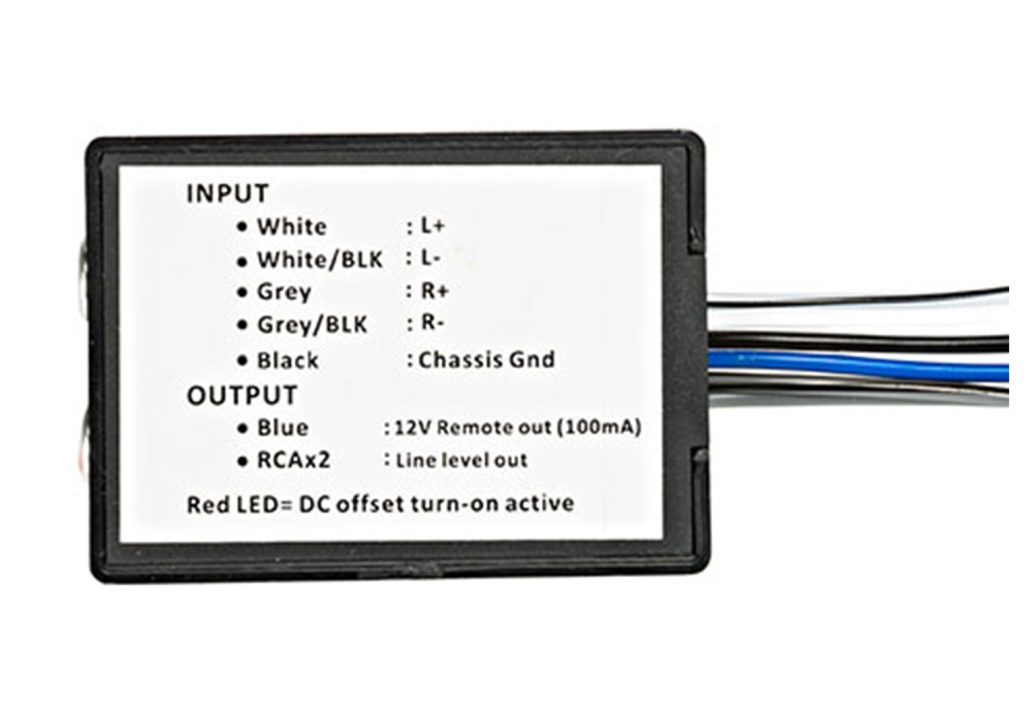
When the budget is tight and all you need is a clean RCA signal off a factory deck for an amp or a sub, this little Kicker does it for about thirty bucks. It taps the rear speaker wires, hands you a 2-channel RCA output up to ~8V, and, unlike the original KISLOC, adds a 12V remote turn-on lead so your amp switches on with the car. Be clear on the limits: it’s passive, so there’s no AccuBASS to fix factory bass roll-off, and on a few problem vehicles a passive LOC can pick up alternator or ground noise. But for a straightforward, non-amplified deck and a tight budget, it’s the honest entry point. If it ever hums or your bass goes weak at volume, step up to the LC2i.| Make | Kicker |
| Model | 46KISLOC2 |
| Type | 2-channel passive LOC |
| Channels | 2-channel |
| Max Speaker Input | ~55W |
| Max Output | ~8V |
| Signal Correction | None (passive) |
| Turn-On | 12V remote lead |
| Price | ~$30 |
Reasons to buy
- Around $30, the cheapest clean way to get RCAs off a factory deck
- Built-in 12V remote turn-on lead switches your amp on automatically
- Up to ~8V output is plenty for most amps
- Passive design with no power or ground fuss to wire
- Tiny enough to hide behind the dash
Reasons not to buy
- Passive with no AccuBASS, so it won’t fix factory bass roll-off (a sub can go weak at high volume)
- No dash bass knob. Level is set only via the amp’s gain
- On some problem vehicles a passive LOC can pick up alternator/ground noise
- Two channels only, not for multi-channel factory-amped systems
See exactly what your car needs
Tell me your year, make, and model and I’ll show you whether your system is factory-amped, what kind of signal you’re working with, and the integration path that fits — plus the amps, speakers, and subs to pair with it.
Factory Stereo Integration FAQs
Do I need a line output converter to add an amp to a factory radio?+
In almost every case, yes. A line output converter (LOC) turns the factory speaker-level signal into the preamp RCA signal an aftermarket amp expects. If your system isn’t factory-amplified, a 2-channel active LOC like the AudioControl LC2i Pro is all you need. If it is factory-amplified, you may need channel summing or a vehicle-specific interface instead.
What’s the difference between a line output converter and a DSP?+
A LOC just converts and cleans the signal so you can add an amp; a DSP tunes it — EQ, crossovers, and time alignment. This guide covers the signal-getting layer. For tuning, see my best car audio DSP processors guide. A few boxes here, like the AudioControl D-5.1300, do both jobs in one chassis.
Will a line output converter fix weak factory bass?+
Only an active one with bass restoration will. Factory radios roll the bass off as you turn up to protect the stock speakers, so a sub fed from them goes weak at volume. AudioControl’s AccuBASS (on the LC2i, LC2i Pro, and LC7i Pro) detects that roll-off and adds the bass back. A basic passive LOC like the Kicker KISLOC2 won’t.
What is an OEM integration adapter, and when do I need one?+
It’s a vehicle-specific interface — like the PAC AmpPro — for processed or data-bus factory-amped systems. Instead of just tapping speaker wires, it talks to the factory radio, de-equalizes the signal back to flat, and keeps your steering-wheel controls and chimes. You need one when a plain LOC can’t get a clean, full-range signal out of a modern amplified system.
How do I integrate a premium factory amp (Bose, Harman Kardon, JBL, B&O)?+
Premium systems usually EQ and often time-align each speaker, so you can’t just sum the outputs and expect flat sound. Your options, in order of effort: a summing LOC (LC7i Pro), a vehicle-specific interface that de-EQs (PAC AmpPro), automatic correction (JL FiX 86), or replacing the factory amp with a DSP-amp (D-5.1300). My guide to upgrading your OEM head unit without losing factory controls walks through the tradeoffs.
Can I keep my factory screen and still add a subwoofer and amp?+
Yes — that’s exactly what this gear is for. The cleanest path is a LOC or interface feeding your amp. For a single sub on a basic deck, the LC2i; for the easiest all-in-one bass add, look at a powered subwoofer on the other end of that signal.
Do I need a remote turn-on wire?+
Not always. Active converters like the AudioControl LOCs use GTO signal-sense to turn on automatically when they detect audio, and budget units like the KISLOC2 include a 12V turn-on lead. Vehicle-specific interfaces give you a proper remote-out. You only need to find a switched 12V source if your device requires one.
LOC vs. DSP-amp — which should I get?+
If you just need a clean signal for an amp you already have or plan to buy, get a LOC. If you want power, signal cleanup, and tuning in one box that replaces the factory amp, get a DSP-amp like the D-5.1300. The deciding factors are how much power you need and whether you want to tune.
What about iDatalink Maestro?+
Maestro is for the opposite job — replacing the factory radio while keeping your steering-wheel controls with an aftermarket head unit. If you’re keeping the factory screen, you want a LOC or a PAC AmpPro instead. If you decide to swap the radio, see my iDatalink-compatible stereos guide.
How many channels of LOC do I need?+
Two channels handle a simple sub or a basic amp on a non-amplified deck. Step up to a 6-channel summing LOC like the LC7i Pro when the factory system is amplified and split into separate front, rear, and sub feeds that need to be recombined into a full-range signal.
More factory-integration reading
Where these adapters fit in a real build.
Why trust CarAudioNow?
