
Home › Car Audio
Car Audio Buyer's Guide Hub
Expert-tested picks for car stereos, speakers, subwoofers, amplifiers, and everything you need to build a great-sounding system.
Upgrading your car's sound system is one of the best investments you can make in your daily driving experience. Whether you're replacing a blown factory speaker, building a competition-grade setup, or just want CarPlay in your dash, the right gear makes all the difference — and the wrong gear wastes your money.
I've been installing and reviewing car audio equipment since 2010, and every guide below is built on real-world testing across hundreds of products. From budget-friendly starter upgrades to premium component systems, these guides are organized to help you find exactly what fits your vehicle, your goals, and your budget.
Independently tested and reviewed by the CarAudioNow team
Find Your Guide
Our Buyer's Guides
Each guide is independently tested and updated regularly. Click any guide to see our full picks with budget, mid-range, and premium tiers.
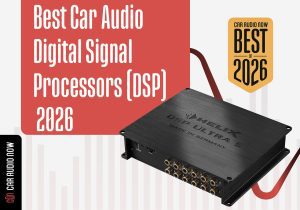


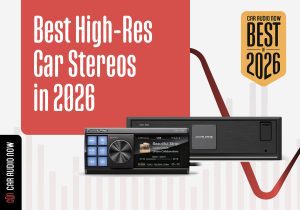



NEW: VEHICLE AUDIO FIT GUIDE
Start Your Build With a Personalized Vehicle Audio Report
Enter your year, make, model, trim, and factory audio package to see how many speakers are in your vehicle, what sizes they are, whether it has a factory amplifier, and whether a head unit upgrade or DSP makes the most sense. Then we’ll point you to the right CarAudioNow buyer’s guides for your build.
Speaker Sizes & Locations
See how many speakers your vehicle has, where they’re located, and what sizes to shop for before you buy anything.
Factory Amp & Audio Package Check
Know whether your vehicle is factory amplified and how your trim or premium audio package affects your upgrade options.
Head Unit vs. DSP Guidance
Get a clearer starting point on whether you should replace the head unit, keep the factory radio, or add a DSP for better results.
How to Build a Car Audio System
The best approach to a car audio upgrade depends on where you're starting and what you want to achieve. If your factory system sounds flat and lifeless, a new head unit/stereo is often the single biggest improvement — it unlocks better audio processing, smartphone integration, and the ability to properly power aftermarket speakers.
Next, upgrade your speakers. Factory speakers are built to a price point, not a sound quality standard. Even a modest set of aftermarket coaxials will sound dramatically better. If you want true audiophile-grade staging and imaging, step up to component speakers with separate tweeters and woofers.
For bass, a dedicated subwoofer fills in the low end that door speakers physically cannot reproduce. Powered subs are the easiest install for beginners; component subs paired with a separate amp give you more output and flexibility.
An amplifier ties the system together. Even if you're not chasing high volume, a quality amp gives your speakers clean, undistorted power — which translates directly to better sound quality at every volume level. Our individual guides below walk you through each component in detail.
What We Cover
Car stereos and head units are the foundation of any system. Our guides cover single DIN, double DIN, touchscreen, Apple CarPlay, Android Auto, GPS navigation, and iDatalink-compatible units — with separate guides for each category so you can zero in on exactly what you need.
Car speakers are organized by size and type: 6.5-inch coaxial, 6.5-inch component, 5.25-inch, 5×7/6×8, and 6×9. Each guide covers the best options at every price point, with real listening impressions and installation notes.
Car subwoofers cover every sub category: competition component subs, powered/enclosed subs for easy installation, shallow-mount subs for tight spaces, and free-air subs for infinite-baffle setups.
Car amplifiers are the unsung hero of any good system. Our amp guide covers monoblock, 2-channel, 4-channel, and 5-channel options with real power output measurements and value analysis.
Rear seat entertainment, CarPlay/Android Auto adapters, and Bluetooth kits round out our car audio coverage. Every guide follows the same hands-on methodology.
How We Test & Evaluate Car Audio
Every product recommendation on CarAudioNow comes from hands-on experience. We don't curate spec sheets or rewrite Amazon descriptions — we install, listen, measure, and compare before we recommend anything.
- In-Vehicle Listening Tests: We install and evaluate every product in real vehicles, not just on a test bench. Sound quality is assessed across multiple music genres at various volume levels, with attention to clarity, staging, bass response, and distortion characteristics.
- Installation Assessment: We document the full installation process for each product — wiring complexity, fitment, required adapters, and any vehicle-specific issues. Our guides flag products that are beginner-friendly vs. those that benefit from professional installation.
- Power & Performance Testing: For amplifiers and powered subwoofers, we verify real-world power output against manufacturer claims. For speakers, we assess sensitivity, frequency response, and power handling under actual driving conditions.
- Build Quality Inspection: We examine materials, construction, terminal quality, mounting hardware, and overall build. A speaker that sounds great but falls apart after six months doesn't make our list.
- Value Across Budget Tiers: Every guide segments picks into budget, mid-range, and premium tiers. We identify the point of diminishing returns in each category so you know exactly where your money goes furthest.
Frequently Asked Questions
What's the best first upgrade for factory car audio?
For most people, replacing the head unit gives the biggest immediate improvement — you get better audio processing, smartphone integration (CarPlay/Android Auto), and the ability to properly drive aftermarket speakers. If your head unit is already decent, upgrading the front door speakers is the next highest-impact change.
How much should I budget for a car audio system?
A solid starter upgrade (new head unit + front speakers) runs $200-400. A well-rounded system with head unit, four speakers, a subwoofer, and an amplifier lands in the $800-1,500 range. Premium builds with component speakers, dedicated amps, and sound deadening can run $2,000-5,000+. Our guides include picks at every tier.
Do I need an amplifier if my head unit has built-in power?
Built-in head unit power (typically 14-22 watts RMS) is fine for casual listening at moderate volumes. But if you want your speakers to sound their best, an external amplifier delivering 50-75+ watts RMS per channel makes a dramatic difference in clarity, dynamics, and headroom. It's one of the most underrated upgrades.
What's the difference between coaxial and component speakers?
Coaxial (full-range) speakers combine the woofer and tweeter in one unit — simple to install, good sound for the price. Component speakers separate the tweeter from the woofer, allowing better placement for superior sound staging and imaging. Components sound better but cost more and require more involved installation.
What size subwoofer should I get?
For most vehicles and music tastes, a 10-inch or 12-inch sub is the sweet spot. 10-inch subs are more compact and deliver tight, accurate bass. 12-inch subs move more air for deeper output. 8-inch subs work in very tight spaces. 15-inch+ subs are for dedicated SPL/competition builds. Match the sub size to your available space and power budget.
Can I install car audio myself or do I need a professional?
Head units and speakers are solid DIY projects for anyone comfortable with basic tools — most installs take 1-3 hours with online guides. Amplifier and subwoofer installation involves running power wire from the battery and signal cables through the vehicle, which is moderate difficulty. Complex builds with multiple amps, active crossovers, or custom fabrication benefit from professional installation.
Will aftermarket audio void my car warranty?
No. The Magnuson-Moss Warranty Act protects you — a dealer cannot void your warranty simply because you installed aftermarket equipment. The exception: if an aftermarket install directly causes a failure (e.g., you short a wire and fry a module), that specific damage may not be covered. Clean installation practices eliminate this concern.
What brands do you recommend most often?
It varies by category, but brands we consistently recommend include: JL Audio, Focal, Hertz, and Morel for speakers; JL Audio, Rockford Fosgate, and AudioControl for amplifiers; Pioneer, Kenwood, Sony, and Alpine for head units; Kicker and Skar Audio for budget-friendly subwoofers. Each guide explains why specific brands stand out in that category.
How important is sound deadening?
Hugely underrated. Even the best speakers sound mediocre in a rattling, resonant door panel. Sound deadening (Dynamat, Kilmat, etc.) reduces road noise, eliminates panel vibrations, and turns your door into a proper speaker enclosure. It's one of the best dollar-for-dollar improvements you can make, especially in trucks and SUVs.
How often do you update your car audio buyer's guides?
We refresh each guide at least quarterly and whenever major new products launch. Car audio moves slower than consumer electronics, but new models from JL Audio, Rockford Fosgate, Pioneer, and others drop every year. We mark every guide with a visible “Updated” date so you always know how current the picks are.
Explore More CarAudioNow Guides
Check out our marine audio and car accessories buyer's guides for more expert-tested recommendations.
