
Last updated May 2026 — I've installed sound deadening in dozens of vehicles over the past 15 years — from daily drivers to full sound quality competition builds — and this is my comprehensive guide to the best car sound deadening kits and materials in 2026.
In this article: I'll walk you through my top car sound deadening picks by category — best overall, best all-in-one with foam layer, best budget, best for audiophile/SQ builds, best mid-range, best for heat plus sound, and best closed-cell foam decoupler — then help you understand the three layers of sound deadening and how to install them properly.
Sound deadening is the single most overlooked upgrade in car audio — and one of the most impactful. A properly deadened door can make a $300 set of speakers sound like a $700 set. A treated trunk can turn a single subwoofer into the bass output of two. And beyond audio, sound deadening cuts road noise, exhaust drone, and rattles, transforming the daily driving experience. Whether you're chasing competition-level SPL or just want a quieter cabin, deadening is where every serious build starts.
In this guide, I've organized the best car sound deadening kits and materials by use case: from premium audiophile-grade CLD tiles, to all-in-one kits with foam decouplers built in, to budget-friendly mats that punch well above their price. Each product has been tested in real installs on doors, floors, trunks, and roofs — and I've included specs, pros/cons, and practical install advice to help you build the right deadening package for your vehicle.
Jump to my top picks
- Best Overall Sound Deadening: Dynamat Xtreme
- Best All-in-One Kit (CLD + Foam): SoundSkins Pro Plus
- Best Budget Sound Deadening: Noico 80 mil
- Best Audiophile / SQ Sound Deadening: Boom Mat Pro CLD
- Best Mid-Range Sound Deadening: Stinger RoadKill Expert
- Best for Heat + Sound: HushMat Ultra
- Best Closed-Cell Foam Decoupler: SoundSkins Pro CCF
Do I Actually Need Sound Deadening?
If you care at all about how your car audio system sounds — or how quiet your cabin is — yes. Untreated sheet metal doors flex and resonate at the exact frequencies your midbass drivers are trying to reproduce, killing punch and clarity. Untreated trunks turn into rattle factories the moment your subwoofer hits a low note. Even modest deadening on doors and the trunk floor delivers a noticeable improvement in midbass output, bass extension, and overall clarity. The only time you might skip deadening is in a vehicle that's already heavily treated from the factory — luxury vehicles with acoustic glass and factory sound packages — and even then, doors almost always benefit from a CLD tile treatment.
How We Test & Choose Car Sound Deadening Kits
- Hands-on installs: I install each product in real vehicles — doors, floors, trunks, and roofs — and evaluate adhesion, conformability, and long-term hold. This is the same methodology I use in my Ford F-150 build and door upgrade walkthroughs.
- Damping performance: I evaluate how effectively each CLD tile reduces sheet metal resonance using knock tests before and after installation, and listen for midbass improvement in the same vehicle and speaker setup.
- Material quality: Butyl content, foil thickness, butyl thickness in mils, and how the product behaves in extreme heat (parked-in-the-sun test) and cold (winter install test).
- Adhesion & conformability: Will it stick to greasy factory sheet metal? Will it conform around door bracing and curved panels? Will it stay stuck through summer heat cycles?
- Coverage & install effort: Square footage per kit, ease of cutting, smell, and how long a full vehicle treatment realistically takes a DIYer.
- Value & price: Real-world cost per square foot and performance per dollar across budget, mid-range, and premium tiers.
For a deeper dive into how deadening fits into a complete build, check my best car speakers guide and my article on pairing speakers and subwoofers to an amplifier. Sound deadening is what lets those components actually perform the way the engineers designed them to. Also check out my how to choose the right sound dampening material article for a good walkthrough on choosing whether foam, mass-loaded vinyl, rubber, or other materials are good for your build.
Best Overall Sound Deadening: Dynamat Xtreme
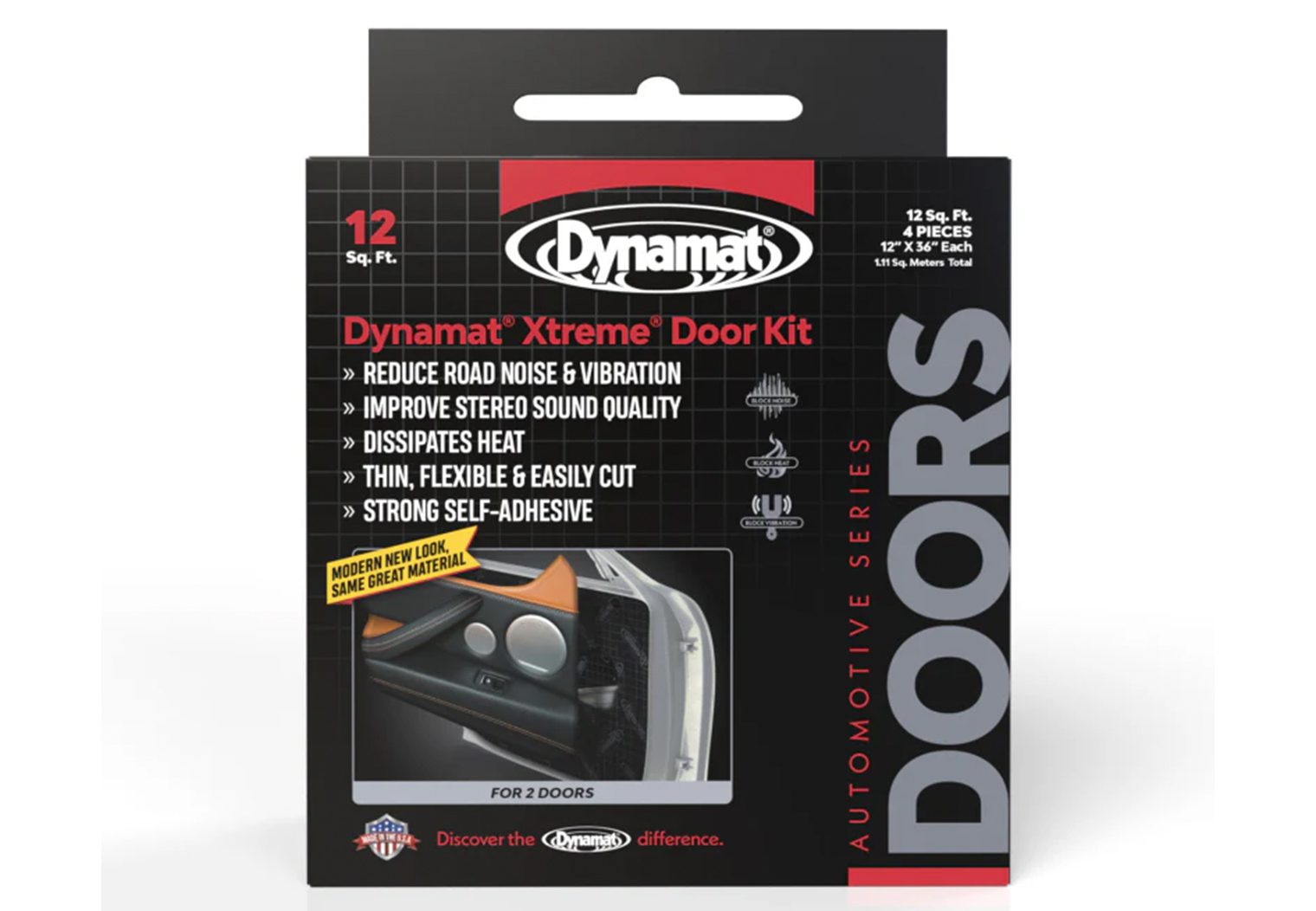
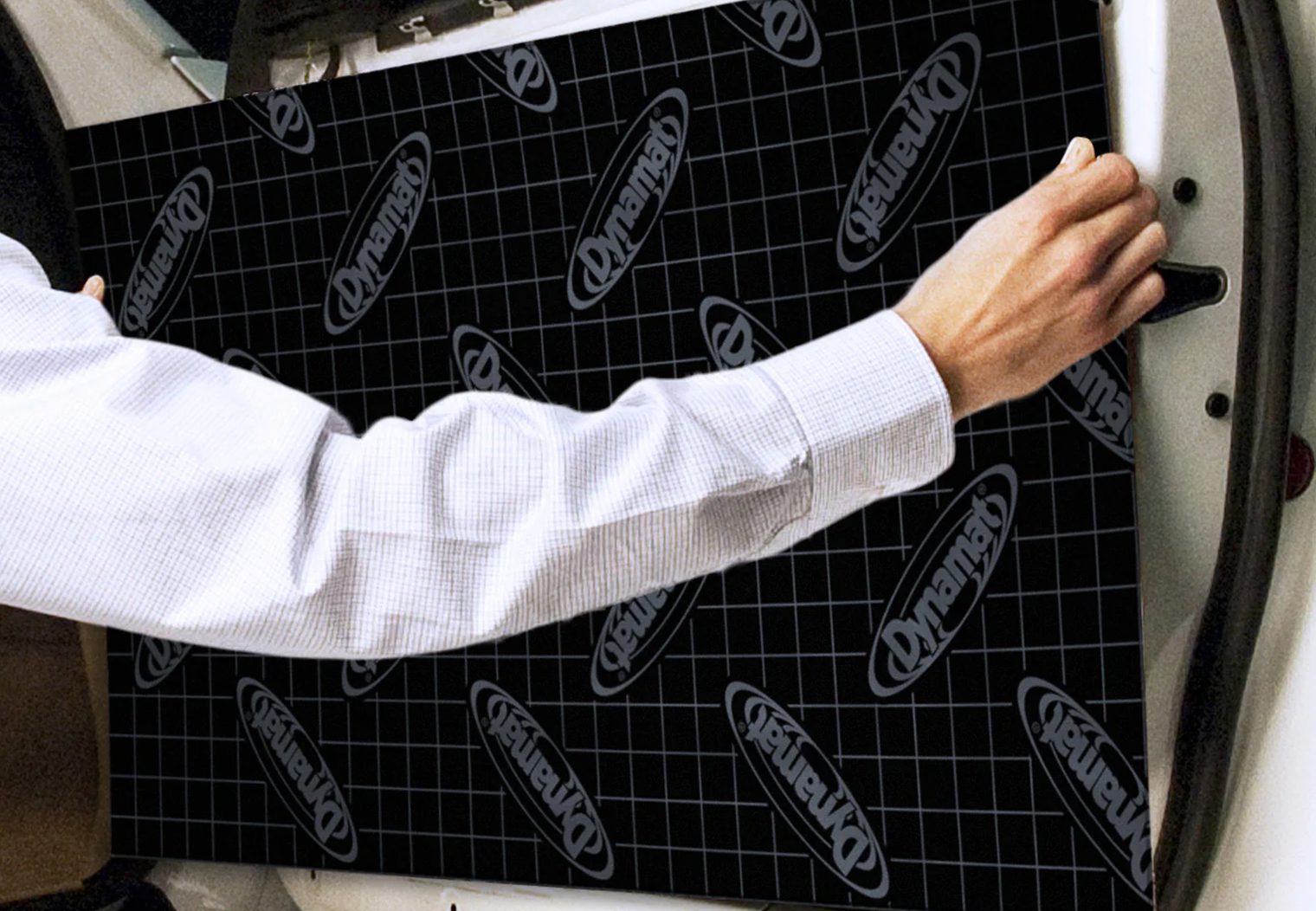
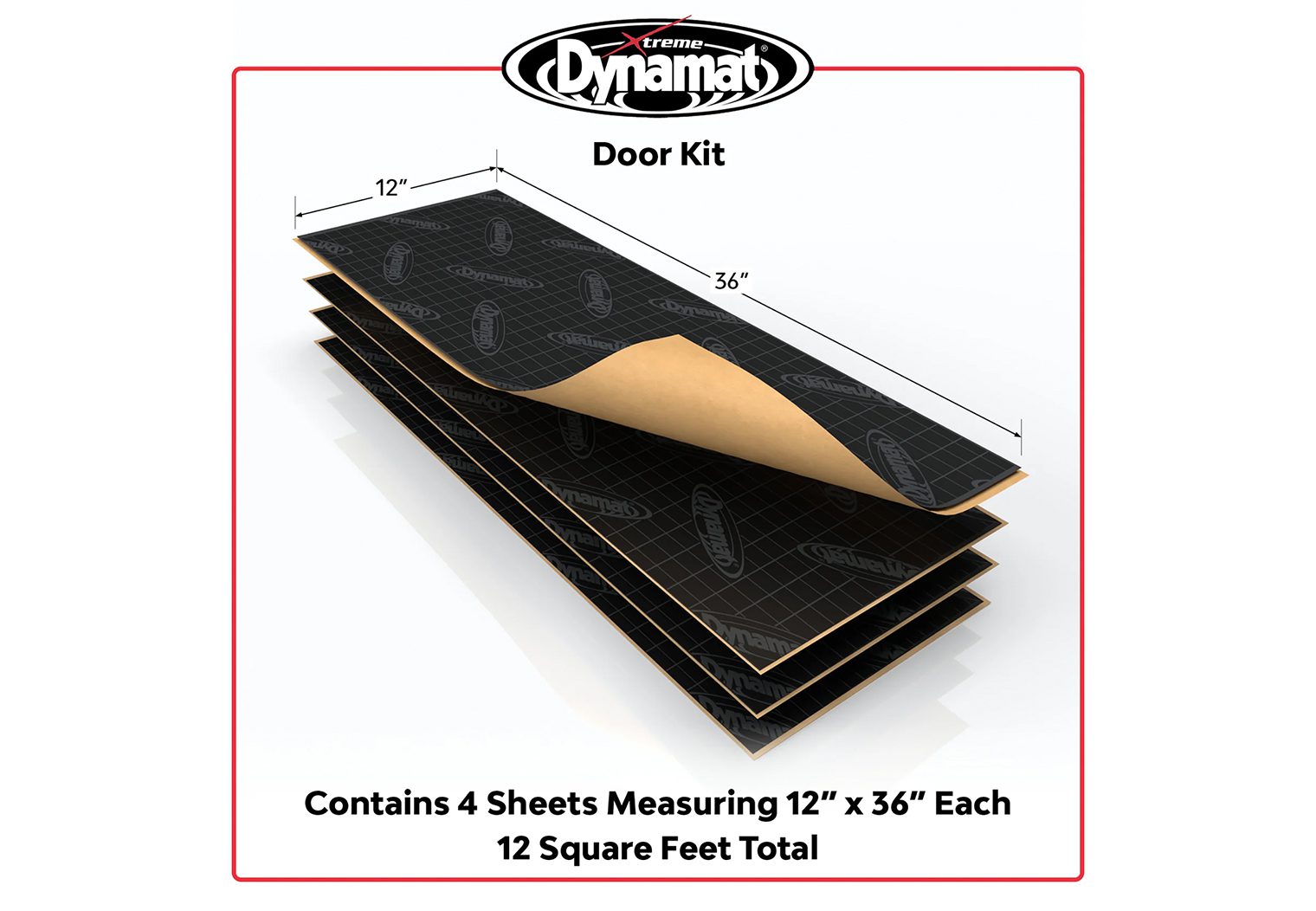
Dynamat Xtreme is the original premium sound deadening mat and still the benchmark every other CLD product is measured against. The 67-mil butyl-based constrained layer damper with an aluminum constraining foil flat-out works — it's been the choice of OEMs, recording studios, and competition installers for decades. The butyl is thick, sticky, and conforms to compound curves without fighting back. Once it's on, it stays on, even through Texas or Arizona summers and Minnesota winters. You'll pay a premium per square foot, but Dynamat Xtreme is the safe pick when you want the job done right the first time.
We test gear and may earn a commission. Buy now clicks are how we make money and support the time we spend making content. This doesn't affect our picks.
Reasons to Buy
- 67-mil butyl thickness with thick aluminum constraining layer — measurably effective damping
- Industry-leading adhesion — sticks to oily factory sheet metal without a primer
- Conforms beautifully to door bracing and compound curves
- Decades-long track record in OEM, studio, and competition applications
- Low odor compared to budget alternatives
Reasons Not to Buy
- Premium price (~$2.50–3.50 per sq ft street)
- Heavier than competing mats — adds noticeable weight to large coverage areas
- Heavy sheets can be challenging to maneuver in tight door cavities
- Overkill for budget builds that just need basic damping
| Make | Dynamat |
| Model | Xtreme |
| Material Type | Butyl CLD with aluminum constraining layer |
| Thickness | 67 mil (1.7mm) |
| Sheet Size | 18″ x 32″ (4 sq ft per sheet) |
| Common Kit Sizes | Door Kit (10 sq ft), Bulk Pack (36 sq ft), Trunk Kit (37 sq ft) |
| Temperature Range | -65°F to 300°F |
| Weight | ~0.45 lb per sq ft |
| Adhesive | Pressure-sensitive butyl |
| Smell | Low |
| Backing Foil | Embossed aluminum |
| Best Use | Doors, floors, trunks, roof — full-vehicle damping |
Bottom line: If you want the safest pick that will absolutely work — without second-guessing whether you bought the right thing — Dynamat Xtreme is the best overall car sound deadening on the market. Pair it with quality components from my best car speakers guide to hear the full benefit of a properly damped door.
Best All-in-One Sound Deadening Kit: SoundSkins Pro Plus
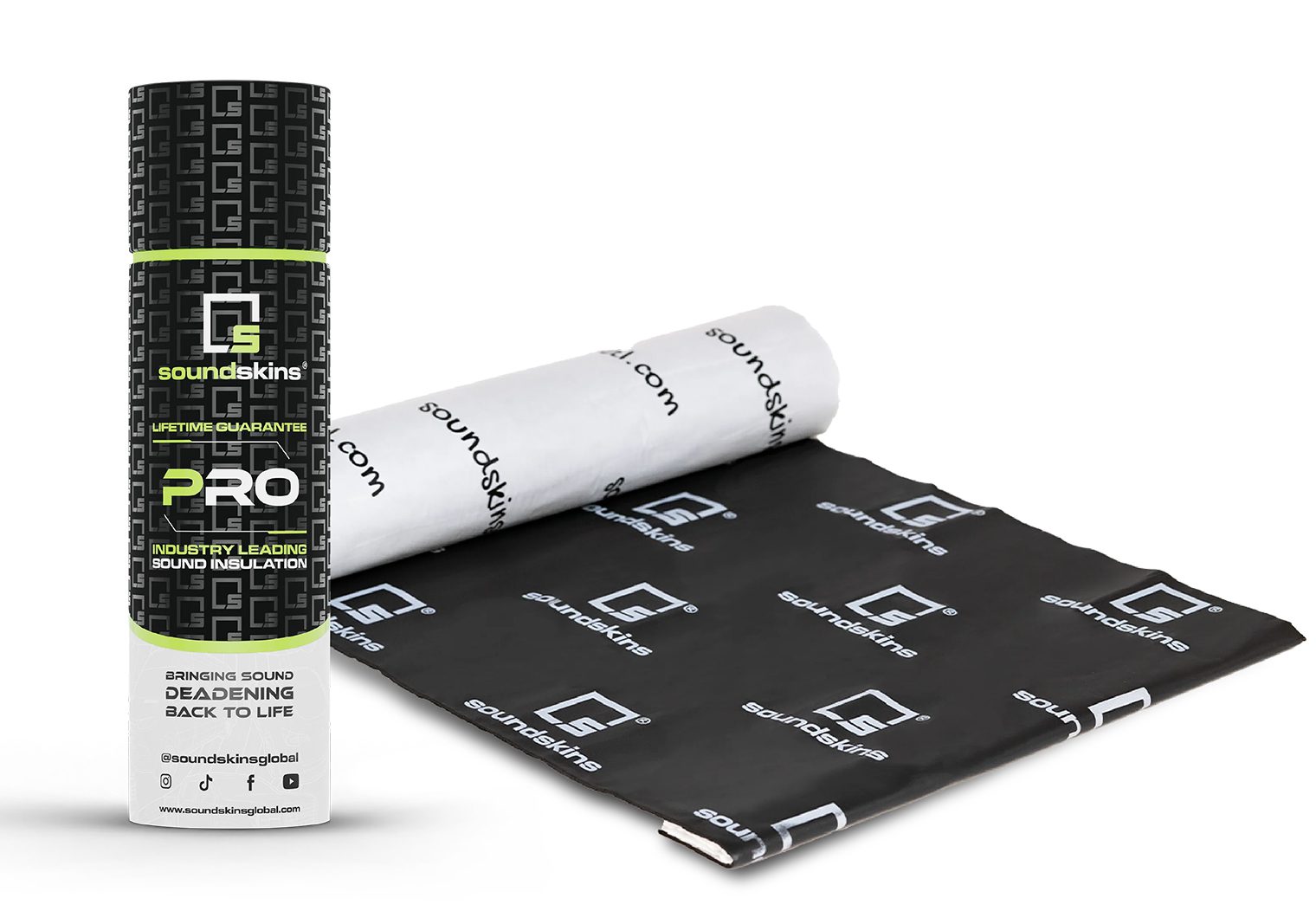
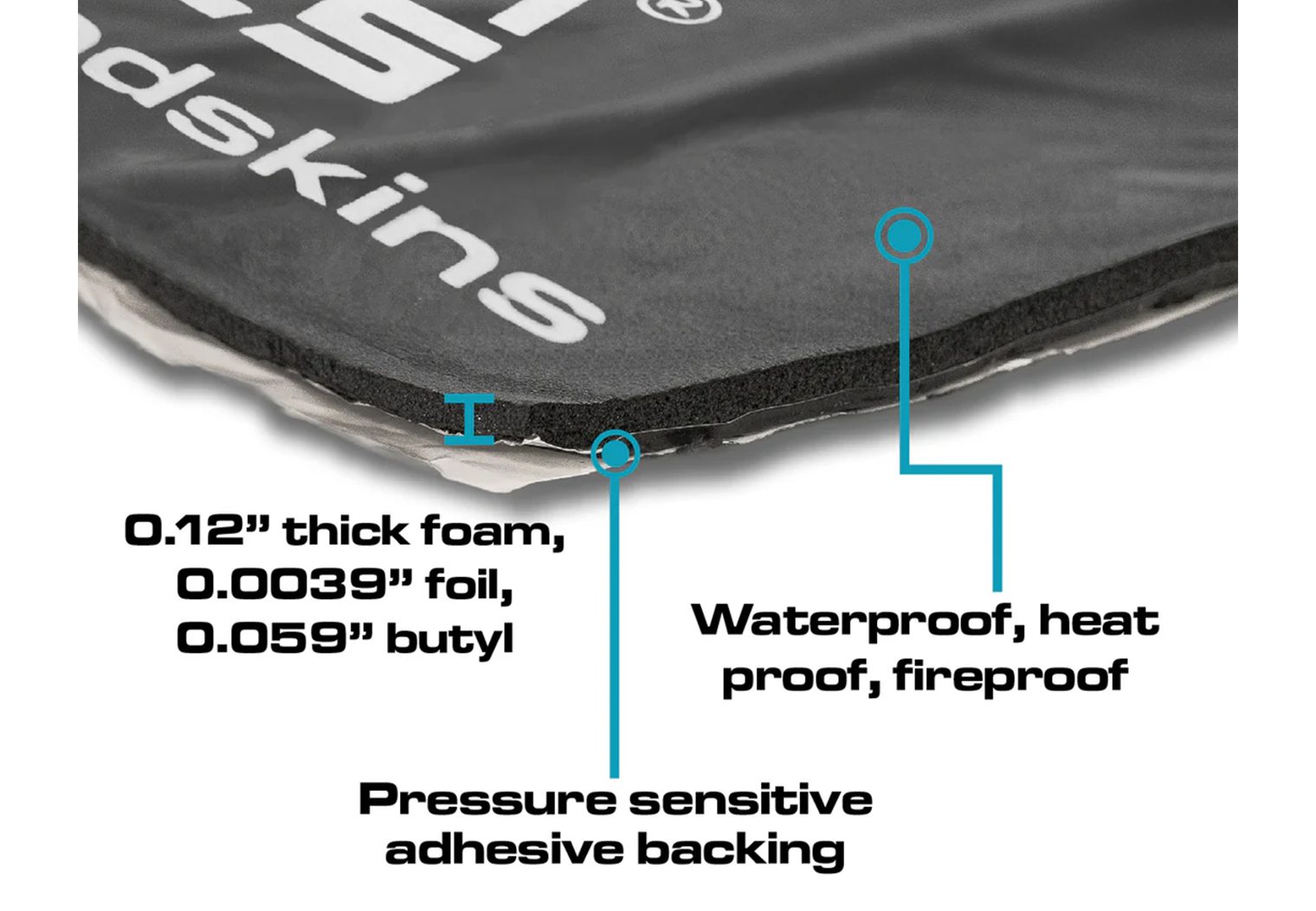
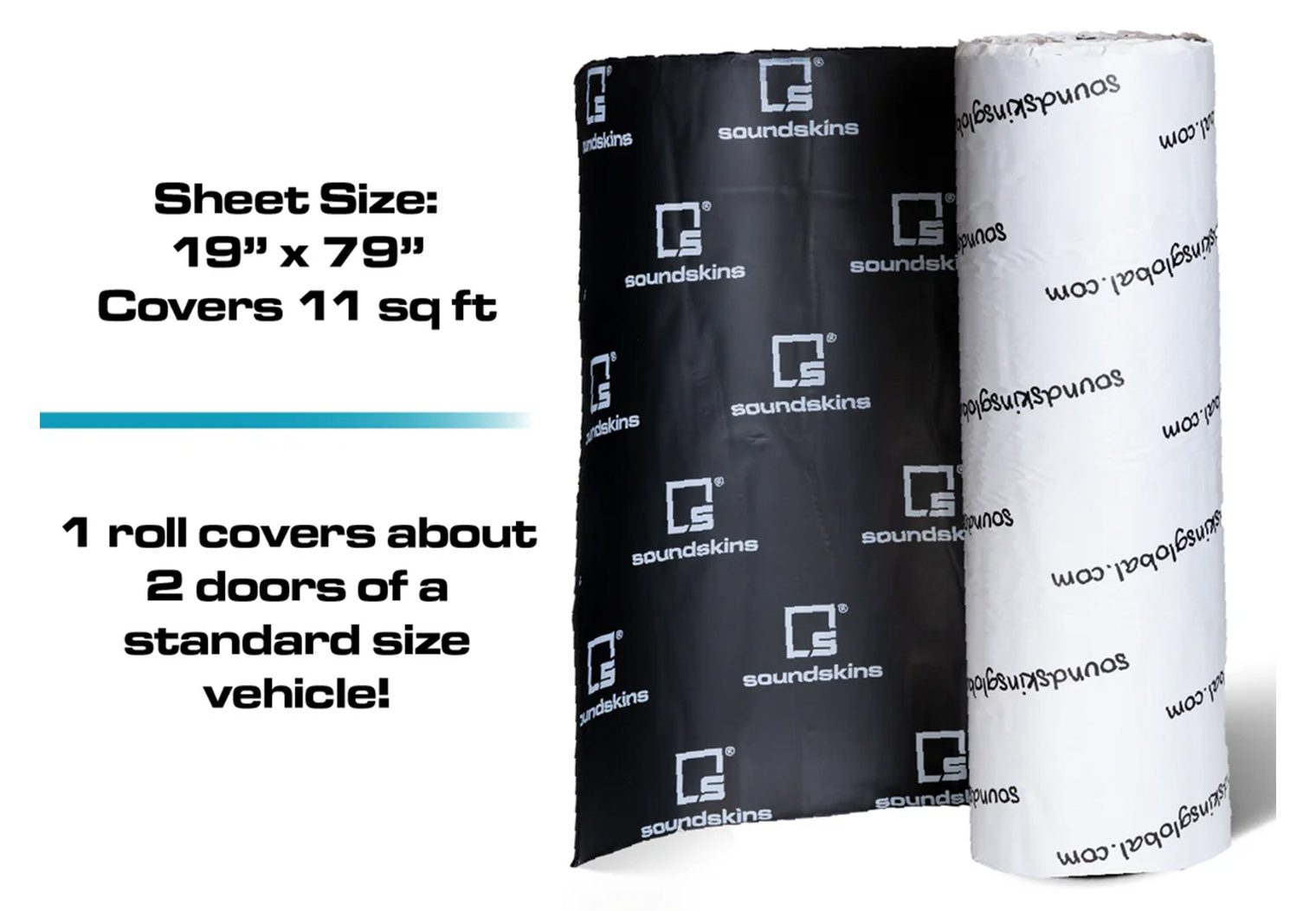
I've used SoundSkins Pro Plus in a few builds now, including on my own personal F-150. It is the smartest single-product solution on the market right now. Each sheet combines a 1.6mm butyl CLD layer, a 4mm closed-cell foam decoupler, and a foil constraining layer — three sound deadening jobs in a single application. Instead of buying CLD tiles, foam, and MLV separately and layering them in three passes, you cut and apply one sheet. The result is a measurable reduction in panel resonance plus airborne noise blocking from the foam layer, all in roughly the time it takes to do a basic CLD-only install. For most DIYers doing doors, this is the easiest way to get audiophile-tier results without the multi-layer headache.
We test gear and may earn a commission. Buy now clicks are how we make money and support the time we spend making content. This doesn't affect our picks.
Reasons to Buy
- Three layers in one sheet — CLD, closed-cell foam, and foil constraining layer
- Cuts install time roughly in half versus multi-layer treatments
- Excellent door application — the foam layer kills outer-skin reflections back into the speaker
- Strong adhesive holds in heat cycles and conforms to bracing well
- Pre-cut door kits available for popular vehicles
Reasons Not to Buy
- Premium price — more expensive per sq ft than CLD alone
- The 5.6mm total thickness is bulkier — harder to fit behind some factory door panels
- Foam layer is wasted on outer floor pans where you'd want MLV instead
- Not the cheapest path if you only need CLD damping
| Make | SoundSkins |
| Model | Pro Plus |
| Material Type | Butyl CLD + closed-cell foam + foil constraining layer |
| Thickness | 5.6mm total (1.6mm butyl + 4mm CCF) |
| Sheet Size | 20″ x 32″ (4.4 sq ft per sheet) |
| Common Kit Sizes | Door Kit (4 sheets), Bulk Pack (10 sheets), Full Vehicle Kit |
| Temperature Range | -40°F to 250°F |
| Weight | ~0.40 lb per sq ft |
| Adhesive | Pressure-sensitive butyl |
| Smell | Low |
| Backing Foil | Embossed aluminum |
| Best Use | Doors, roofs, fenders — anywhere you want all three layers in one pass |
Bottom line: The SoundSkins Pro Plus is the best all-in-one car sound deadening kit if you want serious results without doing a three-layer install. It's my top recommendation for DIYers doing doors, especially when paired with quality component speakers. See my best 6.5″ component speaker guide for components that benefit most from this kind of door treatment.
Best Budget Sound Deadening: Noico 80 mil
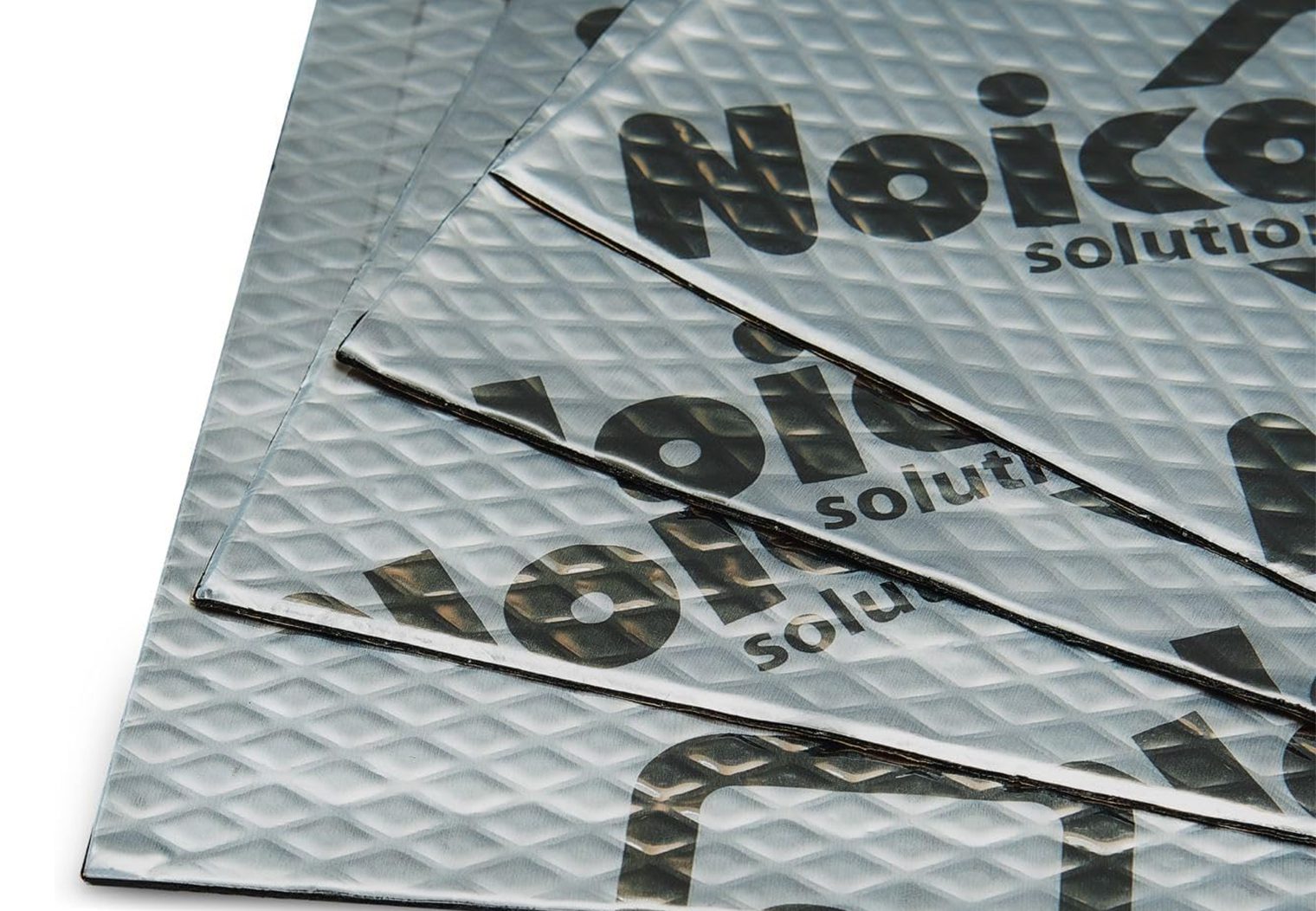
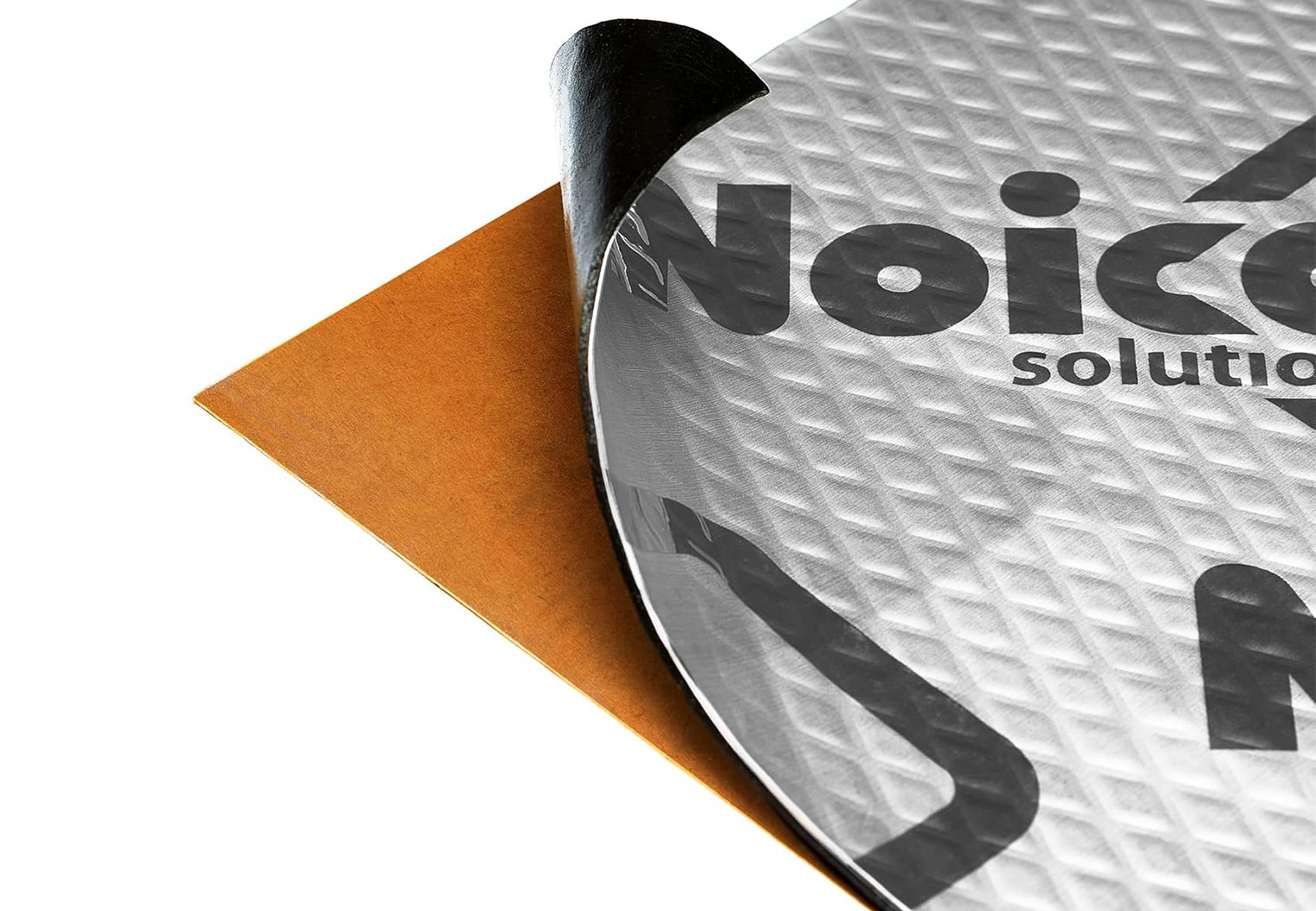
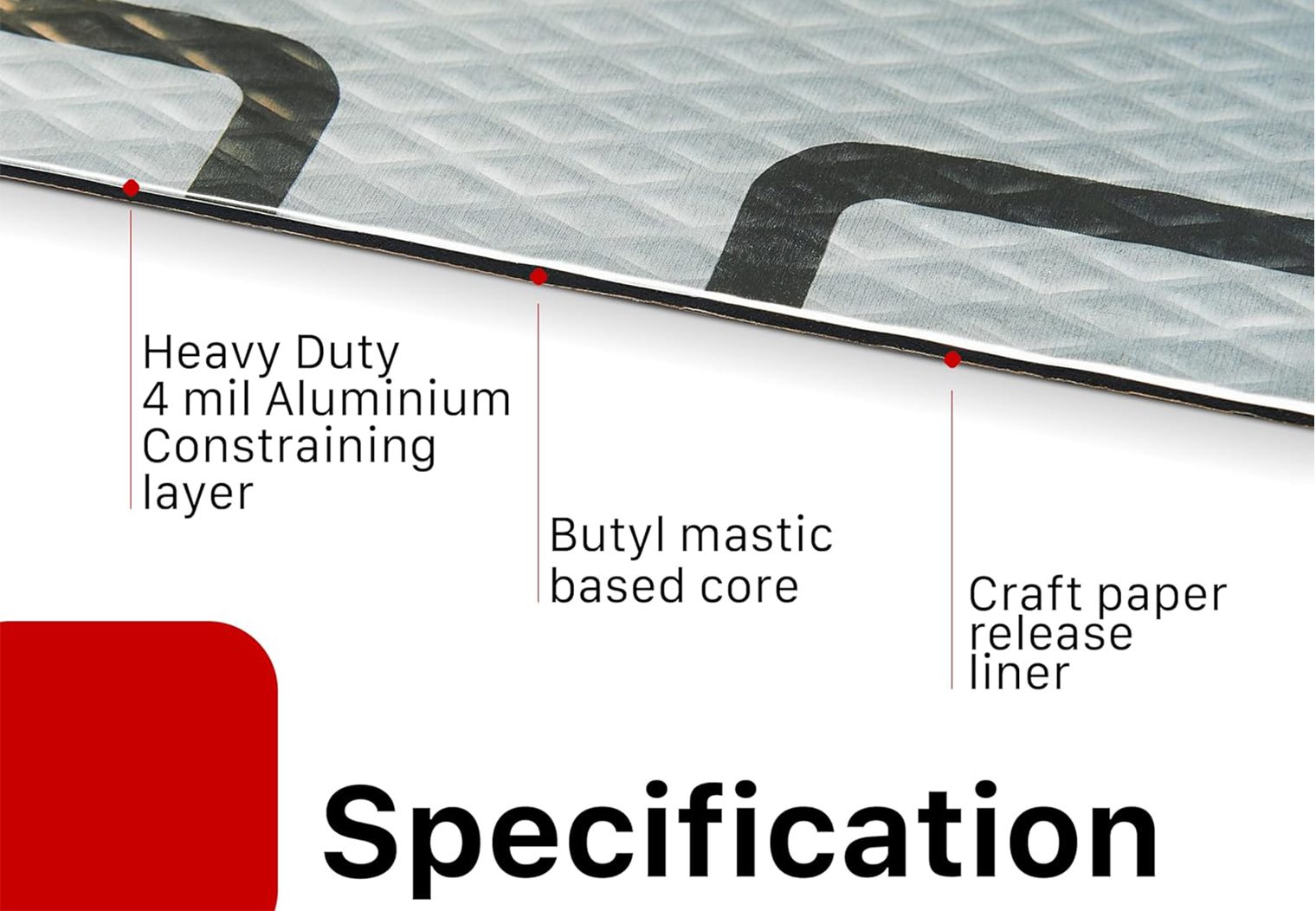
Noico 80 mil has earned cult status for one simple reason: it's roughly a third the price of Dynamat Xtreme and it works. The 80-mil butyl with embossed aluminum foil delivers real damping performance on doors, floors, and trunks — and the embossed dimples on the foil give you a built-in coverage indicator (flatten the dimples with a roller and you know the sheet is properly bonded). It's thicker than Dynamat Xtreme on paper, though the butyl quality and adhesion aren't quite at the same premium tier. For 90% of car audio builds, that gap doesn't matter. If you're deadening a full vehicle on a budget, Noico is the easiest yes in the category.
We test gear and may earn a commission. Buy now clicks are how we make money and support the time we spend making content. This doesn't affect our picks.
Reasons to Buy
- About one-third the cost of premium CLD mats — roughly $1 per sq ft street
- 80-mil thickness puts down real damping mass on a tight budget
- Embossed foil dimples act as a visual roller indicator
- 36 sq ft bulk packs make full-vehicle treatments affordable
- Cuts cleanly with scissors or utility knife
Reasons Not to Buy
- Strong rubbery odor for the first few days after install
- Adhesive less aggressive than Dynamat — surface prep matters more
- Foil is thinner and tears easier when working it into door bracing
- Long-term hold in extreme heat (above 180°F vehicle interior) less proven
| Make | Noico |
| Model | 80 mil |
| Material Type | Butyl CLD with embossed aluminum foil |
| Thickness | 80 mil (2.0mm) |
| Sheet Size | ~10″ x 14″ sheets |
| Common Kit Sizes | 36 sq ft pack, 18 sq ft pack |
| Temperature Range | -45°F to 195°F |
| Weight | ~0.30 lb per sq ft |
| Adhesive | Pressure-sensitive butyl |
| Smell | Strong (dissipates over time) |
| Backing Foil | Embossed aluminum with dimple coverage indicator |
| Best Use | Full-vehicle budget treatments, doors, floors, trunks |
Bottom line: Noico 80 mil is the best budget car sound deadening on the market and the easiest way to deaden a full vehicle without spending $400+ on premium mats. If you're prepping a vehicle for new speakers and want most of the benefit of Dynamat at a fraction of the cost, Noico is the move. Just plan for surface prep with isopropyl alcohol and use a quality roller to make sure every dimple flattens.
Best Audiophile / SQ Sound Deadening: Boom Mat Pro CLD by DEI
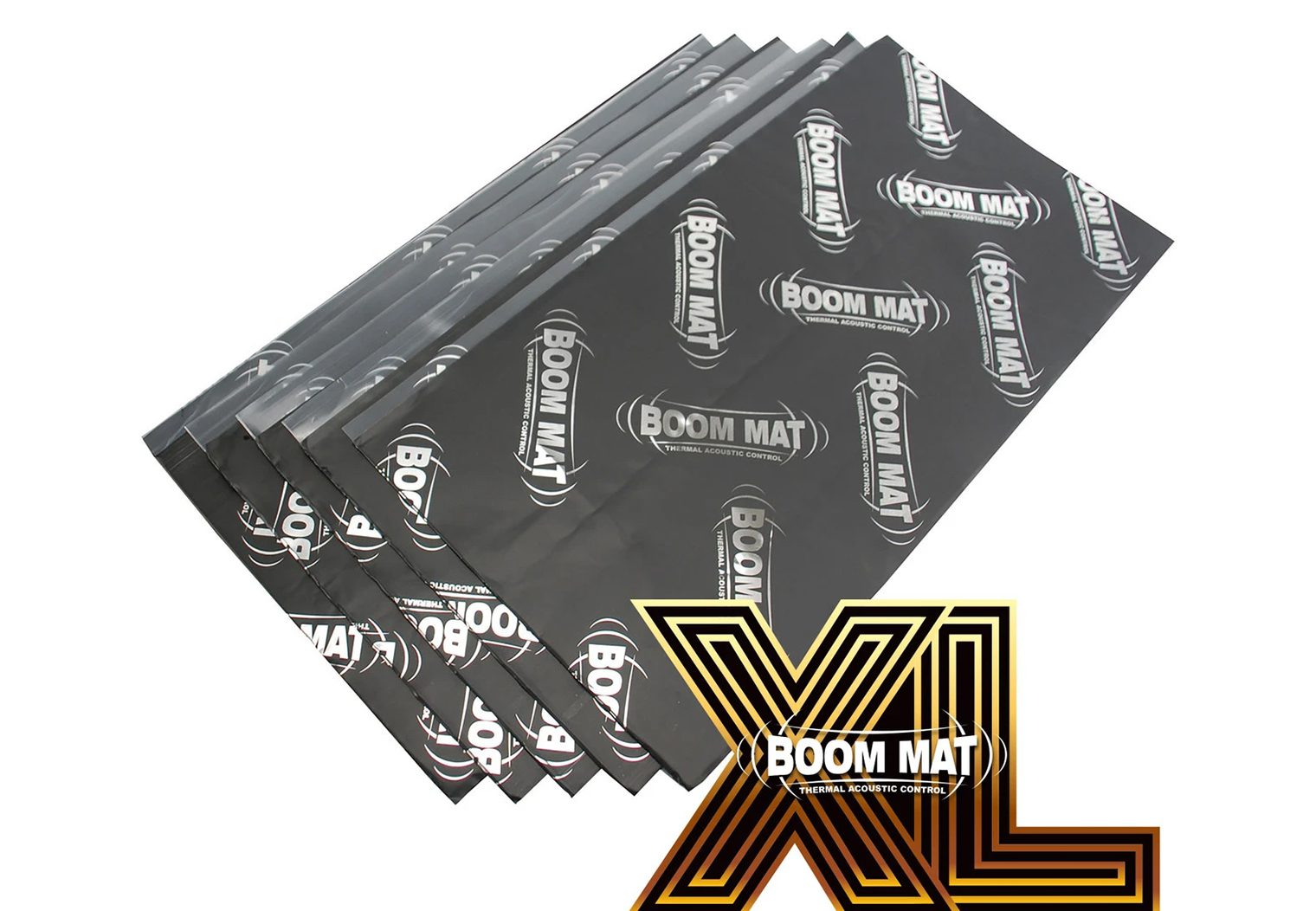
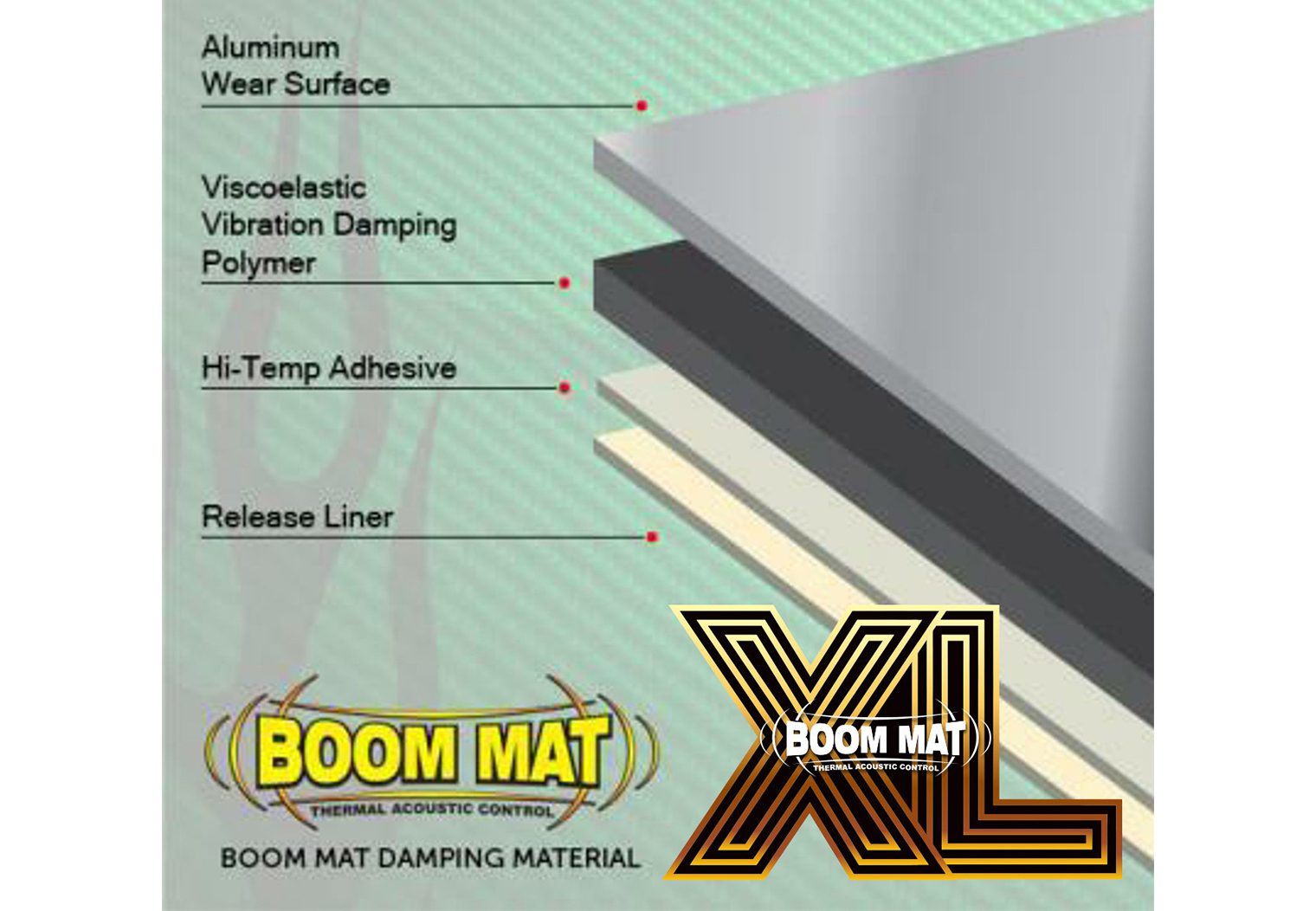
Boom Mat Pro CLD by Design Engineering (DEI) is the deadening I reach for on SQ-focused builds where measurable damping performance matters more than coverage area per dollar. DEI built their reputation in high-performance and motorsport applications — the same engineering rigor goes into their car audio CLD line. The 65-mil butyl with a heavy aluminum constraining layer delivers the kind of dead, neutral knock-test results SQ installers chase. Boom Mat is widely available through both Crutchfield and Amazon, which makes it easier to source than direct-only premium brands. For audiophile builds where you want maximum damping per square inch without sourcing headaches, this is my pick.

We test gear and may earn a commission. Buy now clicks are how we make money and support the time we spend making content. This doesn't affect our picks.
Reasons to Buy
- Heavy aluminum constraining layer paired with dense butyl — measurable damping performance
- Engineered by Design Engineering Inc — long motorsport and high-performance pedigree
- Widely stocked at Crutchfield and Amazon — easy to source vs direct-only brands
- Available in tiles or rolls to match the application
- Strong adhesion that handles factory sheet metal without primer
Reasons Not to Buy
- Premium pricing — not a budget option for full-vehicle treatments
- Heavy — adds noticeable weight on full-vehicle treatments
- Slightly less foil thickness than Damplifier-class boutique mats
- Brand recognition skews motorsport — less well-known among pure car audio crowds
| Make | Design Engineering (DEI) |
| Model | Boom Mat Pro CLD |
| Material Type | Butyl CLD with heavy aluminum constraining layer |
| Thickness | 65 mil (1.65mm) |
| Sheet Size | 12″ x 12.5″ tiles (typical pack format) |
| Common Kit Sizes | Door Kit, 12 sq ft pack, 24 sq ft pack, larger bulk |
| Temperature Range | -30°F to 300°F |
| Weight | ~0.40 lb per sq ft |
| Adhesive | High-tack butyl |
| Smell | Low |
| Backing Foil | Embossed aluminum |
| Best Use | SQ builds, audiophile installs, motorsport applications |
Bottom line: Boom Mat Pro CLD is the best car sound deadening for SQ-focused builds where damping performance matters more than coverage area per dollar — and it's far easier to source than direct-only premium brands. If your speakers and amplifiers are competition-grade, your CLD layer should match. Pair it with the right amplification using my guide to choosing the right car amplifier.
Best Mid-Range Sound Deadening: Stinger RoadKill Expert
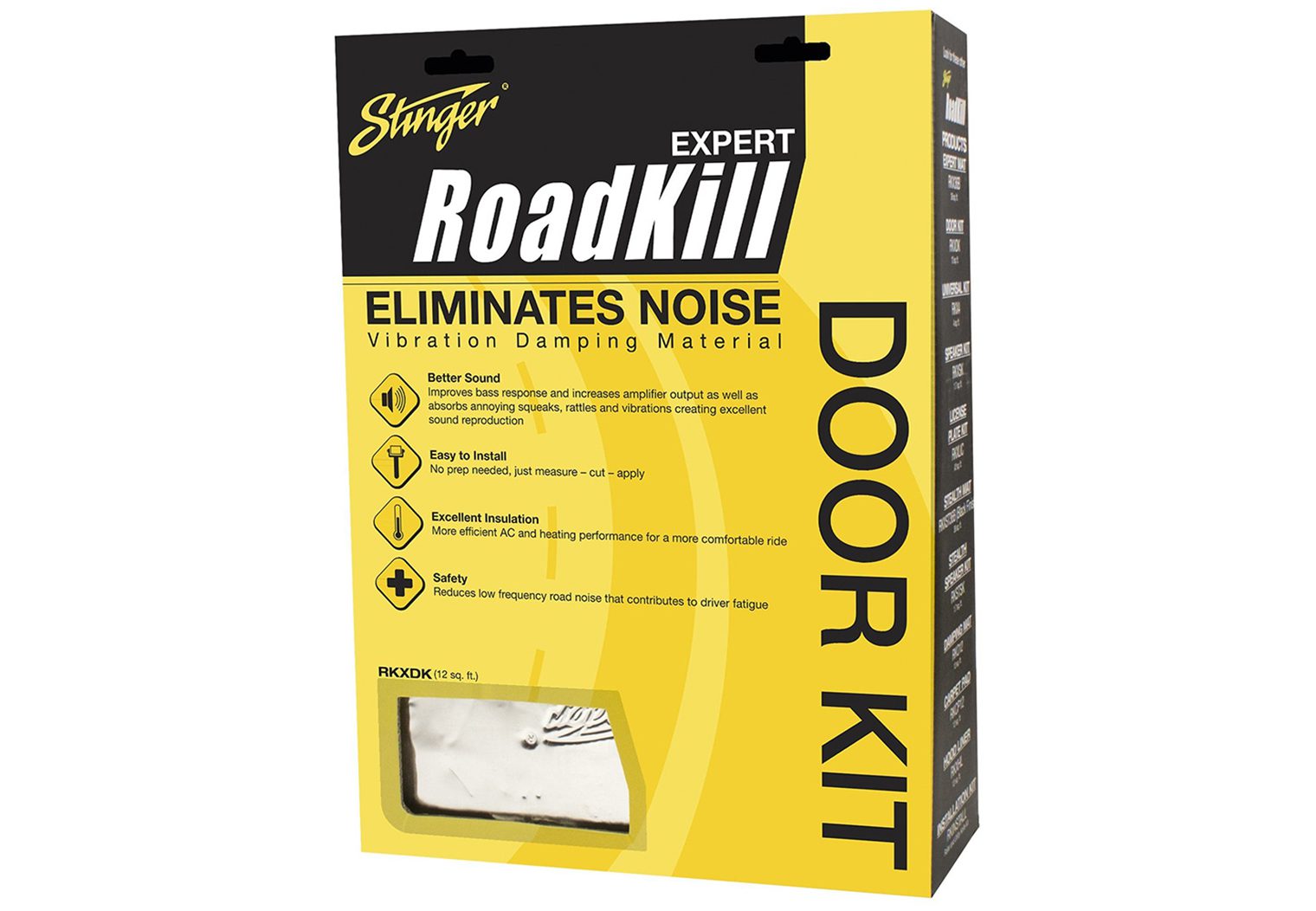
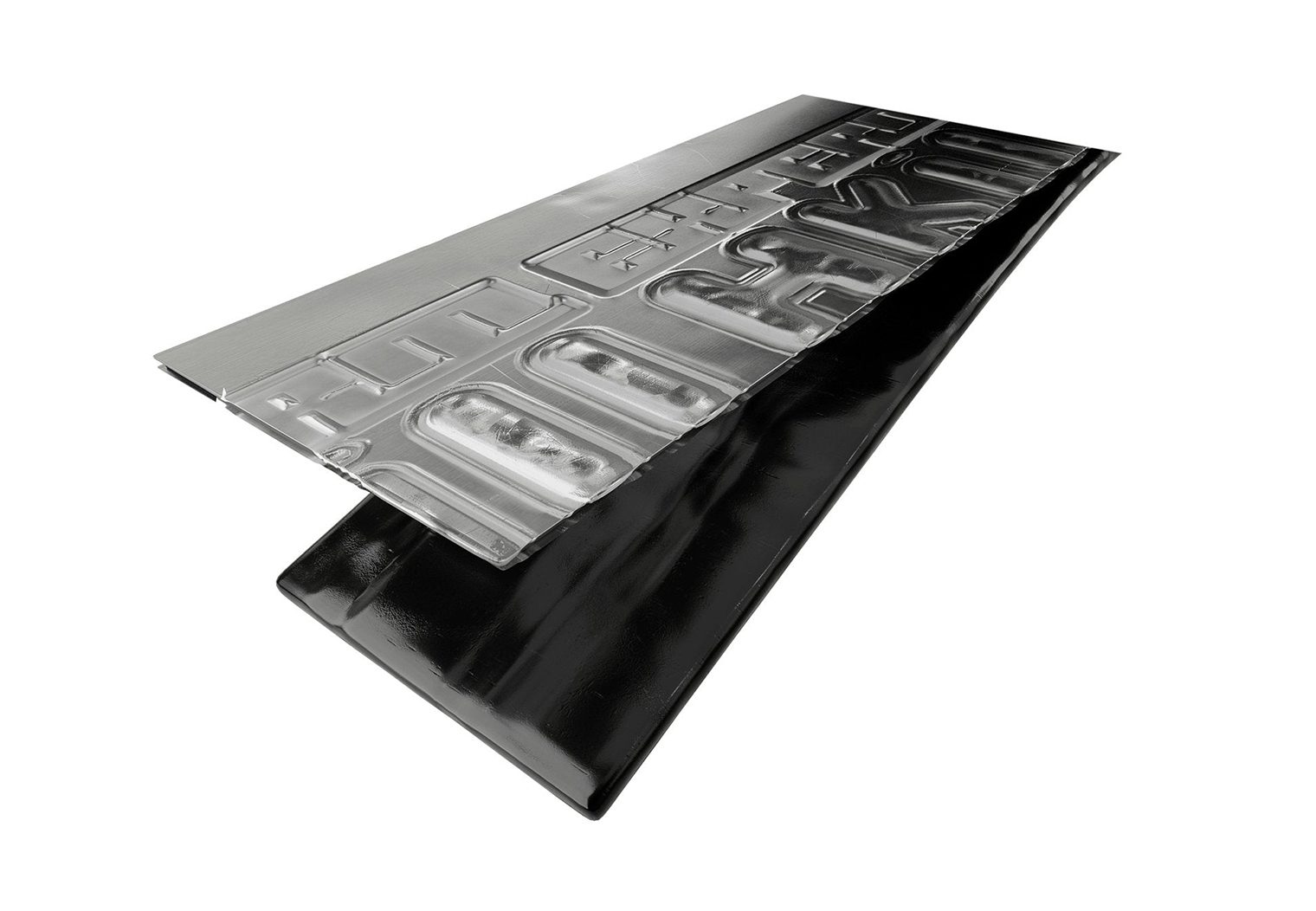
Stinger's RoadKill Expert is the smart middle ground between Dynamat-tier pricing and Noico-tier budget mats. The 80-mil butyl with a 4-mil embossed aluminum foil has been a workhorse for 12-volt shops for years — well-respected, well-distributed through brick-and-mortar car audio retailers, and consistently good in the box. Adhesion is strong, butyl quality is well above budget mats, and Stinger backs it with a real warranty. If you want premium-class performance without paying the absolute top of the market, RoadKill Expert is where most professional installers land for daily-driver builds.
We test gear and may earn a commission. Buy now clicks are how we make money and support the time we spend making content. This doesn't affect our picks.
Reasons to Buy
- Strong adhesion that handles factory paint and sheet metal reliably
- Available at local 12-volt shops — easy to pick up without shipping
- Backed by Stinger's industry-standard warranty
- Strong middle-tier value — ~$1.80–2.20 per sq ft
- Pre-portioned 18″ x 32″ sheets are easy to work with in door cavities
Reasons Not to Buy
- Foil thinner than Damplifier Pro — slightly less constrained-layer effect
- Not the cheapest option — Noico beats it on price-per-sq-ft
- Pure CLD only — no integrated foam or MLV layer
- Mid-range smell during install — noticeable in enclosed garages
| Make | Stinger |
| Model | RoadKill Expert |
| Material Type | Butyl CLD with embossed aluminum foil |
| Thickness | 80 mil (2.0mm) |
| Sheet Size | 18″ x 32″ (4 sq ft per sheet) |
| Common Kit Sizes | Single Sheet, Door Kit (10 sq ft), Trunk Kit (20 sq ft), Bulk (36 sq ft) |
| Temperature Range | -30°F to 300°F |
| Weight | ~0.35 lb per sq ft |
| Adhesive | Pressure-sensitive butyl |
| Smell | Moderate |
| Backing Foil | Embossed aluminum |
| Best Use | Doors, floors, trunks for daily-driver SQ builds |
Bottom line: Stinger RoadKill Expert is the best mid-range car sound deadening for builds that need pro-grade results without flagship pricing. It's my recommendation for most installers and DIYers who want quality, predictability, and easy local availability. For a complete signal-chain upgrade after deadening, see my best car amplifiers guide.
Best for Heat + Sound: HushMat Ultra
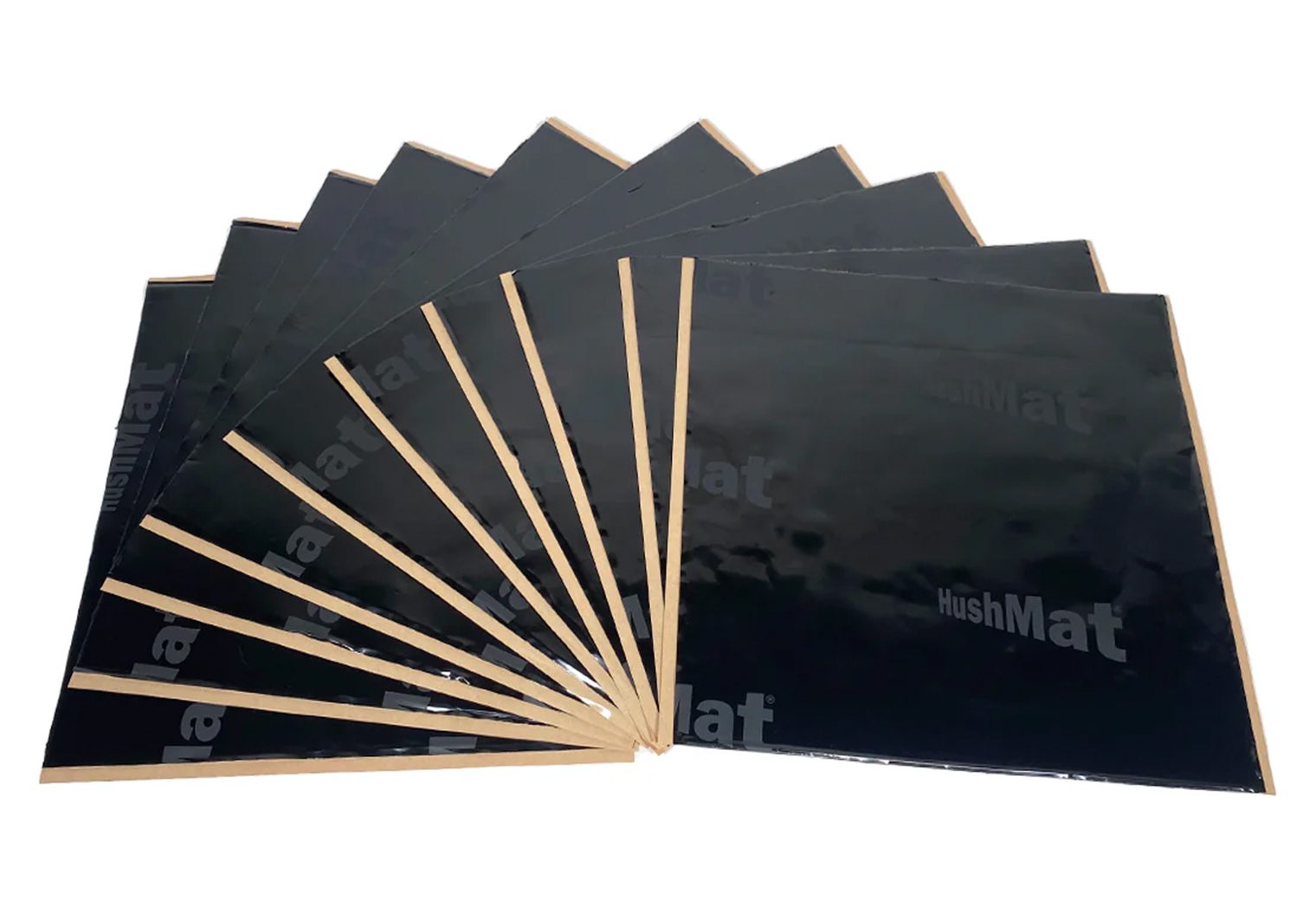
HushMat Ultra is the deadening I reach for when the install needs to address both panel resonance and cabin heat — firewalls, transmission tunnels, floor pans over exhaust, and roof skins that bake in summer. The closed-cell butyl rubber composition is thermally rated up to 400°F and acts as both a CLD and a meaningful thermal barrier, all in a single sheet. The foil is heavy enough to perform as a constraining layer for damping, and the closed-cell butyl resists heat soak in ways that pure CLD mats can't. For trucks and SUVs with hot floors, or for any vehicle in a hot climate, HushMat is the smartest single-layer choice.
We test gear and may earn a commission. Buy now clicks are how we make money and support the time we spend making content. This doesn't affect our picks.
Reasons to Buy
- Genuine thermal performance up to 400°F — works as heat barrier and CLD in one
- Closed-cell butyl rubber doesn't absorb moisture (rain seal failures don't ruin it)
- Made in the USA with a lifetime warranty
- Vehicle-specific kits available for popular trucks and SUVs
- Excellent for firewalls, floor pans, and roofs in hot-climate vehicles
Reasons Not to Buy
- Thinner CLD layer than dedicated SQ mats like Damplifier Pro
- Higher price per sq ft than budget mats — but you're paying for thermal performance
- Sheets are smaller — more pieces to lay down for large coverage
- For pure SQ builds, not the most damping-per-dollar option
| Make | HushMat |
| Model | Ultra |
| Material Type | Closed-cell butyl rubber CLD with thermal performance |
| Thickness | ~60 mil (1.5mm) |
| Sheet Size | 12″ x 23″ (1.92 sq ft per sheet) |
| Common Kit Sizes | Door Kit (10 sq ft), Floor Kit, Trunk Kit, Vehicle-Specific Kits |
| Temperature Range | -30°F to 400°F |
| Weight | ~0.35 lb per sq ft |
| Adhesive | Pressure-sensitive butyl |
| Smell | Very low |
| Backing Foil | Embossed aluminum |
| Best Use | Firewalls, floor pans, roofs, hot-climate vehicles |
Bottom line: HushMat Ultra is the best car sound deadening when heat is a real consideration alongside sound. It's the first thing I lay down on truck firewalls and floor pans, and it's a smart choice for any vehicle in a hot climate. Combine with a quality CLD on doors for a complete vehicle treatment.
Best Closed-Cell Foam Decoupler: SoundSkins Pro CCF
Award: Best Closed-Cell Foam Decoupler
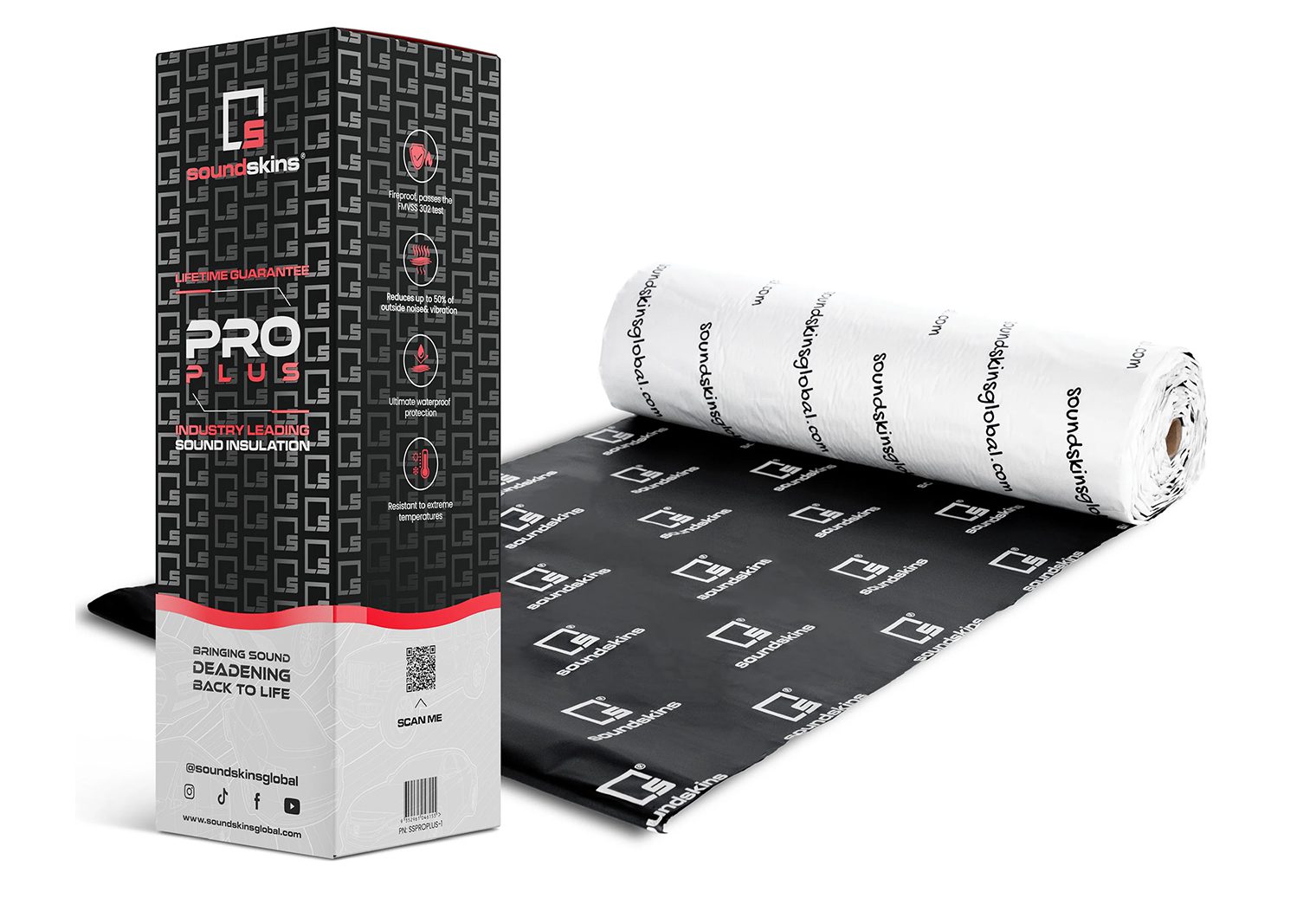
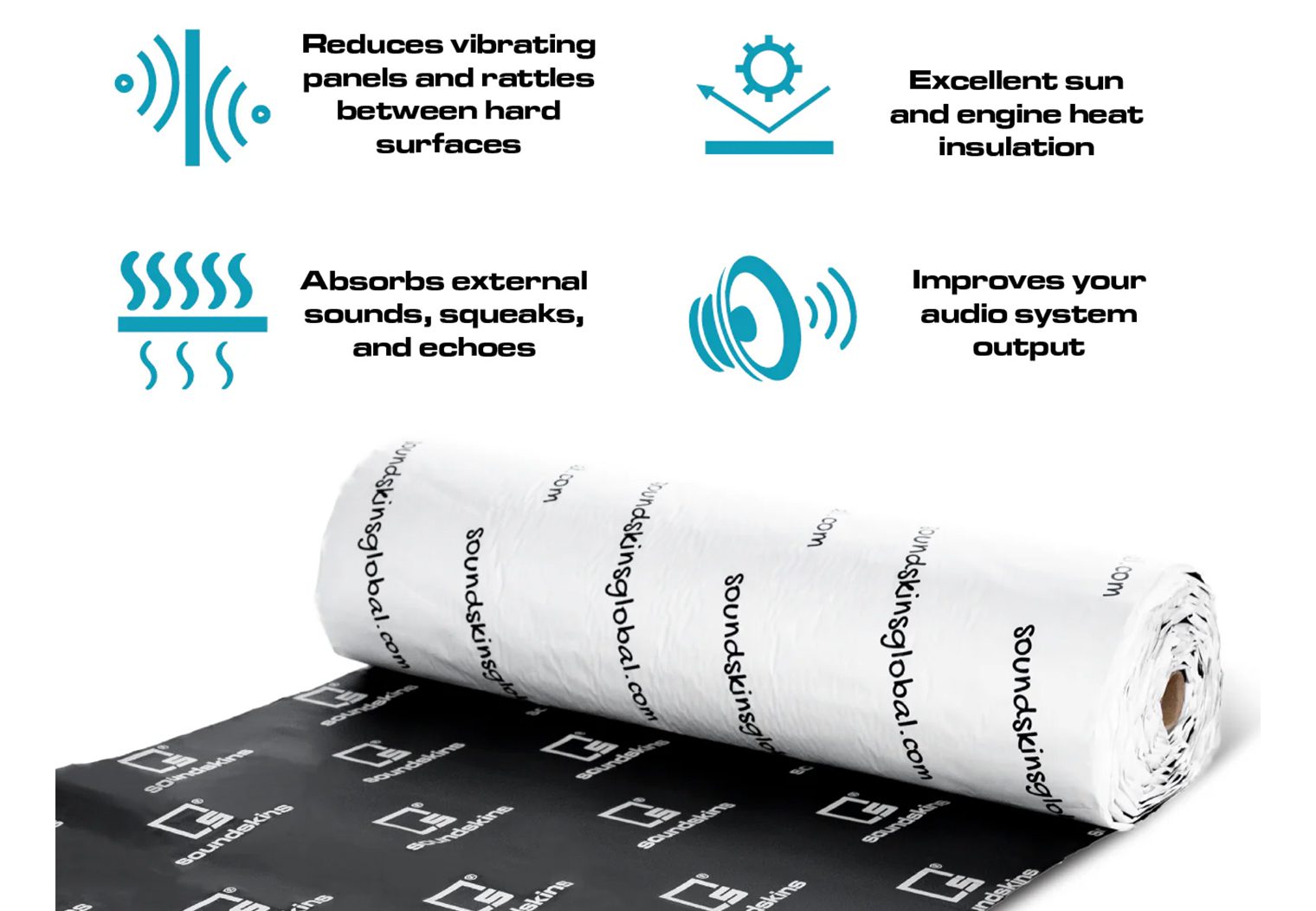
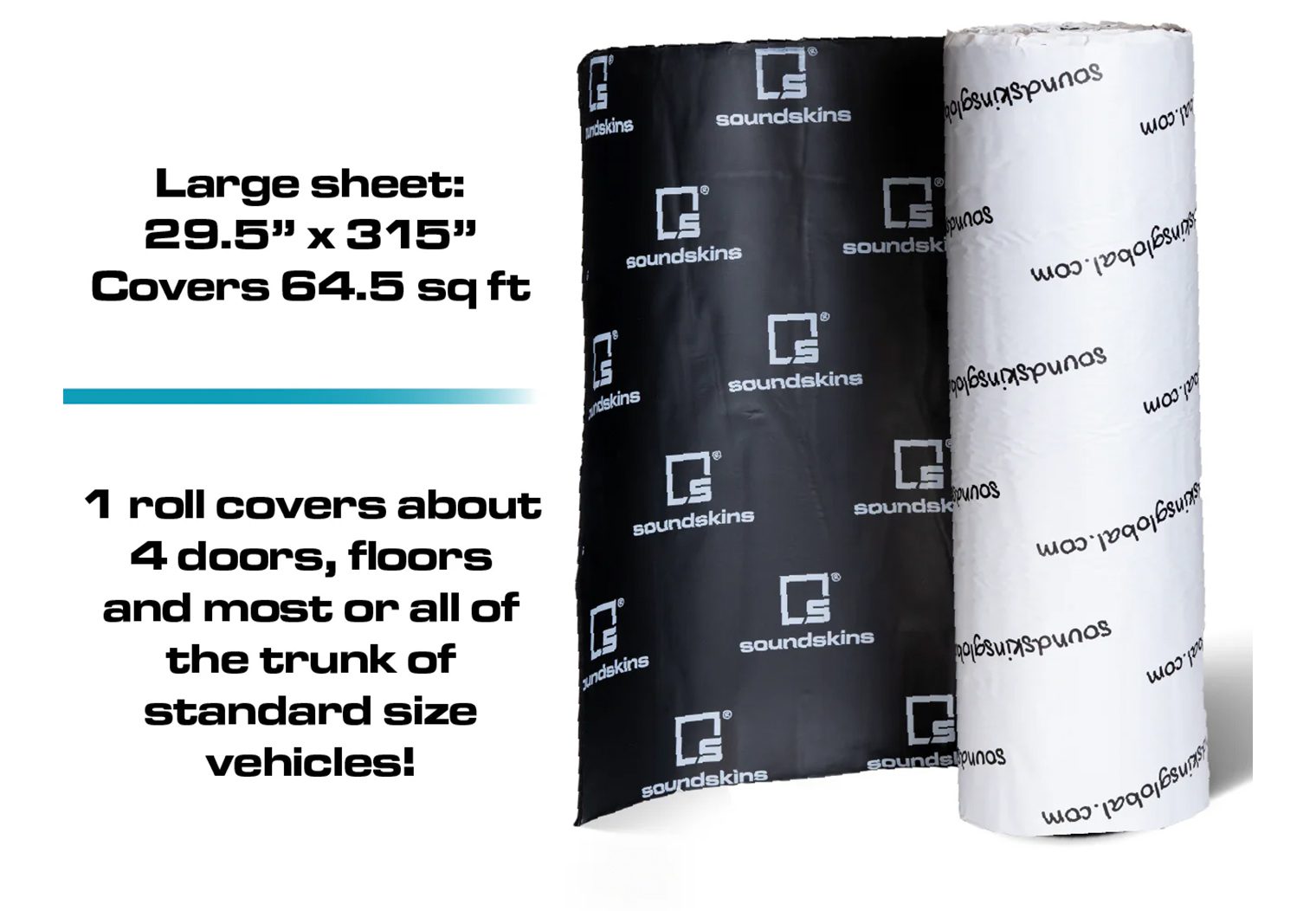
Once your CLD layer is down, the next step for a serious door treatment is a closed-cell foam (CCF) decoupler — a layer that sits between your CLD-treated outer skin and your inner door panel, eliminating panel-to-panel airborne energy transfer. SoundSkins Pro CCF is 7mm of dense closed-cell foam with a self-adhesive backing, sized perfectly for door cavities. It blocks airborne sound from the outer door skin from reaching the door card, which is the main path for road noise into the cabin, and it eliminates door card rattle by giving the panel something soft to register against. This is the layer 95% of installers skip — and the one that separates a “deadened” car from a quiet one.
We test gear and may earn a commission. Buy now clicks are how we make money and support the time we spend making content. This doesn't affect our picks.
Reasons to Buy
- True closed-cell foam — doesn't absorb water or sag over time
- 7mm thickness — enough to actually decouple panels without blocking door card refit
- Self-adhesive backing — no spray adhesive needed
- Kills door card rattles by giving the panel a soft surface to register against
- Pairs naturally with the SoundSkins Pro CLD sheets for full layered treatment
Reasons Not to Buy
- Adds another layer of install complexity over CLD-only treatment
- Pricier than open-cell foam alternatives (which fail in moisture)
- Not a CLD replacement — has to be used on top of a damping layer
- 7mm thickness can interfere with refit in vehicles with tight door panel tolerances
| Make | SoundSkins |
| Model | Pro CCF (Closed-Cell Foam) |
| Material Type | Self-adhesive closed-cell foam decoupler |
| Thickness | 7mm |
| Sheet Size | ~24″ x 39″ rolls or sheets |
| Common Kit Sizes | Door Pack (4 sheets), Bulk Roll |
| Temperature Range | -30°F to 220°F |
| Weight | ~0.12 lb per sq ft |
| Adhesive | Self-adhesive backing |
| Smell | Very low |
| Water Resistance | Closed-cell — non-absorbent |
| Best Use | Layer between CLD and door card — door rattle and airborne noise |
Bottom line: The SoundSkins Pro CCF is the best closed-cell foam decoupler for car audio applications and the layer most builds are missing. Apply it on top of a CLD layer on inner door skins and behind door cards for a complete door treatment that delivers measurable noise reduction and zero rattles.
Sound Deadening Installation Tips
- Three layers, in order: CLD first (reduces panel resonance), closed-cell foam second (decouples panels and blocks airborne noise), mass-loaded vinyl third (blocks road noise via mass). You don't always need all three — but you always apply them in this order.
- Surface prep is everything: Wipe down sheet metal with isopropyl alcohol before applying CLD. Factory paint and oil residue are the #1 cause of mats falling off six months later. Skip this step and you'll redo the job.
- Coverage strategy: You don't need 100% coverage with CLD — 25–60% on a flat panel will damp the panel's primary resonant frequencies. Focus tiles on the center of large flat areas where panels flex most. Save your budget for layering instead of full coverage.
- Best 6.5″ Component Car Speakers
- Best Car Subwoofers
- Amplifier Tuning Quick Guide — How to Tune Your Amp
- Pairing Speakers and Subwoofers to an Amplifier
- My Ford F-150 Car Audio Install Walkthrough
Frequently Asked Questions About Car Sound Deadening
What does sound deadening actually do?
Sound deadening does three different jobs depending on the material. Constrained-layer dampers (CLD tiles) reduce vibration and resonance in sheet metal panels, so doors don't flex like a tuning fork when your speakers play. Closed-cell foam decouples panels from each other and blocks airborne sound transfer. Mass-loaded vinyl adds mass to block low-frequency road and exhaust noise. A good full treatment uses all three layers — CLD first for resonance, foam for decoupling, MLV for noise blocking. The best car sound deadening kits in this guide cover one or more of those roles, and the right choice depends on what problem you're solving.
How much sound deadening do I need to install?
For doors only — roughly 10–12 sq ft of CLD per door, covering 25–60% of the outer skin and most of the inner skin. For a complete vehicle treatment — plan on 36–60 sq ft of CLD covering doors, trunk, floor pans, and wheel wells, plus 25–40 sq ft of MLV for the floor and trunk. You don't need 100% coverage with CLD; the goal is to break up resonant frequencies in large flat panels, not to cover every inch. Focus mass and budget on the layers that matter for your specific goal — bass impact (doors), road noise (floor MLV), or trunk SPL (trunk floor CLD).
Is more expensive sound deadening actually better?
Sometimes, but not always. Premium mats like Dynamat Xtreme and Second Skin Damplifier Pro have measurably better foil thickness, butyl density, and adhesion — and they matter for competition SQ builds. For most daily-driver builds, a quality budget mat like Noico 80 mil installed correctly will get you 80–90% of the audible benefit at one-third the price. Where premium mats really earn their cost: extreme climates, long-term hold on vertical surfaces like door skins, and SQ builds where every dB of damping counts. The best car sound deadening for you depends on your build budget and how much performance margin you want.
Can I install sound deadening myself?
Absolutely — sound deadening is one of the most DIY-friendly upgrades in car audio. A door install takes 1–2 hours per side with basic tools: a heat gun (for cold weather and tight curves), a utility knife or scissors, a small hand roller, and isopropyl alcohol for surface prep. A full vehicle install over a weekend is realistic for a motivated DIYer. The hardest parts are removing door panels without breaking clips and working in tight spaces — neither requires special skills.
Will sound deadening hurt my fuel economy?
Practically, no. A full-vehicle treatment with CLD and MLV typically adds 40–80 lbs to a vehicle — meaningful weight, but not enough to measurably impact fuel economy on a 3,500-lb vehicle. The aerodynamic and tire factors that drive MPG are far more significant. For weight-sensitive builds (lightweight track cars, fuel-economy commuter builds), focus on doors and key resonance areas only, and skip the MLV — that gets you most of the audio benefit with minimal weight.
How long does car sound deadening last?
Premium mats like Dynamat Xtreme, Second Skin Damplifier Pro, and HushMat Ultra are essentially permanent — they'll outlast the vehicle when installed on properly prepped sheet metal. Budget mats like Noico are still likely to last 5–10+ years, though they're more sensitive to surface prep and may release at edges over time in hot climates. The single biggest factor in longevity is surface prep: clean sheet metal with isopropyl alcohol before applying mat. A poorly prepped surface will release any mat — even Dynamat — within a year or two.
More of My Sound Deadening & Install Reviews & Comparisons
Once you've chosen your best car sound deadening kit, the next step is making sure your speakers and amplification take advantage of all that newly damped real estate. Start with my best car speakers guide to match your treated doors with components that benefit most from a damped enclosure. Then check my guide to choosing the right car amplifier for matching power to your new system.
For more on the complete signal chain and install process, explore these related articles:
Ready to transform your system? Start with the doors — that's where deadening delivers the most audible improvement for the least install effort. Then add MLV on the floor for road noise reduction, and you'll have a cabin that sounds and feels like a vehicle two trim levels above what you actually own. The best car sound deadening is the layer that lets every other component in your build perform the way it was designed to.
Editorial note: I do not accept payment to place products in this list. If something is here, it's because we think it's well suited for its category and use-case.
