
In this article: I break down my latest top pick license plate–style backup cameras, how each one fits, image quality in low light, wiring tips, and clear pros/cons—plus a quick spec comparison table. If you’re still deciding between plate, bracket, flush-mount, tailgate or OEM-style options, start with my all-types parent guide here: Best Rear View Cameras, then come back to pick the right license plate camera for your vehicle.
Who this guide is for: If your vehicle didn’t come with a factory camera, or your factory camera failed and you want a simple, clean solution that mounts at the plate, this buyer’s guide is for you. License plate cameras are a great fit for cars, trucks, SUVs, vans and RVs where drilling a new hole in the bumper isn’t ideal. They pair perfectly with any head unit or dash monitor that accepts a standard composite (RCA) video input.
Quick safety note: Since May 2018, new light vehicles in the U.S. must meet FMVSS 111 rear-visibility standards. Aftermarket cameras like these can help older vehicles meet the spirit of that rule—clear view of the 10×20-ft zone behind the vehicle and fast image display—when paired with a compatible display that switches to the camera within ~2 seconds of engaging reverse. If you’re adding a camera, verify your display supports a rear camera trigger and composite video input.
| Model | Resolution | Field of View | IP Rating | Mount Style | Video Output | Best For |
|---|---|---|---|---|---|---|
| eRapta ERT11 | 1280×720 (720p) | ~140–149° wide | IP69K | Plate/Bracket (multi-mount) | RCA (NTSC) | Most vehicles needing HD clarity at a value price |
| Esky License Plate Frame Cam | Analog 480 TVL | ~170° | IP67 | Full license plate frame | RCA (NTSC) | Fast, tidy installs with minimal drilling |
| Alpine HCE-C1100 | 480p with HDR processing | 131° (H) / 103° (V) | IP67 | Compact cube + plate-friendly bracket | RCA (NTSC) | Premium integration with Alpine or multi-cam head units |
Related installs & tips: If you’re wiring to reverse power and a head unit, my how-to on installing wired vs wireless cameras walks through connections and routing. If you’re choosing a stereo, see my best car stereos guide or Alpine’s iLX-W650 review (dual camera inputs) and my Stinger HEIGH10 install (four camera inputs) for multi-cam setups.
1. eRapta ERT11
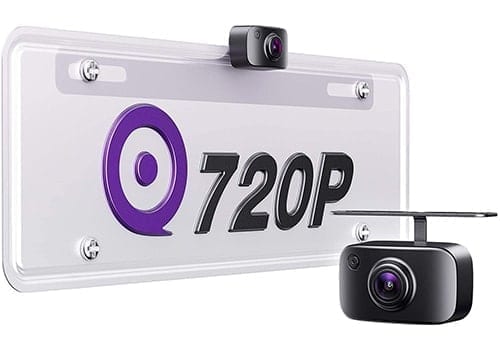
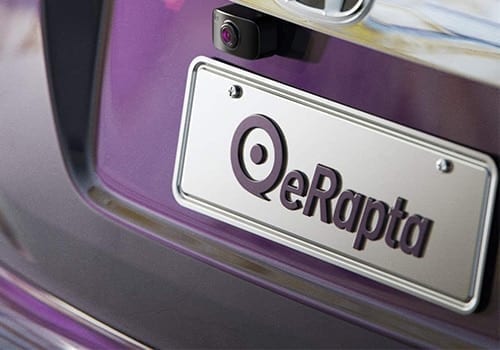
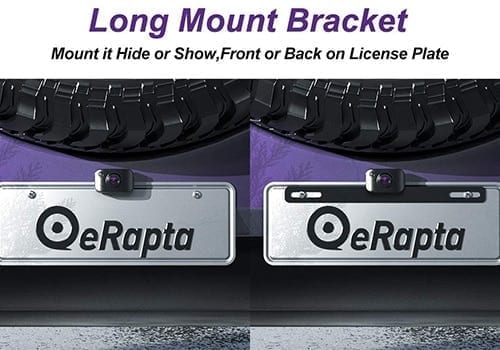
Latest Prices
Key Features
- 720p HD sensor with excellent low-light (“starlight”) performance
- ~149° wide view with adjustable tilt; switchable guidelines & image flip
- IP69K waterproof/dustproof housing
- RCA (NTSC) video output; 12V power; includes multi-mount hardware & full wiring
eRapta ERT11 Quick Review
The ERT11 remains my go-to plate camera when you want a crisp HD picture without spending a fortune. In my installs, the starlight sensor produced a stable, low-noise image under streetlights and LED tails, and the wired RCA connection means near-zero lag when you shift into reverse. The included brackets let you mount above or through the plate frame, and switchable parking guidelines/image flip make it usable on the front or rear.
Compatibility tip: Most aftermarket stereos accept composite (RCA) camera video and have a reverse trigger wire. If your display only offers HDMI/USB video, you’ll need a composite-to-HDMI converter. For basics and wiring diagrams, see my backup camera install guide. If you’re shopping head units, check my best car stereos or rear-view camera parent guide.
Reasons to Buy
- HD clarity and wide view at a value price
- Wired connection = instant image & reliable signal
- Guideline & image-flip options make it versatile for front or rear installs
Reasons Not to Buy
- Bracket angle may need slight bending/shimming to dial in height on lifted trucks
- No built-in LEDs (relies on sensor + ambient light), so very dark alleys will still be grainier than a lit driveway
2. Esky License Plate Camera
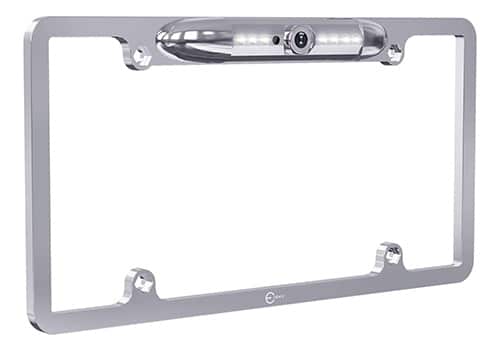
Latest Prices
Key Features
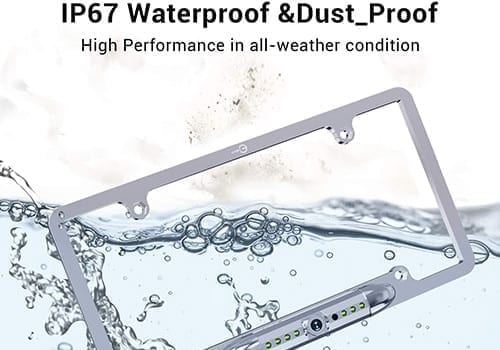
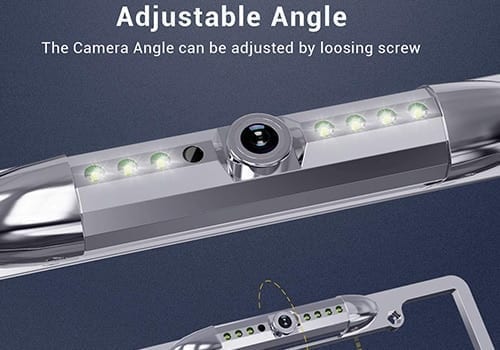
- License plate frame with integrated camera for a clean, fast install
- Analog 480 TVL resolution with ~170° wide-angle lens
- Seven LEDs to assist in low light; IP67 water/dust resistance
- RCA (NTSC) video; includes wiring and hardware
Esky License Plate Frame Quick Review
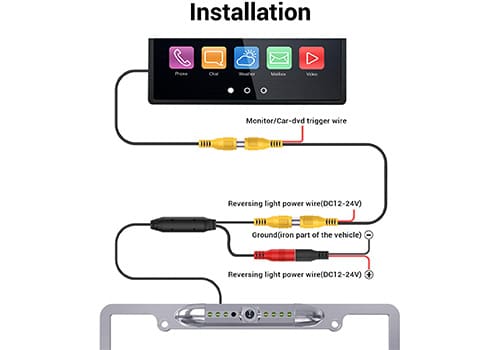
If you want a tidy solution with minimal drilling, Esky’s frame-style camera is tough to beat. You replace the plate frame, route one power and one video cable, and you’re done. The analog 480 TVL image is lower resolution than HD options, but it’s perfectly usable for parking and spotting obstacles. The 170° lens gives you wide coverage (with a bit of “fisheye” distortion at the edges). If you’re upgrading your stereo too, my best head units picks note which models have dedicated camera inputs and triggers.
Fit & compliance tip: Make sure the frame doesn’t cover required state markings or registration stickers on your plate. For wiring basics and reverse-trigger setup, my install tutorial has diagrams you can follow.
Reasons to Buy
- Clean, one-piece frame install takes the guesswork out of mounting
- Very wide field of view helps in tight parking
- Budget-friendly and compatible with almost any RCA-equipped display
Reasons Not to Buy
- Lower resolution than HD options; fine for parking, not for fine detail
- Fixed frame location can limit vertical angle on some SUVs/trucks
3. Alpine HCE-C1100
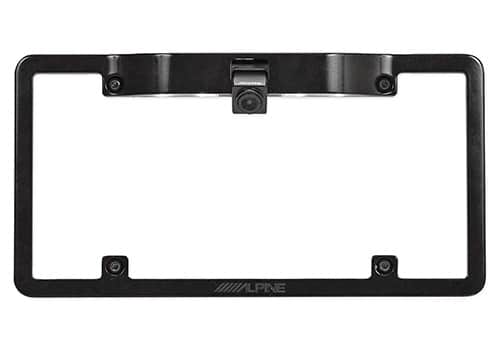
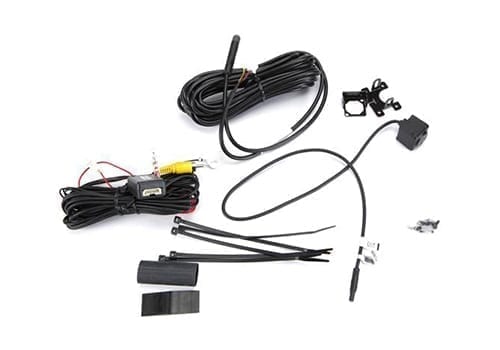
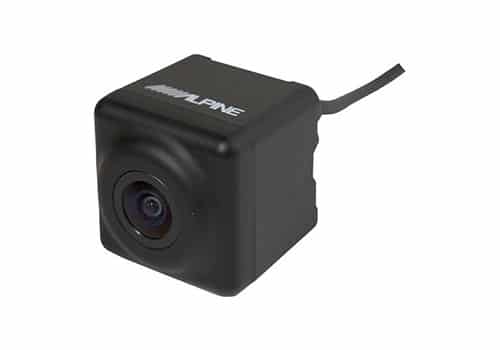
Latest Prices
Key Features
- HDR processing for excellent contrast in bright sun and at night
- 131° (H) / 103° (V) field of view; low-noise CMOS sensor
- IP67 water/dust resistance
- RCA (NTSC) output; works with Alpine head units and most displays with a camera input
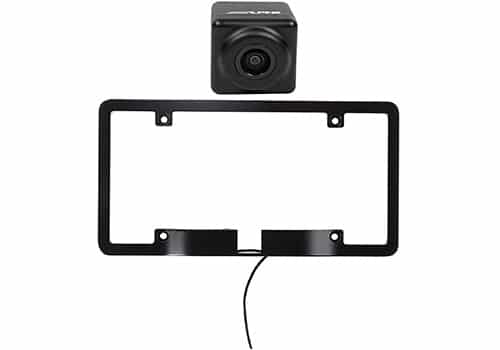
- Includes wiring and plate-friendly mounting hardware
Alpine HCE-C1100 Quick Review
Alpine’s HDR processing makes this camera shine when you’re backing out of a dark garage into noon sun. The 131° horizontal view gives great situational awareness without the extreme fisheye effect, and it plays nicely with both factory and aftermarket displays via RCA. If you’re running an Alpine head unit (like the iLX-W650) or a multi-camera receiver (see my HEIGH10 install), this camera integrates cleanly.
Note on low-light: The HCE-C1100 doesn’t use IR LEDs; instead, its HDR and sensor do the work. In my tests, that produced a more natural color image under streetlights than LED-illuminated budget cams. For a full category overview, see my best rear view cameras guide.
Reasons to Buy
- HDR produces a clear, balanced image in tough lighting
- Premium build and reliability; excellent with Alpine receivers
- Adjustable vertical tilt to dial in the view on tall or low plates
Reasons Not to Buy
- Costs more than budget options despite lower nominal resolution (HDR helps a lot)
- No built-in LEDs; relies on sensor/HDR plus ambient lighting

