
Home › Marine Audio
Boat & Marine Audio Buyer's Guide Hub
Expert-tested recommendations for boat speakers, marine stereos, amplifiers, subwoofers, and tower speakers.
Whether you're rigging out a wakeboard boat, upgrading a pontoon, or adding music to a fishing skiff, marine audio has unique demands that car audio gear simply can't meet. Salt spray, UV exposure, and open-air listening all require purpose-built equipment. I've tested marine audio gear on the water since 2010, and these guides represent hundreds of hours of real-world evaluation across every major brand — from JL Audio Marine and Wet Sounds to Rockford Fosgate M-Series and Kicker KM.
Below you'll find our complete library of marine audio buyer's guides. Each one is independently tested, updated regularly, and organized to help you find the right gear for your boat and your budget.
Independently tested and reviewed by the CarAudioNow team
Find Your Guide
Our Buyer's Guides
Every guide is independently tested and updated regularly. New guides are added as we expand our marine audio coverage.


NEW: VEHICLE AUDIO FIT GUIDE
Start Your Build With a Personalized Vehicle Audio Report
Enter your year, make, model, trim, and factory audio package to see how many speakers are in your vehicle, what sizes they are, whether it has a factory amplifier, and whether a head unit upgrade or DSP makes the most sense. Then we’ll point you to the right CarAudioNow buyer’s guides for your build.
Speaker Sizes & Locations
See how many speakers your vehicle has, where they’re located, and what sizes to shop for before you buy anything.
Factory Amp & Audio Package Check
Know whether your vehicle is factory amplified and how your trim or premium audio package affects your upgrade options.
Head Unit vs. DSP Guidance
Get a clearer starting point on whether you should replace the head unit, keep the factory radio, or add a DSP for better results.
Why Marine Audio Needs Specialized Gear
Car audio components will fail on a boat — usually within one to two seasons. Marine-rated equipment is engineered from the ground up for the harsh conditions of open-water use. True marine speakers use polypropylene or composite cones that won't absorb moisture, stainless steel or coated hardware that resists salt corrosion, and UV-treated grilles and surrounds that hold up under direct sun exposure for years.
Beyond durability, marine audio faces a unique acoustics challenge: there are no walls. Sound dissipates in every direction on open water, which is why marine speakers tend to run higher wattage, marine amplifiers push more clean power, and tower speakers are designed to project sound directionally at speed. Getting good sound on a boat requires the right equipment paired correctly — and that's exactly what our guides help you navigate.
Every product we recommend has been evaluated for marine-grade construction, real-world sound quality on the water, installation practicality, and long-term durability. We don't just read spec sheets — we run this gear on actual boats in saltwater and freshwater environments.
Building a Marine Audio System: Where to Start
If you're starting from scratch or doing a full upgrade, the order matters. Start with your marine stereo/head unit — it's the brain of your system and determines what sources you can play (Bluetooth, Apple CarPlay, SiriusXM, etc.). Next, choose your speakers based on your boat's size and layout. Most boats benefit from a combination of 6.5-inch cockpit speakers and, for wake/ski boats, tower speakers for on-the-water coverage.
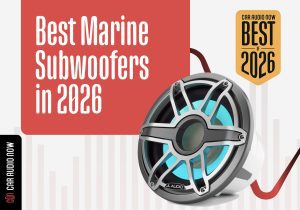
If you want bass that you can actually feel, add a marine subwoofer — the open-air environment makes low-end disappear fast, so a dedicated sub makes a bigger difference on a boat than in a car. Finally, an amplifier ties it all together, giving your speakers and sub the clean power they need to sound good at volume without clipping.
Each of our guides below covers a specific component in depth, with product picks organized by budget tier so you can build a system that fits your boat and your wallet.
How We Test & Evaluate Marine Audio
Every product recommendation on CarAudioNow is backed by hands-on experience. Our marine audio evaluations go beyond lab testing — we install and listen to gear in real marine conditions to give you recommendations that hold up where it matters.
- On-Water Listening Tests: We evaluate sound quality, volume, and clarity while underway at various speeds — not just at the dock. Tower speakers are tested during wakeboarding runs, cockpit speakers during cruising.
- Durability Assessment: We examine construction quality, marine-grade certifications (ASTM B117 salt spray, IP ratings), materials used in cones, surrounds, grilles, and mounting hardware.
- Installation Practicality: We consider ease of installation for DIY boat owners, including wiring complexity, mounting options, and compatibility with common marine dashboards and enclosures.
- Value Analysis: We evaluate price-to-performance across budget, mid-range, and premium tiers. The most expensive option isn't always the best pick — we prioritize gear that delivers the most for what you spend.
- Brand Track Record: We factor in warranty support, parts availability, and long-term reliability data from the marine audio community and our own multi-season testing.
Frequently Asked Questions
Can I use regular car speakers on my boat?
Technically yes, but they'll fail quickly. Car speakers aren't built to handle moisture, salt spray, or UV exposure. Marine-rated speakers use corrosion-resistant materials and waterproof construction that car speakers lack. You'll save money long-term by starting with proper marine gear.
How much power do I need for boat audio?
More than you'd think. Open-air listening means sound disperses quickly with no cabin walls to contain it. A system that sounds loud in a car will feel quiet on the water. Plan for at least 50-75 watts RMS per speaker, and consider a dedicated amplifier to get clean power at higher volumes without distortion.
What's the difference between coaxial and component marine speakers?
Coaxial (full-range) speakers combine the woofer and tweeter in a single unit — they're simpler to install and work well for most boats. Component systems use separate woofers and tweeters for better sound staging and clarity, but require more planning during installation. Most recreational boaters do great with quality coaxials.
Do I need tower speakers?
Tower speakers are primarily for wake/ski boats where riders need to hear music while being towed behind the boat. If you mostly cruise, fish, or dock, cockpit speakers and a sub will serve you better. Tower speakers are a significant investment and really only shine for watersports use.
What marine stereo features matter most?
Bluetooth connectivity is a must for streaming from your phone. Beyond that, look for NMEA 2000 compatibility if you want integration with your boat's existing electronics, conformal-coated circuit boards for moisture protection, and a bright display that's readable in direct sunlight. Apple CarPlay and Android Auto support is increasingly common and worth having.
How do I protect my marine audio from corrosion?
Start with marine-rated components — they're built for the environment. Beyond that, use marine-grade tinned copper wiring (not bare copper), apply dielectric grease to all connections, use heat-shrink connectors with adhesive lining, and flush your boat with fresh water after saltwater use. A quality installation prevents 90% of corrosion issues.
What size subwoofer works best on a boat?
For most boats, a 10-inch marine subwoofer hits the sweet spot between output and installation space. Smaller boats or tight bilge areas may do better with an 8-inch. Larger wakeboard boats with dedicated sub enclosures can benefit from a 12-inch. The key is matching the sub size to your available space and amplifier power.
Is marine audio installation different from car audio?
Yes, in several important ways. Marine wiring must be tinned copper (not CCA), all connections need to be waterproof, and you'll need to account for bilge moisture, engine vibration, and limited access panels. Grounding is also different on boats — you'll typically ground to a bus bar, not the hull. Our individual buyer's guides include installation tips specific to each component type.
How often should I update my marine audio buyer's guides?
We refresh our marine audio guides at least twice per year — once before boating season (spring) and once after testing new gear through the summer. When major new products launch from brands like JL Audio, Wet Sounds, Fusion, or Rockford Fosgate, we add them to the relevant guide as soon as we can evaluate them.
Explore More CarAudioNow Guides
Looking for car audio gear? Check out our car audio buyer's guides, or browse our accessories and tech hub.
